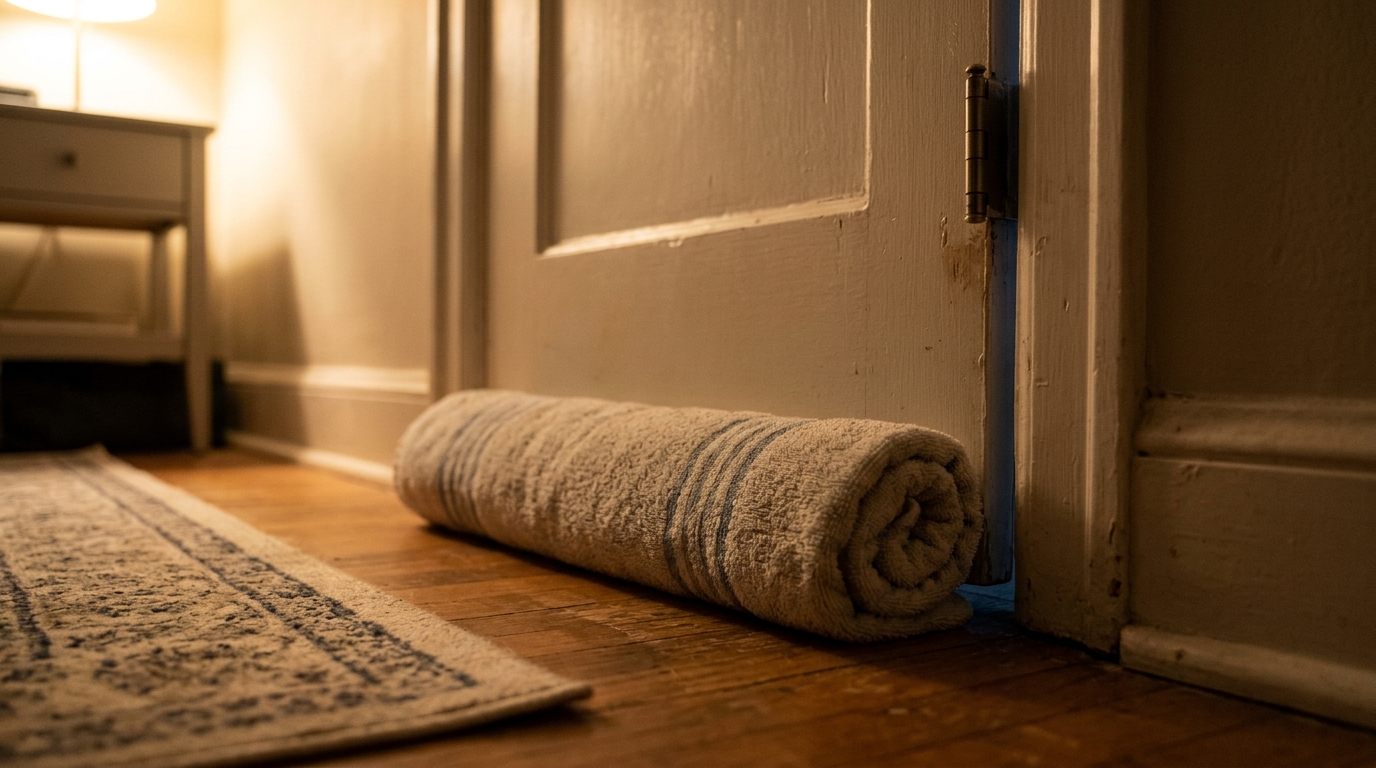
You have probably seen it in a grandparent’s house: a rolled towel or a fabric snake pushed against the bottom of the front door on a cold night. It looks a little quaint, but there is real physics behind it. A typical gap under an exterior door is about 1/4 to 1/2 inch tall and 36 inches wide, which adds up to roughly 9 to 18 square inches of open area. The Department of Energy notes that air leakage can account for 15 to 25 percent of the energy used for heating and cooling, and door gaps are among the easiest leaks to find and fix.
At night the problem gets worse. Outdoor temperatures drop, your heating system cycles more, and the warm air inside rises and pushes out through upper-level gaps, pulling cold replacement air in through low gaps like the one under your door. That creates the chilly ankle-level draft that makes a room feel colder than the thermostat says, and it often prompts people to nudge the heat up a few degrees, which costs real money.
This post explains why a simple towel works, how to use one correctly for an instant zero-cost fix, and how to graduate to a door sweep or threshold seal that does the job permanently. Most of these fixes take under 30 minutes and cost between nothing and about 25 dollars.
What You’ll Need
Click on an item below to shop for the recommended items for this recipe on Amazon.
As an Amazon Associate, we earn from qualifying purchases.
How to Do It
- Pick a dense, thick bath towel rather than a thin hand towel, since thickness blocks more airflow.
- Roll it tightly lengthwise into a firm cylinder at least 3 to 4 inches thick, tight enough that it does not flop open.
- Lay the roll flat against the inside bottom of the door so it covers the full width of the gap from hinge to latch.
- Press the ends firmly against the door frame on each side so no cold air sneaks around the edges.
- Hold your hand near the floor by the door afterward. If the cold stream is gone or much weaker, you have confirmed the gap was the culprit.
- Measure the width of your door and the height of the gap using a tape measure, and note whether you have a flat threshold or a raised one.
- For a no-install option, buy or sew a draft snake (a fabric tube filled with rice, sand, or foam) sized to your door width, or use a slide-on style that clings to the bottom of the door.
- For a permanent option, buy a door sweep rated for your gap size. Adhesive-backed vinyl or silicone sweeps are the easiest, while screw-on aluminum and rubber sweeps last longest.
- Cut the sweep to length with scissors or a hacksaw, hold it to the bottom interior of the door, and mark the screw holes if needed.
- Fasten it so the flexible fin lightly touches the threshold without dragging hard, then open and close the door to check it moves freely.
- Test by shining a flashlight from outside at night or by feeling for air at the base. You should see no light and feel no moving air.
Why It Works: The Benefits
Stopping the stream of cold air across the floor can raise the felt temperature near the door by several degrees, which is often the difference between a chilly room and a comfortable one.
Sealing a 1/4 inch gap under a standard door can reduce whole-house air leakage enough to save roughly 1 to 3 percent on heating, and more in smaller or very leaky homes.
You already own a towel. It gives you immediate relief tonight and helps you confirm that the door gap is actually your problem before you spend anything.
A good seal also blocks outdoor noise, dust, pollen, and insects from slipping under the door, a bonus that many homeowners notice right away.
When the draft is gone, you stop nudging the heat up, avoiding the 1 to 3 percent cost increase per degree that comes with over-compensating.
💰 Savings Impact by Action
Closing a 1/4 to 1/2 inch door gap can trim heating costs by roughly 1 to 5 percent in a typical drafty home.
Stopping floor-level airflow can make a room feel up to 5 to 8 degrees warmer, letting many people lower the thermostat.
Lowering your setpoint by one degree saves about 1 to 3 percent on heating, and a draft-free room often makes that comfortable.
Combining door, window, and outlet sealing can cut total heating and cooling costs by 10 to 20 percent, per ENERGY STAR estimates.
🏠 Key Concepts Explained
The Science Behind It
A rolled towel works because it attacks the two forces that drive drafts: pressure difference and open area. On a cold night, warm air inside is lighter and rises toward the ceiling, creating slightly higher pressure at the top of the house and slightly lower pressure near the floor. That pressure difference, known as the stack effect, pulls outdoor air in through any low opening. The air flow through a gap increases with both the size of the opening and the pressure pushing on it, so shrinking the opening cuts the flow directly.
A dense towel does not create a perfect airtight seal, but it does not need to. Fabric fibers create a tortuous path that forces air to slow and spread out, which reduces the velocity of the draft dramatically. Because the cooling effect on your skin depends heavily on air movement, even a partial reduction can make a room feel several degrees warmer. This is the same principle behind why a light breeze makes you feel cooler in summer and why a still room feels warmer in winter.
The savings come from reducing infiltration, which is the cold air your furnace must heat. Air sealing is consistently ranked by ENERGY STAR and the DOE as one of the most cost-effective efficiency upgrades, and bottom-of-door gaps are among the largest single leaks in many homes. A permanent door sweep does what the towel does but stays in place, seals more consistently, and lasts for years.
Frequently Asked Questions
▼ Why do I still feel a draft even after I placed a towel at the bottom of the door?
The draft may be coming from around the door edges, the latch side, or the top of the door rather than the bottom. Run a lit incense stick or a thin strip of tissue along the full frame and watch for movement, then add weatherstripping to the sides and top where you find leaks.
▼ Can renters use a towel or draft stopper without landlord permission?
Yes. A towel, a fabric draft snake, or a slide-on door draft guard requires no tools or permanent changes, so it is fully renter safe. Avoid screw-on sweeps unless your lease allows small modifications, or choose adhesive-backed ones that peel off cleanly.
▼ How long before I notice savings on my heating bill?
You will feel the comfort improvement the same night. The bill impact shows up in your next full billing cycle, and it is typically modest, often 1 to 5 percent, depending on how big the gap is and how cold your climate is.
▼ What if my home is older than 30 years?
Older homes usually have bigger gaps and worn thresholds, so a towel may not be enough. Consider replacing the threshold or installing a heavy-duty sweep, and have an energy audit done if you suspect widespread leakage, since many older homes lose 25 to 40 percent of conditioned air through gaps.
▼ Is a towel safe to leave under the door all night?
For most interior-use cases it is fine, but do not use it on any door that serves as an emergency exit or that someone may need to open in the dark in a hurry. Keep it clear of any gas appliance air supply and make sure your carbon monoxide detectors are working.
Quick Tips
- Use a dense, tightly rolled bath towel rather than a thin one, and make it at least 3 inches thick for the best block.
- Check all exterior doors, including the one leading to the garage, since garage doors are often the leakiest in the house.
- Replace worn door sweeps every 3 to 5 years, since rubber and vinyl harden and crack with age and temperature swings.
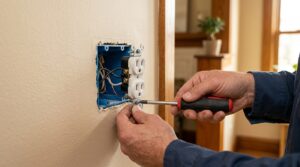
- Pair the door fix with a quick check of window edges and electrical outlets on exterior walls for more cheap draft wins.
Variations for Your Situation
- Apartment/Rental: Use a slide-on fabric door draft guard or a rice-filled draft snake, typically 10 to 20 dollars, since neither needs any installation or damage to the door. Adhesive-backed vinyl sweeps are also usually removable without marks if you peel them slowly with a hair dryer.
- Tight Budget (under $50): Start with the free towel, then make a draft snake by sewing a sock or a fabric tube and filling it with rice or dry beans for about 3 to 5 dollars. If you want a permanent fix, a basic adhesive door sweep runs about 8 to 12 dollars and pays back within a heating season.
- Older Home (pre-1980): Expect worn or uneven thresholds and gaps larger than 1/2 inch, so a towel may only be a stopgap. Look at adjustable thresholds or heavy-duty sweeps in the 20 to 40 dollar range, and add weatherstripping around the full frame to address the higher baseline leakage typical of older construction.