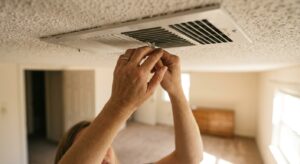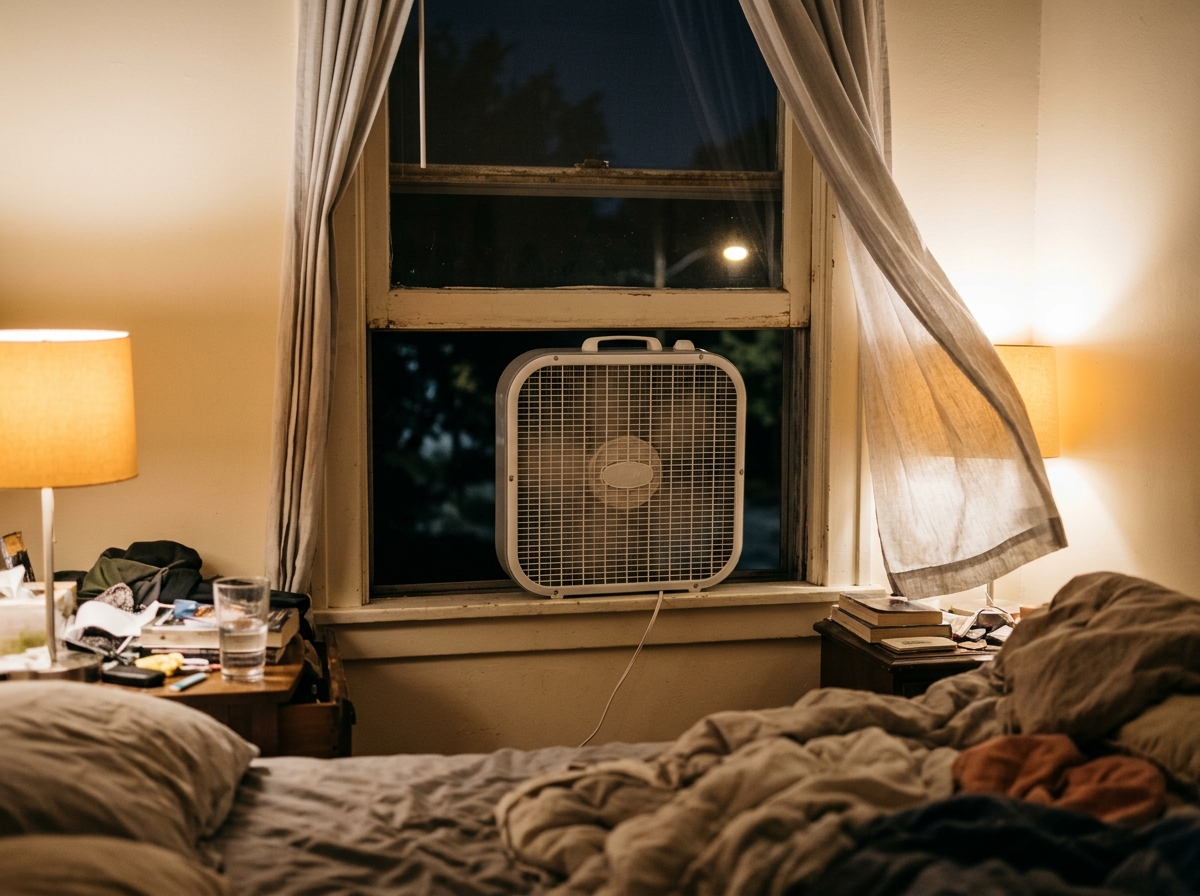
It feels natural to aim a fan inward. Cool air is outside, so you push it in, right? In practice, a single fan blowing in creates a pressure problem: the incoming air has to push the hot, buoyant air already inside toward the ceiling, where it lingers. The result is a stuffy house that cools slowly, even when it is 20 degrees cooler outdoors.
Flip that fan to face outward and you change the whole game. The fan acts as an exhaust, lowering the pressure inside slightly so that cooler outdoor air is drawn in through every other open window and gap. Hot air rises and collects in upper rooms and upper floors, and an exhaust fan removes it directly at the source instead of mixing it around.
In this post you will learn why the outward-facing setup works better, how to arrange fans and windows for the fastest cooldown, and what to do if your house is tight, old, or an apartment where you cannot touch anything permanent. A box fan costs about $25 to $40 and runs on roughly 75 to 100 watts, so even a full night of operation costs only a few cents.
What You’ll Need
Click on an item below to shop for the recommended items for this recipe on Amazon.
As an Amazon Associate, we earn from qualifying purchases.
How to Do It
- Wait until the outdoor air is cooler than indoors, usually after sunset or before sunrise.
- Place a box fan in an upstairs or high window with the airflow arrow pointing outward, and seal gaps around the fan with a towel or cardboard so exhaust air cannot loop back in.
- Open one or two windows on the opposite side of the house or on a lower floor, and crack interior doors so air can travel through.
- Run the fan on high for 1 to 2 hours, then drop to medium to maintain the cooldown through the night.
- Close windows and blinds in the morning once the outdoor temperature rises above the indoor temperature.
- Buy or reuse a 20-inch box fan, or a window-fit exhaust fan with adjustable side panels, rated around 2,000 to 2,500 CFM.
- Cut a rigid foam board or corrugated plastic panel to fit around the fan inside the window frame so the opening is fully sealed except through the fan.
- Install the fan in the highest window, facing out, and place a second fan on the opposite side facing in if you want extra push through a long or multi-room house.
- Open windows in rooms you want to cool, with larger openings downstairs and smaller ones near the exhaust fan to speed airflow past occupied spaces.
- Run a timer or smart plug so the fan runs 6 to 8 hours overnight and shuts off automatically once the house reaches your target temperature.
- Store the fan and panel in a closet when winter arrives, or leave them in place with a cover to block drafts.
- Hire a licensed electrician or HVAC contractor to size the fan, typically 2 to 3 CFM per square foot of living space.
- Have the installer cut a ceiling opening in the top-floor hallway and mount a fan with an insulated, sealed shutter to block winter heat loss.
- Make sure the attic has enough vent area, generally 1 square foot of net free vent area per 750 CFM, so the fan can exhaust freely.
- Test the system by opening several windows and confirming a steady inward breeze before relying on it for nightly cooling.
Why It Works: The Benefits
Exhausting hot air and drawing in cool air can drop indoor temperatures 5 to 10 degrees within one to two hours on a typical summer evening.
Using a 75 to 100 watt fan in place of a 3,000 watt central AC for several hours a night can cut cooling costs by roughly 20 to 40% during shoulder-season weeks.
Pulling heat out through an upstairs window targets the hottest part of the house, where bedrooms often sit and where heat buildup is worst.
Continuous exhaust replaces stale air with outdoor air, reducing lingering cooking odors, humidity, and indoor pollutants.
A box fan at 90 watts costs around 1 to 2 cents per hour at average U.S. electricity rates, so an 8-hour night costs under 20 cents.
💰 Savings Impact by Action
Running an exhaust fan overnight can cut next-day AC runtime by around 30% when nights drop 10 or more degrees below daytime highs.
Placing the fan in a high window and exhausting outward removes accumulated heat faster than blowing air in at floor level.
Opening windows on opposite sides creates a clear airflow path that increases cooling speed by roughly 20%.
Closing windows and blinds in the morning traps cool air and slows heat gain by about 10%.
🏠 Key Concepts Explained
The Science Behind It
The outward-facing fan works because of how air pressure and buoyancy interact. When a fan pushes air into a room, it raises the indoor pressure slightly, and the incoming stream has to shove the lighter, warmer air upward and toward the ceiling. Much of that warm layer stays put, and the incoming air mixes with it, so you move a lot of air without removing much heat.
An exhaust fan does the opposite. It lowers pressure inside by a tiny amount, a few pascals, which is enough to pull replacement air through any open window or gap. That makeup air enters low and cool, while the fan removes warm air from high up. This setup follows the natural stack effect, working with the way heat already wants to move instead of against it.
The cooling is also helped by thermal mass. Drywall, flooring, and furniture act like heat batteries, and a few hours of cool airflow draws that stored heat out. The effect is strongest when outdoor temperatures fall at least 8 to 10 degrees below your indoor temperature, which is why the method shines in dry or shoulder-season climates and is weaker in muggy regions where nights stay warm.
Frequently Asked Questions
▼ Why is my AC still running all day even after I tried these fixes?
Fan cooling only removes heat when outdoor air is cooler than indoors, so it will not offset daytime heat on its own. Run the fan overnight, then close windows and blinds by morning and set the AC a few degrees higher. If the AC still runs constantly, check for air leaks, a dirty filter, or poor attic insulation.
▼ Can renters do this without landlord permission?
Yes. A box fan in a window requires no drilling, screws, or permanent changes. Use a temporary foam board or towel to seal gaps and remove everything when you are done.
▼ How long before I actually notice savings on my bill?
You will feel the difference the same night, and the bill impact shows up within one billing cycle. Households that use the fan on cool evenings typically save roughly 20 to 40% on cooling costs during mild weeks, with smaller savings during peak heat.
▼ What if my home is older than 30 years?
Older homes tend to leak more air, so the fan will pull replacement air through gaps even with few windows open, which helps cooldown speed. The tradeoff is that the house will also warm up faster once you stop, so pair the method with blinds, attic insulation, and closing the house up in the morning.
▼ Does it matter if the fan is in the kitchen or bathroom window?
Kitchen and bathroom windows work, but upstairs or high windows are better because hot air collects there. If you only have a ground-floor option, pair it with open windows on upper floors so the heat has a path to escape.
Quick Tips
- Use the fan only when outdoor air is at least 5 to 8 degrees cooler than indoors, and check with a cheap outdoor thermometer.
- Place the exhaust fan in the highest window of the house to pull hot air off the ceiling layer.
- Seal gaps around the fan with a towel, cardboard, or foam board so hot exhaust air cannot loop back inside.
- Pre-cool bedrooms in the evening, then close windows and blinds before sunrise to trap the cool air.
Variations for Your Situation
- Apartment/Rental: Use a tension-fit window fan or a standard 20-inch box fan with a towel or foam board around it, costing $25 to $60 and leaving no marks. Open a window on the opposite side of the unit for cross-flow, and move the fan to a bedroom window at night for the best effect.
- Tight Budget (under $50): Use one box fan you already own, a towel or old cardboard to block gaps, and the open windows you already have. Run it only during the cool hours from sunset to sunrise, and close blinds during the day, which can deliver most of the benefit for $0 to $30.
- Older Home (pre-1980): Expect more natural air leakage and less attic insulation, so the fan will cool quickly but the house will also reheat faster. Upgrade attic insulation toward R-38 and seal obvious gaps, and consider an attic or whole-house fan for a lasting fix.
- Humid Climate: Only run the fan when outdoor humidity is reasonable, below roughly 60% relative humidity, since drawing in humid air can make the house feel clammy. Use a hygrometer, and rely on the AC or a dehumidifier when nights stay muggy.