Ever notice how your living room feels fine at noon, a bit warm at four, and downright stuffy by bedtime, even after the sun has set? That is not your imagination. Sunlight pours through glass and gets absorbed by your floors, furniture, and walls, which then slowly release that stored heat for hours. By the time you feel it, the damage was done long before dinner.
Windows are the weakest link in your cooling defense. According to the U.S. Department of Energy, about 76 percent of the sunlight that hits standard double-pane windows enters as heat. Once that heat is inside, your air conditioner has to remove it, and it works hardest during the evening hours when electricity rates are often at their peak.
The good news is that blocking heat before it enters is far cheaper and easier than removing it afterward. In this post, we cover how insulated curtains work, how to use them at the right times of day, and two practical approaches, from a zero-cost quick fix to a proper DIY upgrade, so you can cut cooling costs and sleep more comfortably tonight.
What You’ll Need
Click on an item below to shop for the recommended items for this recipe on Amazon.
As an Amazon Associate, we earn from qualifying purchases.
How to Do It
- Identify your two or three worst windows, usually the west-facing ones and any large east-facing windows. Stand in the room at 3 p.m. and notice which ones feel hottest.
- Close existing curtains, drapes, or blinds on those windows by mid-morning for east windows and by noon for west windows, before the sun hits the glass directly.
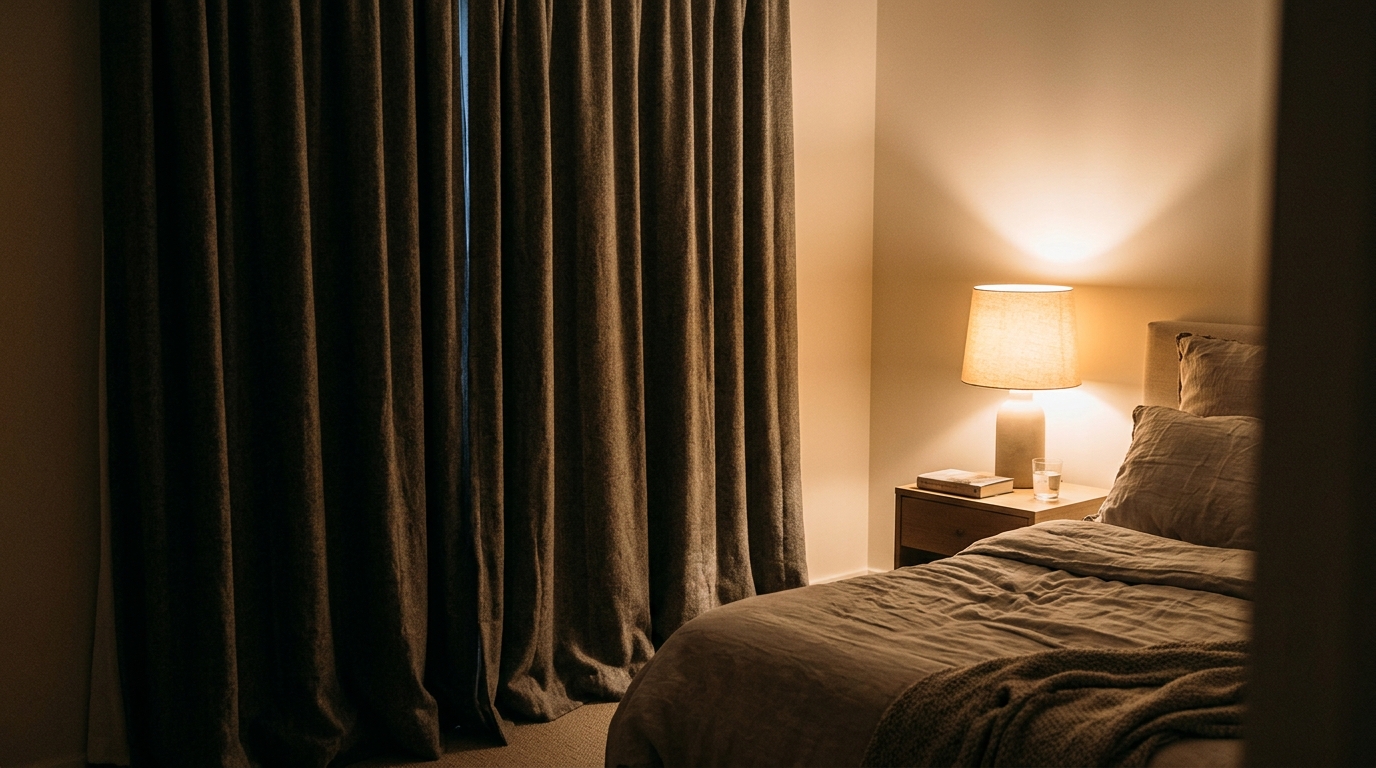
- Make sure curtains hang as close to the glass as possible and extend past the window frame on both sides so heat cannot slip around the edges.
- If you have lightweight or sheer curtains, add a layer of white bedsheet or inexpensive reflective sun shade film temporarily on the worst window. Light-colored, reflective surfaces perform better than dark ones.
- Open windows and curtains in the evening once outdoor air is cooler than indoor air, so you can flush out any heat that did build up.
- Measure each window width and height, then add at least 4 to 6 inches on each side and 2 to 3 inches above the frame. Wider and longer coverage cuts edge leakage dramatically.
- Buy insulated or thermal curtain panels with a white or reflective liner facing the window. Triple-weave or foam-backed styles typically perform best.
- Install a sturdy curtain rod or track mounted 3 to 4 inches above the window and extending past each side. Use wall anchors rated for the extra weight of insulated fabric.
- Hang the curtains so they come within about an inch of the sill or floor. For a tighter seal, add side returns or a cornice box at the top to stop warm air convecting behind the fabric.
- Add Velcro strips or magnetic tape along the sides to hold curtains snug to the wall on the sunniest windows.
- Create a daily routine: close curtains on sun-facing windows before the sun hits them, then open in the evening to let cooler air in.
Why It Works: The Benefits
The DOE estimates that well-fitted drapes with reflective backing can reduce heat gain through windows by up to 33 percent. For a home spending $150 a month on cooling, that can translate to roughly $10 to $20 monthly during peak season.
Stopping heat from entering during the day means your AC cycles less in the evening. Many homeowners notice rooms stay 3 to 7 degrees cooler on the sunniest side of the house.
Fewer long run cycles means less strain on your compressor and potentially a longer system lifespan, a quiet benefit that adds up over years.
Bedrooms that do not hold afternoon heat are easier to cool down to the 65 to 68 degree range sleep experts recommend, often with the AC running less overnight.
The same curtains that block summer heat reduce winter heat loss through windows by up to 10 percent or more when closed at night, so they keep earning their keep after the cooling season ends.
💰 Savings Impact by Action
Well-fitted drapes with reflective backing can reduce solar heat gain through windows by up to 33 percent, per DOE estimates.
Treating sun-exposed windows consistently can lower overall cooling energy use by roughly 10 to 15 percent in sunny climates.
Blocking afternoon sun before it is absorbed reduces stored heat release by up to 25 percent in the hottest rooms.
The same curtains, closed at night, cut winter window heat loss by around 10 percent through the added insulating air gap.
🏠 Key Concepts Explained
The Science Behind It
When sunlight passes through a window, the short-wave radiation is absorbed by whatever it lands on, such as flooring, sofas, and walls, and converted into heat. Those surfaces then warm the surrounding air and slowly re-radiate long-wave heat for hours. This is why a room can feel hotter at 8 p.m. than at noon even though the sun is lower. The heat is stored in thermal mass and released late in the day.
Insulated curtains work in two ways. First, a reflective or light-colored backing bounces part of the incoming solar radiation back out through the glass before it can be absorbed and converted to heat. Second, the layer of fabric and trapped air between curtain and glass slows conductive and convective heat transfer, much like a thin extra pane of insulation. Combined, these effects reduce the cooling load your AC has to handle.
Fit is critical. Heat will always find the path of least resistance, so gaps at the sides, top, and bottom let warm air circulate behind and around the curtain, a mini chimney effect that carries heat into the room. Overlapping the window frame and sealing the edges can make the difference between a curtain that barely helps and one that delivers the full 20 to 33 percent reduction in window heat gain DOE testing suggests is possible.
Frequently Asked Questions
▼ Why is my AC still running all day even after I added insulated curtains?
Curtains only address solar heat gain through windows, which may be just one part of your total cooling load. Check attic insulation, duct leaks, and air sealing around doors and attic hatches next, and make sure curtains are closed before the sun hits the glass rather than after the room is already hot.
▼ Can renters do this without landlord permission?
Yes. Tension rods, adhesive hooks, and clip-on curtain panels need no drilling and leave no marks. Removable reflective window film and cellular shades with stick-on mounts also work well, and cost roughly $15 to $60 per window.
▼ How long before I actually notice savings on my bill?
You should feel cooler rooms on the first sunny day. On your bill, expect to see the difference in the next full billing cycle, typically a 5 to 15 percent drop in cooling-related energy use depending on how many sun-exposed windows you treat.
▼ What if my home is older than 30 years?
Older homes often have single-pane or early double-pane windows with higher solar heat gain, so curtains can make an even bigger difference. Pair them with weatherstripping or caulk around the frames, since air leaks around old windows can undercut the benefit of the curtain.
▼ Do darker curtains block more heat than lighter ones?
Not necessarily. Dark fabric can absorb heat and re-radiate it into the room, while a white or reflective backing sends it back outside. Look for light-colored or reflective linings facing the glass, regardless of the decorative color on the room side.
Quick Tips
- Prioritize west-facing windows first, then east, then south. North-facing windows usually are not worth the investment for cooling.
- Choose white or light-colored linings on the window side, since they reflect more solar heat than dark ones.
- Mount rods wide and high so the curtain overlaps the frame by 4 to 6 inches on each side and sits close to the wall.
- Pair curtains with exterior shade solutions like awnings or shade screens on the worst windows. Blocking sun outside the glass is more effective than blocking it inside.
Variations for Your Situation
- Apartment/Rental: Use tension rods and clip-on or adhesive-mounted thermal curtains, which typically run $20 to $50 per window and leave no damage. Add removable reflective window film on the sunniest west-facing window for about $15 to $25.
- Tight Budget (under $50): Close existing curtains or blinds at the right time of day, hang a white bedsheet behind lightweight curtains on your worst window, and use cardboard wrapped in aluminum foil as a temporary reflector on the hottest windows. Total cost is often under $20.
- Older Home (pre-1980): Older single-pane or early double-pane windows let in more heat, so insulated curtains help most here. Seal any visible gaps around the frame with removable rope caulk first, then hang floor-length insulated curtains with extra width to overlap the frame.