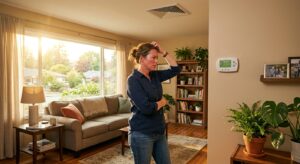
You set your thermostat to 75 degrees, but you still feel hot and sticky. You crank it down to 72, then 70, and your energy bill keeps climbing while your comfort barely improves. The culprit is almost never the temperature. It is humidity. When indoor relative humidity exceeds 55 to 60 percent, your body cannot shed heat efficiently through sweat evaporation, making a 75-degree room feel closer to 85 degrees. That gap between actual temperature and how it feels is called the heat index, and it costs American homeowners billions in unnecessary cooling costs every year.
Your air conditioner was designed to remove both heat and moisture from the air, but most systems are sized and set up for peak cooling capacity, not peak dehumidification. On mild but muggy days, your AC may cycle off before pulling enough moisture out of the air, leaving you uncomfortable at temperatures that should feel fine. This is why controlling humidity independently from temperature is one of the highest-impact, lowest-cost improvements you can make to your home’s comfort and efficiency.
In this post, you will learn exactly how humidity raises your perceived temperature, what a healthy indoor humidity range looks like, and three approaches you can take starting today to bring moisture under control. Whether you spend $0 or invest in a whole-home dehumidifier, every step here will make your thermostat setting actually mean something.
What You’ll Need
Click on an item below to shop for the recommended items for this recipe on Amazon.
As an Amazon Associate, we earn from qualifying purchases.
How to Do It
- Buy or borrow a hygrometer (digital humidity monitor, $10 to $15) to measure your actual indoor relative humidity. You cannot manage what you cannot measure. Target 40 to 50% RH for optimal comfort and efficiency.
- Run bathroom exhaust fans during every shower and for 20 minutes after. A 10-minute shower dumps roughly 1 pint of moisture into the air. If your fan does not run automatically, set a phone timer as a habit.
- Run your kitchen range hood exhaust fan whenever boiling water, making pasta, or cooking soups. Stovetop cooking releases 0.5 to 1 pint of steam per meal.
- Set your thermostat fan to AUTO, not ON. Running the fan continuously recirculates moisture that has condensed on the evaporator coil back into the air, raising humidity between cooling cycles by 3 to 5 percentage points.
- Check that your AC drain line is clear. A clogged condensate drain causes the drip pan to overflow and moisture to re-evaporate inside the air handler. Pour a cup of white vinegar down the drain line access port every 3 months to keep it clear.
- Keep interior doors open while the AC runs so conditioned, dehumidified air circulates freely through all rooms rather than leaving isolated humid pockets.
- Identify the highest-humidity zone in your home using your hygrometer. Basements and ground-floor rooms in contact with soil or a crawl space are almost always the worst offenders and pull moisture into the rest of the house.
- Purchase a portable dehumidifier sized for your space. A 30-pint unit handles up to 1,500 sq ft in moderately humid conditions. A 50-pint unit covers 2,500 sq ft or severely humid spaces. Look for ENERGY STAR models, which use 15% less energy than standard units.
- Place the dehumidifier in the most humid zone, away from walls (12 inches minimum clearance) and away from bedroom doors to minimize noise during operation. Route the drain hose to a floor drain, sump pit, or utility sink for continuous drainage so you never need to empty a bucket.
- Set the target humidity to 50% on the dehumidifier’s humidistat. Running it lower than necessary wastes electricity. At 50% RH, the unit will cycle on and off rather than running continuously, saving energy.
- Seal obvious moisture entry points contributing to that zone. In a basement, apply hydraulic cement or masonry waterproofing paint to any visible wall seepage spots. Add weatherstripping to basement doors and windows. This reduces the moisture load the dehumidifier must handle, cutting its runtime by 20 to 40%.
- After two weeks of operation, re-measure humidity throughout your home. If upper floors are now staying below 55% RH and your AC is cycling more evenly, you have solved the latent load problem. If not, consider the whole-home approach.
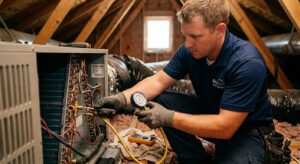
- Schedule a Manual J load calculation with a qualified HVAC contractor to verify your current system is not oversized. An oversized AC is the single most common cause of chronic indoor humidity problems. A correctly sized system runs longer cycles and removes far more moisture per hour of operation.
- Request that your HVAC technician check and potentially lower the air handler blower speed. Slowing airflow across the evaporator coil from the typical 400 CFM per ton to 350 CFM per ton increases moisture removal by 10 to 20% with no other changes, because air spends more contact time on the cold coil.
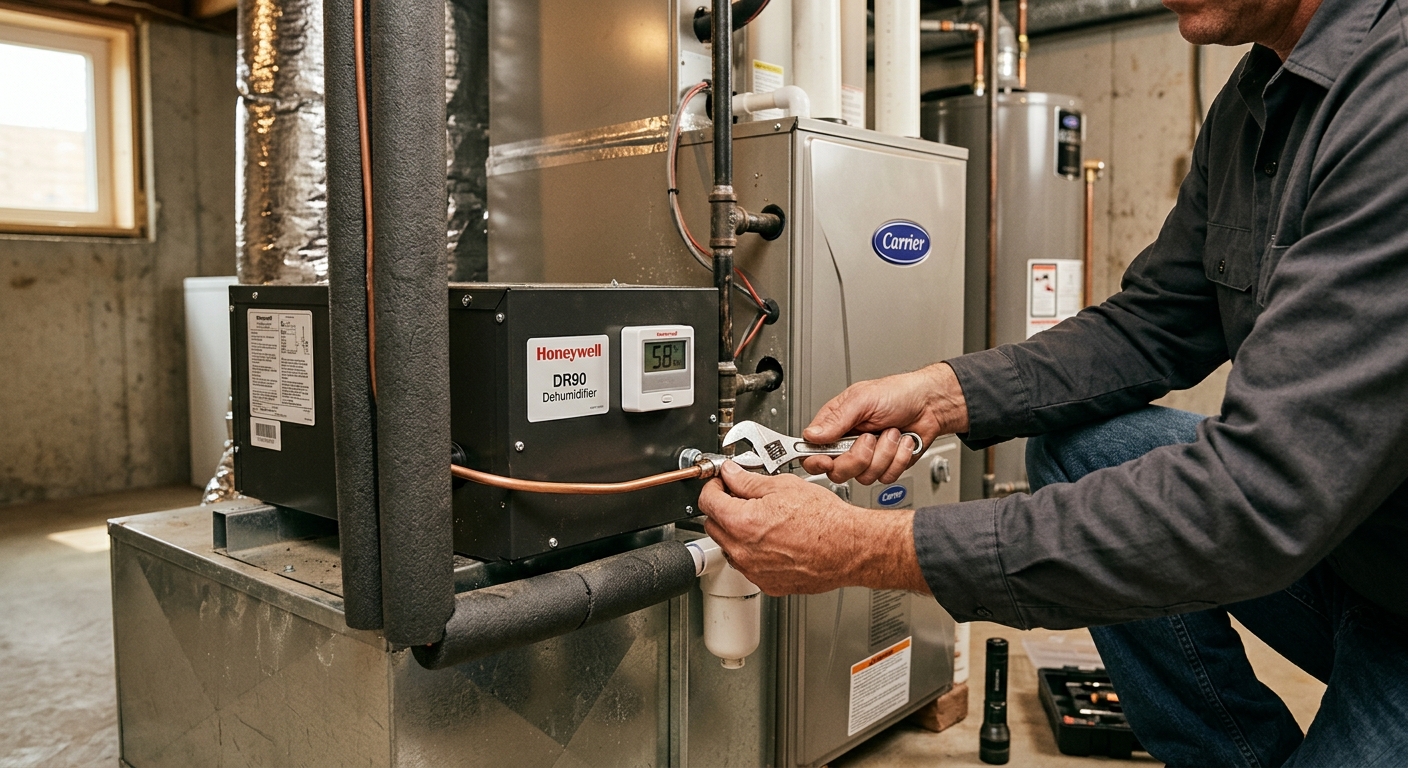
- Have a whole-home dehumidifier installed in-line with your ductwork (brands include Aprilaire, Santa Fe, and Honeywell). These units handle 70 to 130 pints per day and condition all air passing through your system, maintaining whole-house RH regardless of whether the AC is running for cooling.
- Add a smart thermostat with humidity sensing (Ecobee and certain Honeywell models include this). This allows the system to trigger a cooling call or dehumidifier activation based on humidity alone, not just temperature, preventing muggy days when temps are moderate.
- Seal your home’s envelope while the contractor is on-site. Have them inspect and seal duct connections in unconditioned attics or crawl spaces with mastic sealant. Leaky ducts in humid crawl spaces pump moisture-laden air directly into living spaces.
- After installation, set the whole-home dehumidifier to 50% RH and raise your thermostat set point by 2 to 3 degrees. Monitor your next utility bill. Most homeowners in humid climates recoup installation costs in 2 to 3 years through reduced cooling runtime.
Why It Works: The Benefits
Reducing indoor humidity from 70% to 50% can make a 76-degree home feel equivalent to a 72-degree home, allowing you to raise your thermostat set point by 3 to 4 degrees with no loss of comfort.
Each degree you raise your thermostat saves approximately 3% on cooling costs. If better humidity control lets you raise the set point by 3 degrees, that is roughly 9% in savings, and reduced AC runtime from less humidity cycling adds another 5 to 10% on top.
Dust mites thrive above 50% relative humidity and mold can colonize surfaces at 60% or higher. Keeping indoor RH between 40 and 50% cuts these biological hazards significantly, improving air quality and protecting your home’s structure.
When your AC runs long cycles to dehumidify properly, rather than short-cycling repeatedly, compressor starts are reduced. Fewer starts per day means less mechanical stress on the most expensive component of your system, extending equipment life by years.
Wood expands and contracts with humidity swings. Maintaining 40 to 50% RH year-round prevents warping, cracking, and gapping in hardwood floors, cabinetry, and musical instruments, avoiding repair costs that can run into the thousands.
💰 Savings Impact by Action
Humidity control allowing a 3-degree thermostat increase saves approximately 3% per degree, totaling 9% on cooling costs.
Removing excess indoor moisture reduces the latent cooling load, cutting AC compressor runtime by 10 to 20% in humid climates.
Reducing air handler CFM from 400 to 350 per ton increases moisture removal per cycle by 10 to 20%, reducing humidity-driven runtime.
Consistently running bathroom and kitchen exhaust fans removes 1 to 2 gallons of daily moisture before it loads the AC system.
Installing a ground vapor barrier in a crawl space cuts ground moisture evaporation by over 90%, reducing whole-house latent load by up to 20%.
🏠 Key Concepts Explained
The Science Behind It
When warm air holds water vapor, that vapor carries latent energy, meaning energy stored in the phase change of water rather than in air temperature itself. Your air conditioner removes this latent heat by passing warm humid air over an evaporator coil chilled to 40 to 50 degrees F. Water vapor condenses on the coil just like condensation on a cold glass, and drips into the drain pan. This process requires time. The coil needs sustained air contact to drive condensation, which is why short cycling (the AC turning on and off every 5 to 8 minutes) removes almost no moisture despite running the compressor repeatedly.
Relative humidity describes how much water vapor the air holds as a percentage of how much it could hold at that temperature. Warm air holds more vapor than cold air, which is why summer air feels wetter even at the same relative humidity as a cool day. A more intuitive measurement is dew point, the temperature at which air must be cooled before moisture condenses out of it. A dew point of 55 degrees F or below feels comfortable to nearly everyone. A dew point above 65 degrees feels oppressive regardless of air temperature, because your sweat simply cannot evaporate into already-saturated air. In Atlanta or Houston in July, outdoor dew points routinely reach 70 to 74 degrees F, putting enormous latent load on any home that is not extremely well sealed.
The connection to your energy bill is direct: your AC compressor must run to remove this latent load even when your home is already at the target temperature. A home with 70% indoor humidity may require 20 to 30% more compressor runtime to reach the same comfort level as a home held at 50% RH and the same thermostat set point. Solving the humidity problem does not just make you comfortable. It reduces the total cooling load your system carries, which reduces runtime, reduces wear, and reduces your monthly bill simultaneously.
Frequently Asked Questions
▼ Why is my humidity still high even though my AC runs all day?
The most common cause is an oversized AC unit that cools the air temperature quickly and short-cycles before completing a full dehumidification pass. Each cooling cycle needs at least 10 to 15 minutes of runtime to meaningfully condense moisture off the evaporator coil. Contact an HVAC tech to verify your system sizing and consider lowering the blower speed to improve moisture removal per cycle.
▼ What indoor humidity level should I be targeting?
The sweet spot for both comfort and health is 40 to 50% relative humidity. Below 40% causes dry skin, static electricity, and wood shrinkage. Above 55% allows dust mites to thrive and mold risk increases above 60%. A $12 digital hygrometer from any hardware store will tell you exactly where you stand right now.
▼ Can renters control humidity without modifying the HVAC system?
Absolutely. A portable ENERGY STAR dehumidifier costs $150 to $300, requires no installation, and can move with you. Focus it on the most humid room or basement area. Combine it with the no-cost behavioral steps like exhaust fan use and keeping the thermostat fan on AUTO, and most renters can drop indoor humidity by 10 to 20 percentage points without touching any building systems.
▼ My basement dehumidifier runs constantly and never shuts off. Is that normal?
A unit running 24 hours a day means the moisture load is exceeding its capacity or moisture is entering faster than it can remove it. Check for visible wall seepage, a sump pit without a sealed lid, or an exposed dirt floor (which releases enormous amounts of moisture). Covering a dirt crawl space floor with 6-mil polyethylene sheeting can reduce ground moisture evaporation by over 90% and dramatically cut dehumidifier runtime.
▼ How quickly will I notice a difference in comfort after adding a dehumidifier?
Most homeowners notice a clear comfort improvement within 24 to 48 hours of running a properly sized dehumidifier in the main living area. The first utility bill showing measurable savings typically appears within one full billing cycle, around 30 days, especially if the change allows you to raise your thermostat set point by even 2 degrees.
Quick Tips
- Check your crawl space or basement first. Up to 40% of the air in a two-story home migrates up from the lowest level through the stack effect. A wet crawl space or basement makes every floor above it more humid.
- Vent your clothes dryer to the outdoors and inspect the duct for blockages annually. A clogged dryer vent dumps a full load of laundry worth of moisture, roughly 0.5 gallons, directly into your living space.
- Water your lawn and garden in the early morning rather than the evening. Evening watering leaves soil wet overnight, raising outdoor ground-level humidity that infiltrates your home through the foundation and lower walls.
- Cook with lids on pots whenever possible. Lids trap steam and reduce the moisture released into kitchen air by 30 to 50% compared to uncovered pots.
- Open windows strategically. Opening windows feels refreshing but in humid climates, outdoor air above 60% RH that enters your home must be dehumidified by your AC later. Check the dew point before opening up. If it is above 55 degrees F outside, keep the house closed and run your system.
Variations for Your Situation
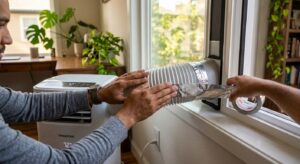
- Apartment or Rental: You cannot access the HVAC system, but you have real options. A 30-pint ENERGY STAR portable dehumidifier ($150 to $200) placed in the living area is the single highest-impact purchase for humid apartment living. Pair it with a window unit that has a dry mode or dehumidify mode if available. Always run bathroom and kitchen exhaust fans and report consistently wet walls or ceilings to your landlord in writing, as those indicate building envelope failures that are the landlord’s legal responsibility to address.
- Tight Budget (under $50): Start with a $12 hygrometer so you have actual data. Then focus on the zero-cost behavioral changes: exhaust fans during and after every shower, thermostat fan set to AUTO instead of ON, and keeping interior doors open for air circulation. Check your AC drain line and clear it with vinegar. These free steps alone can reduce indoor humidity by 5 to 10 percentage points in many homes, which translates to real comfort improvement without spending anything beyond the monitor.
- Older Home (pre-1980): Homes built before modern building codes typically have significant air infiltration through unsealed wall penetrations, leaky windows, and unconditioned crawl spaces or basements without vapor barriers. Address the crawl space or basement floor first with 6-mil poly sheeting ($30 to $60 for most spaces), as this one step frequently reduces whole-house humidity by 5 to 15 percentage points. Follow with weatherstripping on exterior doors and caulking around window frames. These older homes rarely benefit from simply buying a bigger dehumidifier until the moisture entry points are reduced.