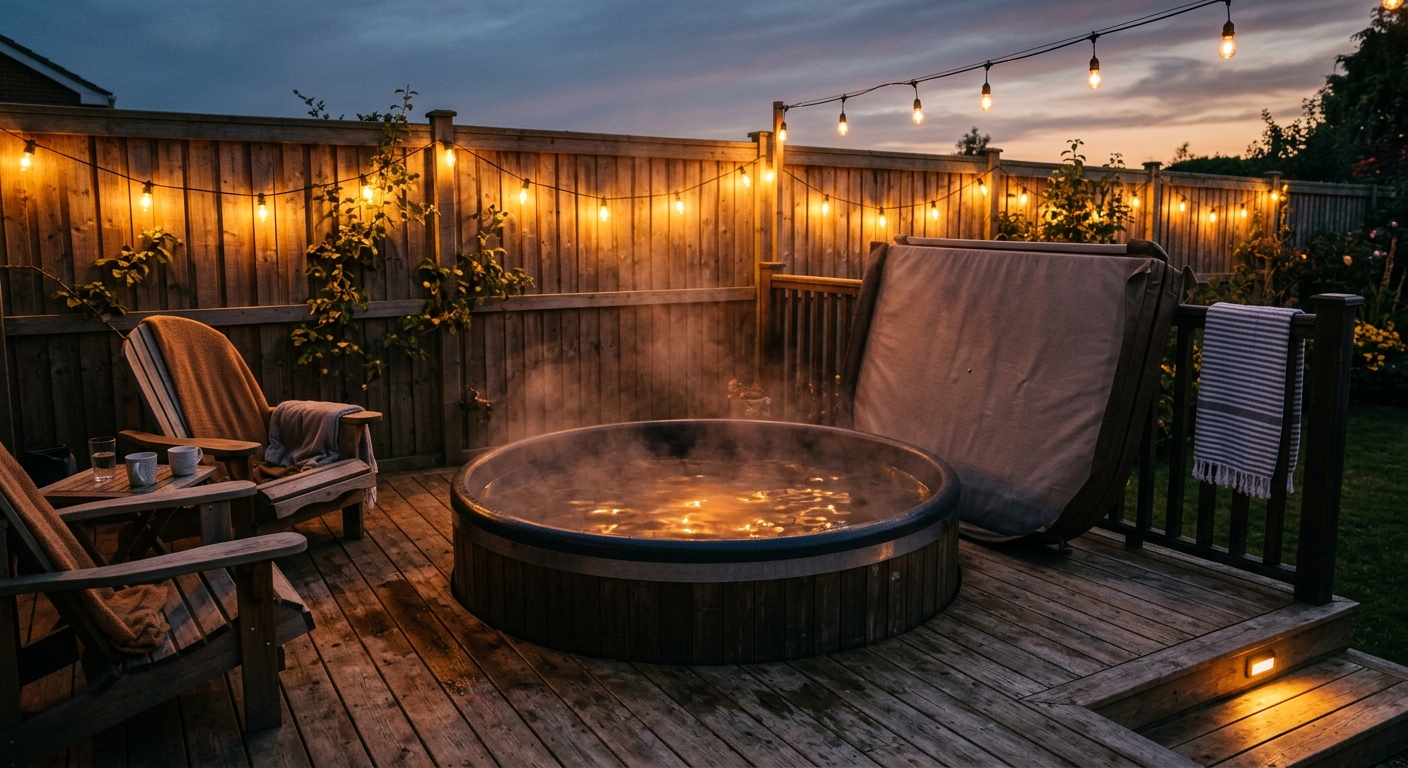
Adding a hot tub to your backyard sounds like a dream until the first electricity bill arrives. Many homeowners are blindsided by a $75 to $150 spike in their monthly energy costs, sometimes more in cold climates where the heater runs constantly. The shock is real: a standard 400-gallon hot tub running at 100 to 104 degrees Fahrenheit can consume 3,000 to 7,500 kWh per year, which at the national average of about $0.16 per kWh works out to $480 to $1,200 annually.
The good news is that most of that cost is controllable. The difference between an energy-hog hot tub and an efficient one often comes down to three things: insulation quality, cover discipline, and thermostat scheduling. A well-managed hot tub in a mild climate can cost as little as $30 to $40 per month. A poorly insulated older model left uncovered in Minnesota in January can hit $200 or more. Understanding the variables puts you in control.
This post breaks down the real numbers with a worked example, explains the building science behind heat loss in hot tubs, and gives you two practical approaches to reduce your operating costs starting today. Whether you already own a hot tub or are shopping for one, you will leave with concrete numbers and a clear action plan.
What You’ll Need
Click on an item below to shop for the recommended items for this recipe on Amazon.
As an Amazon Associate, we earn from qualifying purchases.
How to Do It
- Lower your set temperature from 104 to 100 degrees Fahrenheit when the tub will sit unused for more than 24 hours. Each 1-degree reduction saves roughly 10 to 15 watts of continuous heating load.
- Always replace the cover immediately after every use. Even 30 minutes of open-air cooling can dump as much heat as an hour of standby loss through the cover.
- Use your tub’s built-in economy or sleep mode when you know you will not use it for 3 or more days. Most modern digital controls allow you to schedule this or drop to a 95-degree hold.
- Check your filtration schedule in the control panel and reduce pump runtime to the minimum recommended by the manufacturer, typically 4 to 6 hours per day in moderate weather.
- Shift your scheduled heating cycles to off-peak electricity hours if your utility offers time-of-use rates. Running the heater from 9 p.m. to 6 a.m. can cut heating costs by 20 to 40% on TOU plans.
- Test your existing cover by pressing on the foam sections. If they feel heavy or waterlogged compared to when the tub was new, the foam has absorbed water and lost most of its insulating value. A saturated cover can weigh 50 to 80 pounds versus 15 to 20 pounds when new.
- Replace a worn cover with a new 4-inch tapered foam cover rated at R-12 or higher. Measure your tub carefully and order from a specialty supplier. Budget $200 to $400 for a quality replacement cover with a reinforced vapor barrier.
- Add a floating thermal blanket (also called a solar blanket or floating spa blanket) directly on the water surface under the main cover. These $20 to $50 accessories reduce evaporative losses by an additional 20 to 30% by blocking the air gap between the water and the cover.
- Inspect the cabinet panels around the tub shell. If you can see through gaps or feel cold air when the pump runs, use foam backer rod and weatherstripping to seal cabinet seams. On older tubs with hollow cabinet interiors, injecting low-expansion spray foam through small access holes can dramatically cut side-wall losses.
- Install a windbreak if your tub is in an exposed location. Wind increases surface heat loss even through a cover by disrupting the insulating air layer. A simple lattice fence, hedge, or pergola on the prevailing wind side can reduce heat loss by 10 to 15% in windy climates.
- Consider adding a smart plug or dedicated timer to any supplemental equipment (like an ozone generator or auxiliary pump) to ensure it runs only during intended cycles and not continuously by default.
Why It Works: The Benefits
Understanding your tub’s baseline consumption lets you budget accurately. A well-optimized 400-gallon tub in a moderate climate should cost $35 to $60 per month, not the $120 to $150 surprise many owners experience in their first winter.
Combining a quality cover, scheduled setbacks, and off-peak heating can reduce annual operating costs by $200 to $600 depending on your climate, electricity rate, and starting baseline.
Reducing heater runtime by 20 to 40% through better insulation and scheduling means fewer on-off cycles, which extends the life of your heating element and control board. Most heater elements last 5 to 10 years; reducing cycling can push that toward the upper end.
A well-insulated tub with an intact cover loses less heat between uses, so it reaches your target temperature faster and with less energy. Tubs with good covers typically recover from a 5-degree setback in 1 to 2 hours instead of 3 to 4 hours.
💰 Savings Impact by Action
Replacing a waterlogged cover with a new R-12 or higher model reduces standby heat loss by up to 30% annually by restoring the evaporation barrier and conductive resistance.
Scheduling a 5 to 10 degree setback during non-use periods reduces heater runtime by roughly 15 to 25%, saving $10 to $40 per month depending on climate.
A floating thermal blanket under the main cover cuts evaporative losses by 20 to 30% by sealing the air gap directly above the water surface.
Shifting heater cycles to off-peak hours on a time-of-use utility plan can reduce the effective cost of heating energy by 30 to 40% with no change in comfort.
Sealing cabinet gaps and adding foam insulation to hollow sidewalls reduces conductive side-wall losses by up to 15%, with the largest gains on older or economy-grade tubs.
🏠 Key Concepts Explained
The Science Behind It
Hot tubs lose heat through four mechanisms: conduction through the shell and cabinet walls, convection from air movement across the cover surface, evaporation from the water surface, and radiation from the water to the cooler surroundings. Of these, evaporation is by far the dominant pathway when the tub is uncovered. Water evaporating from a 100-degree surface releases roughly 970 BTUs of heat per pound of water evaporated. Even a light mist of evaporation continuously cooling the surface adds up to a massive thermal loss over hours.
The cover works by blocking the evaporation pathway and trapping a layer of warm air above the water surface. Foam insulation within the cover resists conductive heat transfer, but the real hero is the vinyl vapor barrier that prevents moisture from reaching and waterlogging the foam. Once that barrier tears or degrades, the foam slowly absorbs water, which has a thermal conductivity about 25 times higher than closed-cell foam. This is why a 5-year-old cover can be dramatically less effective than a new one of the same thickness, even if it looks intact from the outside.
Cabinet insulation addresses the second major loss pathway. Heat conducted through the acrylic or fiberglass shell into the air gap inside the cabinet escapes to the outside through the cabinet walls. Full-foam cabinets minimize this by filling the air gap with closed-cell or open-cell foam, reducing wall losses by 70 to 80% compared to an uninsulated air gap. Ground losses matter too: a tub sitting on a concrete pad conducts heat downward continuously. Adding a rigid foam board (R-10 to R-20) between the tub base and the pad can reduce ground losses meaningfully in cold climates, though this requires lifting the tub and is typically done at installation.
Frequently Asked Questions
▼ How much will a hot tub actually add to my electric bill each month?
A realistic range for a standard 400-gallon, 240-volt hot tub is $50 to $150 per month, with climate being the biggest variable. In mild climates like Southern California, well-insulated tubs often run $30 to $50 per month. In cold climates like Minnesota or upstate New York, the same tub can cost $100 to $200 per month in winter. Multiply your tub’s daily kWh consumption (listed in the manual or on the energy label) by your local rate per kWh to get your baseline estimate.
▼ My electricity bill spiked way more than expected after getting the hot tub. What is wrong?
The most common culprits are a worn or waterlogged cover, a heater element running more than expected due to cold ambient temperatures, or a pump set to run far longer than necessary. Check your filter cycle settings first since many tubs come from the factory programmed for 8 to 12 hours of daily pump runtime, which is excessive for most residential users. Also confirm the cover is sitting flush with no gaps, and weigh it if possible to assess water absorption.
▼ Can I use a timer to turn the hot tub heater off completely at night to save money?
Cutting power completely is not recommended because the freeze protection circuit needs to remain active in cold climates, and allowing water to drop below 85 degrees can lead to bacteria growth requiring chemical correction. Instead, use your tub’s built-in economy or sleep mode to hold at 95 degrees during off-hours, which saves nearly as much energy without the risks. If your tub lacks these modes, a programmable 240-volt timer wired by a licensed electrician can accomplish the same result safely.
▼ Does the hot tub size matter that much for operating costs?
Yes, but perhaps less than you expect. A larger tub holds more water that takes more energy to initially heat, but the ongoing standby losses depend more on surface area, insulation quality, and cover R-value than raw volume. A 600-gallon tub with a great cover and full-foam insulation can cost less to operate than a 350-gallon bargain-brand tub with a thin cover and hollow cabinet. Focus on the energy specifications and insulation design rather than gallons alone.
▼ Is it worth draining the hot tub in winter to save electricity?
Almost never, unless you live where temperatures stay below freezing for months and you will not use the tub at all. Draining eliminates the heating bill but risks freeze damage to the plumbing and pumps, which can cost $500 to $3,000 to repair. If you genuinely will not use the tub for a full season, hire a spa technician to winterize it properly, which involves blowing out all plumbing lines, not just draining the shell.
Quick Tips
- Set a calendar reminder every 6 months to check your cover for weight gain and inspect the vapor barrier seams for tears.
- If you use your tub primarily on weekends, program your tub to hold at 95 degrees Monday through Thursday and ramp up to 102 degrees by Friday afternoon. This alone can trim 15 to 20% off your heating bill.
- In summer months when ambient temperatures are above 80 degrees, your tub costs a fraction of what it does in winter. Track your bills monthly so you understand your seasonal baseline and spot any efficiency problems early.
- If shopping for a new hot tub, look for ENERGY STAR certified models. They are independently tested to use at least 20% less energy than standard models and come with verifiable consumption data in kWh per day.
Variations for Your Situation
- Apartment or Condo with a Shared Hot Tub: If you pay a condo fee that covers a shared amenity hot tub, your leverage is through the HOA. Request the board review the tub’s cover condition, filtration schedule, and temperature setpoint. A single cover replacement on a shared amenity tub can save the community $300 to $600 per year and is easy to justify at a board meeting with the numbers from this post.
- Tight Budget (under $50): Start with a floating thermal blanket placed directly on the water surface under your existing cover. At $20 to $40, this is the highest-ROI first step available, reducing evaporative losses by 20 to 30% with zero installation. Combine this with a temperature setback schedule using your existing controls for a total cost of under $40 and potential monthly savings of $15 to $30.
- Older Hot Tub (pre-2005): Older tubs often lack digital economy modes and use single-speed pumps that draw full power during all circulation cycles. Prioritize a cover replacement first, then investigate whether a variable-speed circulation pump retrofit is feasible for your model. If the heater element is original, have a spa technician test its efficiency since degraded elements can draw 10 to 20% more power than rated. At some point, a tub older than 15 to 20 years may cost more to operate and maintain than its replacement value, making a new ENERGY STAR certified model the most cost-effective long-term choice.