Every fall, millions of homeowners get blindsided by their first big heating bill of the season. Utility companies in most regions shift to peak winter pricing between November and February, meaning the electricity or gas you use to heat your home costs significantly more per unit than it did in October. In some states with time-of-use rate structures, peak-hour electricity can cost two to three times the off-peak rate. The homeowners who avoid sticker shock are the ones who prepared before the rates kicked in.
The good news is that winterizing your home is not a complicated or expensive process. Most of the highest-impact steps cost under $100 and take a single weekend afternoon. The key is doing them before November, when the weather is still mild enough to work comfortably and before your heating system is already running full-time. Waiting until December means you are already paying peak prices for every BTU that leaks out through your walls, attic, and door frames.
This guide walks you through a complete pre-winter energy prep strategy, from zero-cost thermostat adjustments to targeted insulation upgrades. You will find real numbers on what each step saves, a realistic payback timeline, and approaches suited to every budget and skill level. Whether you rent an apartment or own a 1970s ranch, there is something here that will put money back in your pocket this heating season.
What You’ll Need
Click on an item below to shop for the recommended items for this recipe on Amazon.
As an Amazon Associate, we earn from qualifying purchases.
How to Do It
- Replace your furnace or air handler filter with a fresh MERV 8 to 11 filter. A clogged filter forces your blower to work up to 15% harder and restricts airflow to heat exchangers, reducing efficiency. Check the filter slot direction arrow and press the new filter in firmly so no air bypasses the edges.
- Walk every exterior door in your home and slide a piece of paper under the bottom seal. If it slides freely with the door closed, you are losing conditioned air through that gap. Apply self-adhesive door sweep tape or a draft snake to seal the bottom. Each door gap costs an estimated $10 to $30 per season in heat loss.
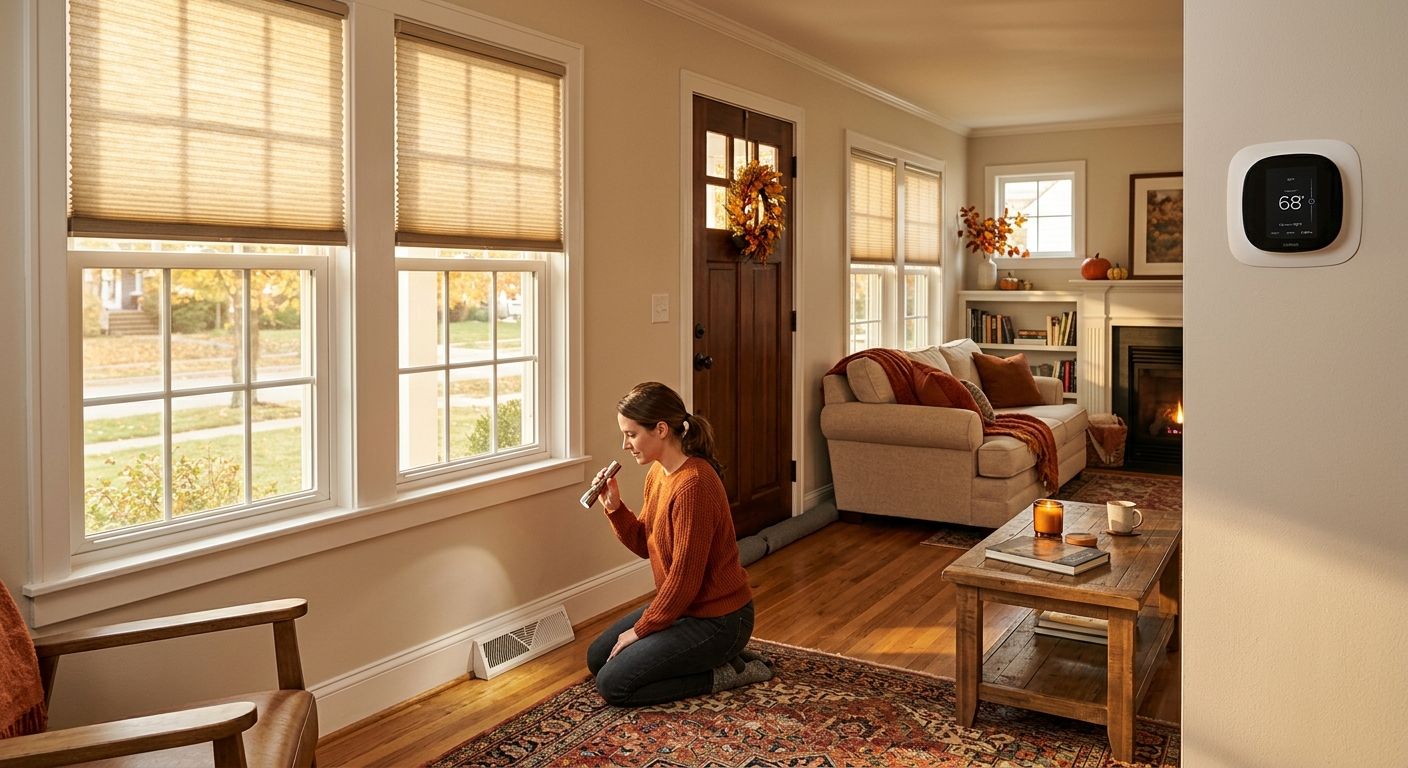
- Program your thermostat to a 7 to 10 degree setback while your household sleeps (typically 10 PM to 6 AM) and again while everyone is away during the day. Use 68 degrees Fahrenheit as your occupied daytime target and 60 to 61 degrees as the setback temperature. The DOE confirms this pattern saves 10% annually on heating.
- Apply rope caulk to any window that rattles, feels drafty, or shows visible daylight around the frame. Rope caulk costs under $5 per roll and peels off in spring without damaging paint. Focus on north and west-facing windows first since they receive the most winter wind pressure.
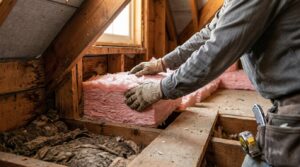
- Locate your attic access hatch and press your hand along its edges on a cold morning. If you feel cold air flowing down, add a layer of batt insulation cut to size on top of the hatch door and apply foam weatherstripping around the perimeter frame. This one fix can eliminate one of the largest single air leaks in the entire house.
- Check that heating vents and baseboard registers in all rooms are open and unobstructed by furniture, rugs, or curtains. Blocked vents create pressure imbalances in forced-air systems and can cause heat to dump into unconditioned spaces, adding 5 to 10% to run time.
- Do a full walk-through air sealing inspection on a windy day. Hold a stick of incense or a smoke pen near electrical outlets on exterior walls, plumbing penetrations under sinks, recessed lights in top-floor ceilings, and fireplace dampers. Smoke movement indicates an air leak. Mark each location with painter’s tape before sealing.
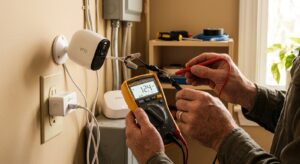
- Seal all identified exterior-wall outlet and switch plate leaks by removing the cover plate and cutting an outlet foam gasket to fit behind it. These foam gaskets cost $5 for a 12-pack and take 30 seconds per outlet. Research shows that exterior-wall outlets can account for 5 to 10% of a home’s total air leakage.
- Apply paintable latex caulk around all window and door frames where the trim meets the exterior wall surface, both inside and outside. Use silicone caulk for exterior masonry surfaces. A single $6 tube covers 20 to 30 linear feet. A well-caulked home with previously leaky frames can show 10 to 20% improvement in blower door test results.
- Insulate your hot water heater if it is in an unconditioned basement or garage. A pre-cut water heater insulation blanket costs $20 to $30 and reduces standby heat loss by 25 to 45%, saving $20 to $45 per year. Check the label first since some newer units are already insulated and do not benefit from an additional wrap.
- Inspect and add pipe insulation to the first 6 feet of hot and cold water pipes connected to your water heater. Use foam pipe insulation sleeves that cost $0.50 to $1.00 per linear foot. This reduces heat loss as water travels from the tank to your faucets and prevents pipes in unconditioned spaces from freezing.
- Install thermal curtains or honeycomb cellular shades on north and west-facing windows. Cellular shades with a double-cell construction reduce window heat loss by 40% compared to bare glass and eliminate the cold-air downdraft that makes sitting near windows uncomfortable. Budget $25 to $60 per window for mid-range cellular shades.
- Contact your local utility company and ask about free or subsidized home energy audits. Many utilities in regulated markets offer audits for $0 to $99 using a certified energy auditor who will conduct a blower door test and thermal imaging scan. The audit report identifies exactly which fixes will deliver the highest return in your specific home.
- Schedule a professional furnace or boiler tune-up before November. A technician will clean the heat exchanger, check the combustion efficiency, inspect the flue for carbon monoxide leaks, and verify that your system is operating at rated efficiency. A tune-up typically costs $80 to $150 and can restore 5 to 15% efficiency lost through normal buildup and wear.
- If your home has a heat pump, schedule a fall refrigerant check and coil cleaning. A heat pump operating with low refrigerant can lose 20 to 30% of its heating capacity, causing it to rely on expensive electric resistance backup strips far more than necessary. Refrigerant recharge costs $100 to $300 but pays back quickly in avoided strip-heat run time.
- Ask the HVAC technician to perform a duct leakage test if you have forced-air heating. Studies by Lawrence Berkeley National Laboratory found that average duct systems lose 20 to 30% of conditioned air through leaks before it reaches living spaces. Professional duct sealing with mastic compound costs $300 to $1,000 but typically delivers 20% or more in heating savings with a payback of 1 to 3 years.
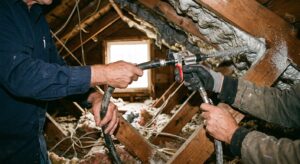
- Review the audit report and prioritize insulation upgrades if your attic is below R-38 (about 12 inches of blown fiberglass). Adding insulation from R-19 to R-38 reduces heating energy use by 15 to 25%. Many utilities and federal tax credits (25C, up to $1,200 per year as of 2024) significantly reduce the out-of-pocket cost of professional insulation work.
Why It Works: The Benefits
Combining air sealing, thermostat programming, and insulation improvements can reduce winter heating costs by 15 to 30% compared to an unprepared home, translating to $150 to $600 in savings over a single heating season for the average household.
Eliminating drafts and improving insulation creates more even temperatures from room to room. Cold spots near windows and exterior walls shrink significantly, so your thermostat reading actually matches how the space feels.
A well-sealed and insulated home requires fewer furnace or heat pump run cycles per hour. Shorter, less frequent cycles extend equipment life and reduce the likelihood of a breakdown during the coldest weeks of the year when repair costs and wait times are highest.
When a polar vortex event or grid emergency triggers emergency peak pricing or tiered billing surcharges, an efficient home needs far less energy to maintain temperature. A home that uses 20% less energy is 20% less exposed to every rate increase your utility applies.
Pre-season HVAC filter replacement and system inspection prevent dust, mold spores, and carbon monoxide issues that worsen when homes are sealed up for winter. A clean system distributes cleaner air through tighter, better-ventilated spaces.
💰 Savings Impact by Action
Sealing gaps, cracks, and penetrations in the thermal envelope reduces conditioned air loss by up to 20%, the single highest-return improvement in most homes.
Programming 7 to 10 degree nighttime and away setbacks saves approximately 10% on annual heating costs per DOE data.
Upgrading attic insulation from R-19 to R-38 reduces heating energy demand by 15 to 25% depending on climate zone and existing conditions.
Professional mastic sealing of leaky ducts in unconditioned spaces recovers 20 to 30% of heated air that would otherwise be lost before reaching living areas.
Double-cell honeycomb shades reduce window heat loss by up to 40%, contributing roughly 5 to 10% savings on total heating bills in window-heavy homes.
🏠 Key Concepts Explained
The Science Behind It
Your home loses heat through three physical mechanisms running simultaneously: conduction (heat moving through solid materials like walls, glass, and framing), convection (warm air escaping through gaps and being replaced by cold air), and radiation (infrared heat energy emitting from warm surfaces toward cold ones). Most weatherization steps target convection first because air leakage is both the largest and cheapest loss to fix. The U.S. Department of Energy estimates that air leakage accounts for 25 to 40% of heating energy waste in typical homes, more than conduction through walls or radiation through windows.
The stack effect amplifies air leakage in winter by creating a natural pressure differential inside your home. As warm air rises and becomes buoyant, it pushes out through any opening at ceiling level, creating a slight negative pressure at floor level that actively sucks cold outdoor air in through low openings. The taller your home and the colder the outdoor temperature, the more powerful this stack-driven airflow becomes. This is why sealing attic hatches, top-floor penetrations, and band joist areas (where the floor structure meets the foundation wall) delivers disproportionately large improvements compared to sealing gaps at mid-wall height.
Thermostat setbacks work because your home’s rate of heat loss is proportional to the temperature difference between inside and outside. When outdoor temperatures are 25 degrees Fahrenheit and your home is at 68 degrees, you have a 43-degree differential driving heat loss through every surface. Dropping to 60 degrees overnight reduces that differential to 35 degrees, cutting heat loss rate by about 18% during those hours. Over a full heating season, those nighttime hours add up to measurable bill reductions without any sacrifice in daytime comfort, which is why the DOE cites thermostat programming as one of the most cost-effective heating strategies available to homeowners.
Frequently Asked Questions
▼ I did the weatherization but my heating bill is still high. What am I missing?
Start with your duct system if you have forced-air heat. Up to 30% of your heated air may be escaping through duct leaks in unconditioned attic, basement, or crawl space areas before it ever reaches your living space. You can do a rough check by running the heat and feeling along accessible duct joints for air escaping. The other likely culprit is your attic insulation depth since adding insulation is one of the highest-impact upgrades in cold climates. Consider a professional energy audit with blower door testing to precisely locate where your money is going.
▼ Can renters do any of this without landlord permission?
Yes, quite a bit. Rope caulk on windows is fully removable and leaves no damage. Draft snakes under doors, thermal curtains, outlet gaskets behind cover plates, and ceiling fan reversal all require zero permission and leave the unit exactly as you found it. Programming a thermostat (if you have access) is also always acceptable. For anything involving the HVAC system or permanent caulking, a quick written message to your landlord asking permission is worthwhile since many will approve minor repairs that protect their property.
▼ When will I actually see savings on my bill?
Thermostat programming shows up on your next bill. Air sealing and weatherstripping improvements are visible within the first full cold month. Insulation upgrades take a full billing cycle in cold weather to fully measure. If your utility offers online energy tracking or daily usage dashboards, you can often see your daily consumption drop within a week of making significant changes.
▼ My home is older than 30 years. Are these steps still worth doing?
They are even more worth doing in older homes because the baseline leakage and insulation levels in pre-1990 construction are dramatically worse than in newer homes. A 1975 ranch home that has never been air-sealed can lose 40 to 50% more heating energy than a code-built 2005 home of the same size. Every dollar spent on weatherization in an older home tends to deliver faster payback because you are starting from a much lower efficiency baseline. Prioritize air sealing first since it delivers the fastest payback, then address insulation.
▼ Is it worth buying a smart thermostat just for the winter savings?
Almost certainly yes if you do not already have programmable scheduling. Smart thermostats like Ecobee and Nest cost $130 to $200 but many utilities offer $50 to $100 rebates that bring the net cost down significantly. The DOE-cited 10% annual heating savings on a $1,500 annual heating bill is $150 per year, meaning payback in under one season after rebates. The added benefit is remote control and occupancy sensing that further optimizes setbacks without any manual programming.
Quick Tips
- Check the attic insulation depth while temperatures are still mild. Measure in inches and compare to your climate zone target (R-49 to R-60 for zones 5 to 8, R-38 for zones 3 to 4). If you can see the floor joists, you almost certainly need more insulation.
- Reverse your ceiling fans to run clockwise on low speed in winter. This pushes the warm air that pools near the ceiling back down along the walls without creating a wind-chill effect, reducing the thermostat temperature needed to feel comfortable by 2 to 4 degrees.
- Check your home’s exterior dryer vent, bathroom exhaust vents, and range hood dampers. These should have functional flapper dampers that close when the fan is off. A stuck-open or missing damper is equivalent to leaving a window cracked all winter.
- Consider signing up for your utility’s budget billing program before November. This spreads your projected annual energy cost into equal monthly payments so a brutal January gas bill does not spike your cash flow, even if your total annual spend is unchanged.
Variations for Your Situation
- Apartment or Rental: Focus entirely on removable and non-destructive fixes since you cannot modify central HVAC, add insulation, or permanently caulk. Apply rope caulk to leaky windows ($4 per roll, fully removable), hang thermal curtains on tension rods ($30 to $80 per window), use draft excluders under exterior doors, reverse ceiling fans, and program your thermostat if accessible. Also check whether your utility offers a free energy kit by mail since many include free LED bulbs, low-flow showerheads, and outlet gaskets at no cost to renters.
- Tight Budget Under $50: Prioritize strictly zero and low-cost steps that still move the needle. Reverse ceiling fans (free), program thermostat setbacks (free), clear all vents of furniture or rugs (free), add foam outlet gaskets on exterior walls ($5 for a 12-pack), apply rope caulk to the worst drafty window ($5), and install a door sweep on the leakiest exterior door ($8 to $15). These five steps together can realistically cut your heating use by 10 to 15% with less than $30 invested.
- Older Home Pre-1980: Treat this as a whole-envelope project rather than a spot-fix exercise. Older balloon-frame or early platform-frame homes have wall cavities that run from basement to attic with no fireblocking, creating massive unobstructed channels for air to travel. Priority fixes are attic air sealing before adding insulation (blown-in attic insulation without sealing first just adds more material for air to bypass), basement band joist sealing with cut-to-fit rigid foam and caulk, and a combustion appliance safety inspection since older furnaces and boilers are far more likely to have cracked heat exchangers. Budget $200 to $400 for the highest-impact DIY fixes and strongly consider a subsidized utility energy audit as your starting point.