Few things are more frustrating than lying awake in a room that is too hot, too cold, or oddly stuffy while your HVAC system hums along as if everything is fine. Most homeowners assume the equipment is undersized or on its last legs and start pricing out a replacement that can run $8,000 to $15,000. In reality, the DOE and field technicians consistently find that a large share of overnight comfort complaints come from drifted settings, restricted airflow, and thermostat schedules that were never set up for how people actually sleep.
Overnight is the hardest test your system faces. Outdoor temperatures swing to their extremes, your house has cooled or heated unevenly through the day, interior doors are closed, and the thermostat may be running a daytime schedule that does not match your sleeping hours. Add a clogged filter, a closed supply vent, or a fan set to the wrong mode, and the result is a bedroom that never quite feels right.
This post walks you through a practical reset in two levels: a 30-minute quick fix that costs almost nothing, and a more thorough DIY tune-up that addresses airflow and duct issues. You do not need to be an HVAC technician. You need a screwdriver, a new filter, and a willingness to spend an evening checking a few things most people never look at.
What You’ll Need
Click on an item below to shop for the recommended items for this recipe on Amazon.
As an Amazon Associate, we earn from qualifying purchases.
How to Do It
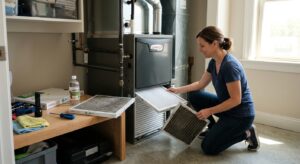
- Replace or inspect the air filter. If you can barely see light through it, swap it. A new 1-inch MERV 8 filter typically costs $8 to $20.
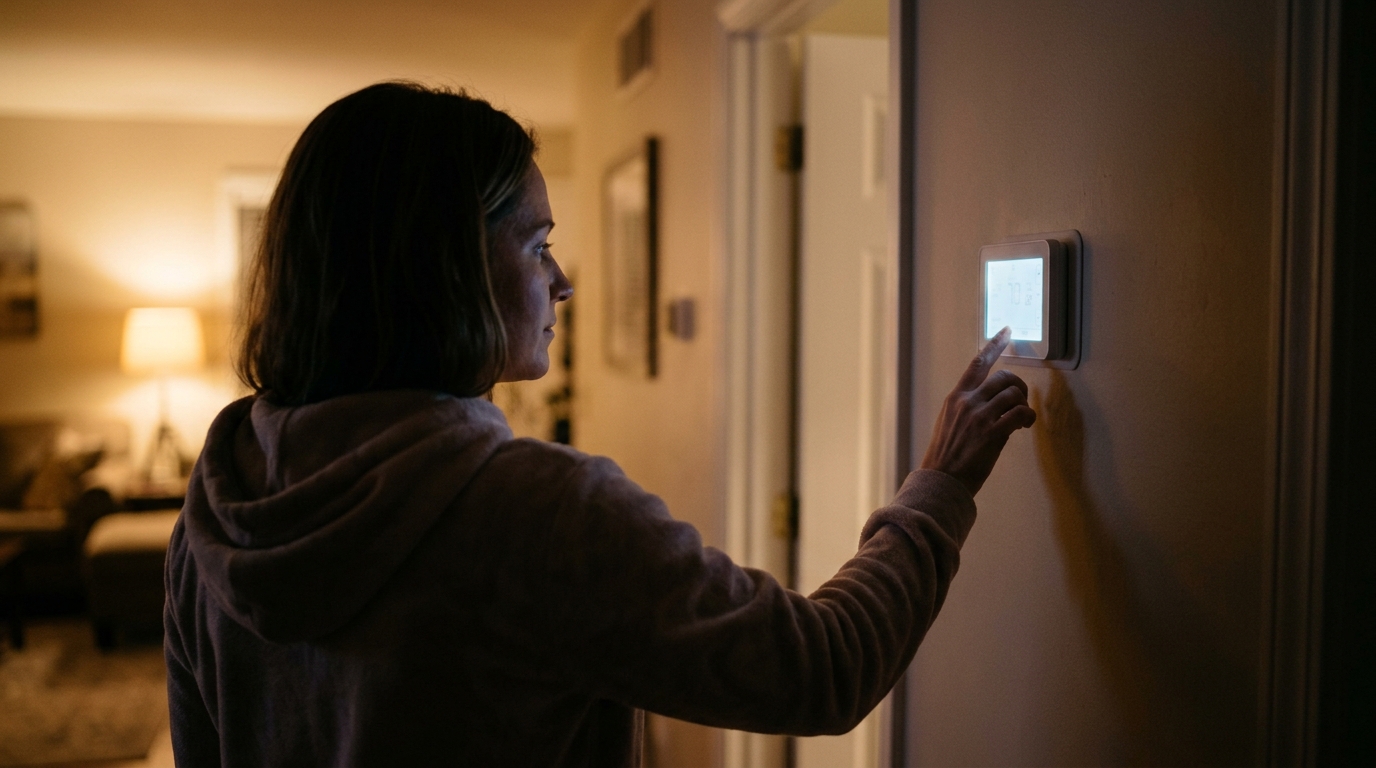
- Reset your thermostat schedule. Set a sleep period with a cooler winter target (62 to 67 degrees F) or a slightly warmer summer target (72 to 78 degrees F), starting 30 minutes before bedtime.
- Set the fan to Auto, not On, unless you have a specific reason such as a whole-home air cleaner or a variable-speed system designed for continuous low-speed operation.
- Walk the house and open every supply vent at least 75 percent. Closing vents in unused rooms rarely saves energy and often raises duct pressure and leakage.
- Move furniture, rugs, or curtains away from supply registers and return grilles so air can actually move.
- Power cycle the thermostat. Switch off the system for 5 minutes at the breaker or thermostat, then restore it, and confirm date, time, and schedule are correct.
- Measure the problem. Place a $10 to $15 digital thermometer or hygrometer in the bedroom and another in the hallway overnight, then compare readings in the morning. A gap larger than 3 degrees F or humidity above 55% tells you where to focus.
- Check the return path. If bedroom doors stay closed at night, verify there is at least a 1-inch gap under the door, or install a jump duct or door transfer grille ($20 to $50) so air can return to the system.
- Inspect accessible ductwork in the attic, basement, or crawlspace for disconnected sections, crushed flex duct, or visible gaps. Seal joints with mastic or foil tape rated UL 181, not standard cloth duct tape. Sealing leaky ducts can improve delivered airflow by 10 to 20%.
- Clean the outdoor condenser (cooling season) by turning off power and gently rinsing fins with a garden hose from the inside out. Clear 2 feet of space around the unit.
- Balance supply dampers. Partially close dampers on rooms that overheat and open those on rooms that lag, adjusting a little at a time and rechecking temperatures over two nights.
- Upgrade to a programmable or smart thermostat if yours is more than 10 years old ($25 to $150). Enable features like adaptive recovery, which starts earlier to hit your target at wake time instead of overshooting.
- Request a full system check that includes refrigerant charge, static pressure, temperature split across the coil, and blower speed settings.
- Ask for a duct leakage test (duct blaster) if rooms are consistently off by 4 degrees F or more. Professional duct sealing typically costs $400 to $1,500 and can cut heating and cooling use by 10 to 20 percent in leaky homes.
- Request a Manual J load calculation if you suspect the system is oversized and short-cycling, which causes clammy humidity and temperature swings.
- Discuss variable-speed or two-stage equipment only after airflow and duct problems are corrected, since new equipment on bad ducts often disappoints.
Why It Works: The Benefits
Proper night setbacks of 7 to 10 degrees for 8 hours can save around 10% a year on heating and cooling, per DOE guidance, and a clean filter and open airflow can trim another 5 to 15% of run time.
Keeping the bedroom in the 60 to 67 degree F range with moderate humidity reduces night waking, and fixing airflow removes the stuffy feeling that disrupts sleep.
Balancing vents and restoring return airflow evens out room-to-room differences that often reach 4 to 8 degrees in a poorly tuned system.
Clean filters and proper airflow reduce strain on the blower motor and compressor, helping a system reach the 15 to 20 year range instead of failing early.
Solving the problem with settings and maintenance can postpone a $8,000 to $15,000 system replacement by years.
💰 Savings Impact by Action
Lowering heat or raising cooling setpoints by 7 to 10 degrees F for 8 hours a night saves about 10% annually per DOE estimates.
Replacing a clogged filter restores airflow and can cut system energy use by 5 to 15%, with lower blower strain.
Sealing leaky ducts can reduce heating and cooling energy use by 10 to 20% in homes with ducts in unconditioned spaces.
Evening out airflow reduces long run times caused by a single hot or cold room.
ENERGY STAR estimates smart thermostats save about 8% on heating and cooling when used with an efficient schedule.
🏠 Key Concepts Explained
The Science Behind It
Overnight comfort problems come down to a handful of physical principles. Heat moves from warm to cold, so as outdoor temperatures drop at night, your home loses heat faster through the envelope, and the system must run longer to keep up. If airflow is restricted by a dirty filter or closed vents, the blower moves less air across the heat exchanger or evaporator coil. That means rooms farthest from the unit get less conditioned air, and the system runs longer without fixing the problem.
Pressure plays a quiet but powerful role. When a bedroom door is closed and the room has a supply vent but no return, the supply air has nowhere to go. The room pressurizes slightly, which slows incoming airflow and pushes air out through gaps in the walls and ceiling. Meanwhile, the hallway, which has the return grille, goes slightly negative and pulls unconditioned air in from the attic, crawlspace, or outdoors. The result is a bedroom that never reaches the thermostat setting even though the system is running.
Humidity is the third piece. Air conditioners remove moisture only while the compressor is running and the coil is cold. A system that cycles on and off quickly, or that runs the fan continuously after cooling stops, can re-evaporate water from the coil back into the house. Since relative humidity strongly shapes how warm a room feels, a 74 degree F bedroom at 60% humidity can feel worse than 78 degrees F at 45%. Fixing airflow, fan mode, and schedule together addresses all three mechanisms at once.
Frequently Asked Questions
▼ Why is my AC still running all day even after I tried these fixes?
Check the filter, the outdoor unit for debris, and whether supply and return vents are open. If the system runs constantly on days under 90 degrees F, have a technician check refrigerant charge, coil cleanliness, and duct leakage. Running nonstop on extreme days (100 degrees F and above) can be normal.
▼ Can renters do this without landlord permission?
Yes, most of the quick reset is renter safe. You can change the filter (confirm who supplies it), adjust the thermostat schedule, open vents, and use a door gap or portable fan. Duct sealing, damper changes, and thermostat replacement should be cleared with your landlord first.
▼ How long before I actually notice savings on my bill?
Comfort improvements show up the first night. Savings appear on the next full billing cycle, and you will see the clearest results by comparing kWh or therm usage against the same month last year, since weather affects every bill.
▼ What if my home is older than 30 years?
Older homes often have leakier ducts, less insulation, and fewer return paths, so airflow and sealing steps matter even more. Start with the quick reset, then prioritize duct sealing and attic insulation to R-38 or higher before considering new equipment.
▼ Should I leave the fan on to even out temperatures at night?
Usually not with a standard system. Continuous fan operation can raise humidity in cooling season and may increase electricity use. If you want constant circulation, ask your installer whether your blower is an ECM or variable-speed model designed for low-power continuous operation.
Quick Tips
- Set a sleep schedule that starts cooling or heating adjustments 30 to 60 minutes before bedtime instead of relying on the system to catch up after you are in bed.
- Replace 1-inch filters every 1 to 3 months and 4-inch media filters every 6 to 12 months, and write the date on the frame.
- Keep the thermostat away from direct sun, supply vents, and kitchen heat so it reads the real house temperature.
- Use a ceiling fan in summer (counterclockwise) to feel 3 to 4 degrees cooler, and turn it off when you leave the room.
Variations for Your Situation
- Apartment/Rental: Focus on what you control. Replace the filter if allowed, set a sleep schedule, clear supply and return vents, and add a $20 door transfer grille or a $30 to $60 quiet bedroom fan. A $15 hygrometer helps you document issues for your landlord if the system needs repair.
- Tight Budget (under $50): Swap the filter ($8 to $20), reset the schedule, open vents, set fan to Auto, and buy one $10 to $15 digital thermometer to track results. These steps alone often deliver most of the benefit.
- Older Home (pre-1980): Expect leakier ducts and weaker return paths. Prioritize sealing accessible duct joints with mastic ($15 to $30), adding return transfer grilles to closed bedrooms, and topping attic insulation to R-38, which can cut heat transfer through the ceiling by 15 to 25 percent.