Most homeowners set the thermostat to 72 or 74 degrees at bedtime and let the AC cycle until morning. It feels like the safe choice, but it means your system is fighting a warm house all night, often during hours when electricity costs more and outdoor air is still holding heat from the afternoon sun. Your AC works hardest when the gap between indoor and outdoor temperature is largest, and that gap is rarely wider than at 9 p.m. on a July evening.
Pre-cooling flips that script. Instead of chasing heat all night, you cool your home’s walls, floors, and furniture earlier in the evening, then let that stored coolness carry you through the night. Your house becomes a thermal battery. On time-of-use rate plans, shifting that cooling load out of peak hours can save even more, since peak rates are often two to three times higher than off-peak rates.
This post walks through two approaches: a zero-cost quick fix you can start tonight, and a DIY upgrade using a smart or programmable thermostat to automate the whole process. We will also cover the building science behind why it works, what to do in apartments and older homes, and the mistakes that can make pre-cooling backfire.
What You’ll Need
Click on an item below to shop for the recommended items for this recipe on Amazon.
As an Amazon Associate, we earn from qualifying purchases.
How to Do It
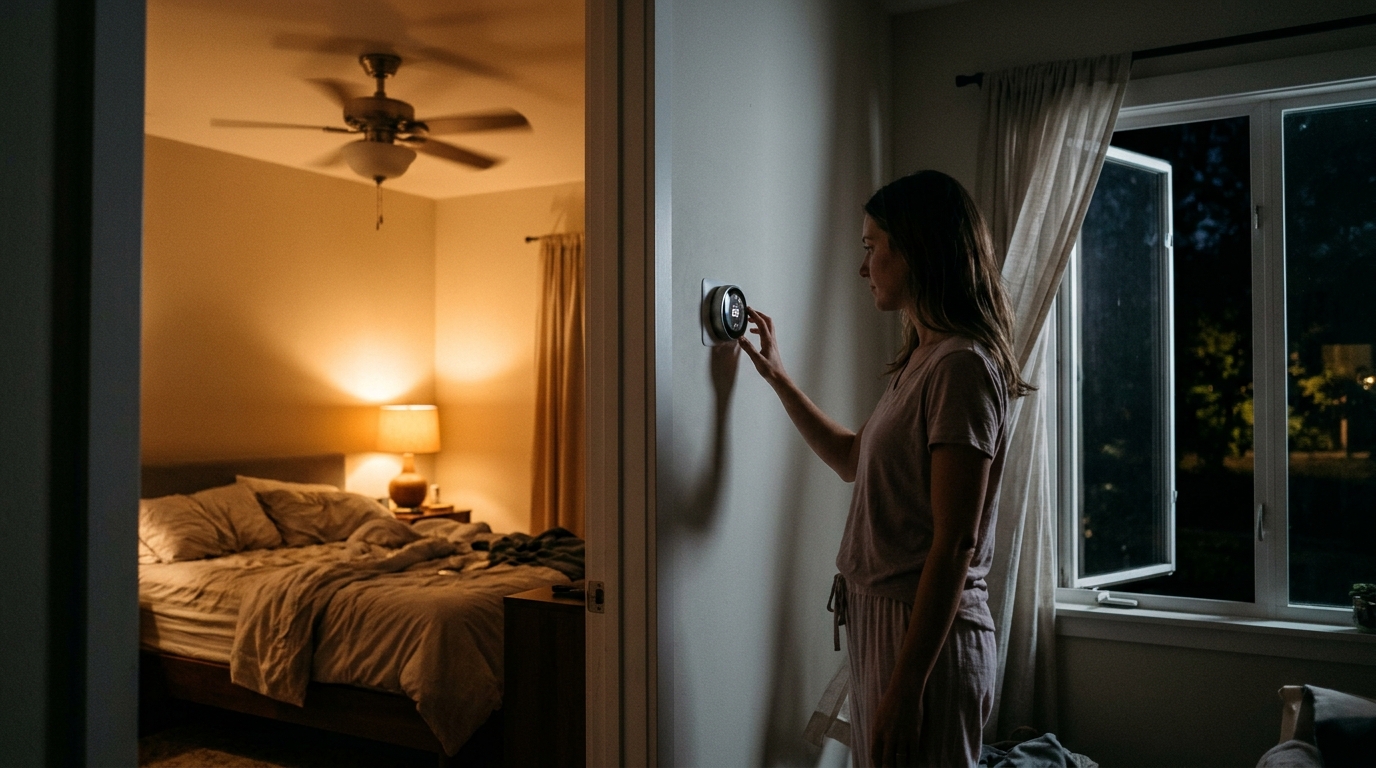
- Around 6 to 8 p.m. (or whenever your off-peak or shoulder window begins), lower your thermostat 3 to 5 degrees below your normal setting. If you usually sleep at 74, set it to 70 or 71.
- Close blinds and curtains on west- and south-facing windows to block lingering solar heat while the AC works.
- Run ceiling fans in occupied rooms (counterclockwise in summer) to improve comfort without lowering the thermostat even further.
- Avoid heat-producing activities during pre-cool: skip the oven, dryer, and dishwasher’s heated dry cycle until later or the next morning.
- About 30 to 60 minutes before bed, raise the thermostat to 75 to 78 degrees (or turn the system off if outdoor temps are mild). Let the house coast on stored coolness.
- Before sleeping, open bedroom doors or turn on a quiet fan if you want to stay cooler. Adjust the setback temperature up or down by 1 degree each night until you find your sweet spot.
- Turn off power to your HVAC at the breaker, then photograph the wiring on your existing thermostat before removing it. Confirm your new thermostat is compatible with your system (most 24V systems are; heat pumps and dual-fuel setups need extra checking).
- Install the new thermostat, restore power, and connect it to Wi-Fi if it is a smart model. Enter your utility’s time-of-use schedule if the thermostat supports it.
- Create an evening pre-cool schedule: drop the setpoint to 70 to 72 degrees starting 2 to 3 hours before bedtime, ideally ending before the peak rate period starts or in the shoulder hours.
- Add a sleep setback: raise the setpoint to 76 to 78 degrees from bedtime until about 30 to 60 minutes before you wake up, then lower it again for a comfortable morning.
- Enable features like geofencing, adaptive recovery, or early-start so the system learns how long your house takes to cool and warm up.
- Review energy reports after two weeks. Adjust pre-cool duration and setback temperature in 1-degree steps until you find the best mix of comfort and savings.
Why It Works: The Benefits
Homeowners on time-of-use plans commonly save 15 to 30% on cooling costs by shifting load away from peak hours. On flat rates, savings are smaller (5 to 10%) but still real.
A pre-cooled house means fewer AC cycles in the middle of the night, which means less noise, fewer temperature swings, and fewer wake-ups.
Fewer long run cycles during the hottest hours reduces compressor strain. Systems that cycle less during peak heat tend to last longer.
Shifting load away from 4 to 9 p.m. helps utilities avoid firing up peaker plants, and some utilities offer rebates or credits for participating in demand response programs.
You start the night at a comfortable temperature without the AC blowing directly on you, which many people find drying or uncomfortable.
💰 Savings Impact by Action
Moving cooling out of 4 to 9 p.m. peak hours can cut overnight cooling costs by 15 to 30% on time-of-use plans.
Raising the sleep setpoint from 72 to 77 degrees reduces overnight cooling energy by roughly 8 to 12%, per DOE estimates of about 1 to 3% per degree.
Closing blinds and curtains on sun-facing windows can reduce indoor heat gain by up to 20 to 30%, easing the pre-cool load.
Ceiling fans let you raise the thermostat by about 4 degrees with no comfort loss, saving up to 8% on cooling.
Running the AC when outdoor air is cooler improves compressor efficiency by roughly 5 to 10% compared with peak afternoon heat.
🏠 Key Concepts Explained
The Science Behind It
Pre-cooling works because your house is not just air. A typical 2,000 square foot home contains thousands of pounds of drywall, wood framing, flooring, furniture, and belongings. All of that material has thermal mass, which means it absorbs heat when warm and releases coolness when it is cooler than the surrounding air. When you pre-cool for two to three hours, you drop the temperature of these materials by several degrees. Overnight, as the air in the house warms slightly from outdoor heat leakage and body heat, it pulls heat into those cooler surfaces first, delaying the moment when the room feels warm.
The second piece is how heat transfers through your building envelope. The rate of heat flow into your home is proportional to the temperature difference between outdoors and indoors. At 7 p.m. it may be 95 degrees outside, so holding the house at 72 means a 23-degree delta. By 2 a.m. it may be 78 outside, so holding the house at 77 means almost no delta at all. A pre-cooled house that drifts up to 77 by morning gains heat very slowly because the nighttime delta is small, while the AC runs far less than it would if it were actively cooling during the hottest hours.
Finally, air conditioners are more efficient when it is cooler outside. A system rated at 14 SEER2 delivers noticeably better real-world efficiency at 80 degrees outdoor than at 100 degrees, because the condenser rejects heat to cooler air. Shifting runtime to the evening and early night means more of your cooling happens at a better coefficient of performance, and on time-of-use plans, at a lower price per kWh too. Together, thermal mass, a smaller nighttime delta, and better equipment efficiency are what make pre-cooling pay off.
Frequently Asked Questions
▼ Why is my AC still running all night even after I pre-cooled?
Your setback temperature may be too low, or your home may be leaking heat faster than the thermal mass can absorb it. Raise the overnight setpoint to 77 or 78 degrees, check for attic or window air leaks, and make sure the AC is not undersized. If the system runs nonstop even at a modest setpoint, have an HVAC tech check refrigerant levels and duct leakage.
▼ Can renters do this without landlord permission?
Yes. Pre-cooling works with any thermostat, including the one already on the wall. You can also use a plug-in smart plug and a window or portable AC with a built-in timer. You do not need to modify anything permanently, and many renters use blackout curtains and fans to boost the effect.
▼ How long before I actually notice savings on my bill?
You will usually see a difference on your next full billing cycle, especially if you are on a time-of-use plan. Many utilities also offer online usage dashboards that show hourly data, so you can see the shift in load within a week. Expect 5 to 10% savings on flat rates and 15 to 30% on time-of-use plans.
▼ What if my home is older than 30 years?
Older homes often have leakier envelopes and less insulation, so they lose pre-cooled air faster. Pre-cooling still helps, but you may need a shorter coast period and a lower setback target. Prioritize air sealing around windows, doors, and the attic hatch, and consider adding attic insulation to R-38 to hold onto stored coolness longer.
▼ Will pre-cooling hurt my AC or make my house humid?
Not if you stay above 68 degrees and keep the filter clean. In humid climates, avoid shutting the AC off for long stretches after pre-cooling, since indoor humidity can climb above 60% and feel uncomfortable. Use a setback of 76 to 78 rather than turning the system completely off, or run a dehumidifier overnight.
Quick Tips
- Run a ceiling fan while pre-cooling, but turn it off when you leave the room. Fans cool people, not air, and wasted fan runtime adds up.
- Close blinds on west-facing windows by early afternoon so your AC is not working against solar gain during the pre-cool window.
- Delay heat-generating chores like laundry, baking, and dishwashing until after the pre-cool period or run them in the morning.
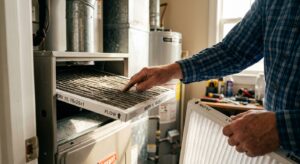
- Replace your air filter before summer starts. A clogged filter can cut airflow by 15% or more, making pre-cooling less effective and straining the system.
Variations for Your Situation
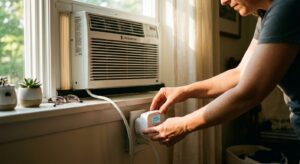
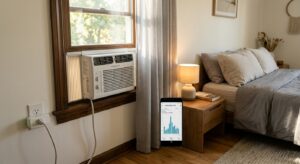
- Apartment/Rental: Use your existing thermostat or a $15 to $25 smart plug with a window AC timer to run cooling from 6 to 9 p.m., then switch to a box fan and blackout curtains overnight. A $20 reflective window film adds extra heat blocking and peels off cleanly when you move out.
- Tight Budget (under $50): Do the manual quick fix. Lower the thermostat 3 to 4 degrees in the evening, close west-facing blinds, run ceiling fans, and set it back to 77 at bedtime. Add $10 to $20 in weather stripping around your bedroom door and a basic programmable thermostat if yours is not already one.
- Older Home (pre-1980): Expect faster heat gain, so shorten your coasting window and use a smaller setback (76 instead of 78). Seal attic bypasses with canned spray foam ($8 to $12 per can), add door sweeps, and prioritize attic insulation to R-38 to R-49 for the biggest improvement in how long pre-cooled air lasts.