Most homeowners treat their air conditioner like a smoke detector: they assume it is working fine until something goes wrong. Skipping one year of maintenance feels low-risk. Skipping two years is where the real damage accumulates. Refrigerant levels drift, coils cake with grime, and electrical connections loosen from seasonal vibration. Each of these issues individually costs you money. Together, they can quietly erase 25 to 40% of your system’s efficiency before you ever notice a problem.
The U.S. Department of Energy estimates that a poorly maintained air conditioner loses roughly 5% of its efficiency for every year it goes without a tune-up. Over two skipped seasons, that compounds into a system that works significantly harder, runs longer cycles, and costs noticeably more to operate every single month. On a $200 summer cooling bill, that is $40 to $80 in pure waste, month after month.
This post walks you through exactly what degrades inside a neglected AC system, which problems you can address yourself today at zero cost, and which issues genuinely require a licensed HVAC technician. You will leave with a clear picture of what a two-year gap has likely cost you, and a concrete plan to get your system back to peak performance before the next heat wave hits.
What You’ll Need
Click on an item below to shop for the recommended items for this recipe on Amazon.
As an Amazon Associate, we earn from qualifying purchases.
How to Do It
- Turn off the system at the thermostat and shut off the disconnect box next to the outdoor unit before doing anything else.
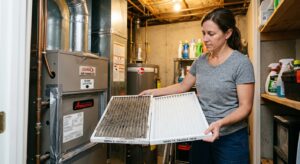
- Replace the air filter with a fresh MERV 8 to 11 filter. If it has been more than 90 days or two years, expect it to be heavily loaded. Note the filter size printed on the frame for future reference.
- Locate the condensate drain line, typically a white PVC pipe exiting the air handler that runs toward a floor drain or outside. Pour 1 cup of white distilled vinegar into the drain pan access port or the cleanout tee on the line. Wait 30 minutes, then flush with water. Do this every 3 months.
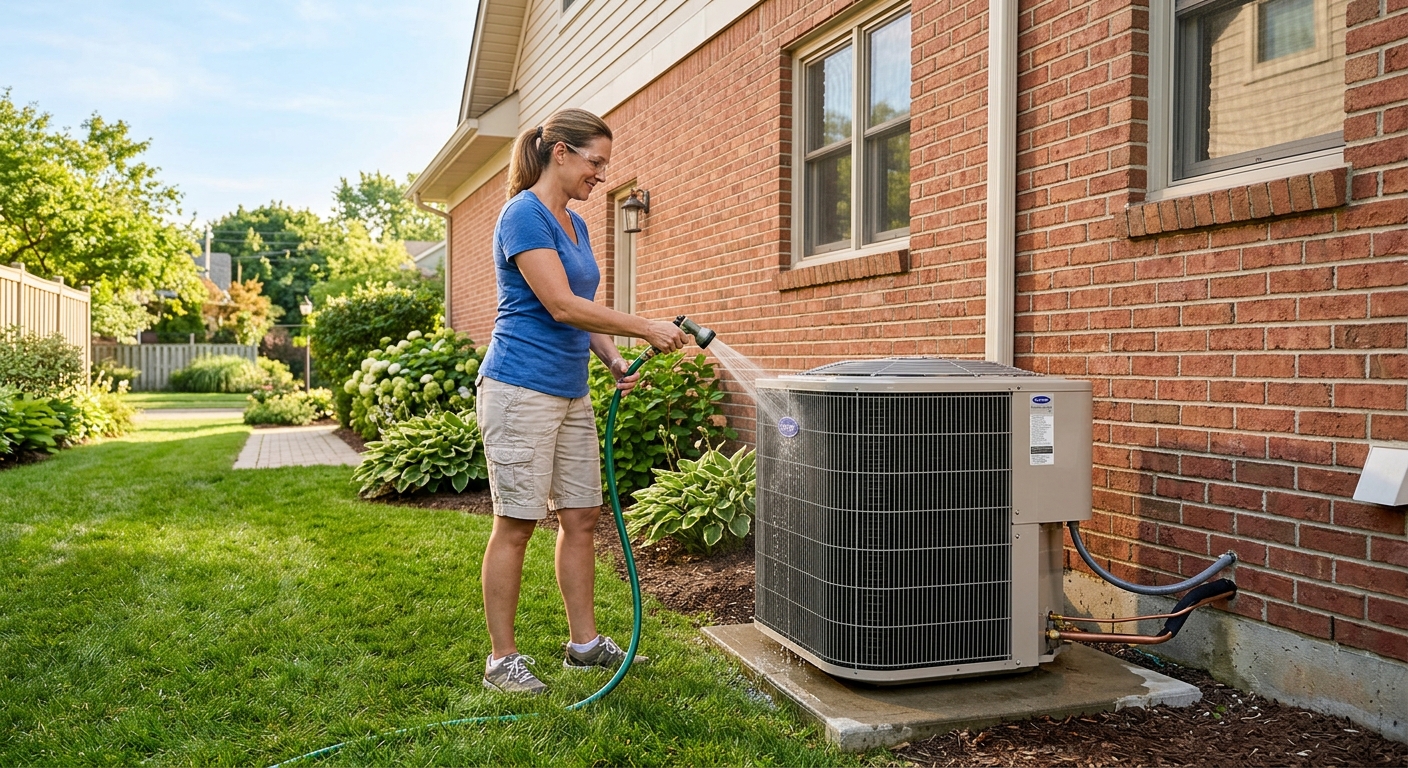
- Go outside to the condenser unit and clear all debris, including leaves, seed pods, and grass clippings, from around the unit. Use a garden hose on a gentle setting to rinse the condenser fins from the inside out by removing the top grille if accessible. Do not use a pressure washer.
- Visually inspect the refrigerant lines running from the condenser into your home. The larger insulated line, called the suction line, should feel cold and may sweat slightly when the system is running. Damaged or missing insulation on this line causes energy loss and should be replaced with foam pipe insulation.
- Restore power, set the thermostat 5 degrees below current room temperature, and let the system run for 15 minutes. Check that cool air is coming from all registers and that the outdoor unit is running without unusual grinding, rattling, or hissing sounds.
- Schedule a tune-up before peak season, ideally in April or May, when HVAC companies have more availability and you avoid the rush premium. Expect to pay $80 to $175 for a comprehensive tune-up from a reputable company.
- Ask specifically for a 21-point or equivalent inspection that includes refrigerant charge verification, capacitor and contactor testing, evaporator and condenser coil inspection, blower motor amperage check, and condensate drain flush. Get the scope in writing before the appointment.
- During the visit, ask the technician to show you the measured refrigerant suction and discharge pressures and compare them to the manufacturer’s rated values. A properly charged system typically shows suction pressure within 2 to 5 PSI of specification.
- Request a written report of findings with any items flagged as marginal or approaching failure, such as a capacitor reading low on microfarads. This gives you a prioritized repair list and prevents upsell pressure in the moment.
- If the technician recommends coil cleaning beyond what a rinse accomplishes, a chemical evaporator coil cleaning typically costs $100 to $200 extra and can restore 10 to 15% of lost efficiency on a heavily fouled system. This is often worth doing after a two-year gap.
- Consider a service agreement for annual maintenance going forward. Most HVAC companies offer plans from $100 to $200 per year that include one or two visits, priority scheduling, and discounts on parts. The math usually works in your favor after just one avoided emergency service call.
Why It Works: The Benefits
Restoring a neglected AC system to proper operating condition typically reduces cooling energy use by 15 to 40%, which can translate to $30 to $120 in savings per month during peak summer, depending on your climate and current system condition.
The majority of mid-season AC failures trace back to components that degrade predictably over time, including capacitors, contactors, and refrigerant leaks. A professional tune-up catches these before failure, and emergency HVAC service calls typically run $150 to $400 above a standard repair cost.
A well-maintained central air conditioner lasts 15 to 20 years. Deferred maintenance accelerates compressor wear and can cut that lifespan to 10 to 12 years, costing you a $4,000 to $8,000 replacement years earlier than necessary.
Dirty evaporator coils and clogged drain pans are prime environments for mold growth. Clean coils and clear drains mean the air circulating through your home carries fewer biological contaminants, which matters especially for allergy and asthma sufferers.
A properly charged and clean system reaches setpoint faster and holds temperature more evenly across rooms. Homeowners restoring neglected systems frequently report that humidity feels more controlled and rooms that were previously warm spots return to normal.
💰 Savings Impact by Action
Removing buildup from evaporator and condenser coils restores heat transfer efficiency and can reduce compressor energy use by up to 21%.
Replacing a clogged air filter restores proper airflow across the evaporator coil and can reduce system energy draw by 5 to 15% immediately.
Correcting a 10 to 20% refrigerant undercharge to manufacturer specification can restore cooling capacity and reduce compressor energy use by up to 20%.
Clearing a partially restricted condensate drain prevents system shutoffs and maintains consistent dehumidification, avoiding comfort-driven thermostat overcorrections that inflate runtime by 5% or more.
A comprehensive professional tune-up on a system neglected for two or more years can restore total seasonal efficiency by 15 to 40% depending on the degree of degradation found.
🏠 Key Concepts Explained
The Science Behind It
Your air conditioner moves heat rather than creates cold. The refrigerant cycle works by evaporating refrigerant inside the indoor evaporator coil, which absorbs heat from your home’s air as it converts from liquid to gas. That heat-laden gas is then pumped outside to the condenser, where it releases the heat to outdoor air and returns to liquid form. The entire system depends on efficient heat transfer at both coils, and anything that insulates either surface from the air moving across it directly undermines the process.
Dust acts as insulation. A layer of particulate buildup just 0.042 inches thick on the evaporator coil surface has been shown in ASHRAE research to reduce heat transfer efficiency by up to 21%. The system compensates by running the compressor harder and longer, which draws more electricity to deliver the same amount of cooling. This is why a dirty system can cost significantly more to operate without any obvious change in your thermostat setting or comfort level. The inefficiency is invisible until you see the electric bill.
Refrigerant charge affects system performance in a nonlinear way. A 10% undercharge does not cause a 10% performance loss. Because refrigerant state changes and pressure relationships follow thermodynamic curves, a modest undercharge forces the compressor to operate outside its design envelope, increasing its internal temperature and mechanical stress. Studies from the Lawrence Berkeley National Laboratory found that a 20% undercharge can increase compressor energy use by 52% while reducing total cooling capacity by 20%. That combination is particularly punishing on hot days when you need your system most.
Frequently Asked Questions
▼ My AC is running constantly but the house never fully cools down. Is this from skipping maintenance?
Continuous runtime without reaching setpoint is a classic sign of degraded efficiency, and two years of deferred maintenance is a very likely contributor. Start by replacing the filter and checking that all supply and return vents are open and unobstructed. If the problem persists, the most probable causes are dirty coils, low refrigerant charge, or an undersized system struggling on an extreme heat day. A professional refrigerant check and coil inspection will confirm which issue applies.
▼ I found ice on my AC. Should I be worried?
Yes, ice on the evaporator coil or refrigerant lines is a sign that airflow is too restricted or refrigerant charge is too low, both of which are common after neglected maintenance. Turn the system off immediately and switch the fan to ON at the thermostat to help it thaw, which typically takes 2 to 4 hours. Once thawed, replace the air filter and restart. If it ices again within a day, you have a refrigerant issue or a failing blower motor and need a professional diagnosis.
▼ My energy bills went up $40 to $60 per month this summer. Could my AC really be responsible?
Absolutely. A combination of dirty coils, a clogged filter, and low refrigerant over two unmaintained seasons can easily account for that level of increased consumption. Before assuming your utility rates are solely to blame, compare your kilowatt-hour usage from this summer to the same months two years ago on your utility statements. If consumption is up even accounting for weather differences, your system efficiency has degraded and a professional tune-up will likely pay for itself in one to two months of recovered savings.
▼ Can I clean the evaporator coil myself?
Light cleaning with a no-rinse foaming coil cleaner spray is something a careful DIYer can do, but it requires removing the access panel on your air handler and working in a confined space around fragile aluminum fins. Never use a pressure washer or stiff brush, as the fins bend easily and restrict airflow permanently. For a coil that has gone two years without cleaning, a professional chemical cleaning is worth the $100 to $200 cost to ensure it is done thoroughly and without damaging the fins.
▼ My AC is 14 years old. Is a tune-up still worth it or should I just replace it?
A tune-up at 14 years is still worthwhile if the system has been reasonably maintained and no major components have failed yet. The rule of thumb from HVAC professionals is the 5000 rule: multiply the repair or service cost by the system age, and if the result exceeds $5,000, replacement is usually the better financial decision. A $150 tune-up times 14 years equals $2,100, well below the threshold, making the tune-up a reasonable investment. If the technician finds a failing compressor or significant refrigerant leak on an old system, get a replacement quote before committing to major repairs.
Quick Tips
- Mark your filter size with a permanent marker on the inside of the filter cabinet door so you never have to guess when ordering replacements.
- Run your AC fan only mode for 15 minutes after the system cycles off on humid days. This helps dry residual moisture from the evaporator coil and drain pan, reducing mold growth.
- Shade your outdoor condenser unit with a fence or vegetation on the west and south sides, keeping at least 18 inches of clearance. Shaded condensers can operate 10% more efficiently than units in full afternoon sun.
- Check your condensate drain line’s exterior termination point every spring. Insects and mud daubers frequently nest in the open end of drain lines during winter, causing a clog the first time you run the AC in warm weather.
Variations for Your Situation
- Apartment or Rental: Renters typically cannot hire HVAC technicians directly, but you can and should change or request a fresh air filter, which is your most impactful maintenance task. Clean the accessible part of your window or PTAC unit with a soft brush and coil cleaner spray. Document any performance issues in writing to your landlord, because central system maintenance is legally the landlord’s responsibility in most states. If the system has not been serviced in over a year, a written maintenance request protects you if the unit fails.
- Tight Budget (under $50): Focus entirely on the free and low-cost DIY steps first. A new MERV 8 filter costs $8 to $15 and is the highest return task available. Rinse the condenser fins with a garden hose, clear debris around the unit, flush the drain line with vinegar, and replace any missing pipe insulation on the suction line. These steps alone can recover 10 to 20% of lost efficiency at minimal cost, and create a cleaner starting point before budgeting for a professional tune-up next season.
- Older Home (pre-1980): Homes built before 1980 often have duct systems with flex duct connections that have loosened or deteriorated over decades. Before investing in AC servicing, check accessible duct connections in your attic or basement for gaps, which you can seal with HVAC foil tape at around $12 per roll. Leaky ducts can waste 20 to 30% of your cooled air before it reaches living spaces, making duct sealing one of the highest-return upgrades in an older home. A professional energy audit, often available free or low-cost through your utility company, can identify and prioritize the biggest losses in older construction.