You have probably heard it from a parent, a neighbor, or a viral social media post: do not keep plants in the bedroom because they steal your oxygen while you sleep. On the flip side, you have also heard that a few leafy plants can scrub your bedroom air clean. Both claims contain a kernel of truth wrapped in a lot of exaggeration, and acting on either one can distract you from what actually makes a bedroom comfortable at 3 a.m.
Here is the reality. At night, plants do consume a tiny amount of oxygen and release carbon dioxide, but the quantity is so small compared to what you and your partner exhale that it is effectively irrelevant. A single sleeping adult produces roughly 15 to 20 liters of CO2 per hour, while a typical houseplant produces a tiny fraction of that. Meanwhile, the air-purifying claims trace back to a 1989 NASA study done in sealed chambers, which does not translate to a real home with air leaks and air changes happening all the time.
This post separates myth from fact and shifts your attention to what really matters: fresh air exchange, humidity in the 30 to 50% range, temperature in the 60 to 67 degree F sweet spot for sleep, and filtration. Keep the plants if you like them. Just do not expect them to do the heavy lifting, and do not feel guilty about the fern on your dresser.
What You’ll Need
Click on an item below to shop for the recommended items for this recipe on Amazon.
As an Amazon Associate, we earn from qualifying purchases.
How to Do It
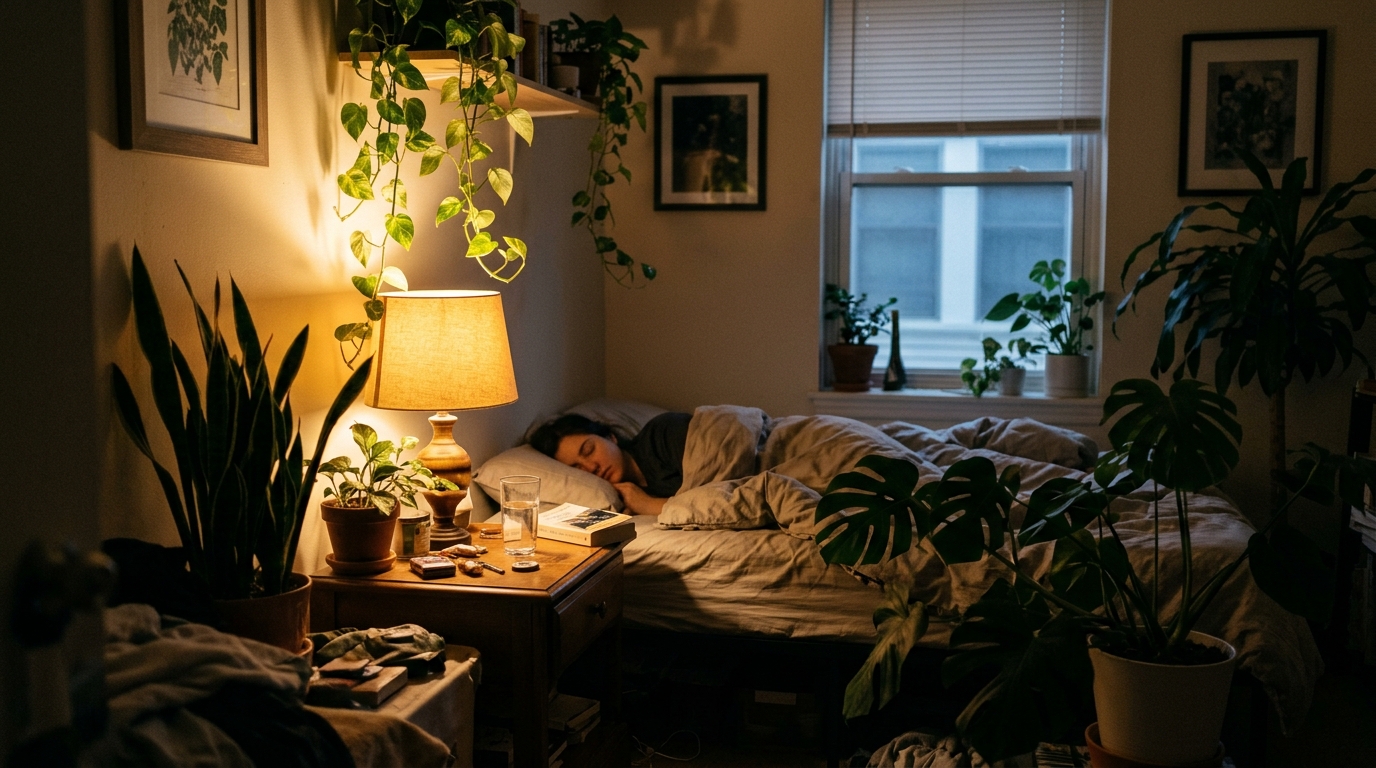
- Stop worrying about moving plants out. Keep them if you enjoy them, but keep leaves dusted so they look good and do not trap allergens.
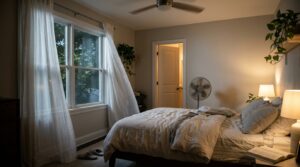
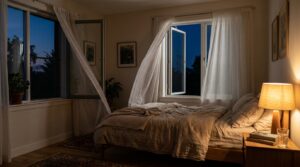
- Crack the bedroom door or a window about 1 inch overnight when outdoor air is mild, which can cut CO2 buildup dramatically.
- Place an inexpensive digital hygrometer on your nightstand and aim for 30 to 50% relative humidity.
- Set your thermostat to 62 to 67 degrees F at night in winter or 72 to 78 degrees F in summer for efficient, comfortable sleeping.
- Run the bathroom or kitchen exhaust fan for 15 to 20 minutes before bed to refresh the home’s air if the house feels stuffy.
- Swap your furnace filter for a MERV 11 to 13 pleated filter, confirming your system can handle the airflow, and replace it every 60 to 90 days.
- Buy a HEPA air purifier rated for your bedroom’s square footage, looking for a CADR high enough to turn over the room’s air at least 4 times per hour.
- Add a small CO2 monitor ($40 to $100) to see your actual overnight levels and decide whether you need more ventilation.
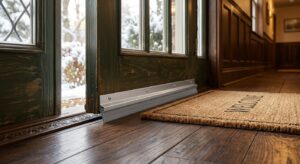
- Install weatherstripping and door sweeps only on exterior-facing gaps, but avoid sealing the bedroom so tightly that fresh air cannot enter.
- Add a programmable or smart thermostat schedule that drops the temperature 5 to 8 degrees F during sleeping hours for both comfort and savings.
- Have an HVAC contractor perform a ventilation assessment and, if needed, a blower door test to measure how tight your home is.
- Ask about installing an energy recovery ventilator (ERV) that brings in fresh air while recovering 60 to 80% of the heating or cooling energy.
- Request a duct inspection to confirm the bedroom gets adequate supply and return airflow, since closed doors can starve rooms of air.
- Consider adding a transfer grille or jumper duct so air can circulate when the bedroom door is closed overnight.
Why It Works: The Benefits
Lowering bedroom CO2 below 800 ppm through ventilation has been linked in small studies to deeper sleep and better next-day alertness.
Dialing in a 60 to 67 degree F nighttime setback can trim heating costs by roughly 5 to 10% per year without sacrificing comfort.
A MERV 11 to 13 filter or HEPA purifier can capture 85 to 99% of airborne dust and dander, a real improvement plants cannot deliver.
Keeping humidity between 30 and 50% reduces window condensation and mold growth, protecting your walls and your health.
You can keep the plants you love for mood and aesthetics, knowing they pose no oxygen risk at night.
💰 Savings Impact by Action
Lowering the thermostat 5 to 8 degrees F while you sleep trims annual heating costs by roughly 5 to 10%.
Sealing drafts around exterior windows and doors can cut heating and cooling losses by up to 15%.
A clean furnace filter replaced every 60 to 90 days keeps airflow strong and can reduce HVAC energy use by 5%.
Holding humidity near 30 to 50% improves perceived comfort so you can set the thermostat a degree or two more efficiently.
🏠 Key Concepts Explained
The Science Behind It
The oxygen myth falls apart with simple math. Room air is about 21% oxygen, and a typical bedroom holds thousands of liters of it. A sleeping person uses roughly 20 to 30 liters of oxygen per hour, while a houseplant’s nighttime respiration is a tiny fraction of that. Even a room crowded with plants would change oxygen concentration by an amount too small to measure, let alone feel. Plants actually photosynthesize during the day and respire at night at much lower rates than animals, so they are a rounding error in your bedroom’s air balance.
The air-purifying claim comes from a 1989 NASA study that tested plants in small sealed chambers. Later research, including a widely cited 2019 analysis, found that you would need hundreds of plants per square meter of floor space to match the pollutant removal of ordinary ventilation. In a real home, air leaks and mechanical ventilation replace the air far faster than plants can clean it, so the effect is negligible.
What does drive nighttime comfort is the balance of CO2, humidity, and temperature. Exhaled CO2 and moisture accumulate in a closed bedroom, raising stuffiness and sometimes condensation on cold windows. Controlling the air exchange rate, holding humidity near 30 to 50%, and keeping the room cool lets your body shed heat properly, which is a key trigger for falling and staying asleep. Those are the levers worth pulling.
Frequently Asked Questions
▼ Should I really move my plants out of the bedroom?
No, there is no meaningful oxygen risk from bedroom plants. A sleeping person uses far more oxygen than any houseplant, so keep your greenery. If you notice excess humidity or mold on the soil, that is a watering issue, not an oxygen one.
▼ Do plants actually clean the air in my bedroom?
Only in a very limited way. Studies suggest you would need hundreds of plants to match the cleaning effect of normal ventilation, so rely on fresh air exchange and a MERV 11 to 13 filter or HEPA purifier instead.
▼ Why does my bedroom feel stuffy even with plants?
Stuffiness is usually caused by CO2 and humidity building up in a closed room, not by plants. Try cracking a window or the door, lowering the temperature to 62 to 67 degrees F, and measuring humidity with a hygrometer.
▼ How long before I notice better sleep or lower bills?
Comfort changes like cooler temperatures and fresher air often show up within a few nights. Energy savings from nighttime setbacks typically appear on your next one to two utility bills.
▼ Is a HEPA purifier worth it compared to plants?
Yes, for allergies and dust. A properly sized HEPA purifier removes up to 99.97% of particles 0.3 microns and larger, which plants simply cannot do, though it will not add the visual appeal that greenery does.
Quick Tips
- Keep your plants for the mood and beauty they add, and water them only as needed to avoid raising humidity or attracting gnats.
- Open a window for 10 minutes each morning to flush out accumulated CO2 and moisture from the night.
- Wash or replace bedding regularly and vacuum with a HEPA vacuum, since dust mites matter more than any plant-related concern.
- If your bedroom feels stuffy with the door closed, try leaving it open an inch or two before spending money on any gadgets.
Variations for Your Situation
- Apartment/Rental: Stick to renter-safe fixes like a $40 to $150 plug-in HEPA purifier, a $10 hygrometer, and a $50 to $100 CO2 monitor. Use a window fan on a low setting or crack a window to improve air exchange, and use removable door sweeps without altering the unit.
- Tight Budget (under $50): Buy a $10 hygrometer, crack a window or door at night, set your thermostat to 62 to 67 degrees F in winter, and replace your furnace filter with a $10 to $20 pleated MERV 8 to 11 option. Keep your plants, since they cost nothing extra.
- Older Home (pre-1980): Older homes leak more air, so you may already get plenty of fresh air and the bigger issue is drafts and uneven temperatures. Prioritize sealing exterior gaps around windows and doors ($20 to $60 in weatherstripping and caulk) while keeping the bedroom itself adequately ventilated, and watch for condensation on single-pane windows in winter.