You feel it before you see it: a thin stream of cold air sliding across your ankles near the front door, or a flap that rattles every time the wind picks up. A mail slot is basically a rectangular hole through your wall with a lightweight flap or two covering it. Those flaps rarely seal tightly, and the brush strips that once helped have often worn down or gone stiff.
It matters more than it looks. The Department of Energy estimates that air leakage accounts for roughly 25 to 40 percent of the energy used for heating and cooling in a typical home, and openings around doors are among the biggest offenders. One unsealed mail slot is a small leak on its own, but it is a constant one, and it often sits right at the spot where you stand to take off your shoes and feel every degree of discomfort.
This post walks through two approaches. The first is a no-cost, 15-minute quick fix you can do tonight with a towel, tape, or a piece of cardboard. The second is a sturdier DIY seal using a draft-blocking cover or foam gasket that lasts the whole season and still lets you get your mail. Both are reversible and renter friendly, so you are not committing to anything permanent.
What You’ll Need
Click on an item below to shop for the recommended items for this recipe on Amazon.
As an Amazon Associate, we earn from qualifying purchases.
How to Do It
- Close the exterior flap and check the interior flap or brush strip. If the flap is bent or stuck open, gently press it flat so it sits as closed as it will go.
- Cut a piece of cardboard or stiff foam board about one inch larger than the slot opening on all sides. A cereal box or shipping box works fine.
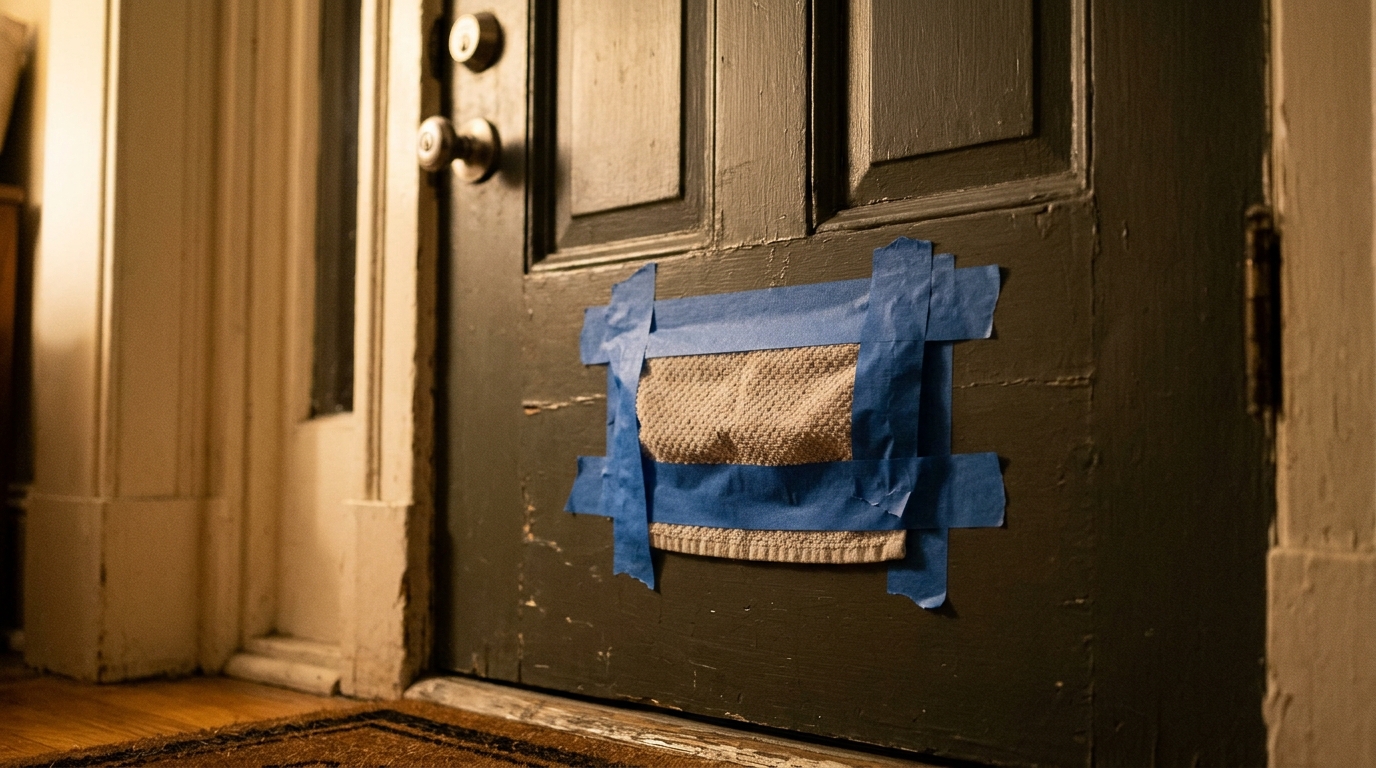
- Pad the cardboard with a folded dish towel, a few layers of newspaper, or a section of old t-shirt cut to the same size. The padding fills the gap and compresses to form a seal.
- Press the padded piece firmly against the interior side of the slot and secure it with painter’s tape or masking tape along all four edges, overlapping the wall by about half an inch. Painter’s tape is gentler on paint and finishes.
- Run your hand around the edges to feel for leftover airflow. If you find a gap, add a strip of tape or tuck a small wad of towel into it until the draft stops.
- Measure the width and height of your mail slot opening on the interior side, and measure the flap plate if you plan to cover it. Write the numbers down before you shop.
- Clean the surface around the slot with a damp rag and let it dry fully. Tape and adhesives will not hold on dusty, oily, or damp surfaces.
- For a foam gasket, cut self-adhesive foam weatherstripping (3/8 inch thick works well) into four strips and press them around the perimeter of the slot frame so the flap closes against them. For a cover, follow the package directions to mount it over the interior opening.
- If you want to keep receiving mail, install a draft-blocking mail catcher or a bristle-style sweep behind the slot. These let letters drop through while the brushes or flap limit airflow.
- Test the seal on a windy day or with a lit incense stick held near the edges. If the smoke streams sideways, there is still a gap to fix. Press the gasket firmly or add another layer until the smoke hangs still.
Why It Works: The Benefits
Blocking a direct draft can raise the perceived temperature near the door by several degrees, because you eliminate the moving cold air that strips heat from your body.
Reducing infiltration even at one opening trims the load on your furnace. Sealing door-area leaks as part of a broader air sealing effort can cut heating and cooling costs by up to 10 to 20 percent across the whole house.
The same gap that lets in cold air also lets in outdoor dust, pollen, and street noise. A seal cuts all three, which is a real comfort gain in spring and summer too.
The quick fix uses items you already own, and a commercial draft cover or foam gasket typically runs $8 to $20, so the payback is measured in weeks, not years.
Every method here can be removed without tools or damage, which makes it safe for renters and lets you restore normal mail delivery in seconds.
💰 Savings Impact by Action
Sealing one door-height opening can trim whole-home heating and cooling costs by roughly 1 to 3 percent.
Stopping a direct draft can remove a large share of the cold, moving air that makes an entryway feel several degrees colder than the thermostat reads.
Sealing gaps around doors, including mail slots, is part of an air sealing effort that can cut heating and cooling costs by 10 to 20 percent when done house-wide.
Closing the slot cavity limits cold air contact with the metal, which can cut frost and condensation on the interior face during hard freezes.
🏠 Key Concepts Explained
The Science Behind It
A mail slot behaves like a tiny chimney lying on its side. When your furnace is running and the house is warmer than outside, warm air rises and pushes out through upper openings like attic gaps. To replace that lost air, outdoor air is pulled in through low openings, and a door-height slot is one of the easiest paths available. Add wind, which creates higher pressure on the windward side of the house, and you get air forced through the slot even harder.
That moving air does two things. It adds to your heating load because every cubic foot has to be warmed to room temperature, and it increases convective heat loss from your body, making the space feel colder than the thermostat says. This is why a draft you can feel on your ankles is more annoying than the raw energy numbers suggest. The comfort penalty is larger than the bill penalty.
Sealing works by interrupting that air path with a compressible material. Foam, felt, brush, and towel padding all trap tiny pockets of still air and resist airflow when pressed against a flat surface. The goal is not insulation, since a thin barrier has little R-value, but air tightness. Stopping the movement of air is what delivers most of the benefit, which is why even a simple padded cardboard cover makes an immediate, noticeable difference.
Frequently Asked Questions
▼ Why can I still feel a draft after I covered the slot?
Check the edges first, since even a quarter-inch gap lets in a surprising amount of air. Press tape down firmly all the way around, and add a second strip or a folded towel tucked into any gap. If the draft persists, the leak may be around the slot frame where it meets the door or wall, so run a bead of removable caulk or foam strip around that perimeter.
▼ Can renters do this without landlord permission?
Yes, as long as you use removable materials like painter’s tape, a padded cardboard cover, or self-adhesive foam that peels off cleanly. Avoid screws, permanent adhesive, or anything that alters the door or frame. It is still a good idea to mention it to your landlord, since many will happily approve a draft fix that also protects the property.
▼ How long before I actually notice savings on my bill?
You will feel the comfort improvement the same night, but the bill impact is small because one mail slot is a minor part of your total air leakage. Expect a savings of roughly 1 to 3 percent on heating or cooling costs, which shows up gradually over a billing cycle or two. The bigger win comes from pairing this with other air sealing around doors and windows.
▼ What if my home is older than 30 years?
Older homes tend to have more baseline leakage and worn slot hardware, so the draft may be worse than you expect. Replace any crumbling foam or brittle brush strips, and consider a heavier-duty cover or a replacement slot with a built-in gasket. Also check the door itself for gaps at the bottom and sides, since a leaky slot is often just one of several drafts on the same door.
▼ Will blocking the mail slot cause problems with my mail carrier?
It can, because carriers may not be able to deliver to a covered slot and could return mail or leave a notice. Put a small mailbox or basket outside the door, or contact your carrier to arrange alternate delivery for a few days. For a longer-term fix, use a mail catcher that lets mail drop through.
Quick Tips
- Use painter’s tape rather than duct tape on painted surfaces and finished wood so you can remove it without peeling paint.
- Seal the slot on both the inside and outside if you can, since cold air trapped in the slot cavity keeps the metal cold and can cause frost on the interior face.
- Test your work with a lit incense stick or a thin strip of tissue paper. If the smoke or tissue moves sideways near the edges, there is still a leak.
- If you want to keep getting mail, swap a full block for a mail catcher box or a brush-style sweep behind the slot so letters still drop in while most airflow is stopped.
Variations for Your Situation
- Apartment/Rental: Stick to removable fixes like a padded cardboard cover with painter’s tape or a self-adhesive foam gasket, which run $0 to $15 and peel off cleanly at move-out. A magnetic or Velcro-style slot cover is another good option and can be reused in your next place.
- Tight Budget (under $50): Use a folded towel, cardboard, and painter’s tape for $0 to $5 total. If you want something more durable, a roll of self-adhesive foam weatherstripping runs about $6 to $10 and can also seal a window or door gap elsewhere.
- Older Home (pre-1980): Expect a worn, possibly oversized slot with little or no weatherstripping, so plan for a heavier seal such as a thick foam gasket or a replacement slot with a built-in brush and flap. Check the door frame and threshold for additional gaps, since older doors often leak in several places at once.