The average central air conditioner lasts 15 to 20 years, but many units get replaced at 10 to 12 years simply because they were never properly maintained. Dirty coils, clogged filters, and neglected drainage lines quietly strangle your system’s efficiency, force the compressor to work harder than it should, and accelerate wear on every major component. The result is a $5,000 to $12,000 replacement bill that often could have been pushed back by half a decade or more.
Here’s the good news: the maintenance that makes the biggest difference costs very little money and takes only a few hours per year. Changing filters regularly, cleaning the outdoor condenser coils, clearing the condensate drain, and checking refrigerant-side indicators can keep your system running at peak efficiency season after season. The Department of Energy estimates that a neglected AC loses 5% of its operating efficiency each year, meaning a dirty system can cost 20 to 25% more to run after just four or five seasons of neglect.
This guide walks you through both a quick seasonal checklist and a deeper DIY maintenance routine, with clear steps for each. Whether you have 15 minutes or an afternoon, there is something here that will meaningfully extend the life of your unit and lower your monthly cooling bills.
What You’ll Need
Click on an item below to shop for the recommended items for this recipe on Amazon.
As an Amazon Associate, we earn from qualifying purchases.
How to Do It
- Check and replace the air filter. Hold it up to light. If you cannot see light through it, replace it. Use a MERV 8 to 11 filter for the best balance of airflow and filtration. Filters cost $5 to $15 each.
- Walk outside and visually inspect the condenser unit. Clear away any leaves, grass clippings, mulch, or shrubs that have grown within 2 feet of the unit on all sides. Restricted airflow around the unit raises head pressure and stresses the compressor.
- Look through the condenser fins (the metal grate around the outside of the unit). If you can see heavy dirt or debris packed in the fins, note it for cleaning in the DIY approach.
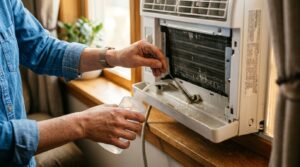
- Locate your condensate drain line, typically a white PVC pipe exiting the air handler or furnace. Pour 1 cup of distilled white vinegar into the drain pan or clean-out port to inhibit algae growth and keep the line clear.
- Turn on the system and confirm cool air is coming from the vents within 5 minutes. If the air is not noticeably cooler than room temperature after 10 minutes of running, the system may have a refrigerant or airflow issue to investigate further.
- Turn off power to the outdoor condenser at the disconnect box (usually a grey box on the wall near the unit) and also turn the system off at the thermostat before touching any components.
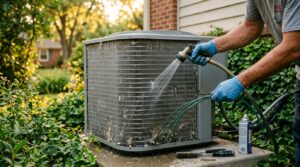
- Remove the top grille or access panel on the condenser (usually 4 to 6 screws). Carefully lift out the fan assembly and set it aside without straining the wiring. Use a garden hose to spray the coil fins from the inside out to push debris out the exterior. Work gently, top to bottom. A fin comb ($10 to $15) can straighten bent fins that restrict airflow.
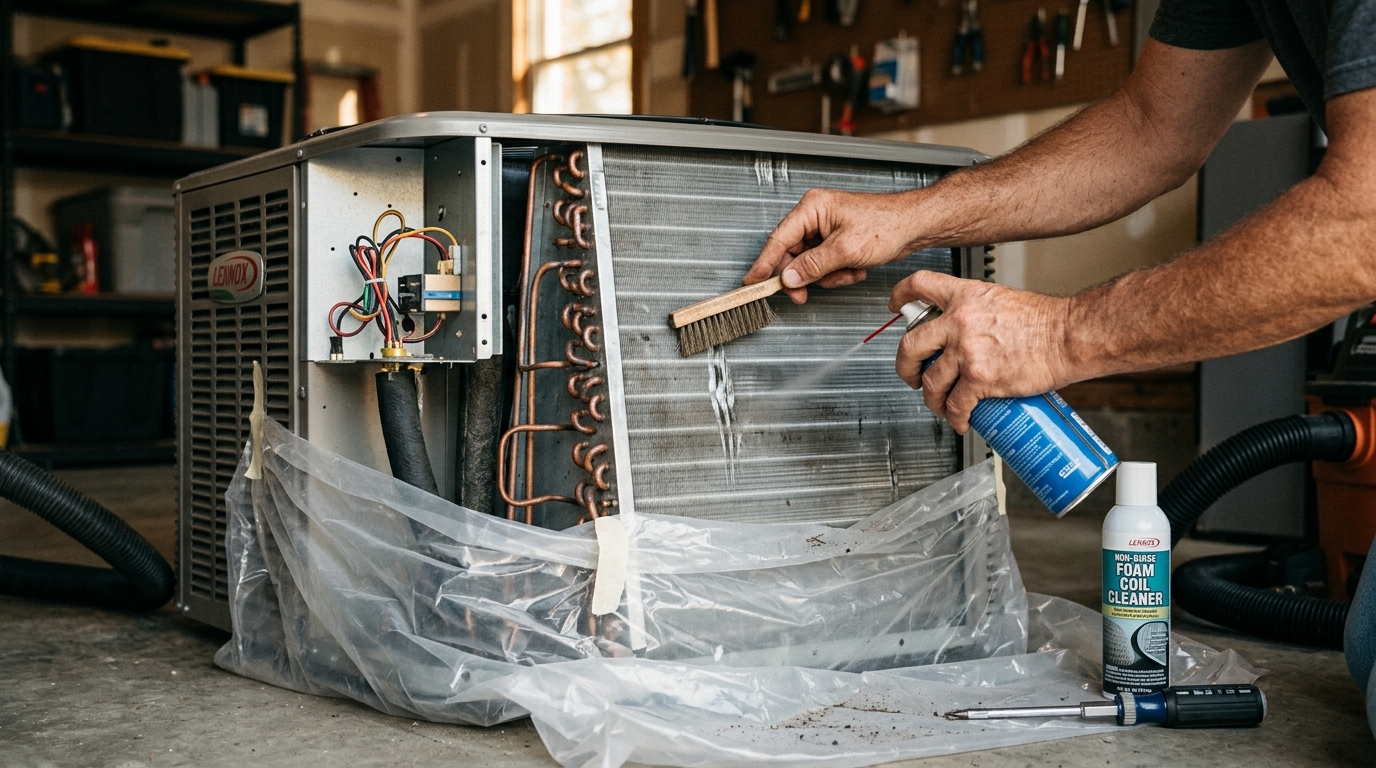
- Apply a foaming no-rinse coil cleaner ($10 to $15 at any hardware store) to the outside of the condenser fins. Let it penetrate for 5 to 10 minutes, then rinse from the inside out again. This step alone can recover 5 to 15% of lost efficiency on a dirty unit.
- Inspect the condensate drain pan inside the air handler for standing water or slime. Use a wet-dry vacuum to clear the drain line from the outside exit point. Flush with a mixture of 1 part bleach to 16 parts water to kill algae, then flush with plain water. Clear drains prevent water damage and mold growth.
- Replace the air filter with a fresh MERV 8 to 11 filter. Write the installation date on the filter frame so you always know when it was last changed.
- Restore power and run the system for 15 minutes. Hold a thermometer at a supply register and a return vent. A properly functioning system should produce air that is 16 to 22 degrees Fahrenheit cooler than the return air temperature (the temperature split). A reading outside that range suggests a refrigerant, airflow, or duct issue worth investigating.
- Schedule a tune-up in early spring (March or April) before the peak season rush drives up prices and delays appointments by 1 to 3 weeks.
- Ask specifically for a technician to check and record the refrigerant charge using gauges. Request a written report showing suction and discharge pressures so you have a baseline for future visits.
- Have the technician inspect and tighten all electrical connections at the contactor, capacitor, and disconnect. Ask them to measure capacitor microfarad ratings and replace any reading more than 10% outside the rated value. A failing capacitor ($20 to $60 part) is the most common cause of compressor failure if left unaddressed.
- Request a check of blower motor amperage and bearing condition. A motor drawing more amps than its nameplate rating or making a grinding noise is a warning sign worth addressing before it fails mid-summer.
- Review the written report with the technician and ask specifically which items are urgent repairs versus watch-and-monitor items. This helps you budget appropriately and avoid unnecessary upsells.
Why It Works: The Benefits
Consistent maintenance can add 5 to 8 years to a typical AC unit’s life, pushing replacement from age 12 to age 17 or later and deferring a $5,000 to $12,000 capital expense.
A well-maintained AC operates at or near its rated SEER efficiency. The DOE estimates neglected systems lose up to 5% efficiency per year, meaning a clean system can cost 20 to 25% less to run than an equivalent dirty one after several seasons.
Most mid-season AC failures trace back to a dirty condenser coil, a clogged drain, a failed capacitor, or a low refrigerant charge, all issues that routine maintenance catches early. Emergency HVAC service calls typically run $150 to $300 just for the visit.
A properly maintained evaporator coil and clear condensate drain remove moisture from indoor air effectively, keeping relative humidity in the comfortable 40 to 50% range and reducing the risk of mold growth in the air handler.
Many manufacturers require documented annual maintenance to honor extended warranty claims. Skipping maintenance can void coverage on a compressor or parts warranty worth $500 to $2,000 in potential repair value.
💰 Savings Impact by Action
Cleaning fouled condenser coils restores heat transfer efficiency and can recover 5 to 15% of lost cooling capacity and efficiency.
Keeping a clean filter maintains proper airflow and can reduce blower energy consumption by up to 10% compared to a severely restricted filter.
A clear condensate drain prevents system shutdowns and maintains proper humidity removal, avoiding efficiency losses from high indoor moisture load.
Consistent annual maintenance can extend AC equipment life by 5 to 8 years, effectively reducing replacement cost amortized per year of service by up to 40%.
Replacing a failing capacitor before it causes compressor failure avoids a repair bill 10 to 20 times larger than the capacitor itself.
🏠 Key Concepts Explained
The Science Behind It
Your AC works by moving heat, not by creating cold. Refrigerant cycles between the indoor evaporator coil (where it absorbs heat from your air) and the outdoor condenser coil (where it releases that heat outside). The efficiency of this cycle depends entirely on the temperature difference between the refrigerant and the air on both sides of each coil. When the condenser coil is dirty, the refrigerant cannot shed heat efficiently, so its temperature and pressure rise. Higher head pressure means the compressor must work harder for every unit of cooling delivered, consuming more electricity and generating excess heat that degrades compressor oil and shortens its life.
Airflow restriction at the indoor coil creates the opposite problem. When a clogged filter starves the evaporator of air, the coil gets too cold because it is absorbing heat from very little air. It drops below 32 degrees Fahrenheit and freezes over. An iced coil cannot absorb heat at all, effectively shutting down the cooling process entirely while the system continues to run and draw power. Repeated freeze-thaw cycles also stress the coil itself and can crack or damage the drain pan over time.
The temperature split test (measuring return air temperature minus supply air temperature) is a simple but powerful diagnostic tool because it captures the net result of all these factors at once. A healthy split of 16 to 22 degrees Fahrenheit indicates proper refrigerant charge, clean coils, and adequate airflow. A split below 14 degrees usually points to low refrigerant or airflow restriction. A split above 22 degrees can suggest an oversized system or very high indoor humidity load. Checking this number takes two minutes and gives you a meaningful snapshot of your system’s health without any specialized equipment.
Frequently Asked Questions
▼ Why is my AC freezing up even though I just changed the filter?
A frozen evaporator coil after a filter change usually points to low refrigerant charge or a dirty evaporator coil (which is separate from the filter). Turn the system to fan-only mode for 2 to 4 hours to let it thaw completely, then restart it. If it freezes again within a day or two, call a licensed HVAC technician to check refrigerant pressure and inspect the evaporator coil.
▼ How do I know if my AC is low on refrigerant?
Common signs include warm air from the supply vents despite the system running, ice on the copper refrigerant lines at the outdoor unit, a temperature split below 14 degrees Fahrenheit, or hissing and bubbling sounds from the indoor unit. Refrigerant does not get consumed normally, so low charge always means there is a leak somewhere. You need a licensed EPA 608-certified technician to diagnose and repair it.
▼ My AC is 12 years old. Is maintenance still worth it, or should I just replace it?
At 12 years, a well-maintained unit can realistically have 5 to 8 years of life remaining, so maintenance absolutely still makes sense unless the system needs a major repair like a compressor replacement costing more than 50% of a new system. A good rule of thumb is to multiply the repair cost by the unit’s age. If the result exceeds $5,000, replacement is usually the better investment. Otherwise, keep maintaining it.
▼ Can renters do this maintenance themselves?
Renters can safely change air filters, pour vinegar into the condensate drain, and clear debris from around the outdoor unit without any landlord permission needed. These steps alone cover the highest-impact maintenance tasks. For anything involving opening panels or professional service, notify your landlord in writing so they can arrange it, as HVAC maintenance is typically a landlord responsibility under most lease agreements.
▼ How often do I really need to clean the outdoor condenser coils?
Once per year is the minimum for most homes, ideally in early spring before you start running the system heavily. Homes near cottonwood trees, dirt roads, or with dogs that shed heavily near the unit may need cleaning twice per year. If you can see visible debris packed into the fins when you look at the unit, it is time to clean regardless of when you last did it.
Quick Tips
- Keep shrubs, fences, and structures at least 2 feet away from the condenser on all sides for unrestricted airflow. Check clearances every spring as plantings grow.
- Run your system in fan-only mode for 30 minutes after a rainstorm to help dry out the evaporator coil and drain pan, reducing algae and mold growth.
- Consider a float switch for your condensate drain pan ($15 to $30 installed by a technician). It automatically shuts the system down if the drain clogs before water overflows, preventing costly water damage to ceilings or floors.
- If you have a heat pump, the same condenser maintenance applies year-round since the outdoor unit runs in both heating and cooling mode. Clean it in spring and again in early fall.
Variations for Your Situation
- Apartment or Condo: Renters typically cannot access the outdoor condenser, but they can and should change the air filter in their air handler monthly, which is the most impactful single maintenance task. Ask your property manager in writing to schedule annual professional maintenance and document the request. You can also pour vinegar into the accessible condensate drain port to prevent clogs and associated water damage to your unit.
- Tight Budget (under $30): Focus first on a replacement air filter ($5 to $15) and a bottle of distilled white vinegar ($3) for the condensate drain. These two items address the two most common causes of early AC failure. Use a garden hose to rinse visible debris off the outdoor condenser fins from the outside at no cost. Skip the coil cleaner spray for now and prioritize the filter change above everything else.
- Older Home (pre-1990): Systems in older homes are more likely to have undersized return air ducts, R-22 refrigerant (no longer manufactured and very expensive to service), and corroded electrical connections. Have a licensed technician inspect the refrigerant type before investing heavily in maintenance, since an R-22 system nearing end of life may be better replaced with a modern R-410A or R-32 unit that will deliver 30 to 50% better efficiency and reliable parts availability.