Your thermostat is set to 76 degrees, the AC is running constantly, and your July electric bill just hit $200. Sound familiar? The problem almost certainly is not your thermostat setting. It is the heat pouring in through your attic, leaking around your windows, and radiating off west-facing walls every afternoon. Your air conditioner is fighting a battle it cannot win because the house itself is letting it down.
The good news is that the biggest gains in home cooling efficiency have nothing to do with how cold you set the AC. They come from reducing the amount of heat that enters your home in the first place, which is called reducing your cooling load. The Department of Energy estimates that air sealing and insulation improvements alone can cut cooling costs by 15 to 25 percent. Add smart shading and a few behavioral tweaks, and hitting that $30-a-month savings target is very realistic for most homes.
This guide walks you through two levels of action: a zero-cost quick fix routine you can start today, and a focused DIY upgrade weekend that targets the highest-impact improvements. You will get real numbers, specific products, and a clear sense of what payback to expect so you can decide where to put your energy and your dollars.
What You’ll Need
Click on an item below to shop for the recommended items for this recipe on Amazon.
As an Amazon Associate, we earn from qualifying purchases.
How to Do It
- Close blinds and curtains on south and west-facing windows by 10 AM before direct sun hits the glass. Even standard curtains can block 33 percent of solar heat gain when closed.
- Shift heat-generating tasks like running the oven, dishwasher, and clothes dryer to before 9 AM or after 8 PM to avoid adding heat during the peak afternoon hours when outdoor temps are highest.
- Switch off incandescent or halogen bulbs in frequently used rooms during the day. A single 60-watt incandescent emits roughly 90 percent of its energy as heat. Swapping to LED or simply turning lights off reduces indoor heat gain noticeably.
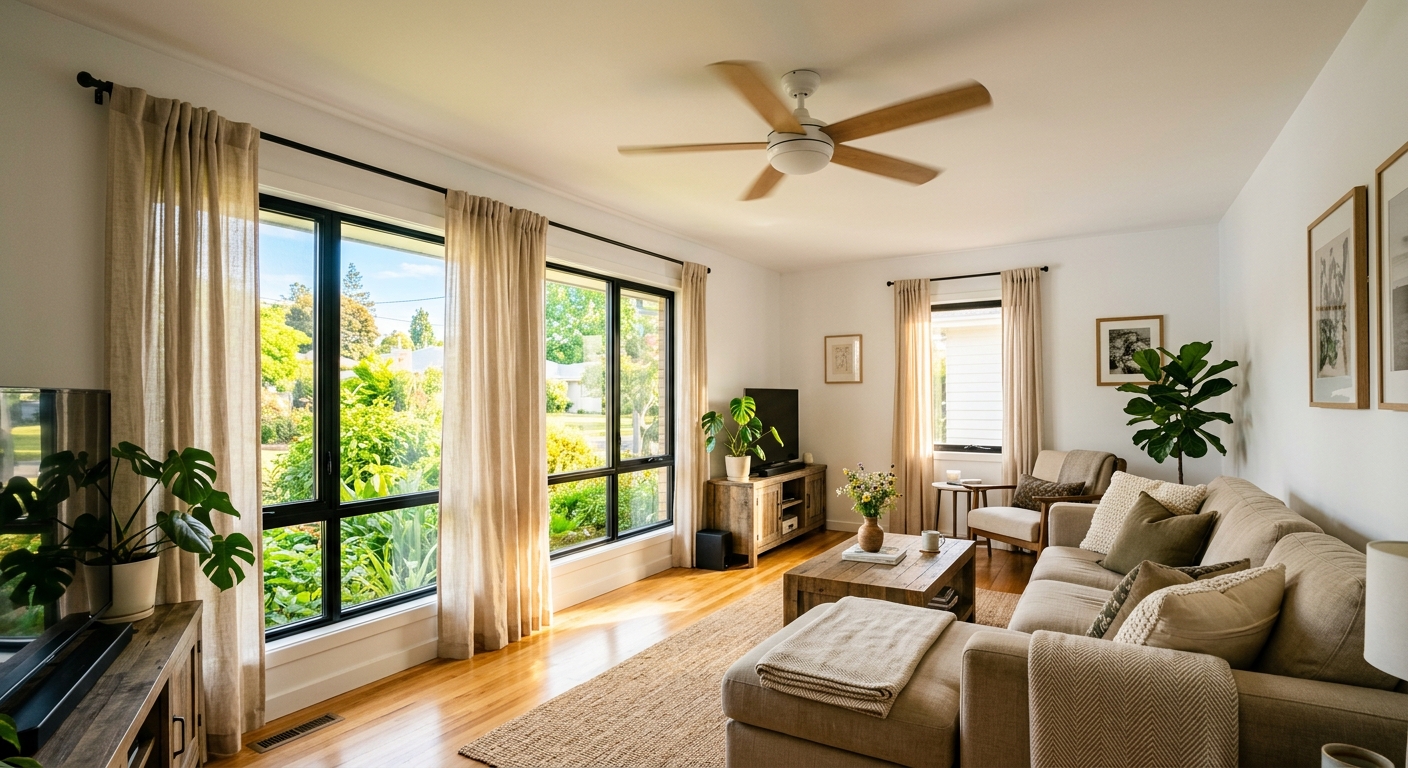
- Use ceiling fans in occupied rooms to create a wind-chill effect, which makes 78 degrees feel like 74 to 75 degrees. Remember to turn fans off when leaving the room since fans cool people, not air.
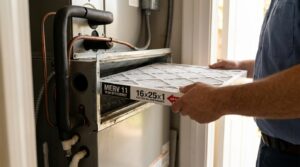
- Check and replace your air filter if it is clogged. A dirty filter can reduce airflow by 15 to 25 percent, making the system work harder and longer to move the same amount of cooled air.
- Open windows strategically on nights when outdoor temps drop below 70 degrees to flush stored heat from the house. Close everything back up by 8 AM before the day heats up.
- Apply reflective window film to south and west-facing glass. Solar control film costs $25 to $60 for a standard kit and can block 55 to 70 percent of solar heat gain while still allowing light through. Clean the glass thoroughly before applying and follow the manufacturer’s wet-application instructions.
- Seal your attic hatch or pull-down stairs with weatherstripping and add a rigid foam insulation cover on top. An unsealed attic hatch is one of the single largest air leaks in most homes. This fix costs $15 to $40 in materials and can reduce cooling load meaningfully on its own.
- Install foam gaskets behind electrical outlet and switch covers on exterior walls. These $5 to $10 packs from any hardware store take about 20 minutes to install throughout the house and seal a surprising amount of air infiltration.
- Caulk around window and door frames on the interior side where trim meets drywall, and on the exterior where frames meet siding. Use paintable silicone or acrylic latex caulk ($4 to $8 per tube). Most homes have 50 to 100 linear feet of gaps here that let conditioned air escape and warm humid air enter.
- Add door sweeps to exterior doors that have visible gaps at the bottom. A $10 to $20 adhesive door sweep takes 10 minutes to install and eliminates a direct infiltration pathway that can be surprisingly large.
- Check accessible ductwork in the attic or crawl space for disconnected joints or gaps. Use metal-backed foil tape (not standard duct tape, which fails in heat) to seal any visible separations. The DOE estimates homes lose 20 to 30 percent of cooled air through duct leaks.
Why It Works: The Benefits
Combining air sealing, attic insulation improvements, and window shading can reduce cooling costs by 20 to 35 percent, which translates to $25 to $45 per month for a typical home spending $130 to $160 on summer electricity.
Reducing heat gain through the envelope means your AC cycles less often and runs more evenly, eliminating the hot spots near windows and ceilings that make some rooms unbearable even when the thermostat says 76.
Sealing infiltration pathways reduces the amount of humid outdoor air entering the home, which can drop indoor relative humidity by 5 to 10 percentage points and make the same temperature feel 2 to 3 degrees cooler.
Every hour you reduce AC runtime is an hour of wear you save on the compressor and blower motor. A system that runs 20 percent less can last 3 to 5 years longer before needing replacement, saving hundreds to thousands of dollars.
Unlike new HVAC equipment with 7 to 12 year payback periods, air sealing materials and window film typically cost $50 to $150 and pay for themselves within a single cooling season.
💰 Savings Impact by Action
Blocking direct solar gain with curtains or window film reduces cooling load by up to 18 percent on south and west exposures.
Sealing gaps around outlets, windows, doors, and the attic hatch can cut infiltration-related cooling costs by up to 20 percent.
Improving attic insulation to R-38 reduces heat conduction through the ceiling assembly by 15 to 25 percent during peak summer heat.
Sealing leaky ducts in unconditioned attics recovers up to 20 to 30 percent of cooled air that would otherwise be lost before reaching living spaces.
Shifting appliance use and switching to LED lighting reduces indoor heat generation by up to 8 percent of total cooling load in an average home.
🏠 Key Concepts Explained
The Science Behind It
Your air conditioner does not cool air in the way most people imagine. It actually moves heat: the refrigerant absorbs heat from indoor air at the evaporator coil and dumps it outside at the condenser. The harder the system has to work, the more electricity it consumes. So anything that reduces the amount of heat entering your home directly reduces how long and hard the AC runs, cutting energy use in almost direct proportion.
Heat enters a home through three mechanisms: conduction (heat moving through solid materials like walls, roofs, and glass), convection (warm air physically moving into the house through gaps and cracks), and radiation (solar energy passing through windows and heating surfaces inside). The strategies in this guide target all three. Window film works on radiation by reflecting infrared energy before it enters the glass. Caulking and weatherstripping address convection by blocking air movement. Insulation and attic sealing reduce conduction through the ceiling assembly, which is where the highest temperature differential in the home typically exists in summer.
The concept of cooling load is central to why these fixes work so well. Cooling load is the total amount of heat your AC must remove per hour to maintain your target temperature. Every BTU of solar heat you block with a curtain or window film is one less BTU the compressor has to pump outside. Cut the load by 20 percent and the system runs 20 percent less, with a nearly identical reduction in electricity use. This is why passive measures often deliver better dollar-for-dollar savings than upgrading to a higher-efficiency AC unit, especially in an older home with significant envelope weaknesses.
Frequently Asked Questions
▼ Why is my AC still running all day even after I tried these fixes?
If your AC runs continuously without cycling off, the unit may be undersized for your home’s current cooling load, or there may be a refrigerant issue limiting capacity. First, confirm your air filter is clean and all supply and return vents are fully open and unblocked. If the system still runs nonstop during moderate weather (below 90 degrees outside), schedule a diagnostic visit with a licensed HVAC technician to check refrigerant charge and system sizing.
▼ Can renters do these fixes without landlord permission?
Most of the no-cost behavioral steps (closing blinds, shifting appliance use, using fans) require zero permission and cost nothing. Temporary window film products are available that use static cling rather than adhesive and can be removed cleanly, making them renter-safe in most cases. For anything involving caulk or permanent weatherstripping, check your lease or ask your landlord, but many will approve improvements that reduce utility costs.
▼ How long before I actually notice savings on my bill?
You should see a difference within one full billing cycle after making changes, typically 30 days. Because utility bills reflect usage over a billing period, improvements made mid-cycle will show partial savings the first month and full savings the second month. Comparing to the same month the previous year (rather than the previous month) gives the most accurate picture since weather varies significantly.
▼ What if my home is older than 30 years?
Older homes typically have higher baseline air leakage and less effective insulation, which means the same fixes deliver larger savings. However, older homes may also have asbestos insulation or vermiculite in the attic (common before the 1980s), so do not disturb any existing attic insulation until you confirm its composition. Have a sample tested by a certified lab for under $30 before doing any attic work.
▼ My upstairs is always much hotter than the main floor. What is going on?
This is almost always an attic insulation and ventilation problem combined with natural convection, since heat rises and the upper floor is closest to the hot attic. Check that your attic insulation is at least R-30 (about 9 inches of blown fiberglass) and that soffit and ridge vents are unobstructed. Adding an attic ventilation fan or ensuring proper passive ventilation can reduce attic temperature by 20 to 40 degrees and significantly cool the upper floor.
Quick Tips
- Light-colored or reflective curtain liners cost $15 to $25 and can double the effectiveness of existing curtains at blocking solar heat gain.
- A $15 plug-in watt meter can show you exactly how much electricity your window AC or portable unit is drawing, helping you identify if the unit is undersized and running constantly.
- Cooking one large meal in a slow cooker or instant pot generates far less heat than running a conventional oven for 45 minutes and can meaningfully reduce afternoon cooling load.
- Bathroom and kitchen exhaust fans vent conditioned air directly outside. Run them only as long as needed (10 to 15 minutes) rather than leaving them on for hours, which can pull significant amounts of hot outside air in through other gaps.
Variations for Your Situation
- Apartment/Rental: Renters cannot modify central HVAC or add insulation, but can still capture meaningful savings. Use static-cling solar film ($15 to $30 per window) on south and west windows, add a door draft stopper ($10 to $15) at the front door, and deploy a smart plug-in fan with a timer to exhaust heat at night. A portable evaporative cooler (in dry climates) or a well-placed window AC with an Energy Star rating can cool a single room for 30 to 50 percent less than running central air to cool the whole unit.
- Tight Budget (under $50): Start with the zero-cost behavioral changes, which alone can save $10 to $20 per month. Then prioritize outlet gaskets ($6 for a full pack), attic hatch weatherstripping ($8 to $12), and one roll of door sweep material ($10 to $15) for the gaps under exterior doors. Total spend under $40 with potential savings of $15 to $25 per month, paying back in 6 to 8 weeks.
- Older Home (pre-1980): These homes typically have single-pane windows, minimal wall insulation, and high natural air leakage, meaning cooling loads can be 40 to 60 percent higher than a modern home. Before tackling individual fixes, consider requesting a professional energy audit (often $100 to $300, sometimes subsidized by utilities) to identify the highest-impact improvements. Adding blown-in wall insulation through a contractor ($1,500 to $3,000) can cut cooling and heating costs by 15 to 20 percent annually and has a payback of 4 to 6 years in high-energy-cost areas.