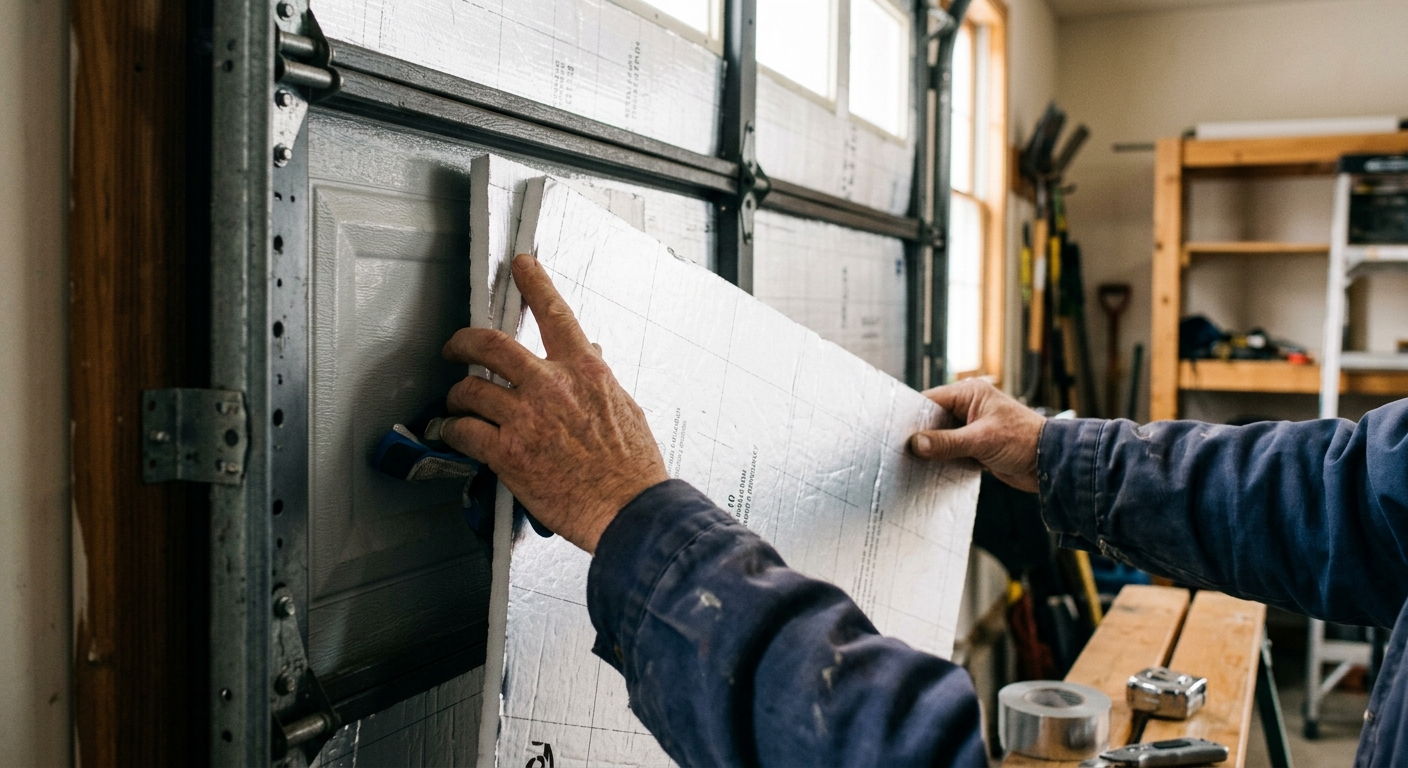
If your home has an attached garage, there is a large, thin, metal or wood panel repeatedly cycling open and closed every day that is almost certainly uninsulated. Most standard garage doors have an R-value between R-0 and R-2, which is barely better than an open hole in the wall. In winter, that door becomes a massive cold radiator that drops the temperature of your garage by 20 degrees or more, which then bleeds cold into your living space through the shared wall and floor.
The Department of Energy estimates that garages account for a significant portion of heat loss in homes where the garage shares walls or a ceiling with conditioned living space. Homeowners in cold climates report saving between $100 and $180 per heating season after insulating their garage door, depending on local energy costs and the size of the door. In milder climates the savings are lower, but comfort improvements in the garage itself are immediate and noticeable year-round.
This post walks you through two proven approaches: a budget-friendly DIY insulation kit you can install in an afternoon, and a full door replacement with a factory-insulated door for maximum performance. You will also find the building science behind why this works, what to watch for during installation, and how to calculate your personal payback period.
What You’ll Need
Click on an item below to shop for the recommended items for this recipe on Amazon.
As an Amazon Associate, we earn from qualifying purchases.
How to Do It
- Measure each door panel section height and width precisely. Most kits include pre-cut panels but verify your door dimensions match the kit specifications before buying.
- Purchase a garage door insulation kit rated R-8 or higher. Popular options include Owens Corning and Reach Barrier foam kits available at home improvement stores for $50 to $120 depending on door size.
- Clean each panel section with a damp cloth to remove grease and dust. Adhesion and fit are much better on a clean surface.
- Cut foam panels to fit each section using a utility knife and straight edge. Score the foam deeply and snap cleanly for straight edges. Wear gloves as cut foam edges are sharp.
- Secure each panel using the retainer clips included in the kit or double-sided foam tape rated for temperature extremes. Do not use standard packing tape as it fails in cold weather.
- Inspect and replace the perimeter weatherstripping and bottom door seal while the project is open. A worn bottom seal alone can negate half the insulation benefit. Replacement seals cost $15 to $30 at hardware stores.
- Measure your existing door opening carefully: width, height, and headroom above the opening. Standard sizes are 8×7, 9×7, 16×7, and 16×8 feet, but custom sizing is available.
- Select a door rated at minimum R-12. Look for polyurethane foam core construction rather than polystyrene, as polyurethane achieves higher R-values per inch and bonds to both door skins for added structural rigidity.
- Get at least two quotes from licensed garage door installers. Installation typically costs $200 to $400 on top of door cost and takes 3 to 5 hours for a professional crew.
- Request removal and disposal of your old door in the quote. Most installers include this but confirm in writing.
- After installation, verify that all sections are plumb, the auto-reverse safety function works correctly, and the opener strain is within the motor rating. A heavier insulated door may require a new opener rated at 1/2 or 3/4 horsepower.
- Apply a bead of weatherstrip sealant around the door frame exterior to seal the gap between the frame and your home’s siding or brick, completing the thermal envelope at the garage wall.
Why It Works: The Benefits
Insulating a garage door in an attached garage can reduce annual heating costs by $100 to $180 depending on climate, door size, and local natural gas or electric rates. Homeowners in USDA climate zones 5 and 6 see the largest savings.
An insulated door can raise the interior garage temperature by 10 to 20 degrees F on a cold day compared to an uninsulated door, making the garage more comfortable for workshop use and reducing the risk of frozen pipes.
Foam insulation reflects radiant heat from the sun-facing door in summer, reducing garage temperatures by up to 15 degrees F on hot afternoons. This protects stored items, vehicles, and any mini-split or window AC unit working to cool the space.
Foam and fiberglass insulation panels add mass and damping to the door, reducing wind noise, traffic noise, and the metallic clatter of the door itself during operation by a noticeable margin.
Water heaters, furnaces, and exposed plumbing in garages are vulnerable to freezing temperatures. Raising the garage temperature buffer protects these systems, potentially avoiding costly emergency repairs from frozen or burst pipes.
💰 Savings Impact by Action
Insulating an uninsulated garage door reduces garage heat loss through the door panel by up to 70%, contributing to a 10 to 15% reduction in whole-home heating costs for homes with attached garages.
Replacing a worn bottom door seal eliminates a major air infiltration point and accounts for up to 6% of total garage heat loss recovery.
Sealing the frame weatherstripping on all three sides of the door stops cold air bypass that can negate a significant portion of panel insulation gains.
Replacing an old door with a factory-insulated R-16 door with thermal breaks delivers up to 20% reduction in garage-related heating costs compared to an uninsulated door.
🏠 Key Concepts Explained
The Science Behind It
Heat moves in three ways: conduction, convection, and radiation. An uninsulated steel garage door is an extremely efficient conductor, meaning it equilibrates quickly to whatever the outdoor temperature is. On a 10 degree F night, your garage door surface is essentially 10 degrees F, creating a massive cold wall that draws heat out of the garage air through convection and absorbs radiant heat from any warm objects nearby, including your water heater, car, and the shared wall leading into your house.
When you add a layer of closed-cell foam rated R-8 to R-10, you interrupt the conductive pathway between the outdoor steel skin and the indoor air. The foam’s tiny closed cells trap inert gas that is a very poor conductor of heat. The indoor surface of the insulated door now stays much closer to the garage air temperature rather than dropping to outdoor temperatures, which dramatically slows the rate at which the garage loses heat to the outside. This is the same principle behind insulating a wall cavity, just applied to a movable panel.
The secondary benefit is that a warmer garage acts as a thermal buffer, reducing the temperature differential across your home’s shared wall with the garage. Heat flow increases exponentially with temperature difference, so raising the garage from 10 degrees F to 30 degrees F can cut heat loss through the shared wall by more than half, even without touching the wall insulation itself. That is why garage door insulation delivers savings disproportionate to its cost compared to other insulation upgrades.
Frequently Asked Questions
▼ My garage is still cold after insulating the door. Did the kit not work?
The door is only one piece of the thermal envelope. Check for large gaps around the door perimeter, unsealed penetrations in the shared wall, and whether the garage ceiling is insulated if there is living space above. Also verify the bottom seal is making full contact with the floor. Infrared thermometer guns, available for $20 to $30, let you scan surfaces and find cold spots quickly.
▼ Will the extra weight of insulation panels damage my garage door opener?
It depends on the opener rating and the weight of your door. Most modern openers rated at 1/2 horsepower or higher handle the added 40 to 60 pounds of a foam kit without issue. The bigger concern is your torsion springs, which are calibrated to the door weight. If the door feels heavy to lift manually or the opener strains noticeably, have a garage door technician rebalance the spring tension.
▼ How long before I see the savings on my energy bill?
You should see a measurable reduction in your first full heating month after installation, typically within 30 to 60 days. However, energy bills vary with outdoor temperatures, so compare the same calendar month year over year rather than month to month. Most homeowners in cold climates notice a $15 to $20 reduction per month during the three to four coldest months of the year.
▼ Can I insulate a wood garage door the same way?
Yes, but use foam board with foil facing rather than bare white polystyrene to protect the foam from humidity and to reflect summer heat. Wood doors often have irregularly sized panels, so measure each one individually. Avoid adding more than 1.5 inches of foam thickness to wood doors as it can interfere with panel hinge clearance during door operation.
▼ Does this also help in summer to keep the garage cooler?
Absolutely. On a hot summer day a south or west facing dark garage door can reach 130 to 150 degrees F on its surface, radiating intense heat into the garage. Insulation creates a thermal barrier that can drop interior garage temperatures by 10 to 15 degrees F in peak afternoon heat, which matters if you use the garage as a workshop or have a refrigerator or chest freezer stored there.
Quick Tips
- Check your garage door’s R-value label before buying a kit. Some newer doors already have minimal factory insulation and may only benefit marginally from a retrofit.
- Paint your insulated panels white if they face south or west. A dark door surface in summer can reach 140 degrees F and accelerate foam degradation over time.
- Install a simple wireless thermometer in your garage before and after the insulation project to measure the actual temperature improvement and confirm your investment is working.
- If your garage has a window panel section, add low-E window film to those panels. Glass is a poor insulator and a significant source of heat loss even in an otherwise well-insulated door.
Variations for Your Situation
- Apartment or Condo with Shared Garage: If you have an assigned garage unit in a shared structure, you likely cannot modify the garage door itself. Instead, focus on insulating the door connecting your unit to the garage using weatherstripping and a door sweep, and ask the HOA or property manager about a building-wide door insulation program, which some associations have adopted to reduce common-area energy costs.
- Tight Budget (under $50): Start with the bottom door seal and perimeter weatherstripping only. A new threshold seal ($15 to $25) and foam weatherstrip tape around the frame ($8 to $12) can reduce air infiltration significantly at almost no cost. These two fixes alone often deliver 30 to 40 percent of the total comfort improvement at less than 25 percent of the cost of a full kit.
- Older Home with Detached Garage (pre-1980): A detached garage does not share walls with living space, so the direct heating bill impact is lower. Focus instead on whether the detached garage contains a water heater or pipes that could freeze, and insulate the door primarily to protect those systems. A basic foam kit is still worthwhile at $50 to $80, and adding a pipe heating cable ($20 to $40) provides additional freeze protection for a very low combined investment.