If you have ever noticed a thick ridge of ice along your roof’s edge in winter, followed by water stains on your ceiling or walls, you have experienced the damage an ice dam can do. Ice dams form when heat escapes through your attic, melts snow on the upper roof, and that meltwater refreezes at the cold overhang near the eaves. The result is a growing wall of ice that forces water under your shingles and into your home. According to the Insurance Information Institute, water damage and ice-related claims account for billions of dollars in homeowner losses each winter.
The frustrating part is that most ice dams are a symptom of an underlying problem: a poorly insulated or inadequately ventilated attic. Raking snow off your roof or installing heat cables can manage the symptoms, but fixing the root cause is what actually protects your home long term. The good news is that the same improvements that stop ice dams also cut your heating bills by 15 to 25%, making this one of the highest-return upgrades you can make to a cold-climate home.
This post covers exactly why ice dams form, what you can do right now to reduce the risk this season, and how to permanently solve the problem with attic air sealing and insulation. Whether you want a quick fix for this weekend or a full solution, we have a practical approach for every budget and skill level.
What You’ll Need
Click on an item below to shop for the recommended items for this recipe on Amazon.
As an Amazon Associate, we earn from qualifying purchases.
How to Do It
- After each significant snowfall (more than 2 inches), use a roof rake with a telescoping handle to pull snow off the lower 3 to 4 feet of your roof while standing safely on the ground. This removes the fuel that feeds ice dam growth.
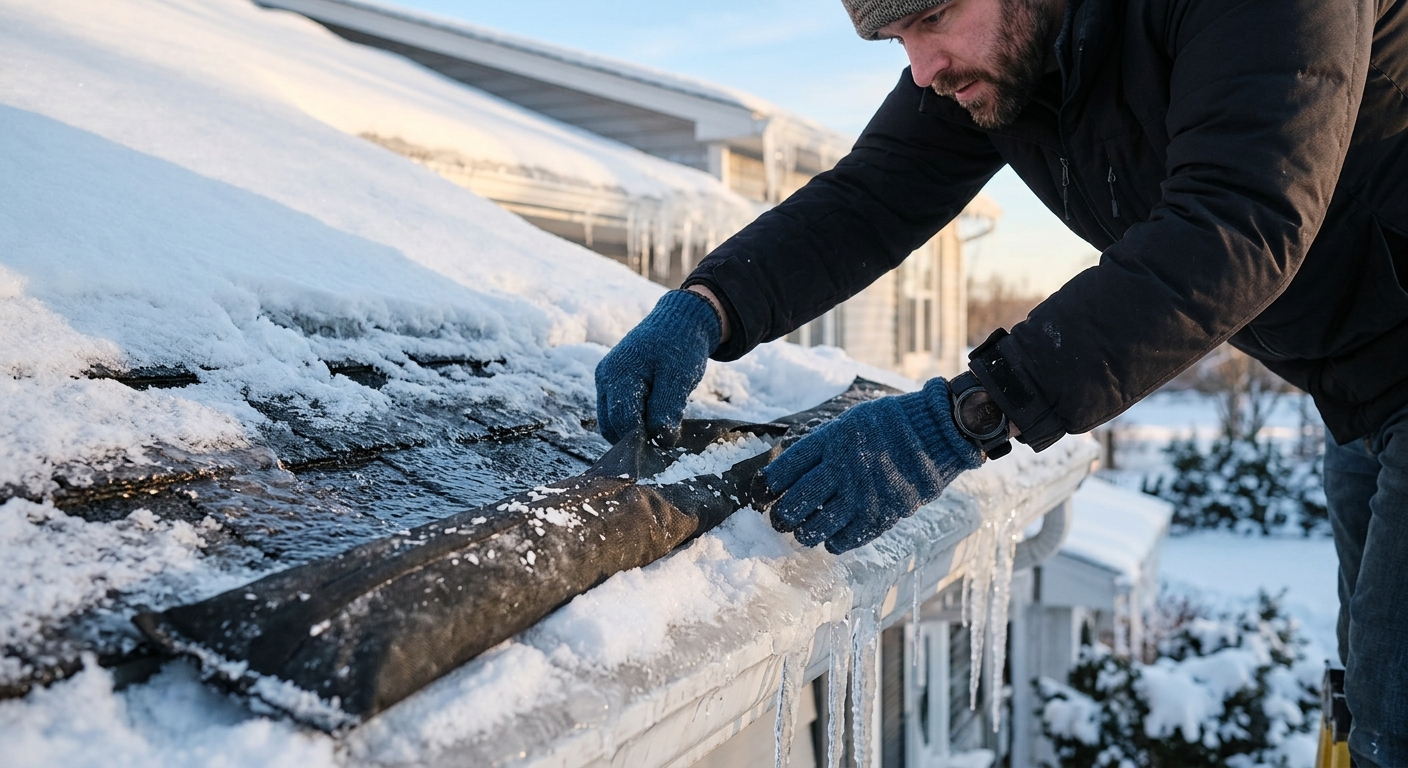
- Purchase calcium chloride ice melt (not rock salt, which damages shingles and metals). Fill a nylon stocking or mesh tube with the pellets and lay it perpendicular across the ice dam, extending just past the roof edge. This creates a channel for meltwater to escape.
- Check that all attic soffit vents are clear of snow, insulation, and debris from inside the attic. Blocked soffits stop cold outside air from flushing the attic and are a leading cause of heat buildup under the roof deck.
- Locate and temporarily cover the attic hatch with a rigid foam board cut to fit, taped at the edges. An unsealed attic hatch can lose as much heat as leaving a window open all winter.
- If you already have a significant ice dam and icicles, call a professional ice dam removal service rather than chipping at ice with a hammer or ice pick. Mechanical chipping is the single most common cause of shingle damage during ice dam events.
- On a cold day, go into your attic and look for light coming through from below, or feel for warm air rising near the following locations: around recessed light cans, plumbing vent stacks, chimney chases, top plates of interior walls, and any electrical or HVAC penetrations through the ceiling.
- Use canned spray foam (low-expansion for small gaps under 1 inch, two-part foam or rigid foam board for larger openings) to seal all penetrations you identified. Pay special attention to recessed lights, which can each leak as much air as a 2-inch-diameter hole running continuously.
- Cut rigid foam board to fit around the chimney and staple aluminum flashing as a fire-safe barrier between the foam and any masonry. Do not use spray foam directly against a chimney without proper clearance and fire blocking.
- Check your attic insulation depth after air sealing. Cold climates (Climate Zones 5 through 7) need R-49 to R-60 in the attic. If your insulation measures less than about 12 inches of fiberglass batts or 10 inches of blown cellulose, plan to add more.
- Verify soffit baffles (rafter chutes) are in place in each rafter bay from the soffit to at least 12 inches past the exterior wall top plate. These cardboard or foam channels maintain airflow from soffit vents even under deep insulation.
- After sealing, check attic ventilation. The standard ratio is 1 square foot of net free vent area for every 150 square feet of attic floor, split evenly between low soffit vents and high ridge or gable vents.
- Schedule a professional energy audit with a BPI-certified auditor. They will use a blower door test and thermal imaging camera to precisely locate all air leaks, show you temperature differentials across the roof deck, and recommend a prioritized scope of work.
- Have the contractor perform comprehensive air sealing before any insulation is added or topped up. Many contractors skip this step. Insist it is included in the scope and ask to see before-and-after blower door numbers.
- If your attic has fewer than 10 inches of existing insulation, have the contractor blow in dense-pack cellulose or fiberglass to bring it to R-49 minimum. Cellulose is preferred in cold climates for its ability to resist air movement even without perfect sealing.
- Ask about spray foam encapsulation for cathedral ceilings or complex roof assemblies where traditional insulation and ventilation cannot be installed. Closed-cell spray foam applied to the underside of roof sheathing creates an unvented conditioned attic and can permanently eliminate ice dams in difficult roof geometries.
- Confirm the contractor will address attic ventilation as part of the project, installing continuous ridge vent and ensuring soffit vents are open and unobstructed for a balanced system.
- Apply for applicable rebates before paying. ENERGY STAR-qualified insulation upgrades qualify for a 30% federal tax credit under the Inflation Reduction Act (up to $1,200 per year), and many utilities offer additional rebates of $0.10 to $0.25 per square foot for blown-in insulation.
Why It Works: The Benefits
A single ice dam event can cause $4,000 to $15,000 in interior water damage including ruined insulation, damaged drywall, stained ceilings, and mold remediation. Preventing ice dams eliminates this risk entirely.
Attic air sealing and insulation upgrades that eliminate ice dams also reduce heating energy use by 15 to 25% annually, saving the average cold-climate homeowner $200 to $600 per year depending on home size and fuel type.
Ice dams physically lift and crack shingles as they expand, shortening a roof’s life by 5 to 10 years. Eliminating ice dams can add years to your existing roof and protect the warranty on a new one.
Sealing attic air leaks also eliminates cold drafts near ceilings and second-floor rooms, making living spaces noticeably warmer and more consistent without raising the thermostat.
Stopping warm humid air from entering the attic through air leaks reduces condensation on cold roof sheathing, cutting the risk of mold growth and wood rot that can compromise structural integrity over time.
💰 Savings Impact by Action
Sealing air leaks around lights, penetrations, and top plates reduces warm air entry into the attic by up to 50%, cutting roof deck heat gain and ice dam risk by an estimated 20% on annual heating costs.
Bringing attic insulation to R-49 in cold climates reduces conducted heat loss through the ceiling by 15 to 25% compared to a minimally insulated attic.
Removing snow from the lower roof after storms reduces meltwater volume by up to 80% during peak ice dam formation events, preventing immediate damage even without structural improvements.
Restoring blocked soffit vents and installing rafter baffles allows cold outside air to flush the attic and can reduce attic temperature by 5 to 15 degrees Fahrenheit on a cold day.
An insulated and weather-stripped attic hatch eliminates a gap that can account for up to 5% of total attic heat loss in an otherwise well-insulated home.
🏠 Key Concepts Explained
The Science Behind It
Ice dams are fundamentally a heat transfer problem. Your living space generates heat constantly, and that heat wants to move toward the cold outdoors through every possible path: conduction through your ceiling, convection through air leaks, and radiation from warm surfaces. In a poorly sealed attic, warm air from the living space rises and collects under the roof deck, raising its temperature 10 to 20 degrees Fahrenheit above outdoor air. When snow sits on that warm deck, it melts from the bottom up even when the outdoor temperature is well below freezing.
The meltwater flows down the roof slope under the snowpack, which acts as an insulating blanket keeping it liquid. When it reaches the eave overhang, which sits above the cold exterior wall and has no warm attic beneath it, it encounters temperatures at or below 32 degrees Fahrenheit and refreezes. Each melt-and-freeze cycle adds another layer to the ice dam. Once the dam is a few inches thick, water pools behind it and, because water under pressure can move upward through capillary action, it wicks under the lapped shingles and into the roof assembly. This is why you can have ice dams on the outside and a dripping ceiling on the inside even when the roof looks intact from below.
The permanent solution requires making the entire roof deck uniformly cold, which means either removing the heat source (warm attic air from leaks) or creating a ventilated cold air channel between the insulation and the roof deck. A properly insulated and air-sealed attic keeps its temperature within a few degrees of the outdoor air temperature, which means no differential melting and no ice dams regardless of how much snow accumulates. This is why a home can have 18 inches of snow on the roof and zero ice dams, while a neighbor with similar snowfall but poor attic insulation has dams forming within 48 hours of each storm.
Frequently Asked Questions
▼ I had my attic insulated last year but I still have ice dams. What is going on?
Insulation alone rarely eliminates ice dams if air sealing was not done first. Insulation slows conducted heat transfer but does not stop warm air from rising through gaps around lights, wires, and wall top plates. Go into the attic and feel for warm air movement near ceiling penetrations on a cold day. Seal every gap you find with spray foam, then check whether ice dams return after the next snowfall.
▼ Can I just install heat cables and call it done?
Heat cables prevent ice from blocking specific drainage paths but they do not stop meltwater from forming or fix the underlying attic heat loss. They also cost $5 to $15 per month per cable to operate, require annual inspection, and can fail without warning. Use them only for problem valleys or low-slope sections that remain difficult after completing air sealing and insulation improvements.
▼ My ice dams are forming on a cathedral ceiling section. Can I still fix this myself?
Cathedral ceiling assemblies are significantly more complex because there is no accessible attic space. The rafter bays must maintain at least a 2-inch ventilation channel between the insulation and the roof deck, and achieving this in existing construction usually requires professional intervention. Options include removing and reinstalling roofing with added rigid insulation above the deck, or spray foaming the underside of the sheathing to create an unvented conditioned assembly. Get at least two contractor bids and ask specifically about each approach.
▼ How do I get rid of an ice dam that has already formed without damaging my roof?
The safest method is calcium chloride in nylon stockings laid perpendicular across the dam to create drainage channels, combined with careful hot water flushing from a hose if temperatures allow. Never use a standard ice pick, axe, or hammer directly on shingles, as even light mechanical chipping cracks and dislodges granules. For large established dams, a professional ice dam removal service using low-pressure steam is the only method that reliably removes ice without shingle damage.
▼ Will fixing ice dams actually lower my heating bill?
Yes, and often significantly. The same air leaks and insulation gaps that cause ice dams are responsible for 25 to 40% of total heat loss in many older homes. Homeowners who complete attic air sealing and insulation upgrades commonly report heating bill reductions of 15 to 25% in the first full winter, with average savings of $200 to $500 annually in cold climates depending on home size and current insulation levels.
Quick Tips
- Install an attic thermometer and check it after a snowfall. If your attic is more than 5 to 10 degrees warmer than the outdoor temperature, you have an air leakage problem driving ice dam risk.
- Pay special attention to recessed lights on the top floor ceiling. Each IC-rated but not airtight recessed light can leak more warm air than a golf ball-sized hole. Retrofit airtight covers are available for about $15 each and take 10 minutes to install from the attic side.
- After sealing air leaks, always verify that soffit vents remain unobstructed. Push insulation back from the eaves and confirm rafter baffles are in place to maintain the ventilation channel before adding any insulation depth.
- Self-regulating heat cables are a legitimate last resort for problem spots like valleys or low-slope sections where air sealing alone cannot fully solve the issue, but they cost $5 to $10 per month to run per cable during cold months. Treat them as a backup, not a primary solution.
Variations for Your Situation
- Apartment or Condo Owner: If you own or rent on an upper floor, you cannot access or modify the attic, but you can reduce heat loss through your ceiling by ensuring your unit’s top-floor ceiling is free of obvious gaps around light fixtures and exhaust fans. Report persistent ice dam damage to building management in writing and request an energy audit, as the liability for water damage from ice dams typically falls on the building owner.
- Tight Budget (under $50): Focus on the two highest-impact free and near-free steps this season. First, cut rigid foam insulation board to fit your attic hatch and tape the edges with foil tape (about $15). Second, use a roof rake after every storm to clear the lower 3 to 4 feet of the roof. These two steps alone can meaningfully reduce ice dam severity at minimal cost while you save for a proper air sealing project.
- Older Home (pre-1980): Homes built before modern energy codes often have little to no air sealing and insulation depths of only 2 to 4 inches in the attic. The good news is the payback on improvements is faster because the baseline is so poor. Start with a professional energy audit, which typically costs $150 to $400 and will precisely identify your worst leaks. Many utilities offer free or subsidized audits for older homes. Expect to invest $1,500 to $3,500 for full air sealing and blown-in insulation, but anticipate heating bill reductions of 20 to 35% annually and qualify for the 30% federal tax credit.