A clogged kitchen sink is one of the most common household plumbing problems, and it almost always comes back within a week if you only treat the symptom. That slow drain or standing water is a sign that grease, food particles, and soap scum have built up inside your drainpipe, and a quick pour of chemical drain cleaner rarely removes all of it. The clog just reforms in the same spot, often faster than before.
The good news is that most kitchen sink clogs can be fully cleared in under an hour without calling a plumber. The key is using the right technique for the type of clog you have, and then doing a few simple things differently going forward to prevent buildup from coming back. Done correctly, you can keep your drain flowing freely for six months to a year between cleanings.
This post walks you through two proven approaches: a quick manual fix you can do right now with almost no tools, and a more thorough DIY method that clears the P-trap and pipe walls so the drain stays clear long-term. You will also find a maintenance routine, common mistakes to avoid, and answers to the questions homeowners ask most often.
What You’ll Need
Click on an item below to shop for the recommended items for this recipe on Amazon.
As an Amazon Associate, we earn from qualifying purchases.
How to Do It
- Remove any standing water from the sink with a cup or sponge so you can work cleanly and assess the situation.
- Pour one full kettle of just-boiled water slowly down the drain in two or three stages, pausing 30 seconds between pours to let heat penetrate the grease.
- Follow immediately with half a cup of baking soda poured directly into the drain opening. Let it sit for 5 minutes.
- Pour one cup of white vinegar into the drain and cover the opening with a drain stopper or a folded rag to force the fizzing reaction downward into the pipe rather than up and out. Wait 15 minutes.
- Fill the sink halfway with warm water, then use a cup plunger with firm, rapid strokes for 20 to 30 seconds to create pressure that breaks up and flushes the loosened clog.
- Flush with another full kettle of hot water. If the drain is running freely, install a mesh basket strainer to catch food solids going forward.
- Clear out the cabinet under the sink and place a bucket directly beneath the curved P-trap pipe. Have old towels ready for drips.
- Loosen the two slip-joint nuts on either side of the P-trap by hand or with slip-joint pliers. Slide the trap down and off, letting any standing water drain into the bucket.
- Inspect the P-trap for solid buildup. Clean it thoroughly by rinsing into the bucket and scrubbing with an old bottle brush. Examine the rubber washers and replace them if cracked or flattened, as worn washers cause slow leaks.
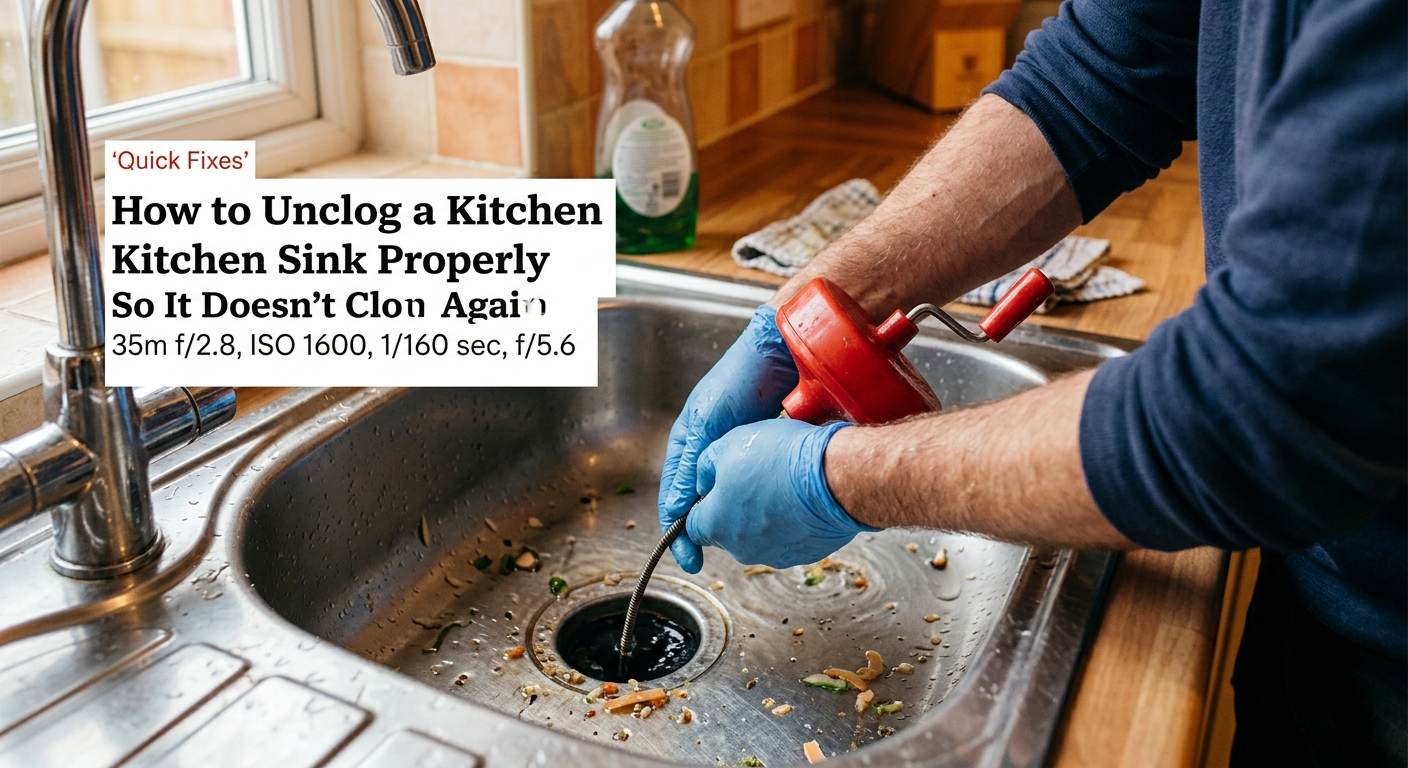
- With the P-trap removed, insert a 25-foot hand drain snake into the pipe opening in the wall. Feed it in while turning the handle clockwise, advancing past any resistance until you feel the blockage. Crank through it, then slowly retract while continuing to turn to pull debris back out.
- Reassemble the P-trap, hand-tightening the slip nuts firmly and then giving each a quarter turn with pliers. Do not overtighten PVC fittings as they will crack.
- Run hot water for two full minutes to confirm strong flow and check under the cabinet for any drips at the connections. Then pour one cup of dish soap down the drain followed by a full kettle of hot water to flush the pipe walls clean.
- Purchase a stainless steel basket strainer that fits your drain opening. Most standard kitchen drains are 3.5 inches and the same strainer fits most sinks. Confirm your size before buying.
- Drop the strainer into the drain opening. No installation is required for most models. Empty food solids into the trash after every sink use.
- Once a month, boil a full kettle of water and pour it slowly down the drain in two stages to melt any grease film before it can build up.
- Follow the hot water flush with two tablespoons of dish soap poured directly into the drain, then run hot tap water for 60 seconds. Dish soap is a surfactant that emulsifies grease and carries it out of the pipe.
- Every three months, repeat the baking soda and vinegar treatment from the quick fix approach as a light maintenance clean to address any biofilm forming on pipe walls.
Why It Works: The Benefits
A plumber call-out for a kitchen drain blockage typically runs $150 to $400 depending on your area. Clearing it yourself with a $10 to $30 set of tools pays back instantly and covers dozens of future uses.
A fully cleared drain with clean pipe walls restores full flow capacity, cutting dishwashing and prep cleanup time noticeably and eliminating the standing water that harbors odors and bacteria.
Repeated use of caustic chemical drain cleaners can degrade older PVC joints and corrode metal pipe fittings over time. Mechanical clearing methods protect your pipes and can extend their lifespan by years.
The rotting food and bacteria inside a greasy drain are the source of that rotten egg or musty smell coming from your sink. Fully removing the buildup eliminates the odor at its source rather than just masking it.
Homeowners who do a monthly hot-water-and-dish-soap flush and use a basket strainer report going six months to over a year between any drain issues, compared to the two to four week cycle common with chemical-only treatment.
💰 Savings Impact by Action
DIY clearing methods resolve roughly 90% of kitchen drain clogs without requiring a professional, saving $150 to $400 per service call.
Homeowners who add a basket strainer and monthly hot water flush reduce clog recurrence by an estimated 75% compared to no maintenance routine.
Switching from $8 to $12 monthly chemical drain treatments to a free hot water and dish soap flush saves 100% of that recurring cost.
Eliminating caustic chemical drain cleaners from regular use can extend the service life of PVC joints and rubber washers by an estimated 30%, delaying costly pipe repairs.
🏠 Key Concepts Explained
The Science Behind It
Kitchen drain clogs are almost always a combination of three things: solidified fats and oils that coat the pipe walls, food particles that stick to that greasy surface, and a biofilm of bacteria that cements everything together. When you pour hot grease or oily cooking water down the drain, it is liquid in that moment but cools to a semi-solid within the first few feet of pipe where temperatures drop. Each episode adds a thin ring of buildup, slowly narrowing the effective pipe diameter until flow slows to a trickle.
The baking soda and vinegar reaction produces carbonic acid and carbon dioxide gas. The fizzing action creates mechanical agitation that helps dislodge loose deposits, while the mild acid cuts through some of the mineral scale that can harden grease buildup. However, this method has real limits. It works best on early-stage buildup and is not strong enough to break up a dense, fully formed grease plug on its own. That is why combining it with boiling water first to melt the fat, then plunging to create hydraulic pressure, is far more effective than either step alone.
Mechanically snaking the line works by physically disrupting the plug and pulling debris back out of the pipe, which is the only reliable method for a complete blockage. Dish soap works as a maintenance tool because it is a surfactant, meaning it has molecules that bind to both water and fat simultaneously. When you flush with hot water after soap, the surfactant molecules surround grease particles and allow them to be carried away by the water instead of sticking to the pipe wall. This is the same reason dish soap removes grease from your pans, and it is equally effective inside your drain if used consistently as part of a monthly routine.
Frequently Asked Questions
▼ I cleared the clog but it came back within a week. What am I doing wrong?
A fast-returning clog almost always means the pipe walls are still coated with grease and biofilm, giving the new clog a ready surface to grab onto. Skip chemical cleaners and go straight to the P-trap cleaning and snaking method in this guide to fully remove the buildup. Follow up with the monthly hot water and dish soap maintenance routine to strip the pipe walls regularly.
▼ Can I use Drano or Liquid-Plumr instead of the methods here?
Chemical drain openers can work on soft, hair-based clogs but are largely ineffective on dense kitchen grease plugs because they cannot penetrate far enough into the solidified fat. More importantly, repeated use of caustic chemicals degrades rubber washers, can cloud PVC pipes, and is harmful to older metal fittings. Reserve them as a last resort before calling a plumber, and never use them before attempting manual clearing.
▼ My sink gurgles after I clear it but drains okay. Is that a problem?
Gurgling after clearing usually points to a partially blocked vent stack on your roof rather than a remaining pipe clog. The vent allows air into the drain system, and without it water creates a vacuum that makes a gurgling sound as it pulls air past the P-trap. Check that no leaves, debris, or bird nests are blocking the vent pipe opening on your roof, or call a plumber to run a camera inspection if the gurgling persists.
▼ Water is backing up in my dishwasher when I run the sink. Are they connected?
Yes. Your dishwasher drain hose connects to the same drain line as the kitchen sink, usually at the garbage disposal or at a connection point under the sink. A significant clog downstream of that junction causes water to back up into whichever path offers least resistance, which is often the dishwasher. Clearing the kitchen drain fully with the P-trap and snaking method should resolve the dishwasher backup as well.
▼ How do I know if the clog is in my pipes or the main sewer line?
If only your kitchen sink is slow or blocked, the clog is almost certainly local to that drain or its P-trap. If two or more fixtures in your home are backing up at the same time, such as the sink backing up when you flush a toilet or water appearing in the tub when you run the dishwasher, that is a main sewer line blockage and requires a licensed plumber with professional snake equipment or a hydro-jetting service.
Quick Tips
- Never pour cooking oil, bacon grease, or pan drippings down the drain. Pour them into a sealed container and throw them in the trash when cool.
- Run cold water while using the garbage disposal, not hot. Cold water keeps fats solid so they pass through in chunks rather than coating the pipe walls as liquid.
- If your drain smells but drains fine, the culprit is biofilm in the upper few inches of pipe. Scrub around the drain opening and stopper with an old toothbrush dipped in baking soda to remove it.
- A $8 stainless mesh basket strainer is the single highest-return investment you can make for your kitchen drain. It prevents food solids from entering the pipe at all.
Variations for Your Situation
- Apartment/Rental: Renters can safely do the quick fix method and install a basket strainer without landlord permission since neither modifies the plumbing. For the P-trap cleaning, notify your landlord first since a persistent clog may be a building-wide issue they are responsible for. Document the problem in writing before spending money on a plumber yourself.
- Tight Budget (under $20): Start with the zero-cost quick fix using boiling water, baking soda from your pantry, and white vinegar. A cup plunger costs $6 to $10 at any hardware store and handles most kitchen clogs without needing a snake. Add a $8 basket strainer and you have a complete prevention system for under $20 total.
- Older Home (pre-1980): Homes of this era often have cast iron or galvanized steel drain pipes rather than modern PVC. These metal pipes corrode on the inside over decades, creating a rough surface that grabs grease aggressively and makes clogs more frequent. Be gentler with the drain snake to avoid disturbing corroded joints, skip boiling water in favor of very hot tap water, and consider having a plumber run a camera inspection if you have recurring clogs, since corroded pipe sections may need replacement.