Your HVAC system is the single most expensive piece of equipment in your home, and it runs thousands of hours every year with almost no attention from most homeowners. That neglect has a price tag: the average emergency HVAC repair costs between $300 and $1,200, compressor replacements run $1,500 to $2,800, and a full system replacement can hit $8,000 to $12,000 much earlier than necessary. The frustrating part is that most of these failures are preventable with a few hours of maintenance each year.
Beyond avoiding repair bills, a poorly maintained system works harder to deliver the same result. Dirty coils, clogged filters, and low refrigerant force your system to run longer cycles, which shows up directly on your utility bill. The EPA and ENERGY STAR estimate that proper HVAC maintenance can reduce energy consumption by 15 to 25%, which translates to real savings every single month, not just when something breaks.
This post walks you through a complete annual HVAC maintenance checklist organized by what you can do yourself in an afternoon and what deserves a professional tune-up once a year. You will get specific tasks, the right timing for each, and the warning signs that mean you need to call a technician before something expensive fails.
What You’ll Need
Click on an item below to shop for the recommended items for this recipe on Amazon.
As an Amazon Associate, we earn from qualifying purchases.
How to Do It
- Replace the air filter with a MERV 8 to 11 rated filter. Check it monthly and replace every 60 to 90 days, or more often if you have pets. Hold a new filter up to light: if you cannot see light through it, it is past due.
- Clear the area around your outdoor condenser unit. Remove all vegetation, debris, and objects within 2 feet on all sides and 5 feet above. Use a garden hose to gently rinse the condenser fins from the inside out to remove dirt and pollen buildup.
- Inspect and clean the condensate drain line. Locate the PVC drain line near the indoor air handler and pour one cup of distilled white vinegar or a diluted bleach solution (1 part bleach to 16 parts water) into the access port to prevent algae growth and clogs.
- Check all supply and return vents throughout the home. Make sure none are blocked by furniture, rugs, or drapes. Vacuum visible dust from vent covers. Blocked vents create pressure imbalances that strain the blower motor.
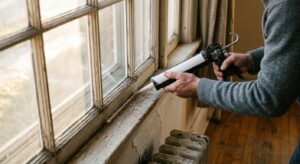
- Inspect accessible ductwork for visible gaps, disconnected joints, or tears in duct tape (which dries out and fails over time). Seal any gaps you find with foil-backed HVAC tape or mastic sealant, not standard duct tape.
- Test your thermostat by setting it 5 degrees above and below the current room temperature and confirming the system responds correctly. Replace thermostat batteries if it uses them, even if they appear functional, as low batteries cause erratic behavior.
- Call two or three local HVAC companies in early spring and request a seasonal tune-up or preventive maintenance visit. Ask specifically what is included in their checklist and confirm it covers refrigerant level check, coil cleaning, electrical connection inspection, and safety controls test.
- Before the technician arrives, write down any observations from the past year: unusual noises, rooms that seem harder to cool or heat, higher-than-normal bills, or short cycling. This information helps the technician diagnose subtle developing issues.
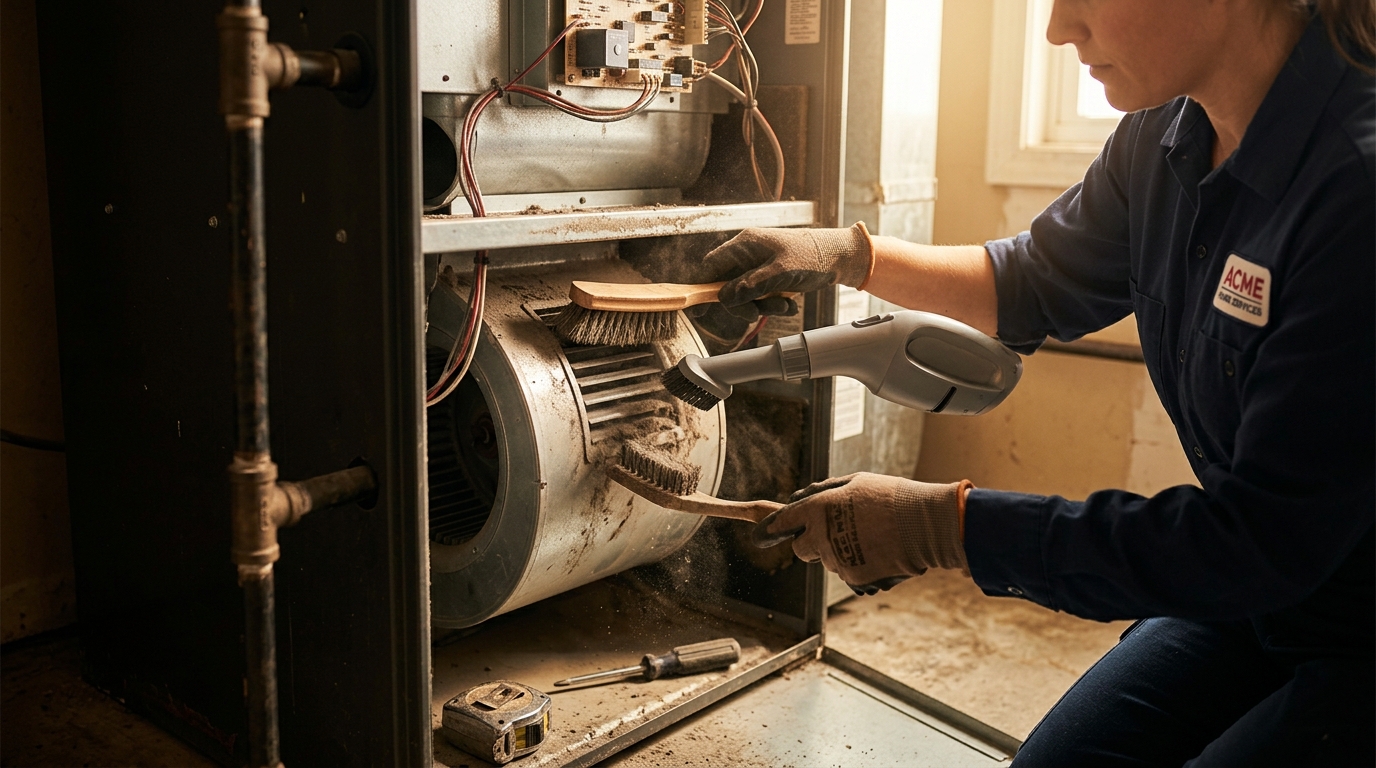
- Ask the technician to check refrigerant charge using manifold gauges and to clean the evaporator coil if accessible. Request that they test capacitor health with a capacitance meter, as capacitors are the most common single-point failure on both AC and heat pump systems.
- Request a static pressure reading if possible. High static pressure (above 0.5 inches water column on a typical residential system) indicates a duct or airflow problem that is costing you efficiency and stressing the blower motor.
- Ask the technician to inspect the heat exchanger on gas furnaces for cracks. A cracked heat exchanger allows combustion gases including carbon monoxide to enter your living space, making this a critical safety check, not just an efficiency one.
- Review the written report before the technician leaves. Ask them to prioritize any findings: what needs attention now, what can wait until next season, and what you can monitor yourself. Get any recommended repairs quoted in writing.
Why It Works: The Benefits
A well-maintained system runs at its rated efficiency. Dirty coils and restricted airflow alone can drop system efficiency by 15 to 25%, meaning a $200 summer electric bill could be $240 to $250 purely due to deferred maintenance. Cleaning and servicing restores that lost efficiency within one billing cycle.
The most common major HVAC failures, including compressor failure, frozen evaporator coils, and cracked heat exchangers, are directly traceable to skipped maintenance. A $100 to $200 annual tune-up routinely prevents the $800 to $2,800 repairs these failures generate.
A properly maintained central AC or heat pump lasts 15 to 20 years. Systems that receive no maintenance typically fail at 10 to 12 years. At a replacement cost of $8,000 to $12,000, extending system life by even three to five years has significant financial value.
A clean filter and coil reduce the volume of dust, mold spores, and allergens circulating through your home. This matters especially for households with asthma or allergy sufferers, where HVAC maintenance is a direct health measure, not just a comfort one.
Most HVAC manufacturers require documented annual professional maintenance to honor long-term warranties on compressors and heat exchangers. Skipping professional service can void a 10-year parts warranty worth thousands of dollars in coverage.
💰 Savings Impact by Action
Replacing a heavily loaded filter restores designed airflow and reduces blower energy draw by up to 15% immediately.
Cleaning fouled evaporator and condenser coils restores heat transfer capacity and can reduce system energy use by 20 to 25%.
Sealing leaky duct connections prevents the 20 to 30% of conditioned air that the DOE estimates is lost in a typical unsealed duct system.
Correcting a 10% refrigerant undercharge restores rated system capacity and eliminates the 20% efficiency penalty caused by an undercharged compressor.
Catching and replacing a failing capacitor or contactor early prevents compressor damage that reduces system efficiency by up to 30% before total failure.
🏠 Key Concepts Explained
The Science Behind It
Your HVAC system operates on the refrigeration cycle: a compressor pressurizes refrigerant, which releases heat through the outdoor condenser coil, then expands through an expansion valve to rapidly cool and absorb heat through the indoor evaporator coil. This cycle depends entirely on efficient heat transfer across both coils. The thermal conductivity of aluminum and copper fins is excellent, but even a thin biofilm of dust, pollen, or mold reduces that conductivity significantly. Studies from the Air Conditioning, Heating, and Refrigeration Institute (AHRI) have shown that a fouled evaporator coil can reduce system capacity by 30% and increase energy use by a proportional amount while the thermostat never registers a difference in setpoint.
Airflow is the other half of the equation. Fans and blowers are engineered to move air at a specific external static pressure. When filters load up with particulates, duct joints leak, or vents are blocked, the resistance the fan must push against increases. The fan motor draws more amperage trying to maintain airflow, and in many cases simply cannot. Reduced airflow across the evaporator coil drops its surface temperature below the dew point of the refrigerant, causing moisture to freeze on the coil rather than drain away. A frozen coil provides essentially zero cooling and, when it thaws, can flood the drain pan and overflow. This chain of events, clogged filter to frozen coil to water damage, is one of the most common and most preventable HVAC failure sequences.
On the heating side, gas furnaces add another critical safety dimension. The heat exchanger is a thin metal chamber where combustion gases travel on one side and your household air travels on the other. Metal expands and contracts thousands of times over a furnace’s lifespan, and stress fractures develop over time. A cracked heat exchanger allows combustion byproducts including carbon monoxide to enter the air stream. This is why annual furnace inspections are not optional for gas systems: they are the primary safety net against CO exposure, which causes more than 400 deaths and 100,000 emergency room visits annually in the United States.
Frequently Asked Questions
▼ My AC runs constantly but the house never cools down. What is wrong?
Start with the filter and the outdoor condenser coil: a dirty filter or a condenser packed with cottonwood or debris are the two most common causes of a system that runs without cooling. If both are clean, the system may be low on refrigerant due to a leak, which requires a technician with gauges to diagnose. Do not let the situation go more than a day or two because a struggling compressor accumulates damage quickly.
▼ How do I know if I need a tune-up or an actual repair?
A tune-up is scheduled preventive maintenance on a system that is running normally, aimed at catching problems early and maintaining efficiency. You need a repair call when the system is not running, not cooling or heating adequately, making unusual noises like grinding or banging, or producing ice on the lines or unit. If something is actively wrong, skip the tune-up scheduling line and call for a diagnostic service call instead.
▼ Can I clean the evaporator coil myself?
You can clean an accessible evaporator coil using a no-rinse coil cleaner spray sold at hardware stores, but accessibility is the limiting factor. Many evaporator coils require removing an access panel and in some systems partial disassembly of the air handler. If the coil is easy to reach and clearly visible, a DIY cleaning is reasonable. If accessing it requires electrical disconnection or significant disassembly, leave it to a technician who can also check refrigerant charge at the same time.
▼ My energy bill went up 20% this summer compared to last year. Could maintenance actually fix that?
Yes, in many cases it can. The three most common maintenance-related causes of a sudden efficiency drop are a loaded air filter, dirty condenser coils, and a slow refrigerant leak. Start with the filter today, then clean or have the condenser cleaned. If the bill is still elevated after those two steps, schedule a refrigerant check because even a small leak causes measurable efficiency loss and will not resolve on its own.
▼ How much should a professional HVAC tune-up cost, and is it worth it?
A standard single-system tune-up runs $80 to $150 for a furnace or AC and $130 to $200 for a heat pump (which needs both heating and cooling checks). It is almost always worth it for systems five years old or older. The tune-up pays for itself if the technician catches and addresses even one developing problem, and it consistently delivers energy savings that partially offset the cost through improved efficiency.
Quick Tips
- Set a recurring calendar reminder for April 1 and October 1 each year to run through your DIY maintenance checklist before the heavy-use seasons begin.
- Sign up for an HVAC maintenance contract with a local company. Most run $150 to $300 per year and include two annual tune-ups, priority scheduling, and 10 to 15% discounts on repairs.
- Install a smart thermostat with runtime tracking. Systems that log daily run hours make it easy to spot efficiency drops: if summer runtime jumps 20% without a weather explanation, something has changed in the system.
- Keep a simple maintenance log in a notes app or on a sheet taped inside your air handler cabinet. Record every filter change, service visit, and repair with the date and cost. This log is valuable when selling your home and when diagnosing recurring problems.
Variations for Your Situation
- Apartment or Condo: Renters can and should change the air filter on schedule, which is often their responsibility under the lease even if the landlord owns the HVAC system. You can also clean your supply vents, pour vinegar into the condensate drain access port if accessible, and keep the area around any outdoor unit clear. For anything beyond that, submit a written maintenance request to your landlord and keep a copy, as deferred maintenance on a landlord-owned system that causes damage or health issues creates liability.
- Tight Budget (under $50): Prioritize in this order: replace the filter ($8 to $20), pour vinegar down the condensate drain ($2), rinse the outdoor condenser with a garden hose (free), and unblock any covered vents (free). These four steps address the most common efficiency losses and failure triggers at minimal cost. Skip the professional tune-up for one year only if the system is under five years old and running normally, then budget for it the following year.
- Older Home with Aging System (15-plus years): Systems in this age range need professional inspection more urgently, not less. Ask the technician to give you an honest remaining-life estimate and to flag any components showing wear, particularly the capacitor, contactor, and heat exchanger. Get a replacement quote at the same time so you can plan financially rather than making a rushed decision during a summer breakdown. Also prioritize duct sealing in older homes, as duct systems of this age typically lose 25 to 35% of conditioned air before it reaches living spaces.