Reach into your attic hatch and grab a handful of insulation. Is it fluffy and white? Gray and papery? Dense and almost rock-like? What you’re holding has a direct impact on how well your home holds heat in winter, stays cool in summer, and how much you pay every month in energy bills. Yet most homeowners have never been told what type of insulation they have, let alone what it means for their comfort or their next upgrade project.
The three most common types of loose-fill and batt insulation found in American homes are cellulose, fiberglass, and mineral wool (also called rock wool or slag wool). Each behaves differently when it comes to thermal resistance, moisture handling, fire performance, and how well it pairs with air sealing. Installing the wrong type in the wrong location, or topping off one type with an incompatible material, can reduce your insulation’s effectiveness and even cause moisture problems.
This guide walks you through exactly how to identify each insulation type using visual cues, texture, and a few simple at-home tests. We’ll also explain what each type does well, where it falls short, and how knowing your current insulation helps you make smarter, better-timed upgrades that can cut heating and cooling costs by 15 to 25 percent.
What You’ll Need
Click on an item below to shop for the recommended items for this recipe on Amazon.
As an Amazon Associate, we earn from qualifying purchases.
How to Do It
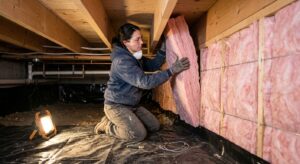
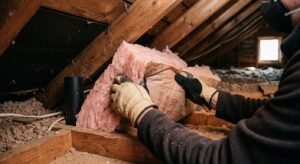
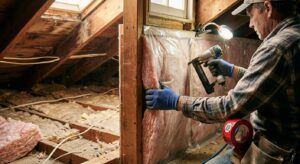
- Put on an N95 or P100 respirator, safety glasses, gloves, and a long-sleeved shirt before entering your attic or opening a wall cavity. All three insulation types can irritate skin, eyes, and lungs.
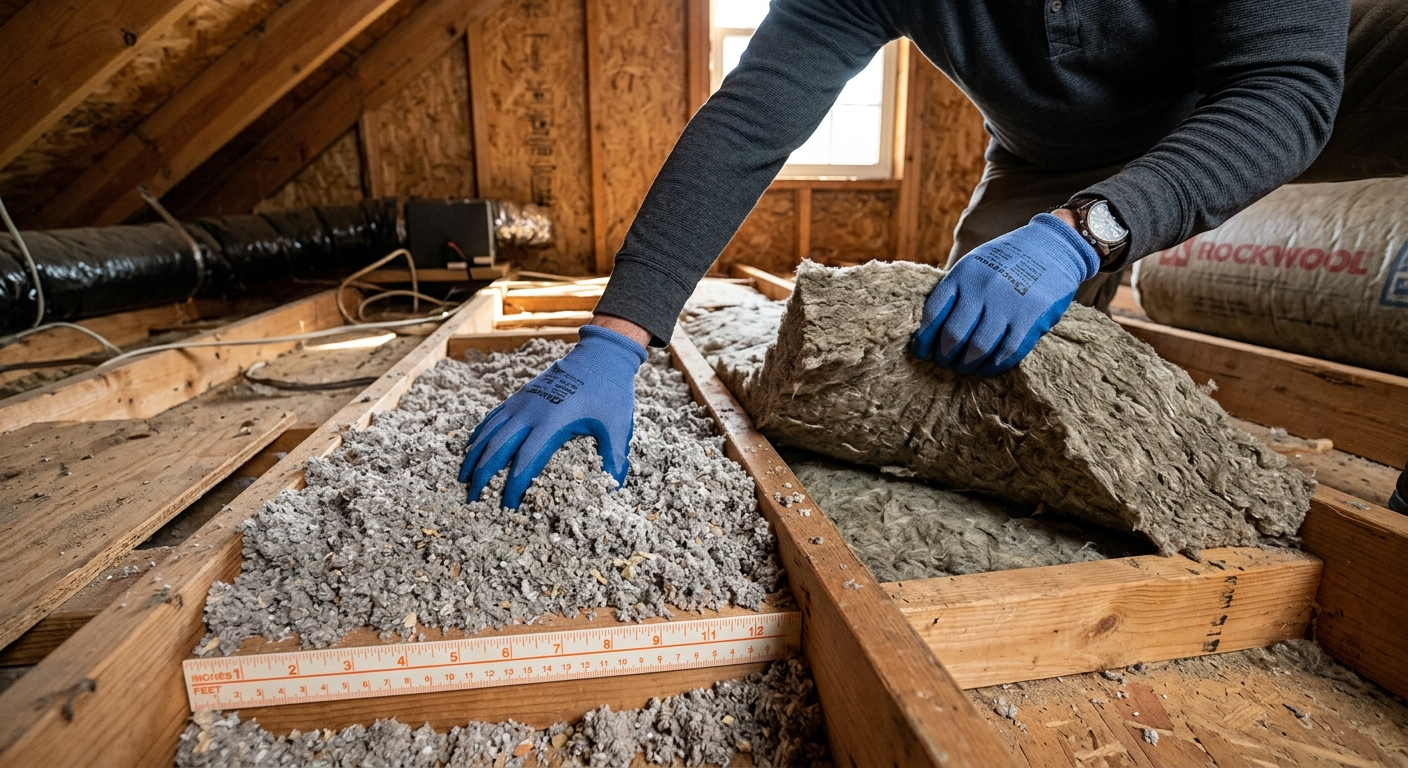
- Look at the color first. Fiberglass loose-fill is typically white or light yellow and looks like fluffy cotton candy with a shiny or sparkly appearance in light. Cellulose is gray to dark gray and looks like shredded newsprint or finely ground paper. Mineral wool loose-fill is grayish-brown to dark tan and looks almost gritty or earthy.
- Gently pick up a small handful and feel the texture. Fiberglass feels light, airy, and may leave a faint itching sensation on skin from tiny glass fibers. Cellulose feels dry and papery, almost like holding a handful of dryer lint, and is noticeably heavier per volume than fiberglass. Mineral wool feels denser and more rigid, almost like compressed soil or coarse wool, and the fibers are stiffer than fiberglass.
- Check for batts rather than loose-fill. Fiberglass batts are typically pink, yellow, or white and have a soft, fluffy texture with a consistent rectangular shape. Mineral wool batts are tan or greenish-gray, noticeably heavier than fiberglass, and hold their shape when you press them. Cellulose is almost never sold in batt form, so batts rule out cellulose immediately.
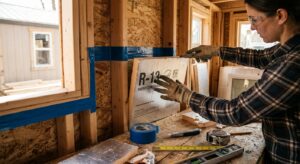
- Measure the depth of loose-fill using a ruler or tape measure. Look for any original installation stickers left by the installer on attic joists, which may list the material type, R-value, and settled depth. Take a photo for your records before closing the hatch.
- Compare your measured depth against standard R-value tables: 3.5 inches of fiberglass batts gives roughly R-11, 3.5 inches of dense-pack cellulose gives roughly R-13, and 3.5 inches of mineral wool gives roughly R-15. This tells you your current thermal performance and how far short you are of modern code minimums (typically R-49 to R-60 in climate zones 4 through 7).
- After identifying your insulation type using the visual and touch steps above, calculate your attic square footage and your current vs. target R-value gap. For example, if you have 6 inches of settled cellulose (roughly R-20) and your climate zone recommends R-49, you need to add approximately R-29 of additional material.
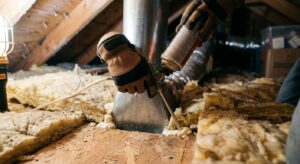
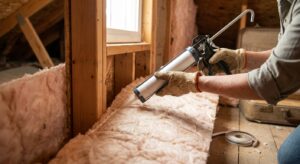
- Air seal all major bypass points before adding any new insulation. Use canned spray foam or acoustical sealant to close gaps around recessed lights (use a fire-rated cover box first), top plates, plumbing penetrations, and attic hatch edges. This step alone can reduce air leakage by 15 to 30 percent and dramatically improves the effectiveness of the insulation you add on top.
- Choose a compatible topping material. Unfaced fiberglass batts can be laid perpendicular over existing loose-fill cellulose or fiberglass, which helps cover joist gaps and adds R-value without the vapor barrier issue. Loose-fill cellulose blown in with a rented machine (available at most big-box stores for free or low cost with purchase of bags) works well over existing fiberglass or cellulose and is easy to achieve even coverage with.
- If adding loose-fill cellulose, rent a blowing machine and follow the bag coverage chart precisely for your target R-value. Wear your respirator and safety glasses throughout. Blow material from the far corners of the attic toward the hatch, working backward so you do not compact the material you have just laid.
- If laying fiberglass or mineral wool batts, run the first layer perpendicular to joists and the second layer (if needed) perpendicular to the first. Never use faced batts as the top layer since the vapor barrier would trap moisture. Leave the attic hatch area clear, or install a rigid foam hatch cover with a minimum of R-15 to avoid a major thermal bypass.
- After the upgrade, measure total insulation depth and compare it to your target. Take photos and note the date and R-value for future reference. Many utility companies offer rebates of $0.10 to $0.25 per square foot for attic insulation upgrades, so check your utility’s website or energystar.gov/rebates before you start.
- Hire a BPI-certified or RESNET-certified home energy auditor to conduct a blower-door test and thermal imaging inspection. This identifies not just what insulation you have, but exactly where the gaps and bypasses are. Expect to pay $200 to $500 for a full audit, which often pays for itself in avoided upgrade mistakes.
- Ask the auditor to identify your wall insulation type. Wall cavities in homes built before 1980 are frequently uninsulated or have degraded batt insulation that no longer contacts the sheathing. Dense-pack cellulose blown into wall cavities through small holes cut in the exterior siding or drywall delivers R-3.5 per inch and fills the entire cavity, unlike batts.
- Get at least two quotes from insulation contractors for any work beyond simple attic top-off. Specify the target R-value in writing, the material to be used, and whether air sealing is included. Air sealing combined with insulation often qualifies for the federal 25C energy efficiency tax credit, which covers 30 percent of costs up to $1,200 for insulation and $150 for an energy audit as of 2024.
- If your home was built before 1980 and has vermiculite in the attic (a brownish, pebble-like material that looks distinct from all three insulation types covered here), do not disturb it. Vermiculite from the Libby, Montana mine contains asbestos. Contact an EPA-certified abatement contractor before doing any attic work.
- After professional installation, request documentation of the installed R-value, material type, and square footage for your records. This documentation is required if you claim the 25C tax credit and is useful for future home sale disclosures.
Why It Works: The Benefits
Knowing your current insulation type lets you choose the right topping material and avoid compatibility errors. A homeowner who mistakes low-density fiberglass for cellulose might add the wrong density or facing type, reducing overall system R-value by up to 20 percent.
Upgrading from under-insulated or degraded insulation to a properly installed R-49 to R-60 attic assembly can cut annual heating and cooling costs by 15 to 25 percent, according to DOE data. Identifying your starting point lets you calculate exactly how many inches of additional material you need.
Cellulose that has been saturated by a roof leak will mat, lose R-value, and can harbor mold. Recognizing the gray, matted, papery texture of water-damaged cellulose before adding new insulation on top of it prevents trapping moisture in the assembly, which can lead to structural rot.
Older fiberglass batts with degraded kraft paper facing can off-gas and shed fibers into the air stream if they are damaged or unsealed. Identifying and replacing damaged batts near HVAC air handlers can meaningfully reduce airborne particulates and improve comfort for allergy-sensitive households.
Identifying whether you have combustible cellulose or non-combustible mineral wool around flue chases, recessed lights, or chimney bypasses is a code compliance and safety issue. Replacing fiberglass or cellulose within 3 inches of a B-vent or flue with mineral wool costs $20 to $80 in materials and eliminates a genuine fire hazard.
💰 Savings Impact by Action
Sealing attic bypasses before adding insulation reduces conditioned air loss by up to 20 percent, which is the step most DIYers skip.
Upgrading an under-insulated attic from R-19 to R-49 cuts annual heating and cooling costs by 15 to 20 percent according to DOE estimates.
Dense-packing previously empty 2-by-4 wall cavities adds R-13 and reduces total home heat loss by approximately 12 percent in older uninsulated construction.
Switching from permeable blown fiberglass to dense-pack cellulose or mineral wool recovers up to 30 to 50 percent of wind-eroded R-value in vented attics, translating to roughly 10 percent bill reduction.
Removing and replacing water-damaged matted cellulose that has lost 30 to 50 percent of its R-value restores full thermal performance and prevents further mold-related degradation.
🏠 Key Concepts Explained
The Science Behind It
All three insulation types work by the same fundamental principle: trapping still air within a fibrous matrix. Heat moves through a material by conduction (fiber to fiber contact), convection (air movement within the material), and radiation (infrared energy transfer). Insulation with finer, denser fibers interrupts all three pathways more effectively, which is why mineral wool and dense-pack cellulose outperform low-density fiberglass on a per-inch basis despite all three relying on trapped air as their primary thermal barrier.
The critical but often overlooked variable is air movement through and around the insulation layer. Loose-fill fiberglass is extremely porous and allows wind-driven air currents in a vented attic to move laterally through the material, a phenomenon called wind washing. Research from Oak Ridge National Laboratory found that wind washing can reduce the effective R-value of attic fiberglass by 30 to 50 percent at wind speeds common in vented attics. Cellulose and mineral wool are dense enough to resist this convective looping, which is why a nominally lower R-value of dense-pack cellulose often outperforms a nominally higher R-value of fluffy blown fiberglass in real-world conditions.
Moisture interaction further distinguishes these materials. Fiberglass is hydrophobic, meaning liquid water beads off the fibers, but the air pockets fill with water when the material is wet, completely collapsing its thermal resistance. Mineral wool is also hydrophobic and retains roughly 70 to 80 percent of its R-value even when wet because the rigid fiber structure holds air pockets open. Cellulose, being made of wood fiber, is hygroscopic and will temporarily buffer small amounts of moisture, but prolonged saturation causes the fibers to mat together, permanently reducing R-value and creating conditions for mold growth. Understanding these physical behaviors helps you choose the right material for each specific location in your home, particularly in climates with high humidity or in areas prone to minor water infiltration.
Frequently Asked Questions
▼ I found two different types of insulation in my attic. Is that normal and is it a problem?
Multiple insulation types in the same attic are very common and are generally not a problem as long as the layers are compatible. The most frequent combination is a base layer of older fiberglass batts with blown-in cellulose or fiberglass on top added during a later upgrade. The key rule is that no vapor barrier or faced batt should be sandwiched between layers, since a trapped vapor barrier can cause condensation. If you see kraft paper or foil facing buried under loose-fill, the facing should be slit or torn to allow moisture to pass through before you add more material on top.
▼ My insulation looks gray and flat. How do I know if it is damaged cellulose or just old fiberglass?
Pick up a small sample and roll it between your gloved fingers. Old compressed fiberglass will feel slightly springy and scratchy and may still have a faint sheen from the glass fibers catching light. Damaged cellulose will feel papery, crumble easily, and leave gray dust on your glove without any springy rebound. If the material has a musty smell or shows dark staining, it has likely been wet, and you should probe it with a moisture meter before proceeding. Wet insulation reads above 20 percent moisture content and should be removed and replaced rather than covered.
▼ Can I mix cellulose and mineral wool in the same attic?
Yes, this is a reasonable upgrade strategy. You can add unfaced mineral wool batts over existing loose-fill cellulose, running the batts perpendicular to the joists to bridge gaps and add R-value. Mineral wool will not chemically interact with cellulose, and both materials have similar vapor permeability so there is no moisture-trapping risk. Just make sure no facing is buried between the layers and that the total assembly reaches your target R-value for your climate zone.
▼ How do I tell if my wall cavities have any insulation at all?
Remove a single electrical outlet cover plate on an exterior wall and use a flashlight to peer into the gap around the electrical box. If the cavity looks hollow and you can see the wall sheathing, the cavity is likely uninsulated. You can also remove the outlet box from the wall, carefully probe the cavity with a long screwdriver, and check what you feel and what comes back on the tip. A more reliable method is thermal imaging with an infrared camera, which many energy auditors use to map uninsulated wall areas without any demolition. Uninsulated 2-by-4 walls in a home represent a missing R-11 to R-15 in every cavity, and dense-pack cellulose blown in by a contractor is the most cost-effective retrofit fix, typically running $1.50 to $3.00 per square foot of wall area.
▼ I added more insulation but my energy bills barely changed. What went wrong?
The most common reason insulation upgrades underperform is unaddressed air leakage. Insulation slows conductive heat transfer, but it does not stop air movement through gaps around light fixtures, plumbing penetrations, and the top plate of exterior walls. If your attic has significant bypass leakage, warm indoor air rises through those gaps directly into the attic regardless of how much insulation is on top of the joists. Go back and air seal all visible penetrations with spray foam and fire-rated caulk, then add a rigid foam cover box over any recessed lights. Homes with both proper air sealing and adequate insulation consistently outperform homes with insulation alone by 10 to 20 percent on energy bills.
Quick Tips
- Take a photo of your attic insulation next to a ruler before any work. This one image tells you both the material type and the approximate R-value and takes 30 seconds to capture.
- Cellulose installed before 1990 may have used different borate formulations. If your cellulose smells musty or is heavily discolored, have it tested for moisture content with an inexpensive pin-type moisture meter before adding more insulation on top.
- When buying loose-fill insulation, the bag coverage chart on the back is legally required to be accurate. Always follow the chart for your target R-value rather than guessing based on depth alone, since settled material is denser than freshly blown material.
- Mineral wool batts are the best choice if you are insulating around a gas fireplace chase, attic kneewalls adjacent to living space, or areas within 3 inches of a metal flue. Fiberglass and cellulose are not rated for direct contact with heat-producing appliances.
Variations for Your Situation
- Apartment or Condo: Renters and condo owners cannot modify wall or attic insulation, but interior window insulation film ($25 to $60 per window) and door draft snakes address the most accessible bypass points. Focus on identifying cold exterior walls during winter with a surface thermometer and use heavy thermal curtains (R-3 to R-6 when closed) over those walls to cut radiant heat loss without touching building systems. Report cold walls or ceiling moisture to your landlord in writing, since inadequate insulation is a habitability issue in most states.
- Tight Budget Under $50: The single highest-impact zero-cost step is a detailed visual inspection of your attic to measure current depth and identify your material. Armed with that information, use the DOE’s insulation fact sheet to calculate your R-value gap. If you are below R-30, contact your utility company before spending anything since many offer free or subsidized insulation installation for income-qualifying households, and weatherization assistance programs through the DOE cover attic insulation at no cost for qualifying homeowners. If you do not qualify, a single $25 can of spray foam used on the top 5 to 10 most obvious air bypass points around light fixtures and plumbing can deliver measurable improvement before you save up for a full insulation top-off.
- Older Home Pre-1980: Homes built before 1980 often have no wall insulation at all, minimal attic insulation that has settled well below modern R-value targets, and a higher number of air bypass pathways due to older framing practices. Prioritize getting a professional energy audit with thermal imaging before spending money on materials, since the audit reveals the specific locations of greatest heat loss rather than forcing you to guess. Also test for vermiculite in the attic before any work, since the Libby mine supplied a significant portion of the national vermiculite market through the 1970s and any brownish pebble-like material must be tested by a certified lab before disturbance.