You turn on your air conditioner on a hot afternoon, and instead of cool relief, you get a wave of damp, musty air that smells like a wet basement. It is one of the most common homeowner complaints during cooling season, and it is not just unpleasant. That smell is biological contamination inside your HVAC system, and breathing it daily can aggravate allergies, trigger asthma, and reduce the overall air quality in your home.
The root cause is almost always moisture. Air conditioners remove humidity as part of the cooling process, and that moisture has to go somewhere. When drainage is blocked, airflow is restricted, or the system sits unused for weeks, mold and mildew colonize the evaporator coil, drain pan, ductwork, or air filter. A dirty filter alone can reduce system efficiency by 5 to 15 percent, and a fully blocked drain line can cause water damage costing hundreds to thousands of dollars to repair.
This post walks you through exactly why your AC smells musty, the six building science factors that make it worse, and two practical approaches you can tackle this weekend. Whether you want a quick fix in under an hour or a thorough DIY cleaning that gets to the root of the problem, you will find step-by-step instructions and real numbers to help you decide what your system actually needs.
What You’ll Need
Click on an item below to shop for the recommended items for this recipe on Amazon.
As an Amazon Associate, we earn from qualifying purchases.
How to Do It
- Turn off the AC at the thermostat and shut off power at the breaker serving the air handler before touching anything inside the unit.
- Locate the air filter at the return air grille or inside the air handler. Pull it out and inspect it. If it is gray, matted, or has visible mold spots, replace it with a fresh MERV 8 filter. A clogged filter is the single most common cause of musty AC odors.
- Find the condensate drain line, which is typically a white PVC pipe exiting the air handler. Locate the clean-out cap or T-fitting near the unit. Pour one cup of white distilled vinegar into the drain line to kill algae and break up soft clogs. Let it sit for 30 minutes.
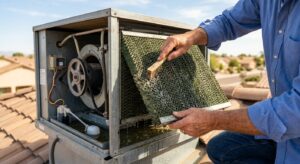
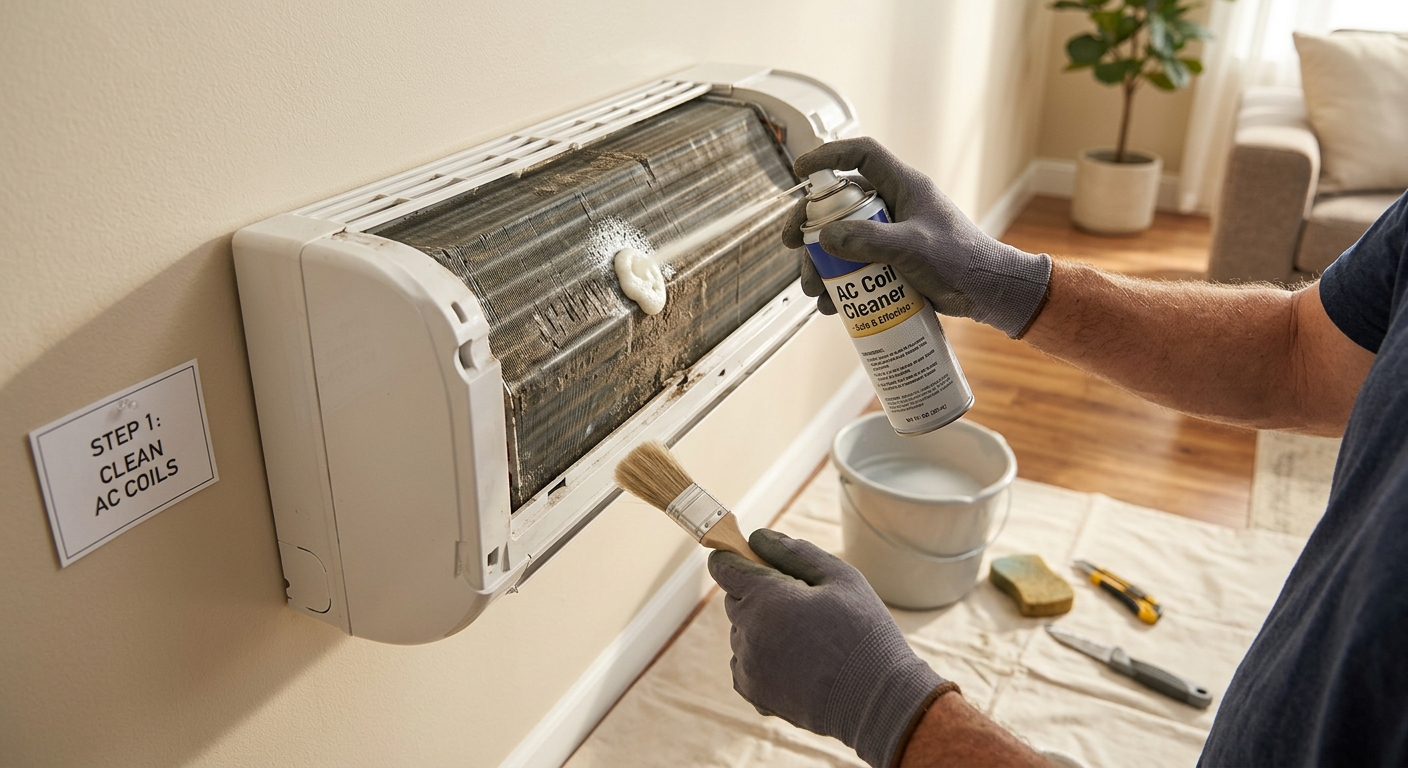
- While the vinegar works, spray a can of no-rinse evaporator coil cleaner (available at any hardware store) onto the accessible coil fins visible through the air handler access panel. The foam will liquefy buildup and drip into the drain pan below.
- Flush the drain line with one quart of warm water to push loosened debris toward the exterior drain outlet. Confirm water is flowing freely out of the drain line terminus outside or into your floor drain.
- Restore power, set the thermostat to cool, and run the system for 20 minutes. The remaining cleaner will drain off the coil with normal condensation. Check for musty smell at the vents. Improvement should be noticeable within one to two cycles.
- Turn off the AC at the thermostat and shut off the disconnect or breaker. Wait 10 minutes to allow the capacitor to discharge before opening the air handler cabinet.
- Remove the access panel on the air handler to expose the evaporator coil. Take a photo before touching anything so you can reference the original arrangement of components.
- Use a soft brush attachment on a shop vacuum to gently remove loose dust and debris from the coil fins. Work top to bottom and vacuum the drain pan at the same time to remove standing water and sludge.
- Apply a foaming no-rinse coil cleaner liberally across all accessible coil surfaces. Let it dwell for 10 to 15 minutes. The foam encapsulates mold, grease, and dust and converts it to a liquid that drains away during operation.
- Clean the drain pan thoroughly with a 50-50 bleach-water solution and a sponge or rag, reaching into corners where biofilm accumulates. Rinse with clean water and dry with a towel.
- Attach a wet-dry vacuum hose to the exterior end of the condensate drain line and run it for 30 to 60 seconds to pull out any remaining clog material. Then flush from the interior clean-out with a solution of one tablespoon of bleach per cup of water to kill remaining algae.
- Drop one or two condensate drain pan tablets (available for under $10 at hardware stores) into the cleaned drain pan. These slow-dissolving tablets release a biocide over 30 to 90 days to prevent algae regrowth.
- Replace the air filter with a fresh MERV 8 to 11 filter, ensuring it seats snugly in the slot with no gaps at the edges. Gaps larger than a quarter inch allow unfiltered air to bypass the filter entirely.
- Restore power and run the system for 30 minutes. Check all supply vents for musty odor. Inspect the exterior drain terminus to confirm active condensate flow. If the smell persists after two days of operation, the issue may be in the ductwork and warrants a professional inspection.
- Schedule a service call with a licensed HVAC technician and specifically mention the musty odor so they bring coil cleaning equipment and a drain line camera or pressure test kit.
- Ask the technician to perform a full evaporator coil cleaning with a pressure-rinse system, which is more thorough than spray-on foam and reaches deep into coil fins that homeowners cannot access.
- Request a condensate drain line inspection and pressure flush. Technicians can use a nitrogen purge or wet-dry vacuum system to clear blockages further down the line than DIY methods can reach.
- Have the technician check duct connections at the air handler for leaks, which can be sealed with mastic sealant. Leaky return ducts pulling in humid unconditioned air are a major driver of persistent mold problems.
- If mold is found in flexible or hard ducts, get a written estimate for professional duct cleaning or section replacement. Ask whether EPA-registered antimicrobial duct treatments are appropriate for your situation.
- Request a written service report documenting findings, any refrigerant readings, and coil condition. Use this as a baseline for next year’s maintenance comparison.
Why It Works: The Benefits
Removing mold and biofilm from the evaporator coil and drain pan eliminates the primary source of airborne mold spores circulated through your home, which is especially important for households with allergy or asthma sufferers.
A clean evaporator coil transfers heat up to 21 percent more efficiently than a coil coated in dust and biofilm, according to ASHRAE research. Homeowners with heavily fouled coils can see cooling bill reductions of 10 to 15 percent after a thorough cleaning.
A fully blocked condensate drain line causes the drain pan to overflow, which can saturate drywall, subfloor, or ceiling materials below the air handler. Remediation and repair for water damage from a clogged AC drain commonly runs $500 to $3,000 depending on the extent of damage.
Mold and debris buildup forces the blower motor and compressor to work against increased resistance, raising operating temperatures and accelerating wear. Regular coil and drain cleaning can add 2 to 5 years to the service life of a central AC system.
A clean coil reaches its design operating temperature faster, improving the system’s ability to pull moisture from the air. This can reduce indoor relative humidity by 5 to 10 percentage points in humid climates, making the home feel cooler at the same thermostat setting.
💰 Savings Impact by Action
Restoring a fouled evaporator coil to clean condition improves heat transfer efficiency by up to 21 percent, translating to roughly 10 to 15 percent lower cooling energy use.
Replacing a clogged air filter restores proper airflow and reduces the energy the blower motor consumes by 5 to 10 percent per cooling cycle.
A clear condensate drain line allows the system to dehumidify efficiently, reducing the runtime needed to reach comfort conditions by approximately 5 percent in humid climates.
Sealing leaky return ducts that pull in humid unconditioned air can reduce the cooling system moisture load enough to cut dehumidification-related runtime by up to 20 percent.
🏠 Key Concepts Explained
The Science Behind It
The musty smell you detect at your vents is the volatile organic compounds (VOCs) released by mold, mildew, and bacteria as they metabolize organic matter. These compounds, called microbial VOCs or mVOCs, are detectable by the human nose at concentrations as low as a few parts per billion. The evaporator coil is an ideal growth environment because it combines three conditions that mold requires: a food source (dust and organic debris), moisture (condensation), and moderate temperatures between 40 and 90 degrees Fahrenheit during startup and shutdown cycles.
Heat transfer efficiency is the reason a dirty coil also costs you money. The evaporator coil works by allowing refrigerant inside to absorb heat from the warm air blown over the fins. A thin layer of biofilm and dust acts as an insulating blanket over the metal fins, slowing that heat transfer. ASHRAE studies have shown that a fouled coil with as little as 0.04 inches of debris coating can reduce heat transfer efficiency by 20 percent or more, forcing the compressor to run longer to achieve the same cooling effect. That translates directly into higher electricity consumption and greater wear on the compressor.
Condensate drain systems rely entirely on gravity and a slight negative pressure created by the air handler blower. Algae, which thrives in the warm wet environment of the drain line, forms a slimy mat that progressively narrows the drain pipe diameter. Once the clog reduces flow enough, water backs up into the pan. At 100 percent blockage, a standard residential system produces roughly two to five gallons of condensate per hour in humid conditions, meaning a fully blocked drain can overflow the pan in just a few hours of operation. Understanding this sequence makes it clear why monthly vinegar flushes during cooling season are one of the highest-return maintenance habits a homeowner can build.
Frequently Asked Questions
▼ I cleaned everything but the musty smell is still coming from one specific vent. What is causing that?
When the odor is isolated to one or two vents rather than present throughout the house, the source is almost certainly in the ductwork serving that zone rather than at the air handler. Look for visible mold around the vent grille itself and check whether that duct runs through a crawl space or attic where moisture intrusion or condensation on the outside of the duct could be feeding mold inside. This situation typically requires a professional duct inspection and targeted cleaning or section replacement.
▼ My AC smells musty only when it first turns on and then the smell goes away. Is that normal?
This pattern is very common and usually means there is a small amount of mold or mildew on the evaporator coil or in the drain pan that gets disturbed by the initial blast of air. The smell fades as the coil cools down and the system reaches steady state. It is not normal, but it indicates a mild to moderate buildup rather than a severe infestation. A thorough coil cleaning using the DIY approach in this guide should resolve it within one to two days of operation.
▼ Can a musty AC smell make my family sick?
Yes, prolonged exposure to mold spores and mVOCs from a contaminated AC system can cause or worsen respiratory symptoms, especially in people with allergies, asthma, or compromised immune systems. Common symptoms include nasal congestion, eye irritation, coughing, and fatigue that improve when you leave the house. If household members are experiencing these symptoms and you suspect HVAC mold, address the system immediately and consider scheduling an indoor air quality test to check spore counts before and after remediation.
▼ How long before I notice the smell is gone after cleaning?
Most homeowners notice a significant improvement within 24 to 48 hours of completing a coil and drain cleaning, as normal system operation rinses away remaining cleaner residue and the source of the odor is eliminated. If a faint smell persists beyond 72 hours of operation with a clean filter installed, there is likely a secondary source such as mold in the ductwork or a slow leak feeding the problem, and a professional inspection is warranted.
▼ My landlord is slow to respond. Can I clean the AC myself as a renter?
Renters can safely and legally handle basic maintenance like replacing the air filter and flushing the condensate drain with vinegar in virtually all lease situations, as these are considered routine care rather than modifications. Document the musty smell in writing to your landlord, then do the quick fix approach yourself using the steps in this guide. If the problem requires coil cleaning or duct work, put the request in writing and keep a copy, as landlords are generally obligated to maintain habitable air quality under most state housing codes.
Quick Tips
- Flush the condensate drain line with one cup of white vinegar every month during cooling season to prevent algae buildup before it causes a clog.
- Run your AC fan on the auto setting rather than on, so the evaporator coil has time to dry out between cooling cycles instead of staying continuously wet.
- Keep indoor humidity between 40 and 50 percent using a standalone dehumidifier if your AC is oversized or short-cycles frequently, which reduces the moisture load that feeds mold.
- Check and replace your air filter every 30 to 60 days during heavy use months rather than waiting for the standard 90-day recommendation, especially if you have pets or live in a dusty area.
Variations for Your Situation
- Apartment or Renter: If you have a through-wall or window AC unit, unplug it and remove the filter. Wash the filter in warm soapy water, let it dry completely, and reinstall it. Spray the accessible coil with no-rinse coil cleaner available for under $12 at any hardware store. For central HVAC in a rental, replace the filter yourself immediately (most leases allow this) and document the problem in writing to your landlord to establish a paper trail for habitability claims.
- Tight Budget (under $30): Start with a fresh air filter ($8 to $15), one cup of white vinegar poured into the drain line, and a homemade coil spray made from one tablespoon of dish soap per quart of water applied with a spray bottle. Wipe the drain pan with a bleach-dampened cloth. These steps cost almost nothing and resolve the problem in roughly 60 percent of cases, making them the right first move before spending more.
- Older Home (pre-1980): Homes built before 1980 often have galvanized metal ductwork with interior surfaces that are more porous and harder to clean than modern flex duct. If cleaning the air handler does not eliminate the smell, the ducts themselves may be the source. Have an HVAC contractor pressure-test the duct system for leaks and inspect interior surfaces with a camera. In some cases, sealing the ducts with mastic from the inside and running the system with the windows open for several hours is enough to purge residual odors.