Every January, millions of homeowners open their utility bill and feel the same gut punch. The temperature outside dropped, sure, but why did your bill jump 40 percent when it only got 10 degrees colder? The answer is not simply that heating costs more in winter. It is that your home is quietly hemorrhaging warm air through gaps, cracks, and thin insulation that you cannot see but your furnace absolutely feels. The heating system runs longer, cycles more frequently, and burns more fuel trying to maintain a temperature your building envelope cannot hold.
The two biggest offenders are stack effect driven air leakage and inadequate attic insulation. Stack effect is the physical process where warm air rises and escapes through every gap at the top of your home, pulling in freezing outside air at the bottom. Meanwhile, an attic insulated to only R-11 or R-19 is losing heat at roughly twice the rate of one insulated to the DOE-recommended R-38 to R-60. Together, these two problems can account for 35 to 50 percent of your total heating load, which maps almost perfectly to that January bill spike.
This post breaks down the exact science behind winter energy spikes, shows you how to diagnose your own home in under an hour, and gives you two practical approaches you can start this weekend. Whether you have 30 minutes or a full Saturday afternoon, there are real, measurable fixes available at every budget level.
What You’ll Need
Click on an item below to shop for the recommended items for this recipe on Amazon.
As an Amazon Associate, we earn from qualifying purchases.
How to Do It
- Do a draft inspection on a cold windy day: hold a lit incense stick or a damp hand near window frames, door edges, electrical outlets on exterior walls, and the attic hatch. Anywhere the smoke wavers or you feel cold air is a confirmed leak.
- Apply foam backer rod and weatherstripping to all exterior door perimeters. Check that the door sweep at the bottom seals flush against the threshold. A proper seal should make a slight hiss of resistance when the door closes. Replacement sweeps cost $8 to $15 per door.
- Seal around every electrical outlet and switch plate on exterior walls using inexpensive foam gaskets that slide behind the cover plate. Each gasket costs under $1 and the job takes 90 seconds per outlet. A typical home has 10 to 20 of these on exterior walls.
- Apply rope caulk or removable window weatherstrip to any single-pane or rattling windows for the season. Rope caulk peels off cleanly in spring and costs about $4 per window.
- Check and reseal the attic hatch with adhesive foam weatherstripping around the frame perimeter. This single gap is often the largest unobstructed path for stack effect air loss in the home. Add a rigid foam insulation cover rated at least R-15 on top of the hatch.
- Look under sinks and behind toilets for pipe penetrations through exterior walls and seal them with expanding foam sealant. These gaps are almost universally skipped during construction and can be as large as 1 to 2 inches in diameter.
- Rent or buy a blower door test if possible, or simply hire an energy auditor for $100 to $300 to identify your top air leakage points before you start. Many utility companies offer free energy audits, so check your provider first.
- Enter the attic with an N95 respirator, safety glasses, and long sleeves. Locate and mark all top-plate gaps where interior walls meet the attic floor, plumbing and wire penetrations, recessed light cans, and any HVAC chases. These are your primary stack-effect pathways.
- Use canned expanding foam for gaps under 3 inches wide around all wire, pipe, and HVAC penetrations. For larger gaps at wall top plates, use rigid foam board cut to fit and sealed with foam around the perimeter. This step alone can reduce air leakage by 20 to 40 percent.
- If recessed lights in the ceiling below are non-IC-rated, build a rigid foam dam around each one leaving 3 inches of clearance, then seal the dam to the drywall with foam. IC-rated recessed lights can be sealed directly with foam.
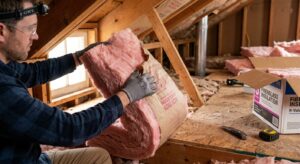
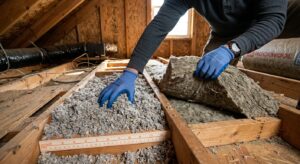
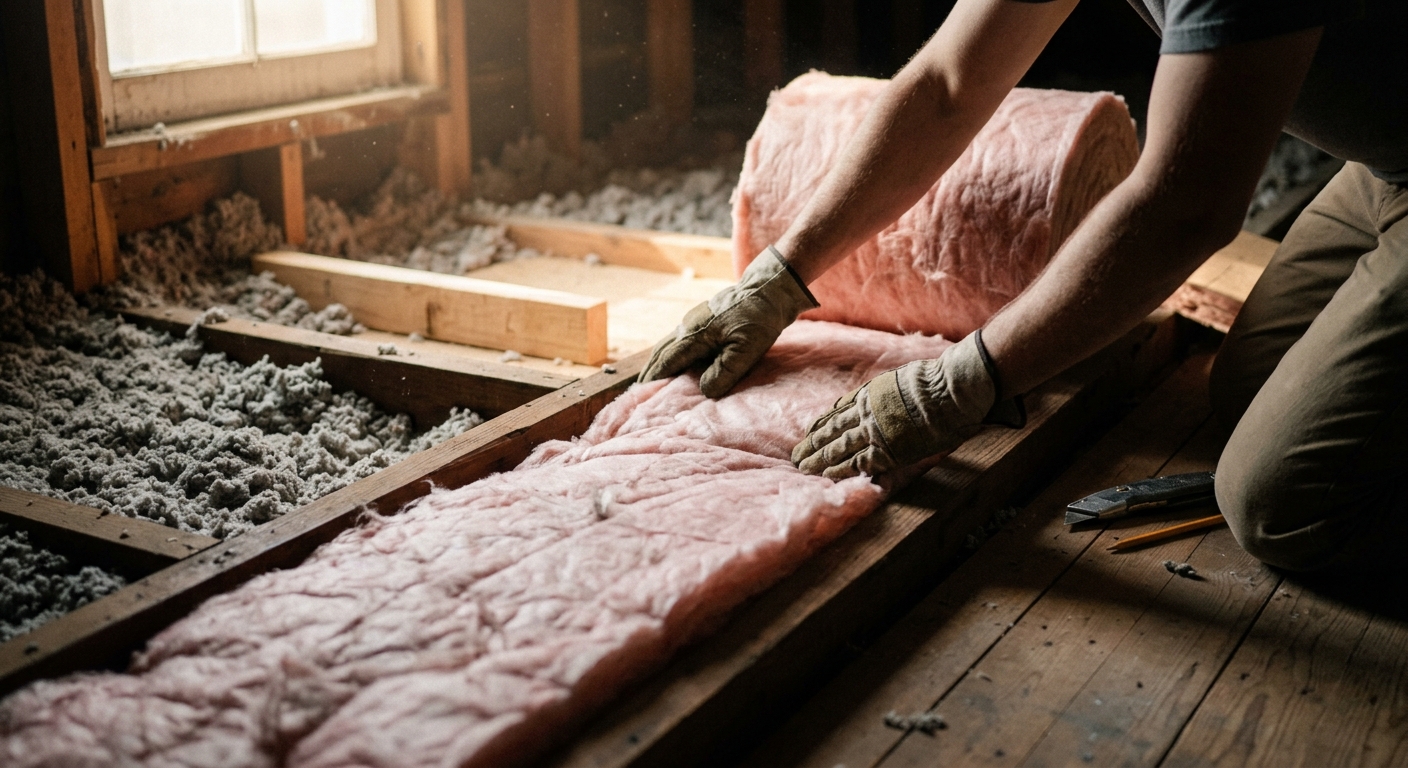
- Measure your existing insulation depth. Standard fiberglass batts compress to about R-3.2 per inch and blown cellulose runs about R-3.7 per inch. If you are below 10 to 11 inches of insulation, you are likely at R-30 or less and under the DOE minimum recommendation for most U.S. zones.
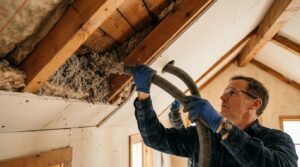
- Add blown cellulose or blown fiberglass to bring the attic to R-49 to R-60. You can rent a blower machine from most home improvement stores for free when you purchase at least 10 bags of insulation, which typically covers 500 to 700 square feet at the target depth. Work from the eaves toward the center, keeping soffit baffles clear to maintain ventilation.
- Request a blower door test from a certified BPI or RESNET energy auditor. The test pressurizes your home and identifies every significant leak location with precision, giving you a baseline ACH number to compare against after work is complete.
- Review the audit report and prioritize the air sealing recommendations. A professional crew using two-component spray foam can seal an entire attic floor in 2 to 4 hours, reaching penetrations that are difficult to access by hand.
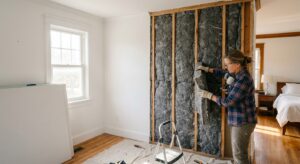
- Ask for dense-pack cellulose injection into any wall cavities that show up as thermal anomalies during an infrared camera scan. This process drills small holes in the exterior cladding or drywall, fills the cavity, and patches cleanly, bringing walls from near R-0 to R-13 without major renovation.
- Request a post-project blower door test to verify the air sealing work achieved the target ACH reduction. A reputable contractor will include this. You should see at least a 20 to 35 percent reduction in air leakage compared to the baseline.
- File for applicable utility rebates and the federal Energy Efficient Home Improvement Credit (25C) when you do your taxes. Keep all receipts and the contractor’s final report as documentation.
Why It Works: The Benefits
Proper attic air sealing and insulation upgrades can reduce heating costs by 20 to 35 percent annually according to DOE data, with the biggest savings concentrated in the January through March billing period when heating degree days peak.
Sealing air leaks eliminates the cold drafts and floor-level chill that make certain rooms uncomfortable in winter, so your thermostat reading actually matches how the room feels.
A furnace that runs 20 to 30 percent fewer hours per day accumulates wear proportionally more slowly, extending equipment life and reducing the frequency of service calls that average $150 to $450 each.
Reducing uncontrolled air infiltration means your home stops drawing in dry outdoor air in winter, which causes nose and throat irritation and damages wood furniture. Controlled ventilation through a sealed envelope lets you manage humidity precisely.
A well-sealed, well-insulated home can retain interior heat for 4 to 8 hours longer during a power outage compared to a leaky home, which matters significantly during winter storms and grid outages.
💰 Savings Impact by Action
Sealing top plates and penetrations in the attic reduces stack-effect air loss by up to 40 percent, translating to 15 to 20 percent lower total heating bills.
Upgrading attic insulation from R-19 to R-49 cuts ceiling heat loss by more than 60 percent, reducing overall heating load by 10 to 15 percent.
Setting back the thermostat 7 to 10 degrees for 8 hours daily saves approximately 10 percent on annual heating costs according to the U.S. DOE.
Replacing weatherstripping and sealing window frames can reduce infiltration-related heat loss by 8 to 12 percent for homes with original door and window seals.
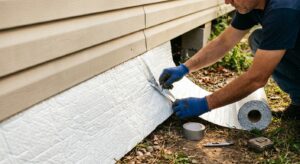
Insulating and air sealing the rim joist in an unfinished basement with rigid foam eliminates one of the most common and overlooked heat loss pathways in older homes, saving 5 to 10 percent on heating.
🏠 Key Concepts Explained
The Science Behind It
Heat moves in three ways: conduction, convection, and radiation. In a cold January, your home is fighting all three simultaneously. Conduction pulls heat directly through the wall and ceiling materials wherever the indoor and outdoor surfaces are connected by solid material. This is why a single-pane window or an uninsulated rim joist feels cold to the touch even in a heated room. Insulation works by trapping air in tiny pockets, slowing conduction dramatically. Each doubling of R-value cuts conductive heat loss roughly in half, which is why going from R-11 to R-49 in an attic can reduce ceiling heat loss by more than 75 percent.
Convection is the movement of heat through air, and this is where stack effect becomes so damaging in winter. Because warm air is less dense, it rises through the home and tries to escape at the highest available gaps. The pressure difference between inside and outside air can reach 0.05 to 0.10 inches of water column on a cold, calm day, and up to twice that when wind is added. This pressure difference drives air infiltration at a rate that scales with the square root of the pressure difference and the total area of gaps. A home with one square foot of total gap area can lose as much conditioned air as a hole the size of a basketball through the wall.
Radiation is the transfer of heat as infrared energy, requiring no physical contact or air movement. This is why you feel cold standing near a large window even if there is no draft. A poorly insulated attic acts as a radiant heat sink, absorbing warmth from your ceiling below and radiating it into the cold attic air above. Radiant barriers can help in hot climates but provide less benefit in heating-dominated climates where bulk insulation depth is the primary solution. Getting the attic to R-49 or higher addresses conduction and significantly reduces the surface temperature differential that drives radiant loss through the ceiling assembly.
Frequently Asked Questions
▼ Why is my heating bill still high after I added insulation last year?
Insulation alone addresses conductive heat loss, but if air leakage was not addressed first, the gaps are still driving significant heat loss through convection. Go back and do a thorough draft inspection focusing on top plates, attic hatches, and plumbing penetrations. In many homes, air sealing provides more savings per dollar than additional insulation layers above R-30.
▼ Can renters do any of this without landlord permission?
Yes, several of the most effective steps require no permission and leave no permanent changes. Outlet gaskets, rope caulk on windows, removable door sweeps, and door weatherstripping are all reversible. You can also add a reflective attic hatch cover from inside if you have attic access. Together these steps can realistically cut your share of heating costs by 10 to 15 percent.
▼ My house is old and drafty. Is it even worth fixing, or should I just upgrade the furnace?
Fix the envelope first, always. A new high-efficiency furnace in a leaky house will still run constantly because it is fighting physics. Sealing the building shell first reduces the heating load, which means you may not need as large or expensive a new furnace, and the one you have will last longer. The DOE consistently finds that air sealing and insulation deliver better cost-per-BTU savings than equipment upgrades alone.
▼ How quickly will I see savings on my actual bill after doing these fixes?
Air sealing work shows up on the very next billing cycle because it immediately reduces how hard your furnace runs. Insulation improvements take effect as soon as the material is in place. Most homeowners report a noticeable reduction within one to two billing cycles, and you can compare month-over-month kilowatt-hours or therm usage on your bill to isolate the improvement from weather variation.
▼ What if my January bills are high but I do not feel any drafts?
Many significant air leaks are not detectable by feel because the air enters through dispersed, small gaps rather than one obvious draft. The most common hidden leakage points are top plates in the attic, recessed lights, fireplace dampers left open, and rim joists in the basement. A $25 thermal leak detector or an inexpensive infrared thermometer aimed at ceiling and baseboard areas on a cold night will reveal these invisible leaks clearly.
Quick Tips
- Check your utility bill for the exact kilowatt-hours or therms used, not just the dollar amount. Compare the same January bill year over year to isolate weather-driven increases from actual efficiency changes.
- A $5 to $10 infrared thermometer aimed at your ceiling, walls, and windows on a cold night will reveal exactly which surfaces are losing the most heat before you spend a dollar on materials.
- Lower your thermostat by 7 to 10 degrees Fahrenheit for 8 hours per day using a programmable or smart thermostat. The EPA estimates this alone saves up to 10 percent per year on heating and cooling combined.
- Reverse your ceiling fans to spin clockwise at low speed in winter. This pushes the warm air pooled at the ceiling down along the walls without creating a wind-chill effect, reducing how hard your heating system has to work to maintain comfort.
Variations for Your Situation
- Apartment or Rental: Renters cannot touch central systems or add insulation, but you can apply reversible fixes that deliver real savings. Install outlet foam gaskets on exterior wall outlets, apply rope caulk to drafty window frames, add a draft stopper to the front door, and use thermal curtains on north-facing windows. These four steps combined can reduce your heating load by 8 to 12 percent at a total cost under $40, all completely reversible at move-out.
- Tight Budget Under $50: Focus entirely on air sealing since it costs almost nothing and delivers the highest return per dollar. Buy one can of expanding foam ($6), a roll of foam weatherstripping ($8), a four-pack of outlet gaskets ($5), and rope caulk for windows ($10). Start at the attic hatch and work down, sealing every gap you can reach from inside the home. This $30 to $40 investment routinely pays back within a single heating season.
- Older Home Pre-1980: Homes built before 1980 typically have minimal wall insulation, single-pane windows, and significant settling that has opened gaps in framing connections. Test for asbestos in any existing insulation or vermiculite before disturbing anything. Prioritize attic air sealing and insulation first since walls and windows are far more expensive to address. Then consider a professional energy audit with infrared scanning to identify the worst wall cavities for dense-pack treatment. Budget $2,000 to $5,000 for a comprehensive weatherization of a pre-1980 home and check for state weatherization assistance programs, which may cover most or all of this cost for qualifying households.