Every winter, homeowners discover the hard way that a freezing garage is more than an inconvenience. Paint cans rupture, car batteries struggle to start, stored beverages freeze solid, and water supply lines that run through an unheated garage can crack and cost thousands in water damage repairs. If your garage shares a wall with your home, a cold garage also pulls heat out of your living space, quietly inflating your heating bill.
The good news is that keeping a garage above freezing does not require running a full propane or electric heater around the clock. A targeted combination of insulation, air sealing, and smart supplemental heat can hold garage temperatures above 32 degrees Fahrenheit even when outdoor temps drop into the teens, often for a fraction of the cost you might expect. Most of the heavy lifting comes from stopping heat loss first, then adding just enough heat to bridge the gap.
This guide walks you through the building science behind a cold garage, practical steps ranked from free quick fixes to more involved upgrades, and real numbers on cost and payback so you can decide which approach fits your budget and climate. Whether you rent a space or own a detached garage, there is a strategy here that will work for you.
What You’ll Need
Click on an item below to shop for the recommended items for this recipe on Amazon.
As an Amazon Associate, we earn from qualifying purchases.
How to Do It
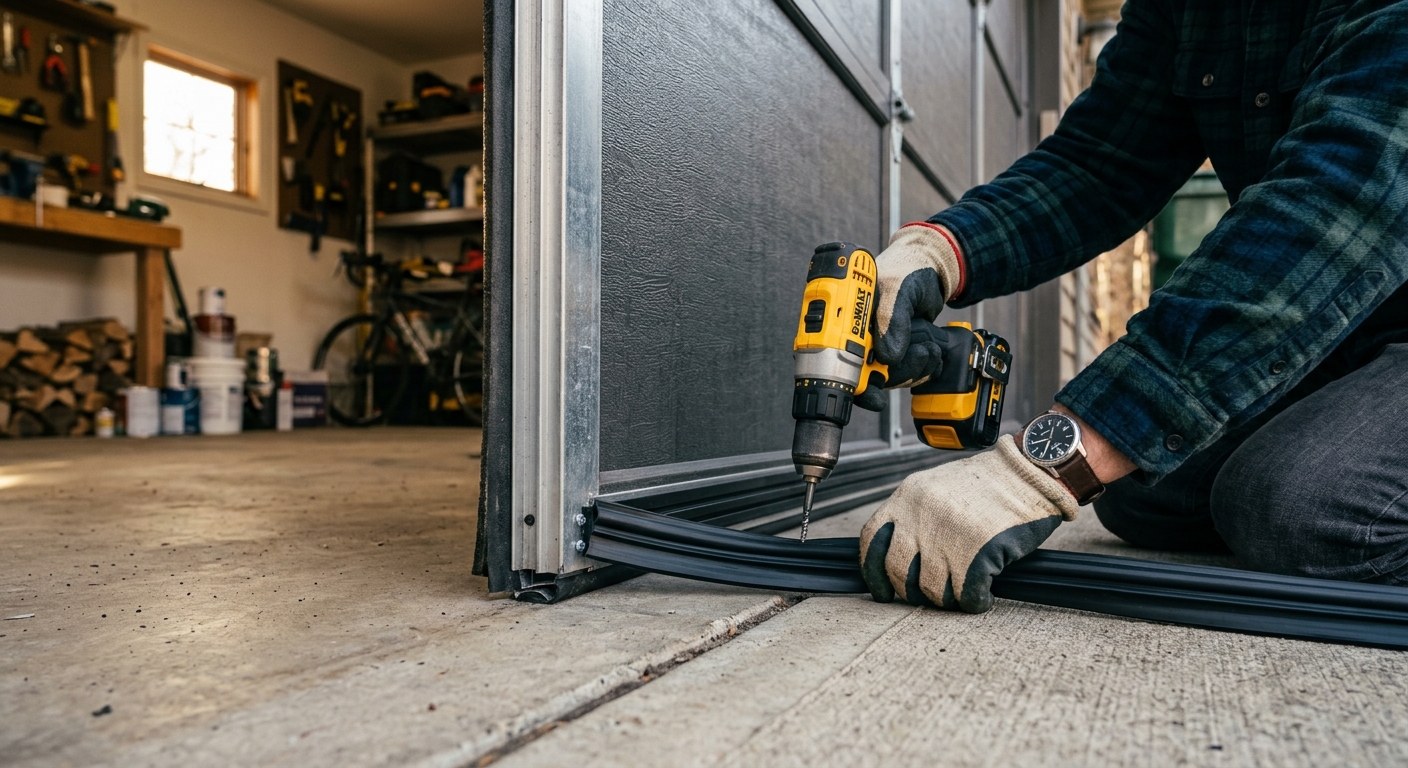
- Inspect the bottom seal of your garage door in daylight with the door closed. If you can see light coming in underneath, press a new rubber bottom seal or T-seal into the track. Replacement seals cost $15 to $25 and take 15 minutes to install.
- Check the pedestrian door between your garage and house or exterior. Feel for cold drafts at the bottom and sides. Apply self-adhesive foam weather stripping to the door frame and add a door sweep to the bottom if one is missing. Cost is under $15.
- Park your vehicles inside whenever possible. A car that drove recently adds passive heat to the garage for 2 to 4 hours after parking, raising ambient temps by several degrees during the coldest overnight hours.
- Cover any garage windows with temporary insulating film or a piece of foam board cut to fit the frame. Single-pane garage windows have an R-value around R-1. Foam board at R-4 per inch eliminates that cold radiating surface for under $10.
- Roll a draft snake or tightly folded towel along the base of the overhead garage door on the interior side during extreme cold snaps if you are not using the door. This adds a second barrier against infiltration at no cost.
- Install a garage door insulation kit on your existing steel door. Kits from brands like Clopay or Reach Barrier cost $50 to $100 and raise door R-value from about R-2 to R-8. Follow the manufacturer’s instructions to cut and press or clip foam or reflective panels into each door section.
- Inspect the top of the garage walls where they meet the ceiling or attic floor. Use a flashlight to find gaps at top plates, pipe penetrations, and wiring holes. Seal all gaps with fire-rated acoustic caulk or expanding foam. This addresses the stack effect and can reduce air infiltration by 20 to 30%.
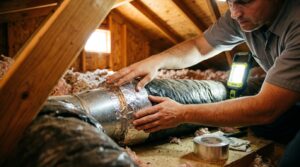
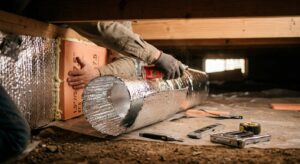
- If your garage ceiling is drywalled and the attic above is accessible, add R-19 batt insulation to any uninsulated bays above the garage ceiling. Many attached garages have the attic portion above the garage left bare. This one step can reduce heat loss through the ceiling by 60% or more.
- Replace or add compression-style weatherstripping to all four sides of the overhead door if your door does not already have side and top seals. These rubber or vinyl bulb seals press against the door jamb when closed and cost $20 to $40 for a full set.
- Insulate the pedestrian door if it is a hollow-core interior door, which many garage-to-house doors are. Replace it with a pre-hung exterior door with a foam core (R-5 or better) or add a rigid foam panel to the garage-facing side of the existing door as a stopgap. A pre-hung exterior door costs $150 to $300 installed yourself.
- Caulk around any pipes, conduit, or hose bibs that penetrate the garage walls. Pay special attention to the mudsill area where the wall framing meets the foundation, which is a major infiltration zone in older garages.
- Choose a frost-protection thermostat or a plug-in electric heater with a built-in thermostat. Set the target to 37 to 40 degrees F, not 55 to 68 degrees F. Running a heater only to freeze-prevention threshold instead of full comfort temperature cuts operating costs by 50 to 70% compared to keeping the space truly warm.
- For a small to medium garage up to 400 square feet, a 1,500-watt plug-in electric infrared or ceramic heater with a built-in thermostat costs $40 to $100 and runs on a standard 120-volt outlet. Place it on a high shelf aimed at the floor-level zone where pipes run.
- For a larger garage or a detached garage with no electricity, consider a propane convection heater rated 10,000 to 30,000 BTU. Ensure adequate ventilation as these heaters produce carbon monoxide. Never run an unvented combustion heater in a sealed garage without a CO detector and a fresh air source.
- Install a dedicated frost-protection thermostat such as the Stelpro ASTAT or a Lux WIN100 plug-in model. These devices cycle the heater on only when temps approach 35 degrees F and off again at 40 degrees F, so the heater may run only 1 to 3 hours per day even in very cold climates.
- Place a CO detector in the garage regardless of heater type as a safety measure, and test it monthly during heating season.
Why It Works: The Benefits
Maintaining garage temps above 35 to 40 degrees F prevents water lines from freezing and bursting, which can cost $1,000 to $15,000 in repairs and water damage remediation according to insurance industry data.
Car batteries lose up to 60% of their cranking power at 0 degrees F. Keeping the garage above freezing preserves battery capacity, reduces engine wear from cold starts, and extends battery life by 1 to 2 years.
An attached garage that shares an insulated wall with the house acts as a buffer zone. When garage temps stay near 40 degrees F instead of 10 degrees F, heat loss through that shared wall drops by up to 30%, reducing whole-home heating costs measurably.
Latex paint freezes and separates at 32 degrees F, fertilizers clump, and many aerosol products lose pressure in the cold. A frost-free garage lets you store these items year-round without replacing them each spring.
Even at 45 degrees F a garage is cold, but it is workable with a jacket. At 45 degrees versus 15 degrees, a small 1,500-watt electric space heater can warm the space in under 30 minutes instead of running for hours, cutting spot-heating energy use by 50% or more.
💰 Savings Impact by Action
Upgrading a bare steel garage door from R-2 to R-8 with an insulation kit reduces heat loss through the door surface by up to 75%, which typically accounts for 25% of total garage heat loss savings.
Sealing the bottom door seal, side seals, top plates, and penetrations can reduce air infiltration by 30% or more, cutting the largest single source of heat loss in an unimproved garage.
Using a frost-prevention thermostat set to 37 degrees F instead of running a heater continuously reduces heater operating hours by 60 to 80% compared to maintaining a full comfort temperature.
Adding R-19 insulation above an uninsulated garage ceiling reduces upward heat loss by up to 60%, which represents roughly 20% of total garage heat retention improvement.
🏠 Key Concepts Explained
The Science Behind It
Heat always moves from warmer to cooler surfaces, and the rate of that movement depends on two things: the temperature difference and the resistance of the material in between. That resistance is R-value. An uninsulated steel garage door has an R-value around R-2, meaning a 40-degree temperature difference between inside and outside drives a significant and continuous flow of heat through the door surface. Adding insulation rated at R-8 cuts that heat flow by 75%, so the same temperature difference produces one-quarter the heat loss. This is why insulation delivers the most dramatic results for the least cost.
Air infiltration works differently but is equally important. Unlike conduction through solid materials, infiltration physically replaces warm air inside the garage with cold outdoor air. On a windy day, a poorly sealed garage door bottom can allow hundreds of cubic feet of cold air per hour to enter at floor level, where pipes and car batteries are most vulnerable. Sealing the bottom seal and side seals addresses this by eliminating the pressure-driven pathways that wind exploits. The stack effect compounds the problem: warm air naturally rises and escapes through any high opening, creating a slight negative pressure at floor level that pulls even more cold air in at the bottom. Sealing top plates and attic penetrations breaks this convective loop.
Thermal mass provides a passive buffer that many homeowners underestimate. A concrete garage floor measuring 20 by 20 feet and 4 inches thick weighs roughly 8,000 pounds. Concrete holds about 0.2 BTUs per pound per degree Fahrenheit, meaning this slab stores around 1,600 BTUs for every degree of temperature it holds. During a cold night, the slab slowly releases that stored heat, moderating the temperature drop in the space. This is why a well-sealed garage often stays 10 to 20 degrees warmer than outdoor air even with no heater running, simply because the mass of the floor and walls releases heat slowly enough to bridge the coldest overnight hours.
Frequently Asked Questions
▼ My garage is still freezing even after I added insulation to the door. What am I missing?
The garage door is just one of several heat loss paths. Check whether the ceiling above the garage is insulated, whether top plates and pipe penetrations are sealed, and whether the bottom door seal is making consistent contact with the floor. If the floor is uneven, light will show under sections of the seal even when it looks closed. A foam tape shim or a new adjustable bottom seal can fix gaps caused by an uneven floor.
▼ Can I just leave a space heater running in the garage all winter?
Running a 1,500-watt electric heater continuously costs roughly $70 to $130 per month depending on your electricity rate, and it is a fire risk if left unattended near stored flammables. A much better approach is to pair a heater with a plug-in thermostat set to 37 to 40 degrees F so it only runs when temps actually drop near freezing. This typically cuts operating hours by 60 to 80% compared to running continuously.
▼ Is it safe to seal my garage tightly if I have a gas water heater in there?
No, not without checking combustion air requirements first. Atmospheric gas water heaters and furnaces need a certain volume of air to burn safely. If you seal the space too tightly, the appliance can backdraft, pulling combustion gases including carbon monoxide into the garage or house. The fix is to consult your appliance manual for combustion air requirements or have an HVAC technician evaluate the space before aggressively sealing it.
▼ How do I keep my garage above freezing if it is detached and has no electrical outlet?
Your best options without electricity are aggressive insulation and air sealing to maximize passive heat retention, combined with pipe insulation on any water lines. If you need active heat, a propane cabinet heater on a frost thermostat is an option, but it requires a CO detector, adequate ventilation, and careful placement away from flammables. Running a heavy-duty outdoor-rated extension cord from the house is another practical solution for a low-wattage thermostat-controlled heater.
▼ Will insulating the garage door cause moisture or condensation problems inside?
In most climates, insulating the door reduces condensation rather than increasing it because the interior door surface stays warmer and is less likely to fall below the dew point of indoor air. If you notice condensation on walls after sealing the space, it typically means humid indoor air is meeting cold surfaces, and the solution is better air sealing at the top of the walls to reduce the warm humid air entering from outside, not removing the insulation.
Quick Tips
- Park your car inside at night during cold snaps. The residual engine heat releases into the garage space for 2 to 4 hours and can keep temps above freezing through the coldest part of the night.
- Use a cheap wireless indoor thermometer with a remote sensor to monitor your actual garage temperature from inside the house so you know when conditions are approaching the freezing threshold.
- Insulate water supply lines that run through the garage with foam pipe insulation even after sealing the space. It costs about $1 per linear foot and adds a second layer of freeze protection independent of air temperature.
- If you have a detached garage, consider burying or insulating any water supply line that runs underground between the house and garage below the local frost line depth to prevent ground freeze from affecting that line.
Variations for Your Situation
- Detached Garage: Without a shared wall with the home, a detached garage loses heat on all four sides plus the ceiling. Prioritize ceiling insulation first since heat loss through the roof is highest. A detached garage with R-19 ceiling insulation and a sealed door can hold 15 to 20 degrees above outdoor temps passively. For active heat, a 10,000 BTU propane heater on a frost thermostat costs roughly $80 to $150 for the unit and $5 to $15 per month in propane at freeze-prevention setpoints.
- Tight Budget (under $50): Focus on the bottom door seal ($15 to $25), foam weather stripping for the pedestrian door ($10), and temporary foam board in windows ($10 to $15). Together these cost under $50 and can raise floor-level temps by 5 to 10 degrees F, which is often enough to protect pipes in moderate climates. Skip the heater entirely and add foam pipe insulation on exposed water lines at $1 per linear foot as a direct freeze-protection backup.
- Older or Unfinished Garage (pre-1980): Older garages often have no drywall on walls, leaving fiberglass batt or bare studs exposed, and may have single-panel wood doors with R-values below R-2. Start by stapling rigid foam board (R-4 per inch) between exposed wall studs using construction adhesive, then add a door insulation kit. Check the mudsill at the base of all walls for gaps and pack them with foam. Older concrete floors may also have larger cracks that act as cold air pathways and should be sealed with concrete caulk.