Tiny homes and accessory dwelling units pack a lot of living into a small footprint, but that efficiency comes with a thermal challenge. Because the ratio of wall, roof, and floor surface area to interior volume is much higher than in a standard house, heat escapes faster in winter and builds up faster in summer. A poorly insulated 300-square-foot ADU can cost nearly as much to heat as a 1,000-square-foot apartment, which defeats the entire purpose of downsizing.
The good news is that the same small footprint that creates the problem also makes it affordable to fix. You are insulating a fraction of the surface area of a conventional home, so even professional-grade solutions often pay for themselves in two to four years. Whether you are building from scratch, retrofitting a backyard ADU, or upgrading an existing tiny house on wheels, the principles are the same: maximize R-value in every assembly, eliminate air leaks before they steal your conditioned air, and choose materials suited to your specific structure and climate.
This guide covers the building science behind tiny-home heat loss, specific R-value targets for all four climate zones, two detailed approaches from DIY-accessible to professional-grade, and real payback numbers so you can decide how far to go. By the end, you will know exactly what to buy, where to put it, and what results to expect on your energy bill.
What You’ll Need
Click on an item below to shop for the recommended items for this recipe on Amazon.
As an Amazon Associate, we earn from qualifying purchases.
How to Do It
- Audit your structure first: use a flashlight and your hand to feel for air movement at electrical outlets, plumbing penetrations, window and door frames, and any transition between floor and wall. Mark every gap with painter’s tape before you buy materials.
- Air seal all penetrations with canned low-expansion spray foam rated for gaps up to 1 inch, and use acoustical sealant or caulk for gaps smaller than a quarter inch around electrical boxes and window rough openings. This step alone reduces infiltration by 15 to 25% and costs under $50.
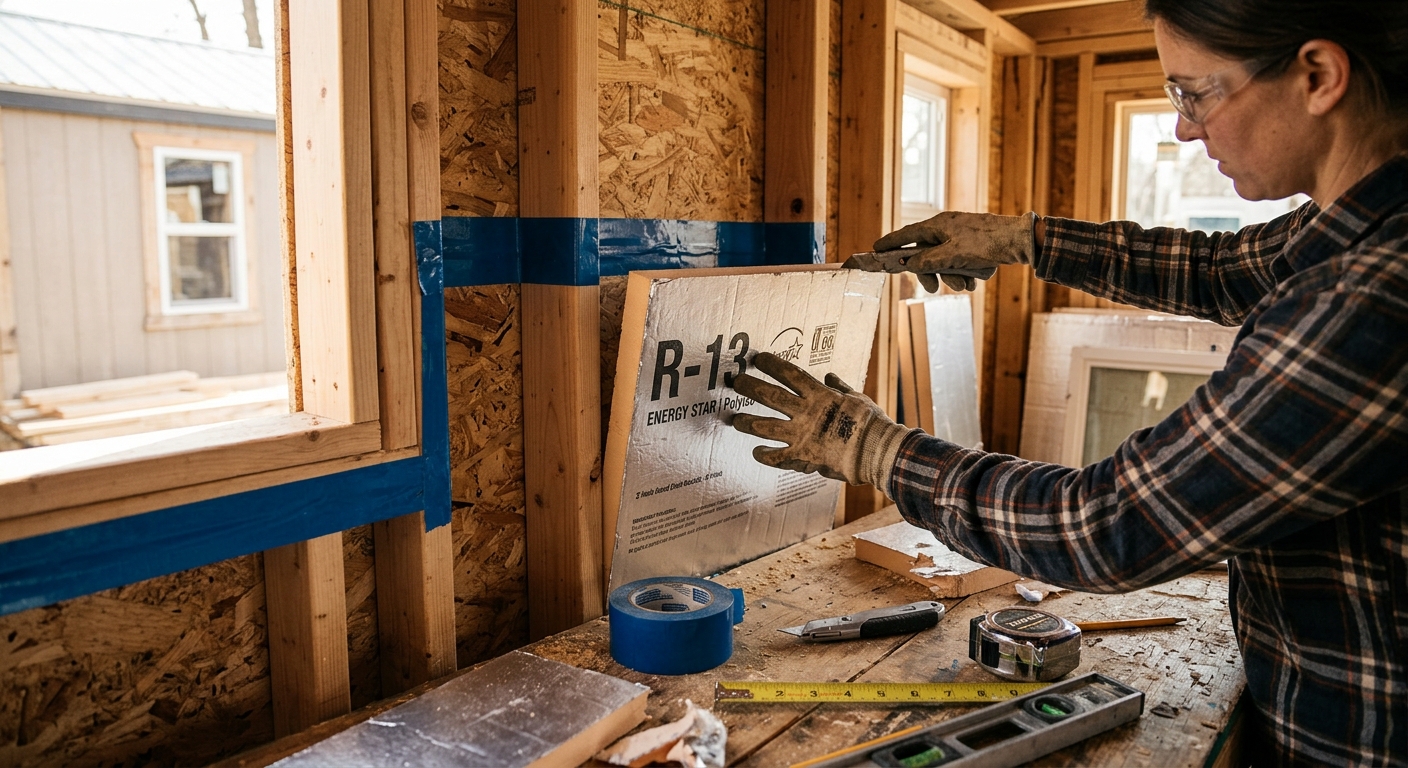
- Install rigid foam board (polyisocyanurate, R-6 to R-6.5 per inch) as continuous insulation on the interior face of exterior walls before adding drywall. Even a 1-inch layer adds R-6 and breaks the thermal bridge through studs. Tape all seams with foil tape to create a secondary air barrier.
- Fill wall cavities with unfaced fiberglass batt or mineral wool batt sized to your stud depth (2×4 cavities get R-15 mineral wool; 2×6 cavities get R-23). Mineral wool is preferred for small spaces because it is moisture-resistant and holds R-value when slightly compressed.
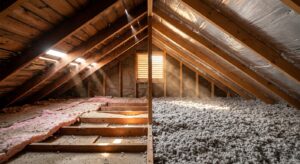
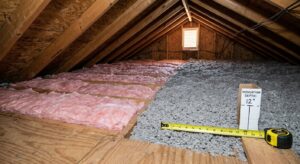
- In the attic or roof assembly, install a minimum of R-38 blown fiberglass or cellulose if you have a vented attic space, or R-30 closed-cell spray foam if you are converting a vaulted or unvented roof to conditioned space. The DOE’s Building America program confirms these levels eliminate 80 to 90% of ceiling heat loss in climate zones 3 through 6.
- Insulate the floor assembly or crawl space with R-19 to R-30 unfaced batts between joists, secured with wire supports every 18 inches, and add a 6-mil polyethylene vapor barrier on the ground below any crawl space. Seal the perimeter of the crawl space with rigid foam rather than relying on ventilation.
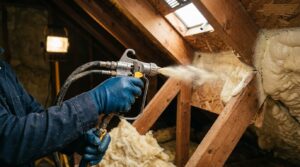
- Schedule a pre-installation walkthrough with your contractor to confirm target R-values for each assembly: a minimum of R-20 closed-cell for walls (about 3 inches), R-30 to R-40 for the roof or ceiling deck, and R-15 to R-20 for the floor in climate zones 5 and above.
- Vacate the structure for a minimum of 24 hours after closed-cell spray foam application. Off-gassing during curing is significant and the space must be fully ventilated before occupancy. Arrange for all pets and plants to be removed as well.
- Have the crew install 2 to 3 inches of closed-cell foam (R-12 to R-20) directly to the interior face of exterior sheathing or the underside of roof decking. This creates an unvented conditioned assembly that eliminates the stack effect and moisture drive simultaneously.
- Request that the contractor then dense-pack the remaining cavity depth with cellulose (R-3.5 per inch) to fill any remaining framing depth cost-effectively. This hybrid approach delivers R-28 to R-38 wall assemblies in a standard 2×6 wall without exceeding your budget.
- After foam cures, have an independent blower door test performed to verify air changes per hour. A well-executed spray foam tiny home should achieve 1.0 to 2.0 ACH50, compared to 5 to 10 ACH50 for a typical unimproved structure. Request the test results in writing.
- Install a fresh air ventilation system (an Energy Recovery Ventilator rated for small spaces, such as a Panasonic WhisperComfort or Lunos e2 pair) after air sealing. Tighter than 3.0 ACH50 requires mechanical ventilation per ASHRAE 62.2 to maintain indoor air quality.
Why It Works: The Benefits
Upgrading a poorly insulated ADU or tiny home from minimal to code-plus insulation levels can reduce annual heating and cooling costs by 30 to 50%, often saving $400 to $900 per year depending on climate and energy prices.
Proper insulation and air sealing reduce the peak heating and cooling load by 30 to 40%, which means a smaller, less expensive mini-split or heat pump can maintain comfort even in extreme temperatures down to 0 degrees F.
A correctly detailed insulation assembly keeps wall and roof surfaces above the dew point, preventing condensation that causes mold, rot, and structural damage, protecting your investment for decades.
Energy-efficient ADUs command 5 to 10% higher rental rates in most markets, and buyers increasingly request energy cost disclosures. A documented, well-insulated unit stands out immediately.
Dense-pack cellulose and closed-cell spray foam both provide meaningful sound dampening, reducing exterior noise by 6 to 10 decibels, a noticeable improvement in a small space where outside noise has nowhere to go.
💰 Savings Impact by Action
Sealing gaps and penetrations in a typical tiny home or ADU reduces conditioned air loss by 15 to 25%, cutting heating and cooling energy use proportionally.
Upgrading attic or roof assembly insulation to R-38 or above reduces heat loss and gain through the largest surface area, accounting for up to 30% of total envelope savings.
Adding continuous rigid foam or spray foam to walls reduces effective heat flow by 20 to 30% compared to batt-only assemblies with thermal bridging.
Insulating the floor assembly or crawl space to R-19 or above reduces conductive and convective heat loss through the ground-level assembly by 10 to 20%.
Combining air sealing with full assembly insulation upgrades reduces total annual heating and cooling energy use by 30 to 50% in most climate zones.
🏠 Key Concepts Explained
The Science Behind It
Heat always moves from warm to cold, and it does so through three mechanisms: conduction (direct contact through solid materials), convection (air movement carrying heat from one place to another), and radiation (infrared energy traveling through space). Insulation works primarily by slowing conduction using millions of tiny air pockets trapped in fibers or foam cells, but it does nothing to stop convection through air leaks. This is why a house with R-30 walls but poor air sealing can perform worse than a house with R-15 walls and a tight air barrier. In a tiny home, this distinction is amplified because the small volume means even a single moderate air leak can cycle all the interior air in minutes.
R-value measures a material’s resistance to conductive heat flow per inch of thickness. Polyisocyanurate rigid foam delivers about R-6.5 per inch, closed-cell spray foam delivers R-6 to R-7 per inch, open-cell spray foam delivers R-3.7 per inch, and fiberglass batt delivers R-3.1 to R-3.8 per inch. However, the effective or whole-assembly R-value of your wall is always lower than the labeled R-value of the insulation alone, because wood studs have an R-value of only R-1.25 per inch, creating thermal bridges that short-circuit heat flow through the higher-resistance insulation between them. Adding even one inch of continuous rigid foam over the studs dramatically reduces this bridging effect and can increase effective wall R-value by 30 to 50% compared to cavity insulation alone.
Vapor drive is the movement of moisture-laden air through building assemblies toward colder, drier air. In winter, vapor moves from the warm interior outward; in summer in humid climates, it moves inward. The dew point is the temperature at which that moisture condenses into liquid water, and your insulation assembly must ensure that no surface inside the wall or roof assembly reaches that temperature during normal conditions. The key variable is the ratio of insulation on the cold side versus the warm side of any vapor-sensitive layer. Building scientists have established minimum ratios for each climate zone, which is why copying a wall detail from a mild climate can cause moisture failure in a cold one. When in doubt, consult the DOE’s Building Science Corporation guidance or hire an energy consultant for your specific climate zone before finalizing your assembly.
Frequently Asked Questions
▼ My ADU is already built and drywalled. How do I add insulation without tearing it apart?
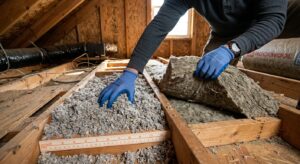
Dense-pack blown cellulose is the standard retrofit solution for finished walls. A contractor drills 2-inch holes every 16 inches in each stud bay, fills the cavity under pressure with cellulose, then patches the holes with wood plugs or spackle. Cost is typically $1.50 to $3.00 per square foot of wall area, and results are immediate and significant. You can also add rigid foam board to the interior surface of walls before repainting, which adds R-value and is a DIY-accessible option if you are willing to reinstall trim and extend outlet boxes.
▼ My tiny home on wheels has condensation dripping inside the walls in winter. What went wrong?
This almost always means warm interior air is reaching a surface that is below the dew point inside the wall cavity, typically because the structure lacks an effective air barrier or the insulation is compressed or missing in sections. For an immediate fix, lower interior humidity below 40% using a dehumidifier and ensure your vapor barrier (if present) is on the warm side of the insulation. Long-term, the wall assembly needs to be rethought: closed-cell spray foam applied to the interior face of exterior sheathing is the most reliable solution for metal-framed or THOW construction because it creates an air barrier, vapor retarder, and insulation layer simultaneously.
▼ How do I know what R-value I actually need for my climate?
The DOE divides the US into eight climate zones, and you can find your zone by ZIP code at energystar.gov. As a practical guide: climate zones 1 to 2 (Deep South, Hawaii) need R-13 walls and R-30 ceilings; zones 3 to 4 (mid-Atlantic, Pacific Northwest) need R-20 walls and R-38 ceilings; zones 5 to 7 (Upper Midwest, Mountain West, Northern states) need R-20 to R-30 walls and R-49 ceilings. In a tiny home, targeting one climate zone above your actual zone costs very little given the small surface area and provides a significant comfort buffer during extreme weather events.
▼ Will insulating my ADU actually help in summer, or is it just a winter thing?
Insulation and air sealing reduce heat transfer in both directions, so the benefit in summer is equal to or greater than in winter in warm climates. A well-insulated ADU reduces cooling loads by 25 to 40%, which means a smaller mini-split can maintain 75 degrees F even during 95-degree days without running continuously. Combine roof insulation with a radiant barrier on the underside of the roof decking in hot climates (climate zones 1 to 3) for an additional 5 to 10% cooling savings.
Quick Tips
- Prioritize the ceiling or roof assembly first in any climate: heat rises and roof assemblies typically account for 25 to 35% of total envelope heat loss in a tiny home.
- Choose mineral wool batts over fiberglass in kitchens and bathrooms of small ADUs because mineral wool does not absorb moisture and retains its R-value when exposed to humidity.
- Install insulation before interior finishes whenever possible. Retrofitting through finished walls with dense-pack blown insulation costs two to three times more than installing batts during construction.
- Use a $30 infrared thermometer to scan walls and ceilings in winter before buying materials. Cold spots indicate missing or settled insulation and help you prioritize exactly where to spend money.
Variations for Your Situation
- Tiny Home on Wheels (THOW): Because a THOW must meet weight limits, prioritize closed-cell spray foam (R-6 per inch) over heavier blown insulation. Target R-18 to R-24 in walls using 3 to 4 inches of closed-cell foam applied directly to the interior face of the metal or wood framing. This also adds structural rigidity to the frame. Budget $2,000 to $4,000 for a professional application on a 200 to 300 square foot THOW, with a payback period of 2 to 3 years compared to uninsulated operation.
- Tight Budget (Under $500): Focus exclusively on air sealing and the two highest-impact surfaces: the ceiling and the floor. Buy two cases of low-expansion spray foam and two tubes of acoustical sealant to seal all penetrations (about $80), then add R-19 batt insulation to the floor assembly from below if accessible (about $150 to $250 for materials). This combination alone can cut heating bills by 15 to 25% and requires no professional help.
- Older Prefab or Modular ADU (Pre-2000): These structures often have minimal insulation (R-11 walls, R-19 ceilings), single-pane windows, and significant air leakage around plumbing chases. Start with a professional energy audit ($150 to $400) to identify the worst areas before spending on materials. Dense-pack cellulose through existing walls and blown insulation added to the attic or ceiling cavity are typically the best first investments, with a combined payback of 2 to 4 years depending on energy prices in your area.