If your household’s showers are a timed race against cold water, you are not alone. Millions of homeowners deal with a water heater that cannot keep up with morning demand, and the culprit is rarely a failed unit. More often, it is a thermostat set too low, years of sediment buildup cutting usable capacity in half, or simply a timing problem that a few scheduling tweaks can fix entirely.
Hot water shortages cost you more than comfort. A water heater working overtime to recover between back-to-back showers runs longer and burns more energy, adding real dollars to your utility bill every month. The average household spends 14 to 18 percent of its total energy budget on water heating, making it the second-largest energy expense in the home after heating and cooling.
This guide walks you through every practical fix, from the five-minute thermostat adjustment you can do right now to a same-day DIY flush that can reclaim 20 to 30 percent of lost tank capacity. You will also learn when your setup genuinely needs a professional upgrade and which modern options deliver endless hot water at the lowest long-term cost.
What You’ll Need
Click on an item below to shop for the recommended items for this recipe on Amazon.
As an Amazon Associate, we earn from qualifying purchases.
How to Do It
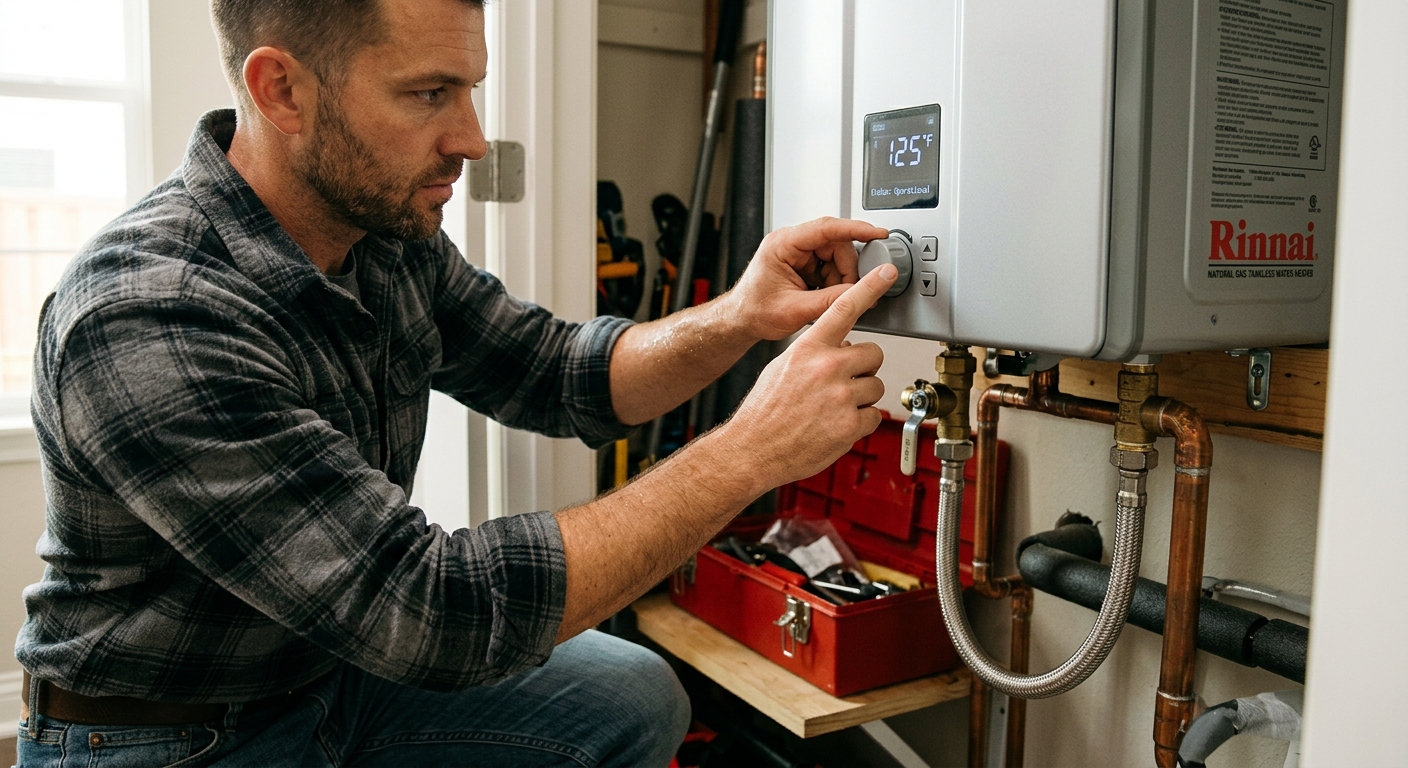
- Locate your water heater’s thermostat dial. On gas heaters it is on the front of the gas valve. On electric heaters it is behind one or two access panels on the side of the tank. Use a flathead screwdriver to open electric panels.
- Check the current setting. If it reads ‘Warm’ or is below 120 degrees Fahrenheit, raise it to 120 to 125 degrees for the minimum recommended setting. If your household has no young children and you have a mixing valve at fixtures, raise it to 130 to 135 degrees to increase usable hot water volume by up to 20 percent.
- Wait 2 to 3 hours for the tank to reach the new temperature, then test at a faucet with a cooking thermometer to confirm the setpoint.
- Map your household’s morning schedule and stagger showers by at least 10 minutes. This allows 10 to 15 gallons of partial recovery between uses and is often enough to eliminate cold-water shortfalls entirely.
- Delay dishwasher or laundry cycles until midmorning when the tank has fully recovered. Hot water demand from appliances during the morning rush directly competes with showers.
- Turn the water heater to ‘Pilot’ mode (gas) or flip the breaker to off (electric). Connect a standard garden hose to the drain valve at the base of the tank and route it to a floor drain or outside.
- Open a hot water faucet anywhere in the house to break the vacuum, then open the drain valve fully. Let the tank drain for 10 to 15 minutes. The water will likely run brown or gritty if sediment is present.
- Close the drain valve, briefly open the cold water supply to stir remaining sediment, then drain again. Repeat until the water runs clear, typically 2 to 3 flushes.
- Close the drain valve, remove the hose, and refill the tank fully by leaving the hot faucet open until water flows steadily without air sputtering, then close it.
- Restore power or relight the pilot and allow 1 to 2 hours for a full reheat before testing.
- Wrap the tank with a pre-cut water heater insulation blanket rated R-8 or higher ($20 to $40 at hardware stores). Avoid covering the top of a gas heater or the thermostat and relief valve on any heater. This reduces standby heat loss by 25 to 45 percent and accelerates recovery between showers.
- Calculate your household’s peak hour demand: count the number of showers, appliance loads, and other hot water uses in your busiest morning hour. Multiply average shower time by 2 gallons per minute and add appliance loads to get total gallons needed.
- Request quotes from at least two licensed plumbers. Ask specifically about high-recovery gas water heaters (40 to 50 gallons per hour recovery), tankless gas units (5 to 10 gallons per minute continuous), or heat pump hybrid electric units which are 2 to 3 times more efficient than standard electric tanks.
- Check for federal tax credits before committing. Heat pump water heaters qualify for a 30 percent federal tax credit (up to $600) under the Inflation Reduction Act through 2032, and many utilities offer additional rebates of $100 to $400.
- Ask the installer to set the new unit to 120 to 125 degrees and verify the pressure relief valve and expansion tank are code-compliant for your municipality.
- After installation, confirm the First Hour Rating on the label matches or exceeds your calculated peak demand from step one.
Why It Works: The Benefits
Flushing sediment and correcting the thermostat setpoint typically restores 15 to 30 percent of lost tank capacity, enough to add one or two full showers back into your morning routine without any new equipment.
A clean, properly set water heater runs shorter recovery cycles. Homeowners who flush sediment and add a tank insulation blanket commonly see 10 to 15 percent reductions on their water heating portion of the utility bill, saving $30 to $60 per year on average.
Sediment forces the tank’s lower element or burner to overheat, accelerating corrosion and wear. Annual flushing can extend a water heater’s functional life by 2 to 5 years, deferring a $900 to $1,800 replacement cost.
Properly calibrated thermostat settings combined with a mixing valve eliminate the dangerous temperature spikes that happen when a nearly empty tank delivers superheated water, improving safety for children and elderly household members.
Staggering shower times by just 10 minutes between family members allows the tank to partially recover, eliminating cold-water surprises without spending a single dollar on equipment.
💰 Savings Impact by Action
Removing sediment buildup restores heat transfer efficiency and reduces recovery time, cutting water heating energy use by up to 15 percent.
An R-8 insulation blanket reduces standby heat loss by 25 to 45 percent, translating to roughly 10 percent savings on annual water heating costs.
Dropping from 2.5 to 1.5 gallons per minute reduces hot water consumption per shower by 40 percent, cutting water heating demand by 15 to 20 percent annually.
Replacing a standard electric tank with a heat pump hybrid water heater reduces water heating electricity use by 60 to 70 percent due to its coefficient of performance of 3 to 4.
Correcting a thermostat that reads 10 to 20 degrees low eliminates unnecessary recovery cycles and can reduce energy waste by 5 percent or more.
🏠 Key Concepts Explained
The Science Behind It
A conventional storage water heater works by maintaining a full tank at a set temperature so that hot water is available on demand. The problem is that usable hot water is not the same as tank volume. At 120 degrees Fahrenheit, your body and fixtures will blend roughly equal parts hot and cold to reach a comfortable shower temperature of about 105 degrees. At 130 degrees, each gallon of stored hot water stretches further because it requires more cold water to dilute it, effectively giving you a larger usable supply from the same tank. This is the physics of mixing ratios, and it is why thermostat calibration is the highest-leverage free adjustment available.
Sediment buildup works against you through two mechanisms. First, calcium and magnesium carbonate particles settle on the tank floor and form a hardened layer that insulates the burner flame or electric element from the water above it. Heat transfer becomes less efficient, recovery takes longer, and the lower element on electric heaters can overheat and fail prematurely. Second, the sediment physically displaces water volume. In a 50-gallon tank with two inches of sediment, effective capacity may drop to 42 to 45 gallons, a loss you pay for in cold showers rather than on your receipt.
Standby heat loss is a continuous drain on your system’s readiness. The laws of thermodynamics guarantee that heat always flows from hot to cold, meaning your 125-degree tank is always losing energy to the surrounding air. An uninsulated tank in a 50-degree garage loses significantly more heat overnight than one in a conditioned space. Adding an R-8 insulation blanket reduces this loss by 25 to 45 percent and means the tank starts your morning at full temperature rather than needing a recovery cycle before the first shower even begins.
Frequently Asked Questions
▼ I flushed the tank and raised the thermostat but still run out of hot water. What now?
Check your water heater’s First Hour Rating on the yellow EnergyGuide label attached to the unit and compare it to your household’s actual morning demand. If your peak hour need exceeds the FHR by more than 10 gallons, no amount of maintenance will solve the problem permanently. You need a larger tank or a tankless system sized for your load.
▼ My water heater is only 4 years old. Why is it already running out?
Household size or habits have likely grown beyond what the unit was originally sized for, or sediment has built up faster than expected in areas with very hard water. Start with a flush to rule out sediment, then calculate your peak hour demand against the FHR label. If your family has grown or you added a bathroom since installation, the unit may simply be undersized for current use.
▼ Can renters fix this without landlord involvement?
Scheduling adjustments and low-flow showerheads are completely renter-friendly and cost nothing. Flushing the tank and adjusting the thermostat touch the actual appliance, so notify your landlord first. In most states, landlords are required to provide adequate hot water, so a documented complaint about shortfalls obligates them to address the underlying equipment issue.
▼ How long before I see savings on my energy bill after flushing and insulating?
You will notice improved hot water availability immediately after the tank fully reheats, typically within 2 hours. Energy bill savings from flushing and adding an insulation blanket will appear within one to two billing cycles. At $30 to $60 per year in savings, the $20 to $40 insulation blanket pays for itself within 6 to 12 months.
▼ Is it safe to raise my water heater above 120 degrees?
Yes, with the right precautions. The CDC recommends 120 degrees as the minimum to inhibit Legionella bacteria growth, but 130 to 140 degrees at the tank is safe if you install anti-scald mixing valves at showers and sinks that cap delivered water at 110 to 120 degrees. Without mixing valves, keep the tank at 120 degrees to prevent burns, especially in homes with children or elderly occupants.
Quick Tips
- Set a recurring calendar reminder to flush your water heater once a year. Skipping even two years allows sediment to harden into a crust that is much harder to dislodge.
- Install a low-flow showerhead rated at 1.5 gallons per minute instead of the standard 2.5 gallons per minute. This alone extends a 40-gallon tank’s effective shower supply by 40 percent.
- If you have a two-story home, insulate the first 6 feet of hot water pipe leaving the tank. Pipe heat loss means the first 30 to 60 seconds of every faucet run is cold water that came from a cooled pipe, wasting both water and energy.
- Consider a point-of-use electric water heater under a kitchen sink or in a master bath if that fixture is far from the main tank. These small units cost $150 to $300 and eliminate both wait time and pipe heat loss at remote fixtures.
Variations for Your Situation
- Apartment or Rental: Renters typically cannot access or adjust the central water heater. Focus on demand-side fixes: install a 1.5-gallon-per-minute low-flow showerhead ($10 to $25) to stretch the available supply, stagger shower times by 10 minutes, and avoid running the dishwasher during the morning rush. If shortfalls are severe and persistent, document the problem in writing and request that your landlord inspect and service the water heater, as adequate hot water is a habitability requirement in most jurisdictions.
- Tight Budget Under $50: Zero-cost scheduling changes (staggered showers, delayed appliance cycles) should be your first move. Next, calibrate the thermostat using a cooking thermometer and adjust the dial for free. If you have $20 to $40, a water heater insulation blanket delivers the best return on investment of any single purchase, cutting standby losses by up to 45 percent. Skip the flush if your drain valve looks corroded and you cannot afford a plumber, as a stuck or broken valve on an old tank is a real risk.
- Older Home Pre-1980: Homes of this era often have original or once-replaced water heaters with significant sediment buildup, undersized tanks for modern household use (30 to 40 gallons was standard then), and uninsulated pipes throughout. Flush the tank carefully, as drain valves on older units are prone to sticking or leaking after being opened. Budget $10 to $20 for a replacement brass drain valve if needed. Seriously consider replacement with a modern 50-gallon high-recovery unit or a heat pump hybrid, as units over 12 years old are past their reliable service life and efficiency has degraded substantially.