If you live in an apartment without central air conditioning, summer can feel like a losing battle. A single window AC unit running constantly, a box fan pointed the wrong direction, and blinds left open all day can easily push your electric bill past $150 to $200 in peak months. The frustrating part is that most of that waste is preventable with strategies that cost little to nothing.
Cooling a small apartment efficiently comes down to three things: blocking heat before it gets in, moving air strategically so your body feels cooler, and running whatever cooling equipment you have only when and how it actually helps. Done right, these steps can cut your cooling costs by 30 to 40 percent compared to the typical unmanaged approach, often keeping a 600 to 800 square foot apartment comfortable for $60 to $90 a month even in hot climates.
This guide covers everything from zero-cost habits you can start today to smart $30 to $80 purchases that pay for themselves in a single season. Whether you rely on a window AC unit, a portable unit, or fans alone, these strategies apply. We will walk through two practical approaches, the science behind why they work, and honest answers to the questions renters ask most.
What You’ll Need
Click on an item below to shop for the recommended items for this recipe on Amazon.
As an Amazon Associate, we earn from qualifying purchases.
How to Do It
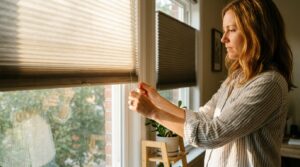
- Close blinds or curtains on south and west-facing windows between 11am and 6pm to block direct solar heat gain. This single step can lower afternoon indoor temperatures by 4 to 6 degrees.
- Move your box or tower fan to create cross-ventilation: place it in one window blowing inward on the shady side of the apartment, and crack the opposite window to let hot air escape. If you only have one window, point the fan outward in the evening to exhaust hot air built up during the day.
- Set your window AC to 76 to 78 degrees instead of 70 to 72 degrees and run a ceiling or floor fan simultaneously. The fan makes 78 degrees feel like 72 to 74 degrees due to convective cooling, saving roughly 6 to 8 percent per degree raised on the thermostat.
- Eliminate indoor heat sources during peak heat hours: avoid using the oven between noon and 7pm, switch to LED bulbs if you have not already (incandescent bulbs emit 90 percent of their energy as heat), and unplug devices on standby.
- Pre-cool aggressively before heat peaks: if you have a window AC unit, drop the apartment to 72 to 74 degrees before 10am when electricity rates and outdoor temps are lower, then raise the setpoint to 78 degrees and let the thermal lag carry you through the hottest afternoon hours.
- Open windows fully when outdoor temperature drops below 74 degrees at night (typically after 10pm in most climates) and run fans to flush out heat stored in walls and floors from the day.
- Install blackout curtain panels on south and west-facing windows. Look for thermal-backed blackout curtains ($15 to $30 per panel at most home stores). These block 90 to 99 percent of solar heat gain compared to standard blinds, and reduce heat entering through glass by up to 33 percent according to DOE data.
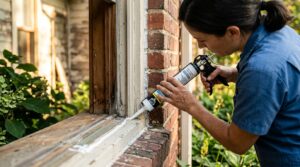
- Add window AC foam insulation strips around your window unit if any visible gaps exist between the unit and the window frame. Air leaking around a poorly fitted unit can waste 20 to 30 percent of the cooling the unit produces. Foam AC side panels cost $8 to $12 and install in under 10 minutes.
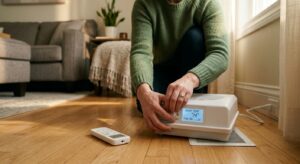
- Purchase a programmable or smart plug timer for your window AC unit ($12 to $25). Set it to begin cooling 30 minutes before you return home rather than running all day, and to reduce operation to fan-only mode after midnight when temperatures drop. This alone can cut AC runtime by 3 to 4 hours per day.
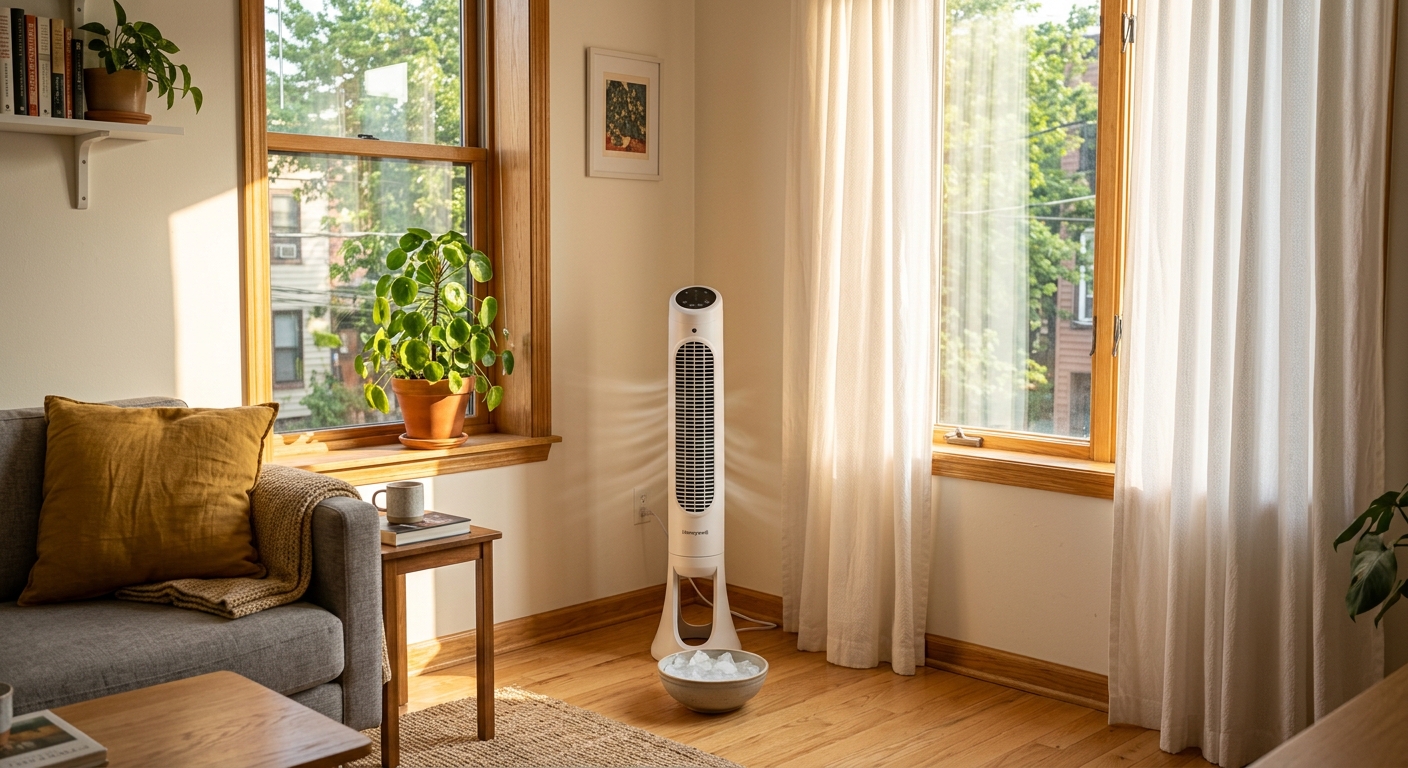
- Place a shallow pan or bowl of ice in front of a box fan to create a low-tech evaporative cooling effect for your immediate seating or sleeping area. This works best in lower-humidity climates and costs essentially nothing beyond the ice. For a more durable solution, a personal evaporative cooler ($35 to $60) uses a wet wick and a small fan to cool a 6 to 10 foot personal zone for about $0.01 to $0.03 per hour.
- Apply reflective window film to east and west-facing windows ($15 to $25 for a standard kit). Renter-safe static-cling versions require no adhesive and can be removed at move-out. These films block 45 to 70 percent of solar heat while maintaining outward visibility, reducing heat gain significantly without requiring blackout curtains in living areas.
- Use draft snakes or rolled towels at the base of exterior-facing doors to prevent warm hallway or outdoor air from seeping under the door into your cooled space. In apartment buildings, shared hallways can run 85 to 90 degrees in summer, and gap under a door is often a major unaddressed heat source.
Why It Works: The Benefits
Combining passive heat blocking with smart fan use can reduce cooling-related electricity consumption by 30 to 40 percent, dropping a $140 summer bill to $85 to $95 for a typical 700 square foot apartment.
Blocking solar heat gain before it enters keeps room temperatures 4 to 8 degrees lower in afternoon hours, eliminating the hot spikes that force AC units to run at full capacity for extended periods.
When passive strategies reduce heat load, your AC unit cycles on and off less frequently. Reducing runtime by 25 to 30 percent meaningfully extends compressor life and reduces the chance of mid-summer breakdowns.
Many of these changes, like repositioning a fan for cross-ventilation or closing west-facing blinds at noon, deliver noticeable results within minutes at zero cost.
Apartments relying on fans alone can still reach comfortable sleeping temperatures below 76 degrees on most nights by combining nighttime cross-ventilation with a $30 to $50 evaporative personal cooler, without the $150 to $300 cost of a portable AC unit.
💰 Savings Impact by Action
Thermal blackout curtains on south and west windows reduce solar heat gain through glass by up to 33 percent according to DOE data, directly cutting AC workload during peak afternoon hours.
Using fans to raise the comfortable thermostat setpoint from 72 to 78 degrees saves approximately 6 to 8 percent per degree, totaling up to 20 percent in cooling energy savings.
Opening windows for cross-ventilation when outdoor temps fall below 74 degrees reduces the need for mechanical cooling the following morning by resetting indoor baseline temperature, saving 10 to 15 percent on daily AC runtime.
Using a smart plug or timer to run the AC only 30 minutes before arrival rather than all day eliminates 3 to 5 hours of unnecessary runtime, cutting daily AC energy use by 15 to 20 percent.
Sealing gaps around window AC units and door bottoms prevents warm outdoor air infiltration that can waste 20 to 30 percent of the cooling a unit produces.
🏠 Key Concepts Explained
The Science Behind It
The core challenge in a small apartment without central air is managing heat gain faster than it accumulates. Your apartment gains heat through three pathways: radiation (sunlight through glass), conduction (heat moving through walls, ceilings, and floors from outside), and infiltration (hot outdoor air leaking through gaps). In a typical apartment, solar radiation through windows accounts for roughly 28 percent of total cooling load according to the U.S. Department of Energy, which is why blocking sunlight is the highest-leverage free action you can take.
Fans work by accelerating convective and evaporative heat loss from your skin. At 78 degrees with still air, most people feel warm and uncomfortable. Add a fan moving air at just 2 to 3 miles per hour across your skin, and the perceived temperature drops by 4 to 6 degrees, making 78 degrees feel like 72 to 74 degrees. This is purely a physiological effect: the room temperature does not change, but your body loses heat faster. This is why the correct strategy is always fans plus a higher thermostat setpoint, rather than a lower setpoint alone.
Cross-ventilation works through pressure differentials. Wind pressure on the windward side of a building is positive, while the leeward side experiences negative pressure. Opening windows on both sides creates a pathway for air to flow along this pressure gradient, flushing hot indoor air out. When outdoor temperatures fall below indoor temperatures in the evening, typically after 9 to 11pm in most U.S. climates, this natural ventilation can reduce indoor temps by 3 to 8 degrees overnight without any electricity cost, resetting your apartment to a lower baseline before the next day’s heat arrives.
Frequently Asked Questions
▼ Why is my window AC running all day but my apartment is still 82 degrees?
The most likely causes are a dirty filter, a unit that is undersized for your square footage, or significant heat gain from unsealed gaps around the unit or under exterior doors. Start by cleaning or replacing the filter and checking for foam gaps around the window frame. A window AC unit should be rated for at least 20 BTUs per square foot of space, so a 500 square foot apartment needs at least a 10,000 BTU unit.
▼ Can I use these cooling strategies as a renter without violating my lease?
Yes, all of the approaches in this guide are renter-safe and require no permanent modifications. Blackout curtains, static-cling window film, smart plug timers, foam AC gap fillers, and draft snakes are all removable and leave no damage. Always check your lease before drilling or mounting anything to walls, but curtain tension rods and command-strip hooks are generally acceptable alternatives.
▼ How long before I see savings on my electric bill after making these changes?
You will see the impact on your very next monthly bill if you implement changes early in the billing cycle. Habit-based changes like closing blinds and raising the thermostat setpoint with a fan take effect immediately and show up as a 15 to 25 percent reduction in cooling-related consumption. Purchased upgrades like blackout curtains and window film typically pay back their cost in 4 to 8 weeks during peak summer months.
▼ My apartment faces west and stays hot until midnight. What specifically helps most?
West-facing apartments absorb maximum heat in the late afternoon when outdoor temperatures are already at their peak, and that heat stays stored in walls and flooring well into the night. Your highest-impact moves are thermal blackout curtains on west windows closed from noon onward, and a window fan set to exhaust mode after 10pm to pull stored heat out. Reflective window film is especially valuable on west exposures and can block 50 to 70 percent of incoming solar energy while still letting you see outside during daylight hours.
▼ Is it cheaper to run a portable AC or a window AC unit?
Window AC units are consistently more efficient than portable units of the same BTU rating. Portable units exhaust hot air through a hose, but they also draw replacement air from inside the room, creating a slight negative pressure that pulls warm unconditioned air in through gaps in the building envelope. A 10,000 BTU portable unit may deliver only 6,000 to 7,000 BTUs of effective cooling, while a 10,000 BTU window unit delivers close to its rated output. If you have the option to install a window unit, it will cool more effectively and cost 20 to 30 percent less to run.
Quick Tips
- Check your local utility’s time-of-use rate schedule. If your utility charges less for electricity before 9am or after 9pm, shift your heaviest AC runtime to those windows to cut costs by 10 to 20 percent with no change in comfort.
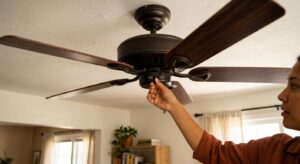
- A ceiling fan should run counterclockwise in summer to push air straight down and create the wind-chill effect. Check the direction switch on the motor housing and flip it if needed.
- Cooking is one of the most underestimated heat sources in a small apartment. An electric oven running for one hour can raise a 600 square foot apartment’s temperature by 2 to 4 degrees. Switching to a countertop air fryer, microwave, or no-cook meals on the hottest days makes a measurable difference.
- If you use a portable AC unit, make sure the exhaust hose is as short and straight as possible. Every bend in the hose adds resistance and reduces cooling efficiency. Most portable units lose 20 to 30 percent of their rated BTU capacity through a long or kinked exhaust hose.
Variations for Your Situation
- Tight Budget (under $30): Focus entirely on zero-cost habits first: close blinds from noon to 6pm, reposition fans for cross-ventilation, raise the AC setpoint to 78 degrees with a fan running, and eliminate oven use during peak heat. These steps alone typically cut cooling costs by 15 to 20 percent. If you have $15 to $25 to spend, one pair of thermal blackout curtains on your hottest-facing window delivers the highest return per dollar of any single purchase.
- No Window AC, Fans Only: In climates with low overnight humidity, a $35 to $60 personal evaporative cooler pointed at your bed can drop your immediate sleeping zone by 6 to 10 degrees for about $0.01 to $0.03 per hour. Combine with aggressive nighttime cross-ventilation after 10pm to flush daytime heat from walls. In humid climates above 60 percent average relative humidity, evaporative cooling is less effective and a $150 to $200 window unit may be worth the investment if your lease permits.
- Top-Floor Apartment: Top-floor units absorb heat through the roof all day, which can add 10 to 15 degrees to interior temperatures compared to mid-floor units. Prioritize covering your ceiling-adjacent space with a white or light-colored area rug on any exposed concrete, keep AC running at a slightly lower setpoint of 75 to 76 degrees during peak afternoon hours, and ask your landlord whether the attic space above has adequate insulation (R-30 or higher). Even one inch of added attic insulation above your ceiling can reduce your cooling load by 10 to 15 percent in a top-floor unit.