No central air conditioning does not mean you have to suffer through summer. Millions of homes, especially older construction, apartments, and rentals, rely entirely on fans, open windows, and smart shading to stay livable. The problem is that most people use these tools wrong, and end up with a stuffy room that traps heat instead of releasing it.
The real enemy is radiant heat gain and poor airflow strategy. Your walls, windows, and ceiling absorb solar energy all day and slowly release it into your living space, often peaking between 4 and 7 PM. A single west-facing window with no shade can add the equivalent of a 500-watt space heater to a room. Understanding this helps you attack the problem at the source rather than just blowing hot air around.
This guide covers practical, tested strategies to cool a room for under $50, from free tactics you can do in the next 10 minutes to simple DIY setups that cost less than a cheap box fan. You will find specific numbers, product types to look for, and a step-by-step breakdown for each approach so you can put it into action today.
What You’ll Need
Click on an item below to shop for the recommended items for this recipe on Amazon.
As an Amazon Associate, we earn from qualifying purchases.
How to Do It
- Close all windows, blinds, and curtains on sun-facing sides of the room by 9 AM. South and west-facing windows are the highest priority. This alone can cut radiant heat gain by 40 to 70% compared to leaving them uncovered.
- Identify the coolest outdoor side of your home, usually north or east in the morning, and open a window there at the lowest possible position to pull in cooler air at floor level.
- Open a window or interior door on the opposite side of the room at the highest position you can reach, or crack a bathroom exhaust vent, to let hot air escape using the stack effect.
- Point any existing fan so it faces outward in the upper window or high opening, exhausting hot air rather than just circulating it. This turns a standard box fan into a ventilation tool.
- After sunset when outdoor temperature drops below indoor temperature, fully open all windows and run fans inward to flush stored heat out of walls and floors before bed.
- Purchase a static-cling solar window film rated for 50 to 80% solar heat rejection. A standard kit for one to two windows costs $15 to $25 at hardware stores. Apply to the inside of sun-facing windows by spraying the glass with soapy water, laying the film in place, and squeegeeing out air bubbles.
- Set up a box fan in the window on the shaded, cooler side of the room facing inward. This pulls outdoor air in at the coolest available point.
- Place a second fan, even a small desk fan, near the ceiling level or high on a shelf on the opposite wall, facing outward toward an open window or toward the hall to push warm air out of the room.
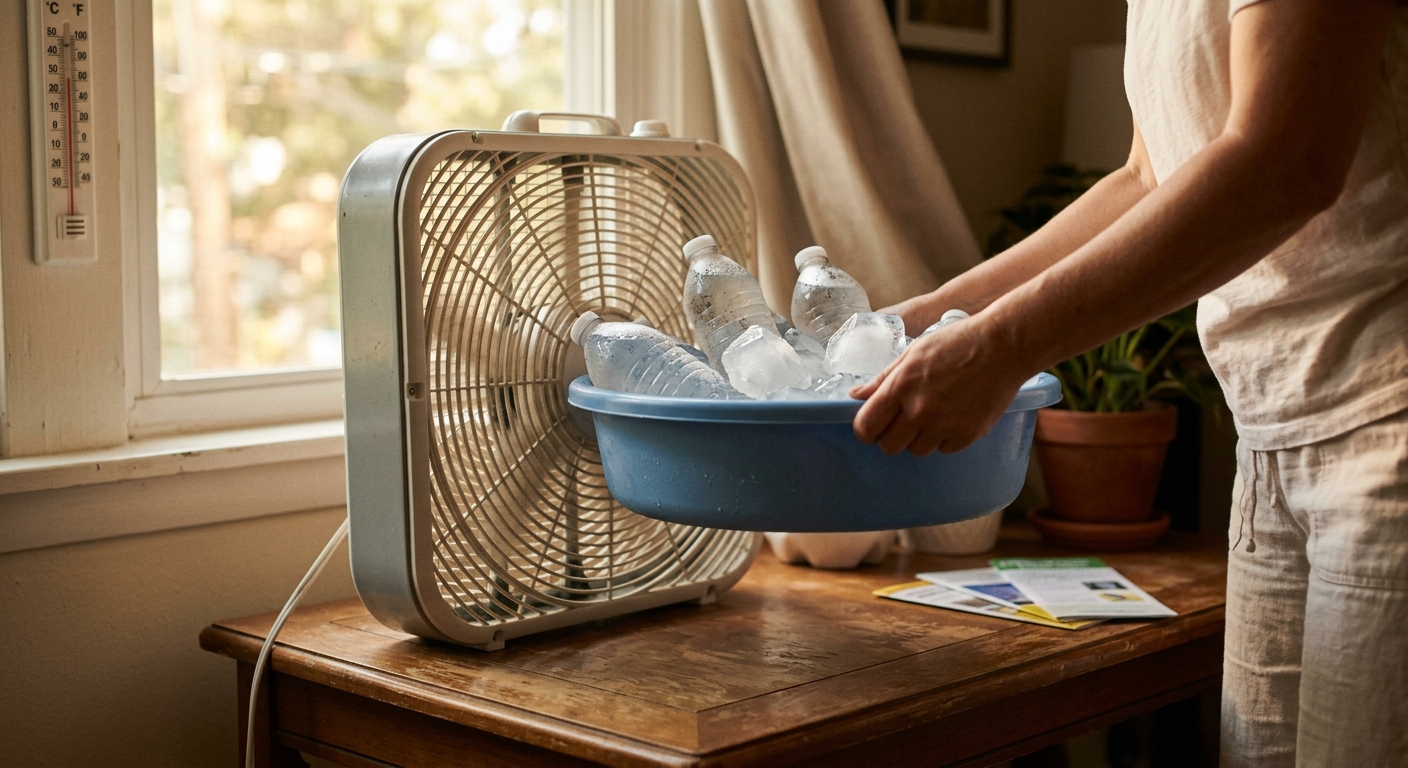
- For a DIY evaporative boost in low-humidity climates (below 50% relative humidity), fill a shallow pan or baking dish with ice and set it 12 to 18 inches in front of the inward-facing fan. The air passes over the ice and drops 5 to 8 degrees as it enters the room. Expect 2 to 3 hours of cooling effect per tray of ice.
- Hang a damp cotton sheet or towel in the doorway or in front of the inward fan on very hot days. As air passes through the wet fabric, evaporative cooling drops the air temperature by 3 to 5 degrees before it reaches you.
- Before bed, remove ice and wet fabric to avoid humidity buildup overnight, then switch to pure cross ventilation with both fans running on low to maintain airflow without adding moisture.
- Install a tension-rod blackout curtain or thermal cellular shade on every south and west-facing window in the room. Blackout curtains with a white or reflective backing cost $20 to $35 per panel and reduce solar heat gain by 33 to 45% compared to standard sheers.
- Apply reflective bubble foil insulation or rigid foam board (cut to fit) inside window frames as a removable seasonal insert. A 25-square-foot roll of reflective foil costs $15 to $20 and can cover two to three windows, blocking up to 97% of radiant heat transfer through the glass.
- Use self-adhesive foam weather stripping around the room door to reduce hot air infiltration from adjacent uncooled spaces. A standard roll costs $6 to $10 and takes 20 minutes to apply.
- Install a programmable or smart plug-in timer on your fan so it automatically switches to intake mode in the early morning hours, typically 5 to 7 AM, when outdoor air is coldest. Smart plug timers cost $10 to $15 and require no wiring.
- Conduct a quick audit for heat sources inside the room: incandescent bulbs, electronics on standby, and older appliances. Switching one incandescent lamp to LED removes 40 to 60 watts of continuous heat from the room, which matters more in a sealed space than it might seem.
Why It Works: The Benefits
A two-fan cross-ventilation setup combined with window blocking can reduce indoor felt temperature by 8 to 12 degrees Fahrenheit within 30 minutes of setup, no refrigerant required.
A standard box fan costs roughly 2 to 3 cents per hour to run, compared to 15 to 40 cents per hour for a window AC unit. Running fans instead of AC for 8 hours a day can save $30 to $80 per month.
Most of these strategies require no permanent installation, no landlord approval, and no tools, making them accessible to anyone in an apartment or rental home.
The human body initiates sleep more easily when core temperature drops. Cooling a bedroom from 82 to 72 degrees Fahrenheit using fans and shading aligns with the optimal sleep temperature range of 65 to 72 degrees.
Fans and passive cooling add no outdoor heat exhaust, unlike window AC units that dump heat outside. In dense urban areas, this also means you are not contributing to the local heat buildup that raises everyone’s temperatures.
💰 Savings Impact by Action
Blocking direct sun with blackout curtains or reflective film reduces solar heat gain through glass by 40 to 70%, cutting the room’s peak heat load significantly.
Running a box fan instead of a window AC unit reduces cooling electricity consumption by up to 88%, dropping hourly cost from roughly 30 cents to under 3 cents.
Actively exhausting stored heat at night with cross ventilation lowers the next-day starting temperature by 5 to 10 degrees, reducing cooling demand the following afternoon by roughly 15%.
Replacing incandescent bulbs with LEDs removes 40 to 75 watts of continuous heat per fixture, reducing the room’s internal heat load by roughly 10% in a small bedroom.
🏠 Key Concepts Explained
The Science Behind It
The reason a room without AC heats up so dramatically comes down to two physics principles working against you simultaneously. First, solar radiation passes through glass almost unimpeded and is absorbed by floors, walls, and furniture as heat. Single-pane glass blocks almost none of the infrared spectrum that carries heat energy. Once that energy is absorbed into a solid surface, it re-radiates as long-wave infrared, which cannot escape back through the glass. This is the greenhouse effect at the room scale, and it is why a room can be 15 degrees warmer than outdoors on a sunny afternoon.
Second, without mechanical cooling, the only way to remove heat from a room is through air exchange. Heat flows from hot to cold, which means outdoor air only helps you when it is cooler than indoor air. On most summer days, this window of opportunity exists between roughly 9 PM and 9 AM. Outside of those hours, bringing outdoor air in makes the room warmer, not cooler. This is why the most effective passive cooling strategy is to block all heat gain during the day and then aggressively flush the room with night air after temperatures invert.
Evaporative cooling works on a different principle: the phase change of water from liquid to vapor requires energy, and that energy is pulled from the surrounding air, dropping its temperature. In a dry climate at 30% relative humidity, a pound of water evaporating can remove roughly 1,000 BTUs of heat, the same cooling output as running a small window AC unit for a few minutes. In humid climates above 60% relative humidity, however, the air is already saturated and evaporation slows dramatically, which is why this technique is standard practice in the American Southwest but rarely effective in the Southeast.
Frequently Asked Questions
▼ I have a fan running all day but the room is still unbearably hot. What am I missing?
A fan running during the heat of the day when outdoor temperatures exceed indoor temperatures is making things worse by bringing hot air in and adding motor heat to the room. Turn the fan off or reverse it to exhaust mode during peak hours between 11 AM and 7 PM. The primary fix is blocking solar gain first, then using the fan only when outdoor air is cooler than indoor air.
▼ Can renters use window film without violating the lease?
Static-cling solar film is the safe choice for renters because it uses no adhesive and peels off cleanly without leaving residue. Avoid pressure-sensitive adhesive films, which can damage window coatings or glass seals and may violate lease terms. When in doubt, check your lease for language about window alterations and ask your landlord in writing before applying anything.
▼ How long before I notice a real difference after setting this up?
The airflow and fan positioning changes are immediate, with felt temperature improvement in 15 to 30 minutes once outdoor air is cooler than indoor air. Window film takes about 30 days to reach full performance as the adhesive cures and bonds fully to the glass. Blackout curtains work from day one and show a noticeable difference in room temperature within a single afternoon of use.
▼ What if my apartment only has one window and I cannot create cross ventilation?
Without two openings you cannot create true cross ventilation, but you can still help significantly. Use the window for nighttime air intake with a fan pulling cool air in, and rely on interior door airflow to create a weak exhaust path through the rest of the apartment. Prioritize blocking solar gain during the day with reflective film or a blackout curtain, and use a personal evaporative cooler or the ice-and-fan method for supplemental relief during peak hours.
▼ My room cools down fine at night but stays hot even after I open windows. Why?
The most likely cause is that your walls and floor are still radiating heat stored from daytime sun exposure, a phenomenon called thermal lag. Solid walls can take 6 to 8 hours to release stored heat after the sun goes down. To speed this up, maximize airflow across wall surfaces, not just through the center of the room, and consider placing a fan aimed at the wall that receives the most afternoon sun to accelerate convective heat transfer off those surfaces.
Quick Tips
- Cool your body, not just the room. A small USB fan aimed directly at skin cools you as effectively as lowering room temperature by 4 to 5 degrees, because moving air accelerates sweat evaporation.
- Freeze a damp pillowcase and use it for the first 20 minutes of sleep. Your body loses heat fastest through the head and neck, and a cool pillow surface can help you fall asleep before room temperature peaks.
- Keep interior doors closed to rooms you are not occupying, especially kitchens after cooking. A single 20-minute cooking session can add 1,000 to 3,000 BTUs to a home’s heat load.
- Check your window orientation before buying any product. North-facing windows gain very little solar heat and may not need treatment. Spending your $50 budget on south and west windows only will give you far better results than spreading it across all windows equally.
Variations for Your Situation
- Apartment or Rental: Focus on zero-modification options such as static-cling solar film ($15 to $20 per window), tension-rod blackout curtains ($20 to $35 per panel), and portable evaporative fans ($30 to $50). These require no tools, leave no damage, and can be moved to a new place when you leave. A two-window apartment can be meaningfully cooled for under $50 with just film and one blackout curtain.
- Tight Budget Under $20: Skip all purchased products and focus on the free tactics: close blinds before 9 AM, reverse your existing fan to exhaust mode during peak hours, use a damp sheet in the doorway, and flush the room aggressively between 10 PM and 6 AM. This zero-dollar approach can realistically lower felt room temperature by 5 to 8 degrees with consistent daily execution.
- Older Home Pre-1980: Older homes have more air leakage through walls and attic, which means hot attic air infiltrates living spaces throughout the day. Before addressing windows, check if there is attic access above the room and ensure the attic hatch is insulated and weather-stripped, as an uninsulated hatch leaks heat equivalent to a small hole in your ceiling. Prioritize reflective foil on south and west windows, and consider a whole-house fan if the attic has adequate ventilation, as these move 10 to 20 times more air than a box fan and are well suited to pre-1980 construction.