Here is a scenario that plays out in millions of homes every summer. The sun goes down, the outdoor air drops to a comfortable 65 or 70 degrees, and the AC keeps running anyway because the house is sitting at 78 degrees, soaked with the day’s heat. You are paying to cool a building that could be cooling itself for free.
Night flushing (sometimes called night ventilation or nocturnal cooling) flips that script. By opening the right windows when the outside air is cooler than the air inside, you pull heat out of your walls, floors, furniture, and ceilings. Then, first thing in the morning, you close everything up and let that stored coolness carry you well into the late morning, often until noon or later before the AC needs to switch on.
This post walks through how the trick works, a zero-cost version you can start tonight, a more powerful DIY fan setup that does the job faster, and the situations where it works great and where it does not. We will also cover humidity, security, and allergy concerns so you do not trade a lower bill for new headaches.
What You’ll Need
Click on an item below to shop for the recommended items for this recipe on Amazon.
As an Amazon Associate, we earn from qualifying purchases.
How to Do It
- Check the forecast each afternoon. If the overnight low will be below about 70 degrees (and the dew point under about 60), plan to flush the house.
- After sunset, once the outdoor temperature drops below your indoor temperature, open windows on opposite sides of the house for cross ventilation. Open upper-floor windows wide and ground-floor windows partway to help the stack effect.
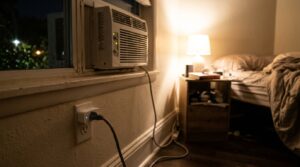
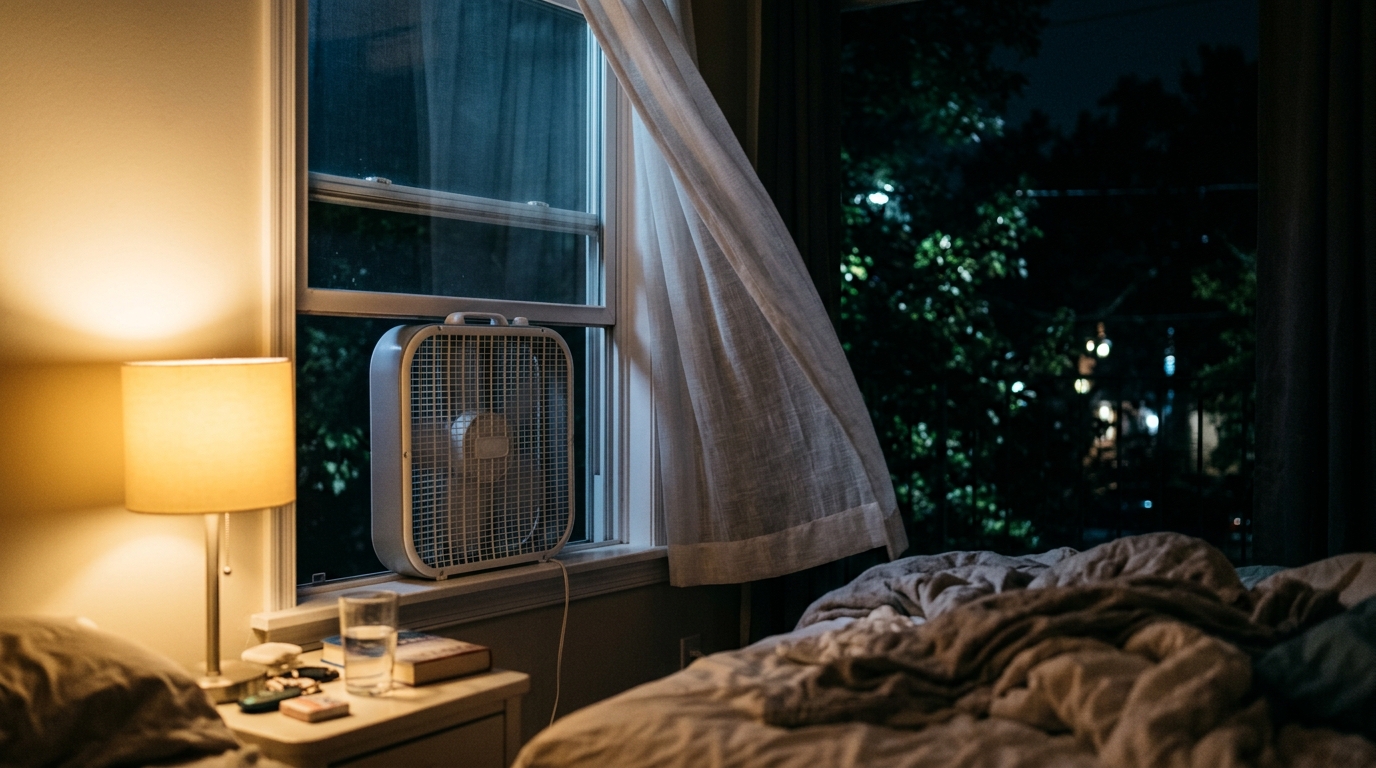
- Set a box fan in a window blowing outward in the warmest part of the house (usually upstairs) to exhaust hot air, while opening windows in cooler rooms to pull in fresh air.
- Turn off or raise your thermostat setting overnight so the AC is not fighting the open windows.
- At sunrise, or when the outdoor temperature climbs above the indoor temperature, close all windows, draw blinds and curtains on sun-facing windows, and shut exterior doors.
- Keep interior doors open so the cooled air circulates, and hold off on the AC until the indoor temperature reaches about 77 to 78 degrees, often late morning.
- Pick your fan. A pair of reversible window fans (about $60 to $120 total) works for most homes. A whole-house fan (often $400 to $1,500 installed) is a bigger project, so start with window fans to test your climate.
- Place one fan in an upstairs or top-floor window facing outward to exhaust hot air. Open windows in the cooler lower and shaded rooms so air is drawn in through them.
- Aim for roughly 15 to 20 air changes per hour. As a rule of thumb, you want about 2 to 3 CFM of fan capacity per square foot of floor area, so a 1,500 sq ft home wants 3,000 to 4,500 CFM.
- Add a plug-in timer or smart plug ($10 to $25) so the fan shuts off automatically once the house has cooled, and set it to restart before dawn if needed.
- Install fine-mesh window screens or a removable filter panel over the intake windows to cut down on pollen, dust, and insects.
- In the morning, close windows, turn off the fan, and cover sun-facing glass with blinds or reflective shades. Use ceiling fans to feel cooler as the day warms up, since they let you raise the thermostat by about 4 degrees without losing comfort.
- Have a contractor size a whole-house fan for your square footage and attic vent area. You typically need about 1 square foot of attic vent opening for every 750 CFM of fan capacity.
- Confirm that your attic has enough free ventilation area and that combustion appliances (furnace, water heater) are not at risk of backdrafting when the fan runs.
- Install the fan in the ceiling of a central hallway with an insulated, sealed cover or damper so it does not leak heat in winter.
- Add a smart thermostat or outdoor temperature sensor setup that tells you (or automatically triggers the fan) when outside air is cooler and drier than inside.
- Pair with window shading, such as exterior shades or solar screens, to keep stored coolness from being lost to sun the next day.
Why It Works: The Benefits
Delaying AC start time from 8 a.m. to noon can cut run time by 3 to 5 hours on hot days. In dry climates, studies of night ventilation report cooling energy reductions of 20 to 40%, and 15 to 30% is a realistic target for most homes.
If your utility uses time-of-use rates, shifting AC use later and shorter can lower the most expensive hours of your bill, which often run from 4 to 9 p.m.
Fewer run hours means fewer starts and less compressor strain, which can extend equipment life and reduce repair risk.
Flushing the house swaps stale, VOC-laden indoor air for fresh outdoor air each night, which can help lower indoor pollutant and odor buildup.
Most people sleep best in a bedroom between 60 and 67 degrees. Pulling cool air through the bedroom overnight can get you there without running the AC.
💰 Savings Impact by Action
Pulling cool night air through the house can cut cooling energy by 15 to 30% in climates with a large day-night temperature swing.
Pushing AC start time from 8 a.m. to noon removes 3 to 5 run hours on hot days, which can trim daily cooling use by about 20%.
Closing blinds and curtains on sun-facing windows blocks up to 45% of solar heat gain and adds roughly 15% more savings when combined with night flushing.
Running ceiling fans lets you raise the thermostat 4 degrees without losing comfort, which saves about 8% on cooling for the time it is in use.
Using a thermostat schedule that holds off cooling on flush days adds an extra 10% reduction by avoiding unnecessary early-morning run time.
🏠 Key Concepts Explained
The Science Behind It
Your house is essentially a giant thermal battery. Materials like drywall, wood framing, tile, concrete, and furniture have high thermal mass, meaning they soak up heat slowly during the day and release it slowly at night. By the late afternoon, your home’s interior has absorbed a huge amount of stored heat, which is why the house can feel warm in the evening even after the sun has set.
Night flushing works by reversing that process. When the outdoor air is cooler than your indoor air, moving it through the house creates a temperature gradient that pulls heat out of the thermal mass. By sunrise, the structure itself has been cooled, sometimes by 5 to 8 degrees. During the next day, that cooled mass acts as a heat sink, absorbing incoming heat from sunlight, appliances, and people before it raises the air temperature. This is why a well-flushed house can stay at 72 to 76 degrees until late morning even when it is 90 degrees outside.
The effect depends on the diurnal swing and humidity. Dry climates like the Southwest, Mountain West, and Pacific Northwest can see nighttime lows 25 to 35 degrees below daytime highs, which makes night flushing extremely effective. Humid climates like the Southeast have smaller swings and higher dew points, so there is less free cooling available and a greater risk of bringing moisture indoors. In those areas, night flushing is best used in the shoulder seasons (spring and fall) or on the occasional dry night.
Frequently Asked Questions
▼ Why is my AC still running all day even after I tried these fixes?
Check whether nights actually dropped below your indoor temperature by at least 10 degrees and whether you closed up early enough in the morning. If the house is still heating up quickly, the issue is often solar gain or leaky ducts and attic insulation. Close blinds on sun-facing windows, and consider having an energy audit to find air leaks and insulation gaps.
▼ Can renters do this without landlord permission?
Yes. Opening windows and using a box fan or tension-mounted window fans requires no modifications. Use a window fan with adjustable side panels, and skip anything that needs cutting, drilling, or permanent installation. Whole-house fans are not renter-friendly, but window fans in the $30 to $60 range are.
▼ How long before I actually notice savings on my bill?
You will feel the difference the first morning, and you should see it in your next bill. Most homeowners see a measurable drop within one billing cycle, typically 10 to 25% less cooling energy on days when the trick works. Track your usage with your utility’s online portal or a smart thermostat to confirm.
▼ What if my home is older than 30 years?
Older homes often have leakier envelopes, which actually helps night flushing since air moves more freely, but the same leaks let the cool air escape faster in the morning. Focus on sealing attic bypasses and adding insulation, and close up the house on time to hold in the stored coolness. Older homes with plaster walls and plenty of thermal mass often respond very well to this trick.
▼ Does this work in humid climates like Florida or Louisiana?
Only on the occasional dry night, since high dew points mean the night air carries a lot of moisture. If the dew point is above 65 degrees, skip the flush and rely on your AC with a dehumidifier or a setting that prioritizes humidity control. Spring and fall nights in humid regions can be good candidates.
Quick Tips
- Open windows on the shady side of the house first and the sunny side last, since shaded air is typically cooler and cleaner.
- Run ceiling fans in the morning after you close up to circulate the stored cool air and make the house feel 4 degrees cooler.
- Close blinds and curtains on east and south windows before you leave for work to block solar heat gain, which can add 20 to 40% to your cooling load.
- Use a smart thermostat to hold off cooling until later in the morning, for example by setting your daytime start to 11 a.m. instead of 8 a.m. on flush days.
- Check the weather app for the dew point, not just the temperature. Flush when it is under 60 degrees for the most comfortable results.
Variations for Your Situation
- Apartment or Rental: Use a pair of tension-mounted reversible window fans ($60 to $100) set to exhaust in one window and intake in another, and add blackout curtains ($25 to $50) for the daytime. No installation or permission needed, and everything comes with you when you move.
- Tight Budget (under $50): Skip the fans and use the open-and-close routine with a $10 indoor/outdoor thermometer. Open windows after sunset, close them at sunrise, and shade sun-facing glass with cardboard or old blankets. A single $25 box fan placed in an upstairs window can boost the effect substantially.
- Older Home (pre-1980): Older homes often have attic fans or operable transoms that you can use for stack-effect venting. Seal attic air leaks and add insulation to R-38 so the stored coolness lasts longer, and check that double-hung windows open at both top and bottom for the best airflow.
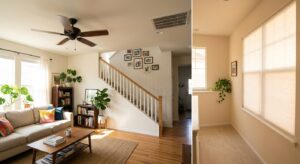
- Two-Story Home: Open the top-floor windows wide and the ground-floor windows partway so the stack effect pulls cool air up through the house. Close bedroom doors only if you are running a window fan in that room.