You set the thermostat to 70 degrees, yet the living room feels chilly at 9 p.m. and perfectly fine at 2 p.m. The thermometer says nothing changed. What changed is the light. Bright, blue-white LED lighting in the evening can make a room feel cooler and more alert, while warm, dim light signals your brain that it is time to wind down and stay cozy. Many homeowners respond by cranking up the heat, paying for warmth they may not actually need.
This effect is real, but it is worth being precise about what it is. Light does not change the air temperature, and it will not make 60 degrees feel like 72. What it does is influence your perceived thermal comfort and your body’s own heat regulation. Your body temperature follows a daily rhythm, dropping in the evening as melatonin rises, and light color and intensity can nudge both. Research on color-temperature and thermal perception has also shown that warm-hued light tends to make people feel slightly warmer than cool-hued light at the same air temperature.
This post explains how circadian-friendly lighting interacts with comfort, then gives you two practical paths: a free quick fix using the lights you already own, and a DIY upgrade with tunable smart bulbs and a coordinated thermostat schedule. Used together, they let you hold a lower evening setpoint without feeling like you are sacrificing comfort.
What You’ll Need
Click on an item below to shop for the recommended items for this recipe on Amazon.
As an Amazon Associate, we earn from qualifying purchases.
How to Do It
- Turn off bright overhead lights after sunset and switch to table or floor lamps. Lamps naturally cast lower, more localized light that feels cozier.
- If you already own dimmers or dimmable bulbs, dim the lights to roughly 30 to 50% about 2 hours before bedtime.
- Swap any cool-white bulbs (4000K or 5000K) in lamps you use at night for warm-white bulbs rated 2700K or lower. Basic LED bulbs usually cost $2 to $5 each.
- Lower your thermostat by 1 degree in the evening and hold it for a few days. If you feel comfortable, drop another degree, staying within a range that is comfortable for everyone in the home.
- Add a warm layer such as a throw blanket, socks, or slippers. These pair with the lighting change and often matter more for comfort than the bulbs alone.
- Pick the rooms where you spend your evenings, usually the living room and bedroom. Count the lamps and fixtures you want to control.
- Install tunable white smart bulbs, which cost about $10 to $20 each, or a smart dimmer if your fixtures support it. Choose bulbs that can reach 2200K to 2700K for evening and 4000K to 5000K for daytime.
- In the lighting app, create a daily schedule: cool, brighter light in the morning and midday, gradually shifting to warm and dim after sunset, and very dim amber light 1 hour before bed.
- Program your thermostat to match. A sample schedule is 68 degrees while awake and home, 66 to 67 degrees during the evening wind-down, and 62 to 65 degrees overnight, adjusting for your own comfort.
- Add a night path light at 1 to 5% brightness in warm amber for bathroom trips, so you avoid bright light that can disrupt sleep.
- Review your results after 2 to 3 weeks and fine-tune the color temperature and setpoints. Keep what feels comfortable and adjust anything that does not.
Why It Works: The Benefits
The DOE estimates you save roughly 1% on heating for each degree you lower the thermostat for 8 hours. If warm lighting helps you accept a 2 to 3 degree evening setback, that adds up to roughly 2 to 3% on top of a normal nighttime setback, and more when combined with a full overnight schedule.
Reducing blue-rich light for 1 to 2 hours before bed supports natural melatonin release. Better sleep also pairs well with a cooler bedroom, since most sleep guidance suggests a bedroom around 60 to 67 degrees Fahrenheit.
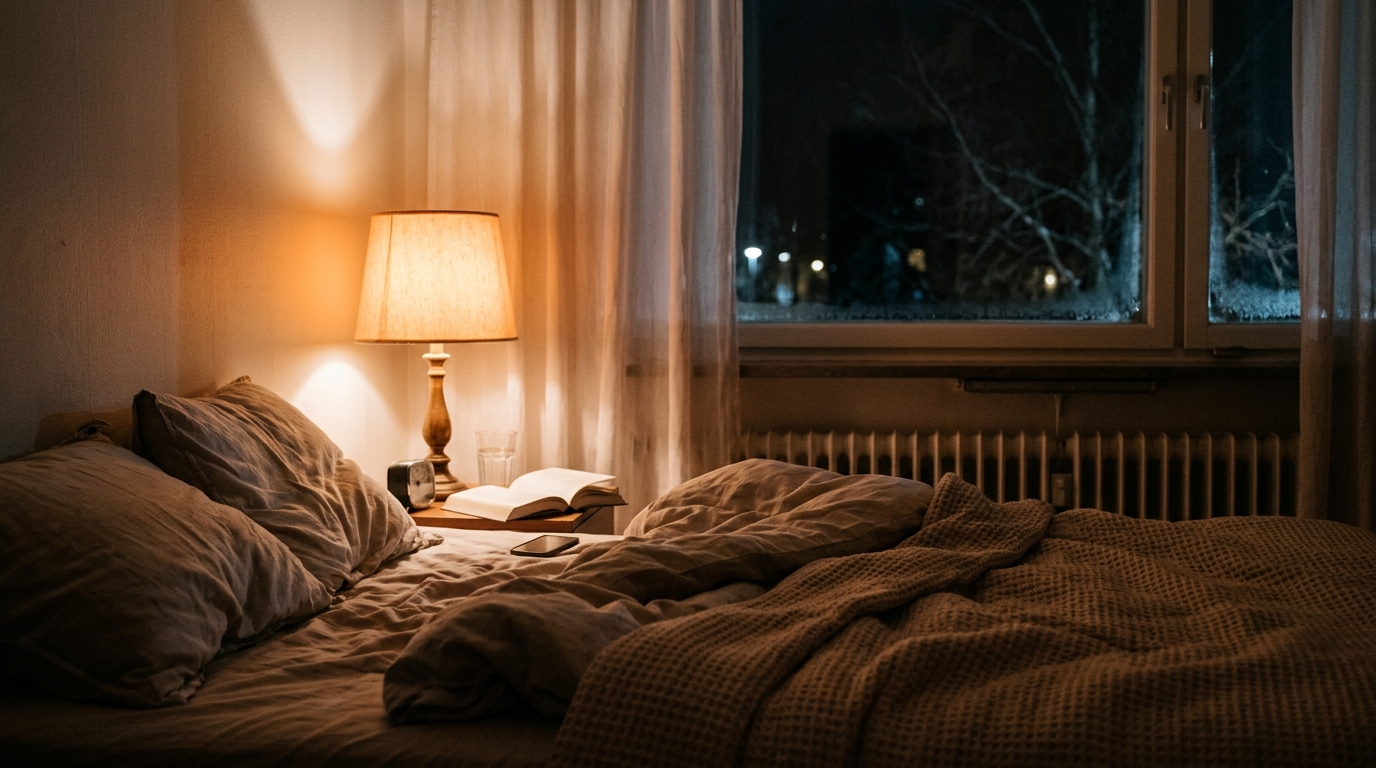
Warm 2200K to 2700K light and lower brightness create a visual sense of warmth. Many people report feeling comfortable at setpoints 1 to 3 degrees lower, though the effect varies from person to person.
Dimming LEDs to 30 to 50% brightness cuts their power draw roughly in proportion. Switching from overhead fixtures to a few low-wattage lamps in the evening can trim lighting use in the room by 50% or more.
Scheduled lighting and temperature changes become automatic cues for the household, so the evening wind-down happens without anyone touching a thermostat or switch.
💰 Savings Impact by Action
Lowering the evening and overnight setpoint by 3 to 4 degrees for 8 hours saves roughly 1% per degree, or about 3 to 8% depending on climate.
Running evening lights at 50% brightness can cut that fixture’s electricity use by up to about half, which is a small dollar amount but adds up.
Replacing cool-white bulbs with warm, lower-wattage LEDs and using lamps instead of overheads reduces room lighting energy use by roughly 10 to 50%.
Automating lighting and temperature together prevents forgotten settings and typically adds about 3 to 5% in extra seasonal savings.
🏠 Key Concepts Explained
The Science Behind It
Human thermal comfort is a blend of physical and perceptual inputs. The physical side includes air temperature, surface temperatures, humidity, and airflow. The perceptual side includes expectation, visual cues, and your internal clock. Lighting plays mostly in the perceptual and circadian categories. Studies of color temperature and thermal sensation have found that people often rate rooms lit with warm-hued light as slightly warmer than identical rooms lit with cool-hued light, a cross-modal effect sometimes described as the hue-heat hypothesis. The effect is modest and varies between individuals, but it is consistent enough to use as a comfort aid.
The circadian piece is more physiological. Specialized cells in your eyes, called intrinsically photosensitive retinal ganglion cells, are especially sensitive to blue wavelengths around 480 nanometers. Evening exposure to blue-rich light delays melatonin release, which keeps you more alert. Melatonin is also involved in the evening drop of core body temperature, so reducing blue light supports the natural cooling process that helps you fall asleep. When your body is in wind-down mode, a cooler room tends to feel more acceptable.
From an energy standpoint, the savings come from the thermostat, not the bulbs. Heating load scales with the difference between indoor and outdoor temperature, so each degree of setback reduces the heat your furnace or heat pump must deliver. Lighting changes simply help you tolerate that lower setpoint, and dimming LEDs adds a small secondary saving on electricity.
Frequently Asked Questions
▼ I switched to warm bulbs, but my house still feels cold at night. Why?
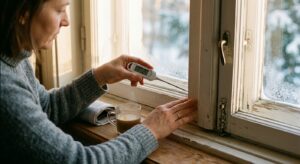
Lighting only nudges perception, so real drafts, cold windows, or poor insulation will still make you feel chilly. Check for air leaks around windows and doors, close drapes at night, and consider a small rug or draft stopper. If one room is much colder than the rest, that points to an insulation or airflow problem worth fixing.
▼ Can renters do this without landlord permission?
Yes. Warm LED bulbs, plug-in smart bulbs, and plug-in dimmers all work in standard lamps and sockets with no modifications. Renters should skip hardwired smart dimmers and use a smart plug or smart bulbs instead, and a plug-in or battery smart thermostat alternative can help if you cannot change the wall thermostat.
▼ How long before I actually notice savings on my bill?
You will likely see the effect on your next full billing cycle if you consistently lower the evening and overnight setpoint. Expect around 1% savings per degree of setback over 8 hours, so a 3 to 4 degree adjustment might mean roughly 3 to 4% on its own. Savings are larger in cold climates and smaller in mild ones.
▼ What if my home is older than 30 years?
Older homes often have more air leakage and uneven temperatures, so perceived comfort can fall faster at night. Use the lighting changes as a bonus, but prioritize air sealing and attic insulation, which typically deliver bigger and more reliable savings. Check your wiring before installing smart dimmers, since older homes may lack neutral wires.
▼ Will warm light make my room feel warmer if the air is truly cold?
Not in any meaningful physical way. The effect is a subtle shift in how warm the space feels, usually small enough that it supports a 1 to 3 degree setback rather than replacing heat. If you are shivering, raise the thermostat or add layers rather than relying on bulbs.
Quick Tips
- Choose bulbs rated 2700K or lower for evening-use lamps, and look for 2200K amber options in bedrooms.
- Keep daytime lighting cooler and brighter, around 4000K to 5000K, to support alertness and a strong day-night contrast.
- Layer lighting with lamps at different heights instead of one bright overhead fixture, which feels cozier and uses less power.
- Combine the lighting shift with a 2 to 4 degree nighttime thermostat setback for the best mix of comfort and savings.
- Use warm-tinted night lights with amber or red tones in hallways and bathrooms to avoid waking your brain fully.
- Dim screens or use night mode on phones and TVs in the evening, since they emit blue-rich light too.
Variations for Your Situation
- Apartment/Rental: Stick with plug-in solutions. Screw-in tunable smart bulbs run $10 to $20 each, smart plugs cost $10 to $15, and warm 2700K lamp bulbs cost a few dollars. Pair them with a smart or programmable thermostat only if your lease allows, otherwise use a space heater with a timer only in rooms you occupy and follow safety guidelines.
- Tight Budget (under $50): Replace 2 to 4 cool-white lamp bulbs with 2700K warm LEDs ($2 to $5 each), turn off overhead lights after sunset, and lower the thermostat 1 degree every few days. Add a throw blanket or warm socks if you do not already have them. Total cost is typically $10 to $25.
- Older Home (pre-1980): Expect higher baseline air leakage and colder wall and window surfaces, which can make evenings feel cooler regardless of lighting. Use warm lighting as a comfort aid, but seal obvious leaks with caulk and weatherstripping first, and be cautious with smart dimmers if your wiring is original, since a licensed electrician may be needed.