You set the thermostat to 68 degrees, go to bed comfortable, and wake up shivering in a house that has drifted down to 58. The furnace may even be running constantly through the night. It is a frustrating problem, and most homeowners assume the furnace is failing and start pricing replacements that can run $4,000 to $8,000.
In reality, a furnace that cannot hold temperature overnight is usually suffering from one of three problems: the furnace is not delivering enough heat (dirty filter, failing igniter, weak blower), the heat is not reaching the rooms (leaky or disconnected ducts), or the house is losing heat faster than any properly working furnace could replace it (air leaks and thin insulation). Each cause has a different fix and a very different price tag.
This post gives you a step-by-step diagnostic process. We start with free checks you can do tonight, move to a hands-on DIY inspection, and finish by explaining when a licensed HVAC technician is worth the call. You will also learn how to read your furnace’s run-time behavior, which is the single best clue to what is actually wrong.
What You’ll Need
Click on an item below to shop for the recommended items for this recipe on Amazon.
As an Amazon Associate, we earn from qualifying purchases.
How to Do It
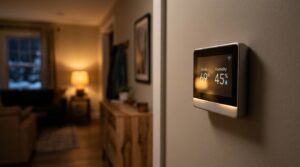
- Check the thermostat schedule and setpoint. Confirm no overnight setback is lowering the temperature, and that the system is set to ‘Heat’ with the fan on ‘Auto’. Replace the batteries if it uses them, since weak batteries cause erratic behavior.
- Inspect the air filter. Slide it out and hold it up to a light. If you cannot see light through it, replace it. A clogged filter is the most common cause of reduced heat output. Use the correct size and a MERV 8 to 11 rating.
- Open all supply registers and make sure return grilles are not blocked by furniture, rugs, or curtains. Closing more than about 20% of registers in a home can raise duct pressure and reduce airflow.
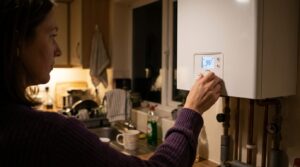
- Watch the furnace cycle for 30 to 60 minutes on a cold evening. Note whether it runs continuously (possible capacity or heat loss problem), turns on and off every few minutes (short-cycling, often airflow or thermostat related), or never kicks on at all (possible ignition or control problem).
- Feel the air at a supply register while the furnace runs. It should be roughly 120 to 140 degrees F near the register, or about 40 to 70 degrees warmer than the return air. Cool or lukewarm air suggests a burner, igniter, or heat exchanger issue.
- Run a temperature-drop test. Set the thermostat to 70 degrees, let the house stabilize, then turn the heat off for two hours on a cold night and record how fast the temperature falls. A drop of more than 3 to 4 degrees per hour at 25 degrees outside points to major air leakage or poor insulation rather than a furnace fault.
- Inspect accessible ductwork in the basement, crawlspace, or attic. Look for disconnected joints, crushed flex duct, and gaps at the furnace plenum. Seal seams with foil-backed tape or mastic, never standard cloth duct tape, which fails within a few years.
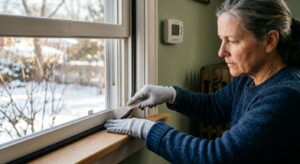
- Check for infiltration. On a windy day, hold a stick of incense or a lit candle near window frames, exterior doors, recessed lights, attic hatches, and the rim joist. Wavering smoke shows leaks. Seal with caulk, weatherstripping, or expanding foam.
- Measure attic insulation depth. Most cold climates call for R-49 to R-60 (roughly 16 to 20 inches of blown fiberglass or cellulose). If you see ceiling joists, you are likely under-insulated and heat is escaping overnight.
- Test the thermostat accuracy. Place a reliable digital thermometer next to the thermostat for 15 minutes. If the readings differ by more than 2 degrees, recalibrate or replace the thermostat. Also confirm it is not mounted on an exterior wall or in direct sun.
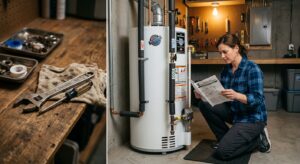
- Listen and look at the furnace during a heat call. Healthy sequence: inducer fan starts, igniter glows, burners light with a steady blue flame, then the blower starts after 30 to 90 seconds. Yellow or flickering flames, repeated clicking, or burners shutting off early all call for a pro.
- Ask the technician to measure temperature rise across the furnace. Every furnace has a rated range (typically 35 to 65 degrees F) on its nameplate. A rise outside that range indicates airflow or burner problems.
- Request a static pressure test on the duct system. Pressure above about 0.5 inches of water column means the ducts are too restrictive, which suffocates the blower and cuts heat delivery.
- Have the technician inspect the heat exchanger, flame sensor, igniter, and high-limit switch. A dirty flame sensor (a $5 to $10 cleaning job) is a very common cause of burners shutting off prematurely.
- Ask about a Manual J load calculation if the furnace runs constantly and still cannot keep up. This confirms whether the unit is undersized for the home, which is rare but possible after additions or insulation changes.
- Consider a duct leakage test or a blower door test ($300 to $600). These quantify exactly how much conditioned air you are losing and prioritize the fixes with the best payback.
Why It Works: The Benefits
Fixing duct leaks and restricted airflow can cut heating costs by 10 to 30%, which is $150 to $450 per year on a typical $1,500 winter heating budget.
Many ‘dying furnaces’ turn out to be filter, igniter, or duct problems costing $10 to $400 to fix, compared with $4,000 to $8,000 for a new system.
Balancing airflow and sealing ducts reduces the gap between your warmest and coldest rooms, often cutting the difference from 6 to 8 degrees to 2 or 3.
A furnace that runs constantly or overheats from restricted airflow wears out its heat exchanger and blower motor faster. Correcting airflow can add years to the system’s 15 to 20 year lifespan.
Diagnosing airflow and combustion problems early reduces the risk of a cracked heat exchanger, which can leak carbon monoxide into your home.
💰 Savings Impact by Action
Restoring proper airflow can improve furnace efficiency by 5 to 15% and prevent safety shutoffs.
Sealing and insulating ducts in unconditioned spaces can cut heating losses by up to 20% or more.
Sealing attic, rim joist, and window leaks reduces heating and cooling costs by about 15% on average.
Bringing attic insulation to R-49 can reduce winter heat loss through the ceiling by 10 to 20%.
A properly set 7 to 10 degree setback for 8 hours saves roughly 1% per degree, up to about 10% annually.
🏠 Key Concepts Explained
The Science Behind It
A furnace and a house are in a constant tug of war. The furnace adds heat at a fixed rate measured in BTUs per hour, while the house loses heat at a rate that depends on the temperature difference between inside and outside. On a mild 45 degree night, the loss is small and the furnace easily keeps up. At 10 degrees, heat loss can triple, and any weakness in the system or the building shell becomes obvious. That is why overnight temperature problems tend to appear only during the coldest stretches.
Airflow is the hidden variable. A furnace heats air by passing it over a heat exchanger, and a blower moves that air through the ducts. If the filter is clogged or the ducts are undersized, less air passes over the exchanger, which overheats and trips the high-limit safety switch. The burners shut off, the blower keeps running, and the house cools until the cycle repeats. The result is a furnace that appears to run all night but delivers far less heat than it should.
Heat loss through the building envelope compounds the problem. Warm air rises and escapes through the attic and upper-level leaks, pulling cold air in through lower leaks, a process called the stack effect. In a leaky home this can replace the entire volume of indoor air every one to two hours. Combine that with leaky ducts losing 20 to 30% of the heat before it reaches a room, and a perfectly healthy furnace may only deliver 50 to 60% of its rated output where you actually need it.
Frequently Asked Questions
▼ My furnace runs all night but the house still gets cold. Is it too small?
It is less likely undersized than you think. First check the filter, supply air temperature (it should be 120 to 140 degrees F), and ductwork for leaks. If those are fine and the house loses more than 3 to 4 degrees per hour with the heat off, air leaks and weak insulation are the more probable cause. Only after ruling those out should you ask a technician for a load calculation.
▼ My furnace turns on and off every few minutes. What does that mean?
That is short-cycling, usually caused by a clogged filter, blocked returns, an oversized furnace, a dirty flame sensor, or a thermostat placed near a vent. Start by replacing the filter and opening all registers. If it persists, a technician can check the flame sensor and high-limit switch, which are often $100 to $250 repairs.
▼ Why is one room always colder than the rest at night?
That room likely has a leaky or crushed duct, a closed damper, or poor insulation on exterior walls. Check that the register is open and airflow is strong, then inspect the duct run feeding it. Sealing that single branch with mastic and adding insulation often fixes it for under $50.
▼ How can I tell if my heat exchanger is cracked?
Warning signs include a yellow or flickering burner flame, soot around the furnace, a persistent odor, or a CO detector alarm. You cannot safely confirm a crack yourself, so shut the furnace off and call a licensed technician right away if you notice any of these. Never ignore a CO alarm.
▼ Is it worth replacing an old furnace just to fix overnight cooling?
Rarely as a first step. A furnace under 15 years old with a good heat exchanger is usually better served by duct sealing, air sealing, and insulation. If the furnace is over 20 years old, around 80% efficiency or less, and needs frequent repairs, a 95%+ AFUE model can cut heating bills by 15 to 25%, with a payback of roughly 7 to 12 years.
Quick Tips
- Replace your furnace filter every 1 to 3 months during the heating season. Mark the date on the filter frame so you never guess.
- Close the damper on an unused fireplace and cover the opening with an inflatable chimney balloon, which can stop a surprising amount of overnight heat loss.
- Use a smart or programmable thermostat with a gradual recovery feature so the house reaches your wake-up temperature on time without blasting the furnace at full output.
- Have your furnace professionally tuned up every fall. A $80 to $150 tune-up catches dirty flame sensors, worn igniters, and failing capacitors before they leave you cold in January.
Variations for Your Situation
- Apartment/Rental: You cannot modify central HVAC or ducts, so focus on what you control. Replace the filter if your lease allows access, use removable weatherstripping and window insulation film ($15 to $30 per window), and place draft stoppers at doors. Document the problem in writing and ask your landlord to schedule a furnace inspection, since heating is typically a landlord responsibility.
- Tight Budget (under $50): Replace the filter ($5 to $15), clear every supply and return of blockages, add door sweeps ($8 each), caulk the most visible window and baseboard gaps ($6 to $10 per tube), and seal accessible duct seams with foil tape ($8 to $12). Lower your overnight setback to only 3 to 4 degrees instead of 8 to 10 so recovery is faster. Together these steps can recover 10 to 15% of lost heat.
- Older Home (pre-1980): Expect higher baseline air leakage, uninsulated or poorly insulated attics, and ducts in unconditioned spaces. Prioritize attic air sealing and insulation first, then duct sealing, since these often deliver the best payback of 2 to 4 years. Also check for knob-and-tube wiring and vermiculite insulation (a possible asbestos concern) before disturbing attic materials, and call a professional if you find either.