You finally settle into bed, the heat kicks on, and then it starts: clank, bang, hiss, tick. A noisy radiator can turn a cozy bedroom into a sleep-wrecking racket. Most homeowners just learn to live with it, or crank the radiator valve closed and shiver instead. Neither is necessary.
Radiator noise almost always comes from one of three things: trapped air, trapped water, or pipes that are expanding and rubbing against framing. These are not just noise problems. Air pockets can reduce a hot-water radiator’s output by 20 to 30 percent, and water trapped in a steam radiator forces your boiler to cycle more often and waste fuel.
This post walks through a quick fix you can do in about 15 minutes before tonight’s bedtime, plus a more thorough DIY upgrade for stubborn noise. You will learn how to tell whether you have a hot-water or steam system, what each type of sound means, and how to fix it without calling a plumber.
What You’ll Need
Click on an item below to shop for the recommended items for this recipe on Amazon.
As an Amazon Associate, we earn from qualifying purchases.
How to Do It
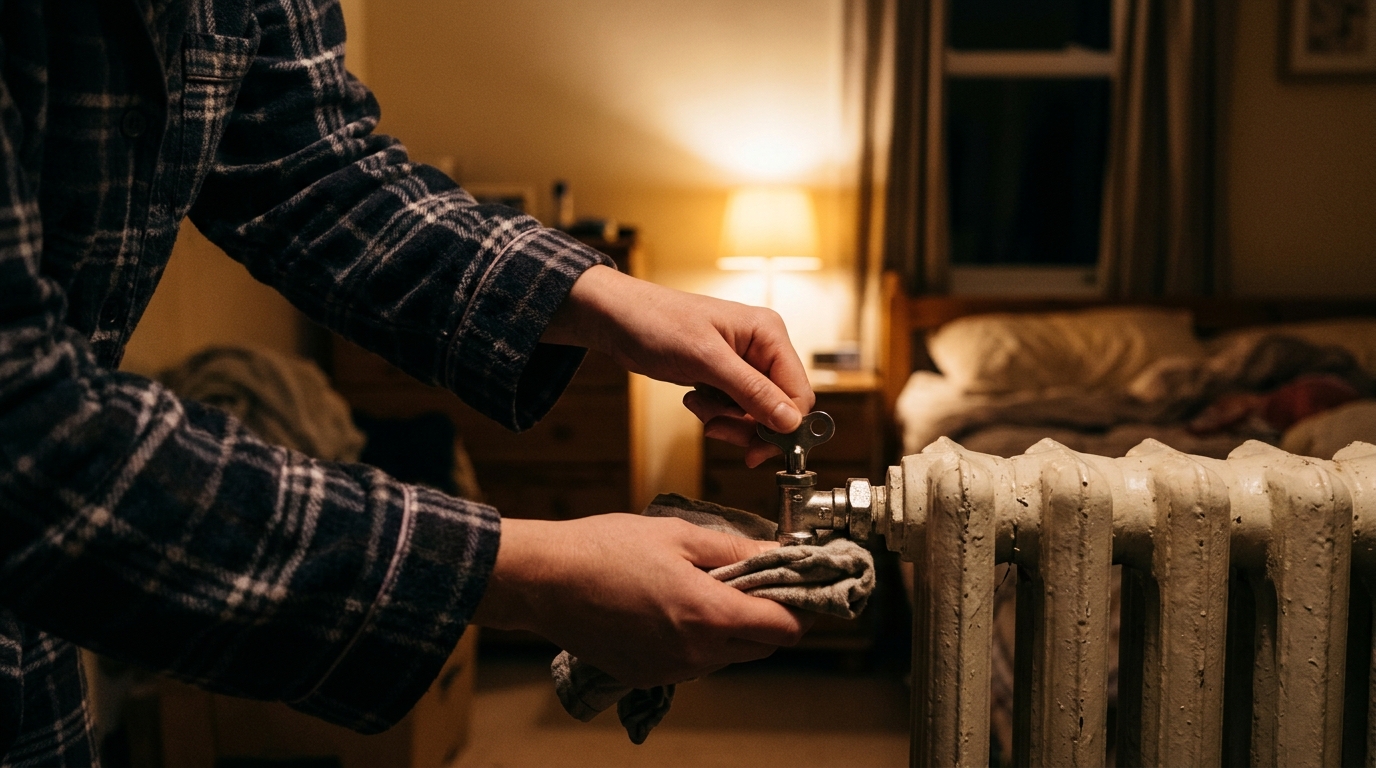
- Identify your system: a hot-water radiator has a small bleed valve (a square or slotted stem) at the top corner. A steam radiator usually has a small round air vent on the side and a single large inlet valve at the bottom.
- For hot-water radiators, turn the heat on and let the radiator warm for 10 to 15 minutes. Then turn the heat off and wait about 20 minutes so the water stops circulating.
- Place a towel and a small cup under the bleed valve. Use a radiator key (about $3 at a hardware store) or a flathead screwdriver to turn the valve a quarter turn counterclockwise. You will hear a hiss as air escapes. Close the valve as soon as a steady dribble of water appears.
- For steam radiators, make sure the large inlet valve is fully open or fully closed. A half-open valve is one of the most common causes of banging and hissing.
- Check that the radiator slopes slightly toward the inlet valve. Lay a small level on top; the bubble should lean toward the valve end.
- Wipe up any water, turn the heat back on, and listen. Most air-related gurgling and ticking stops immediately.
- For steam radiators that bang, raise the end opposite the inlet valve using wooden or metal shims so the radiator tilts about 1/4 inch toward the valve over its length. Place shims under the feet and check with a level.
- Replace a failed steam air vent. With the system off and cool, unscrew the old vent (use a wrench if it is stuck), wrap the threads of a new adjustable vent with plumber’s tape, and screw it in hand tight. Vents cost $10 to $20 each.
- Locate pipe ticking by listening while the system heats. Where pipes pass through floors, walls, or joists, slide a rubber or felt pipe sleeve or a small piece of foam pipe insulation between the pipe and framing to cushion movement.
- Add or replace pipe hangers if a long run of pipe sags. Sagging pipes trap condensate and cause banging. Pipe hangers cost about $2 to $5 each and screw into joists.
- Check the boiler water level and pressure. Low water in a steam boiler causes erratic steam production and noise; follow your boiler manual to top it up. For hot-water systems, pressure is typically 12 to 15 psi when cold.
- Run a full heat cycle and listen at each radiator. If a unit still bangs or hisses, note which one so you can describe the problem to a heating contractor.
- Call a licensed heating contractor to inspect the boiler, steam traps, and piping for sloping or sizing problems that cannot be fixed with shims.
- Ask the technician to power flush or chemically clean the system if you have sludge, which can block flow and cause gurgling and cold spots.
- Have steam traps tested and replaced if they are stuck open or closed. Failed traps are a major source of wasted fuel and noise.
- Request a full system balance, including adjusting vents so every radiator heats at the same pace.
Why It Works: The Benefits
Eliminating banging and hissing removes sudden noise spikes that can fragment sleep, especially in bedrooms where the radiator is within a few feet of the bed.
Bleeding trapped air from a hot-water radiator can restore 20 to 30 percent of lost heat output, so the room warms faster and the boiler runs fewer minutes.
Fixing air and condensate problems lets the whole system run more efficiently, often cutting heating costs by 5 to 15 percent in homes that have gone years without maintenance.
Water hammer and short cycling stress boiler components and pipe joints. Fixing the cause can help avoid leaks and costly repairs down the road.
💰 Savings Impact by Action
Removing trapped air from a hot-water radiator can restore up to 25% of lost heat output so the room warms faster.
Replacing failed steam vents evens out heating and can trim fuel use by about 10 to 15% in affected systems.
Properly sloping steam radiators lets condensate drain, reducing boiler short cycling and wasted steam by roughly 8%.
Balancing all radiators so they heat at the same rate reduces overheating of rooms near the boiler by about 10%.
🏠 Key Concepts Explained
The Science Behind It
Radiators work by moving heat from hot water or steam into the room air. In a hot-water system, circulating water at about 160 to 180 degrees F fills the radiator from the bottom up. Air is lighter than water and rises to the top, where it gets trapped. That pocket of air acts like an insulator, blocking hot water from reaching part of the radiator surface. The result is gurgling and ticking as water squeezes past the bubble, plus a radiator that is cool at the top and warm at the bottom.
Steam systems behave differently. Steam enters the radiator, releases its heat as it condenses back into water, and that condensate must drain away by gravity. If the radiator is level or the pipe sags, water pools in low spots. When fresh steam rushes in and hits that standing water, it creates a shock wave called water hammer, the loud bang you hear in the walls. Steam also needs air to escape as it enters, which is why a working air vent is essential for quiet, even heating.
Noise that sounds like ticking or creaking is usually thermal expansion. A 50-foot run of iron or copper pipe can lengthen by roughly half an inch when it heats up. If the pipe is pinned tightly against a joist or floorboard, it sticks, then slips with a snap or tick. Cushioning those contact points with felt or foam lets the pipe slide silently.
Frequently Asked Questions
▼ Why is my radiator still banging after I bled it?
If you have a steam system, bleeding does nothing, and the banging is almost certainly from trapped condensate. Check that the inlet valve is fully open and that the radiator tilts slightly toward the valve, using shims under the far end if needed. If it still bangs, a failed air vent or sagging supply pipe is the likely cause.
▼ Can renters fix a noisy radiator without landlord permission?
Renters can usually check valve position and use a radiator key to bleed a hot-water radiator, since this is routine maintenance. Slipping a rubber or felt pad under the feet is also low risk. For anything involving vents, pipes, or boiler adjustments, notify your landlord and let them arrange the work.
▼ How long before I notice savings on my heating bill?
The effect on comfort is immediate if air was blocking heat, since radiators warm more evenly within minutes. Bill savings show up over the next billing cycle or two, typically 5 to 15 percent if the system had significant air or condensate problems.
▼ What if my radiators are more than 50 years old?
Older cast iron radiators are very durable, but old valves, vents, and pipe hangers often wear out. Expect to replace vents and possibly add pipe hangers, and have a pro check for sludge buildup and rust. If bleeding produces brown or black water, schedule a system flush.
▼ Is it normal for water to come out when I bleed the radiator?
Yes, a small amount of water is normal once the air has escaped. Close the valve as soon as a steady stream replaces the hissing. If you see more than a cup or two, or the water keeps flowing after closing the valve, the valve may be damaged and needs replacement.
Quick Tips
- Do the quick fix in the afternoon so the system has time to settle before bedtime.
- Keep a radiator key on a hook near your boiler so you remember to bleed radiators each fall.
- Mark each radiator’s valve position with a small piece of tape so you can confirm steam valves are fully open.
- If a bedroom radiator is the only noisy one, try moving the bed or adding a thick rug nearby to dampen sound while you work on a permanent fix.
Variations for Your Situation
- Apartment/Rental: Stick to non-invasive fixes like confirming steam valves are fully open, bleeding hot-water radiators with a $3 key if your lease allows, and placing rubber furniture pads under radiator feet. Report loud banging or leaks to your landlord in writing so repairs are documented.
- Tight Budget (under $50): A radiator key ($3), a handful of wooden shims (free to $5), and foam pipe insulation ($5 to $10) will solve most noise problems. Add one adjustable steam vent ($10 to $20) only to the radiator that hisses the loudest.
- Older Home (pre-1980): Expect original cast iron radiators, older piping, and possibly sagging runs. Budget for replacing steam vents on every radiator ($10 to $20 each), adding pipe hangers every 4 to 6 feet on long runs, and having a pro inspect for sludge and failed steam traps.