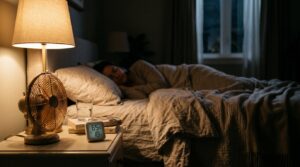
If you wake up with a stuffy nose, scratchy throat, or a dry mouth, your bedroom air may be the culprit. Relative humidity (RH) swings overnight as temperatures drop, as you breathe out roughly a pint of moisture while you sleep, and as your HVAC system cycles on and off. In winter, heated air can fall to 15 to 20% RH. In summer, a poorly run AC can leave a bedroom clammy at 60% or higher.
Both extremes cause problems. Below 30% RH, nasal passages dry out, static builds up, and viruses survive longer in the air. Above 55 to 60% RH, dust mites multiply rapidly and mold can begin to colonize walls, window frames, and closets. The EPA recommends keeping indoor humidity between 30 and 50%, and for sleeping comfort and allergy control, the 40 to 50% range is the practical sweet spot.
This post walks through why that range works, how to measure what your bedroom is actually doing, and two ways to fix it: a free quick adjustment and a more complete DIY setup. You will also find troubleshooting answers, tips for renters and older homes, and realistic estimates of how much you can save along the way.
What You’ll Need
Click on an item below to shop for the recommended items for this recipe on Amazon.
As an Amazon Associate, we earn from qualifying purchases.
How to Do It
- Buy an inexpensive digital hygrometer (many double as thermometers) and place it on your nightstand, away from vents, windows, and humidifiers.
- Check the reading at bedtime and again first thing in the morning for three nights to see your baseline and the overnight swing.
- If RH is above 55%, run your AC or a bathroom exhaust fan for 20 minutes before bed and keep the bedroom door open to improve air circulation.
- If RH is below 35%, move damp towels into the bedroom to dry, or set a bowl of water near a warm (not hot) register as a stopgap.
- Keep the bedroom door closed at night only if your readings stay in range, since a closed door can trap breath moisture and raise RH.
- Use your hygrometer data to decide the need: below 35% RH calls for a humidifier, and above 55% calls for a dehumidifier.
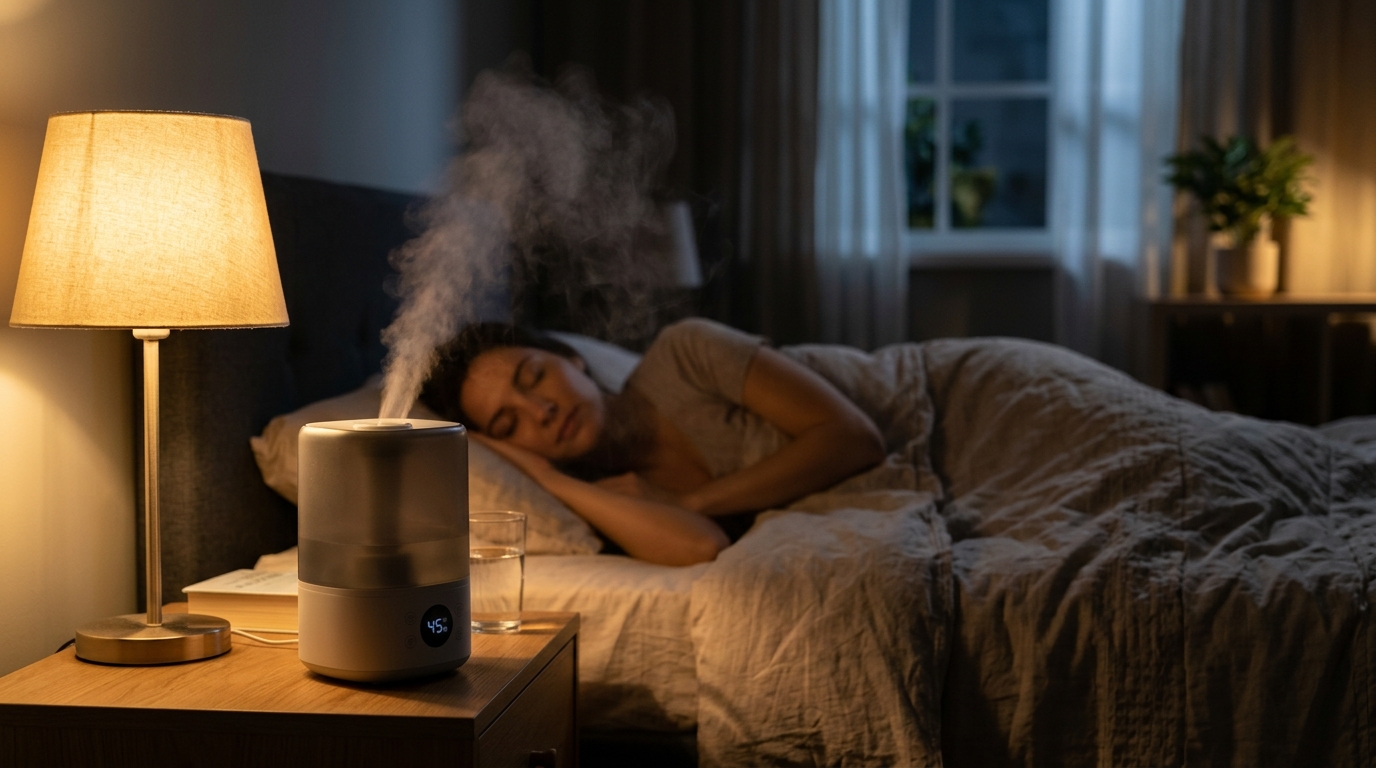
- For dry air, choose an evaporative or ultrasonic humidifier with a built-in humidistat, sized for your room (a 300 to 500 sq ft bedroom typically needs a 1 to 2 gallon per day unit). Ultrasonic models should use distilled or demineralized water to avoid white dust.
- For damp air, choose an ENERGY STAR dehumidifier rated for your space (a 20 to 35 pint unit handles most bedrooms), and use the drain hose option if possible so you never wake up to a full bucket.
- Place the unit on a stable surface at least 3 feet from your bed and a few inches off the wall, and set the humidistat to 45% RH.
- Clean the humidifier tank every 3 days and replace filters or wicks on schedule to prevent bacteria and mold growth.
- Recheck your hygrometer after a week and fine tune the setting by 2 to 3 points until readings stay between 40 and 50% overnight.
Why It Works: The Benefits
Keeping RH under 50% suppresses dust mite populations, which are a leading trigger for nighttime congestion. Many allergists recommend this target as a core part of bedroom allergen control.
Properly humidified air reduces dry throat, coughing, and snoring. People often report waking less frequently when bedroom RH sits near 45%.
In summer, removing excess moisture lets you feel comfortable at a thermostat setting 2 to 3 degrees higher, saving roughly 6 to 9% on cooling. In winter, adding moisture makes the same temperature feel warmer, allowing a 1 to 2 degree setback worth about 2 to 4% on heating.
Stable humidity prevents wood floors from cupping and cracking, reduces peeling paint, and stops mold from taking hold behind furniture and in closets.
Air below 30% RH pulls moisture from skin, causing tightness and itching. Staying above 40% noticeably reduces dryness and static shocks.
💰 Savings Impact by Action
Removing excess moisture lets you raise the summer thermostat 2 to 3 degrees for about 6 to 9% less cooling energy.
Humidified winter air feels warmer, supporting a 1 to 2 degree setback that cuts heating energy by roughly 2 to 5%.
Keeping RH below 50% can cut dust mite populations by half or more compared with homes sitting at 60% and above.
Holding RH under 50% sharply reduces the chance of condensation-driven mold on windows and exterior walls.
🏠 Key Concepts Explained
The Science Behind It
Relative humidity depends on both the amount of water vapor in the air and the air’s temperature. Warm air can hold far more moisture than cold air, roughly doubling its capacity for every 20 degrees F of increase. That is why a bedroom that reads 45% RH at 70 degrees F can climb past 55% if the room cools to 62 degrees F overnight, even when no extra moisture is added. Your own breathing adds to the load, and a closed door traps it.
Biological responses follow the same curve. Dust mites absorb water vapor directly from the air and lose the ability to do so efficiently below about 50% RH, so their populations collapse in drier conditions. Mold spores, meanwhile, need surface moisture, which appears when air touches a surface at or below its dew point. Keeping RH moderate keeps those surfaces above the dew point, so condensation never forms.
On the dry end, low humidity speeds evaporation from the thin mucus layer that lines your airways. When that layer thins, cilia (tiny hairs that sweep out particles) work less effectively, so irritants and pathogens linger. Studies on airborne viruses have also shown improved survival at low RH, which is one reason 40 to 50% is considered a healthy middle ground rather than just a comfort preference.
Frequently Asked Questions
▼ Why is my humidity still above 55% even though my AC runs all day?
Oversized AC units often cool the air quickly and shut off before removing much moisture, which is called short cycling. Try a slightly lower thermostat setting with a longer run time, add a standalone dehumidifier in the bedroom, and check that your condensate drain is not clogged. If it persists, ask an HVAC pro to evaluate unit sizing and consider a whole-house dehumidifier.
▼ Can renters do this without landlord permission?
Yes. A hygrometer, portable humidifier, or portable dehumidifier requires no installation and no modifications to the unit. Just avoid DIY changes to ductwork or vents, and report any recurring mold or leaks to your landlord in writing.
▼ How long before I actually notice savings or symptom relief?
Comfort and congestion improvements often show up within 3 to 7 nights once humidity is steady. Energy savings appear on your next one or two billing cycles if you also adjust your thermostat by 1 to 3 degrees, and allergy relief tied to dust mites can take 2 to 4 weeks as populations decline.
▼ What if my home is older than 30 years?
Older homes usually leak more air, so humidity tracks the outdoors more closely and swings more widely. Expect to run equipment harder, seal obvious gaps around windows and doors, and watch for condensation on single-pane glass, which is a sign to lower your target a few points.
▼ Do I need to run the humidifier all night?
Not always. With a humidistat set to 45%, the unit cycles on only when needed. If your bedroom is small and well sealed, you may find it only needs to run for the first half of the night.
Quick Tips
- Place your hygrometer at bed height, not on a high shelf, so it reflects what you actually breathe overnight.
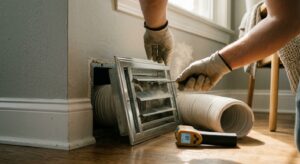
- Run bathroom and kitchen exhaust fans for 15 to 20 minutes after showers or cooking so moisture does not migrate into the bedroom.
- Wash bedding weekly in hot water (130 degrees F) to kill dust mites, and use zippered allergen-proof covers on pillows and mattresses.
- Fix leaks and keep houseplants out of the bedroom if RH runs high, since soil and transpiration add moisture.
Variations for Your Situation
- Apartment/Rental: Use portable, plug-in equipment only. A $15 hygrometer plus a 1 gallon per day evaporative humidifier ($50 to $90) or a 20 to 22 pint compact dehumidifier ($150 to $200) handles most bedrooms. Run a bathroom fan after showers and avoid drying laundry in the bedroom, and document any recurring moisture for your landlord.
- Tight Budget (under $50): Buy a $10 to $15 hygrometer first. In dry months, dry laundry on a rack in the bedroom during the evening and leave the bathroom door open after showers. In humid months, run your AC or a window fan to exchange air before bed and keep closets uncrowded to improve airflow.
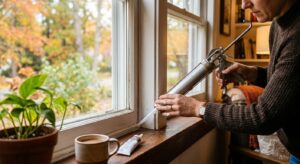
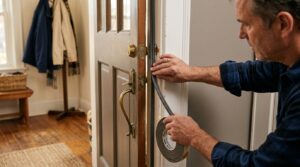
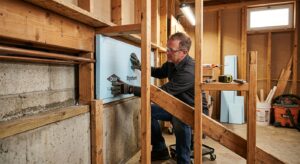
- Older Home (pre-1980): Expect larger humidity swings from air leakage and less insulation. Seal obvious gaps with caulk and weatherstripping (about $30 to $60), keep your winter target nearer 35 to 40% to avoid window condensation, and inspect basements or crawlspaces for dampness that can raise bedroom humidity from below.