When temperatures drop, a space heater feels like a small miracle. For a few cents an hour, you can warm the room you are actually sitting in instead of heating an entire house. The U.S. Department of Energy notes that zone heating with a portable heater can cut heating costs meaningfully when you lower the central thermostat to match. But there is a catch that too many homeowners learn the hard way: according to the National Fire Protection Association (NFPA), space heaters account for about 40 percent of home heating fires and a striking 80 percent of home heating fire deaths.
The good news is that most of these fires are not freak accidents. They come from predictable, checkable problems: a frayed cord, a plug that runs hot, a heater placed too close to bedding or curtains, or a tip-over switch clogged with dust. Every one of these can be caught in about a minute if you know what to look for.
This post walks you through a fast nightly safety check you can do with no tools, a deeper monthly inspection for those willing to spend a little time and money, and the science behind why heaters fail. You will also learn how to use zone heating the smart way so you save money without taking on risk.
What You’ll Need
Click on an item below to shop for the recommended items for this recipe on Amazon.
As an Amazon Associate, we earn from qualifying purchases.
How to Do It
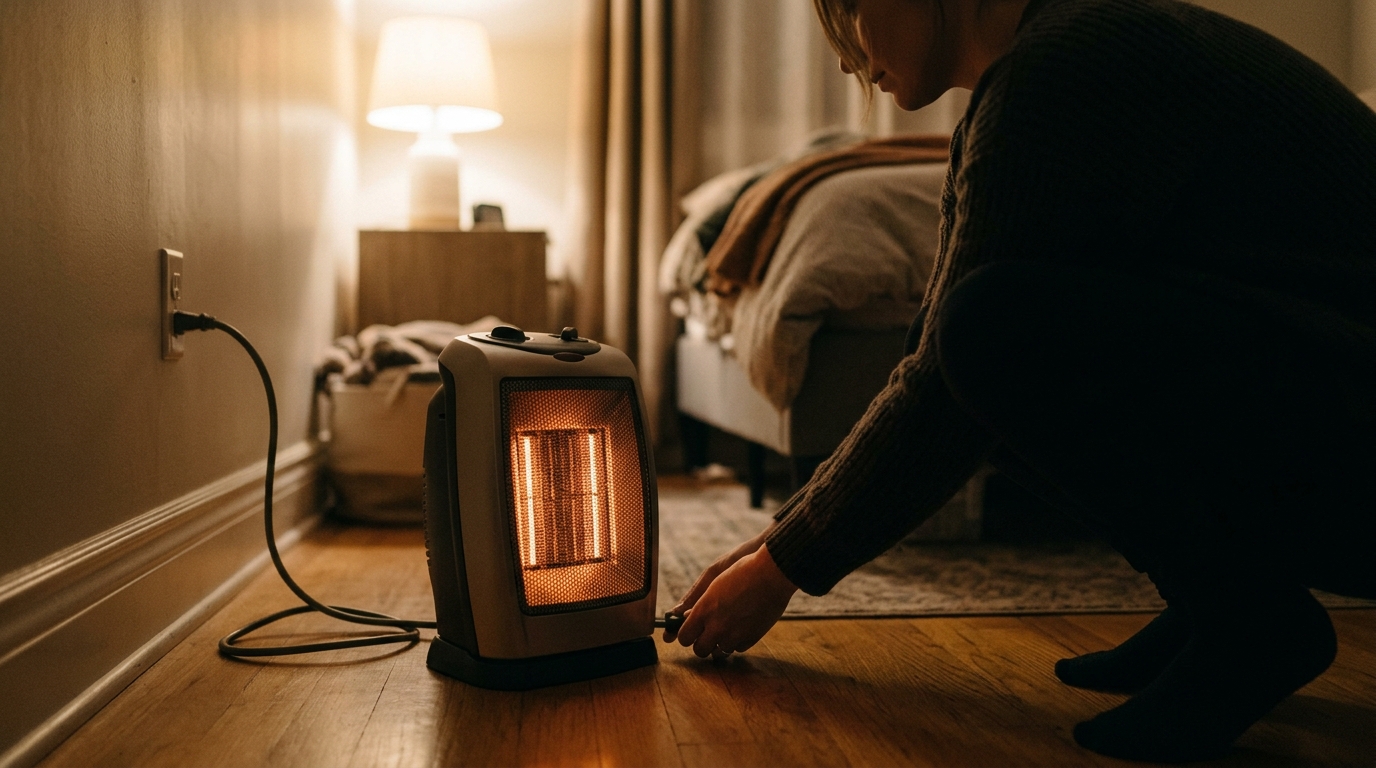
- Look at the cord and plug from end to end. Check for fraying, cracks, discoloration, or melted spots. If you see any damage, stop using the heater immediately.
- Feel the plug and outlet after the heater has run for a while. They should be only slightly warm. If either is hot, unplug the heater and do not use that outlet again until it is inspected.
- Measure 3 feet of clear space around the front, sides, and back. Move bedding, curtains, clothing, paper, and furniture out of that zone.
- Confirm the heater sits on a flat, hard, level surface, never on a rug, bed, or couch, and never on a table where it can be bumped.
- Plug directly into a wall outlet. Never use a power strip or a thin extension cord. Make sure nothing else high-draw is on the same circuit.
- Before leaving the room or going to sleep, switch the heater off and unplug it.
- Unplug the heater and let it cool completely. Use a vacuum with a brush attachment to remove dust and pet hair from the front grille, rear vents, and any intake slots.
- Test the tip-over switch. With the heater unplugged and cool, check that it moves freely. Then plug it in on a safe surface, turn it on, and carefully tilt it to confirm it shuts off. If it does not, replace the heater.
- Check the label for a recognized safety certification such as UL, ETL, or CSA. If your heater lacks one, or is more than 10 years old, plan to replace it.
- Confirm the heater has a working thermostat and overheat protection. If it only has a basic on and off switch, consider upgrading to a thermostat-controlled model, which typically costs $40 to $100.
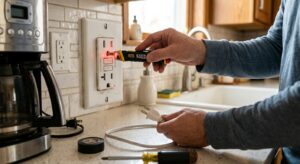
- Test your outlet and breaker. If the outlet feels loose, shows scorch marks, or the breaker trips repeatedly, have an electrician look at it.
- Plug a heater with a built-in timer or smart plug rated for the load, so it shuts off automatically after a set period. Make sure the smart plug is rated for at least 15 amps.
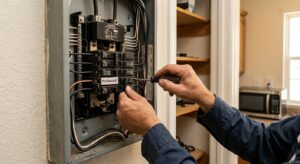
- Ask a licensed electrician to inspect the outlet, wiring, and breaker serving the room where you use the heater.
- Have them confirm the circuit can safely handle a 1,500-watt continuous load alongside whatever else is plugged in.
- Consider adding a dedicated circuit or upgrading to a GFCI or AFCI protected outlet for added shock and arc-fault protection.
- If the home has aluminum or knob-and-tube wiring, follow the electrician’s guidance before running any high-wattage heater.
Why It Works: The Benefits
Most space heater fires come from preventable issues like damaged cords, poor placement, or overloaded outlets. A consistent nightly check addresses the top causes before they become emergencies.
Pairing a safe space heater with a central thermostat setback of 7 to 10 degrees can reduce your overall heating costs by roughly 10 to 30 percent, depending on your home and habits.
Cleaning dust from vents and grilles keeps airflow strong and prevents overheating components, helping a $40 to $100 heater last several seasons instead of one or two.
Knowing your heater is in good shape means you can sleep, work, or leave the room without that nagging worry. It turns a risky habit into a routine safety practice.
A single heating fire can cause tens of thousands of dollars in damage. A one-minute check costs nothing and is far cheaper than a claim, a deductible, or a rebuild.
💰 Savings Impact by Action
Heating only the occupied room while lowering the central thermostat can cut overall heating costs by 10 to 30 percent.
Turning the central thermostat back 7 to 10 degrees for 8 hours a day saves up to 10 percent annually, according to the DOE.
A heater that cycles to hold a set temperature uses far less energy than one that runs continuously at full power.
Space heaters are linked to about 80 percent of home heating fire deaths, and most causes are preventable with basic checks.
🏠 Key Concepts Explained
The Science Behind It
A space heater converts nearly 100 percent of the electricity it uses into heat, which is why a 1,500-watt unit delivers about 5,120 BTUs per hour no matter the brand. The real question is not how efficient the heater is, but where that heat goes. By warming only the room you occupy, you avoid paying to heat empty spaces, which is the logic behind zone heating.
The danger comes from two places: the heater’s own hot surfaces, and the electrical path feeding it. A 1,500-watt heater pulls about 12.5 amps, which is 83 percent of a typical 15-amp circuit. Any weak link, such as a worn plug, a loose outlet, or a thin extension cord, adds electrical resistance. Resistance converts electricity to heat at that weak point, following the principle that heat generated rises with the square of the current times the resistance. That is why a damaged plug can get hot enough to melt or ignite nearby materials even when the heater itself looks fine.
Clearance matters because radiant heat travels in straight lines and warms any surface it strikes. Fabric, paper, and wood can ignite well below the surface temperature of a hot heater element, especially with prolonged exposure. A 3-foot buffer lets that radiant energy dissipate into the room air before it reaches anything flammable, and tip-over switches add a mechanical backstop if the unit falls.
Frequently Asked Questions
▼ My space heater keeps tripping the breaker. What should I do?
Unplug other devices on that circuit first, since a 1,500-watt heater uses most of a 15-amp breaker’s capacity. If it still trips with nothing else plugged in, stop using it on that outlet and have an electrician check the circuit, because repeated tripping can signal a wiring or breaker problem.
▼ The plug or cord feels warm. Is that normal?
Slightly warm is normal after extended use, but hot to the touch is not. Unplug the heater, let it cool, and inspect the plug and outlet for discoloration or looseness. If the outlet is hot, switch to a different circuit and have the first one inspected; if the plug is hot, replace the heater.
▼ Is it safe to use a space heater with an extension cord?
It is best to avoid it entirely and plug directly into a wall outlet. If you absolutely must use one, choose a heavy-duty cord rated for at least 15 amps (12 or 14 gauge), keep it short, and never daisy-chain it or run it under rugs.
▼ Can I leave my heater on overnight if it has an auto shutoff?
Safety experts and the NFPA advise against it. Auto shutoff features can fail, and a sleeping person cannot respond to a problem. Use a timer to turn it off after the room warms, and layer bedding or use a heated blanket with its own safety shutoff for overnight warmth.
▼ How do I know if my tip-over switch still works?
With the heater cool and on a safe surface, turn it on and carefully tilt it past about 45 degrees; it should shut off immediately and restart when set upright. If it keeps running, dust may have jammed the switch, and the safest move is to retire the heater.
Quick Tips
- Make the safety check a habit by doing it at the same time every evening, such as when you turn on the heater or before you brush your teeth.
- Choose a heater with both tip-over protection and overheat protection, and look for a UL, ETL, or CSA listing on the label.
- Run the heater at a lower setting if the room warms up fast. A thermostat-controlled heater cycling at 70 degrees uses far less energy than one running flat out.
- Replace any heater older than about 10 years or one that has been dropped, even if it still seems to work.
Variations for Your Situation
- Apartment/Rental: Renters cannot rewire circuits, so focus on the heater and the plug-in setup. Choose a UL-listed heater with tip-over and overheat protection ($40 to $80), plug it directly into the wall, and use a 15-amp plug-in timer ($10 to $15) so it shuts off automatically. Tell your landlord about any hot outlets so they can have them repaired.
- Tight Budget (under $50): Do the free 60-second nightly check, vacuum the heater vents with the vacuum you already own, and use a 3-foot tape measure or even a piece of string to check clearance. If you need a new heater, look for a UL-listed ceramic model with a thermostat in the $30 to $50 range rather than the cheapest unit available.
- Older Home (pre-1980): Older homes often have lower-capacity circuits, loose outlets, and aging wiring that struggle with a 1,500-watt load. Avoid sharing the circuit with other appliances, check for warm outlets frequently, and consider paying an electrician $100 to $300 to evaluate the circuit before relying on a space heater all winter.