
If your laundry room feels like a sauna every time you run a load, your home has a moisture problem that goes beyond mild inconvenience. Excess humidity in a laundry room typically means that warm, wet air from your dryer or washer is not leaving the building the way it should. Over time, that trapped moisture soaks into drywall, feeds mold colonies, warps cabinetry, and raises the humidity level throughout the rest of your home, forcing your air conditioner to work harder just to keep up.
The good news is that the root causes are almost always fixable without a contractor. A clogged or disconnected dryer vent, a missing exhaust fan, or a cracked duct connection account for the vast majority of laundry room humidity complaints. These are weekend-afternoon projects that cost between $0 and $200 and pay for themselves within months through lower energy bills and avoided repair costs from moisture damage.
This guide walks you through exactly why your laundry room stays humid, the building science behind why it matters, and two concrete approaches you can tackle this weekend, from a free 20-minute inspection to a full DIY vent upgrade that will keep the room dry for years to come.
What You’ll Need
Click on an item below to shop for the recommended items for this recipe on Amazon.
As an Amazon Associate, we earn from qualifying purchases.
How to Do It
- Pull the dryer 12 to 18 inches away from the wall and visually inspect the duct connection at the back of the machine. Look for a disconnected, crushed, or kinked flexible duct section and reconnect or straighten it by hand.
- Go outside and locate the dryer vent cap on your home’s exterior wall or roof. Open the flap manually and check that it moves freely and is not blocked by lint, a bird nest, or debris. Clear any visible blockage with a gloved hand.
- From inside, disconnect the flexible duct from the dryer’s exhaust port. Reach in or use a flashlight to check the first 12 inches of duct for a dense lint plug. Remove any visible lint buildup by hand or with a vacuum hose.
- Run the dryer on a timed dry cycle for 5 minutes, then go outside and hold your hand 6 inches from the vent cap. You should feel a strong, steady warm airflow. Weak or barely perceptible airflow confirms a deeper blockage requiring the DIY approach below.
- Check the room itself for an exhaust fan. If none exists, crack a window or interior door to the rest of the house during drying cycles as a temporary measure to reduce humidity buildup.
- Purchase a dryer vent cleaning brush kit with flexible rods (typically $20 to $35) and measure your full duct run from the dryer to the exterior cap. Buy enough rigid 4-inch aluminum duct sections and elbows to replace any flexible accordion duct, which costs roughly $8 to $12 per 5-foot section.
- Disconnect power to the dryer (unplug electric, or turn off the gas shutoff and disconnect the flex gas line for gas dryers). Pull the dryer fully away from the wall and disconnect the existing duct at both the dryer collar and the wall fitting.
- Feed the brush kit from the exterior vent cap inward, rotating the rods to dislodge lint. Work in sections, adding rod extensions until you reach the full length of the duct. Vacuum loose lint from both ends when done.
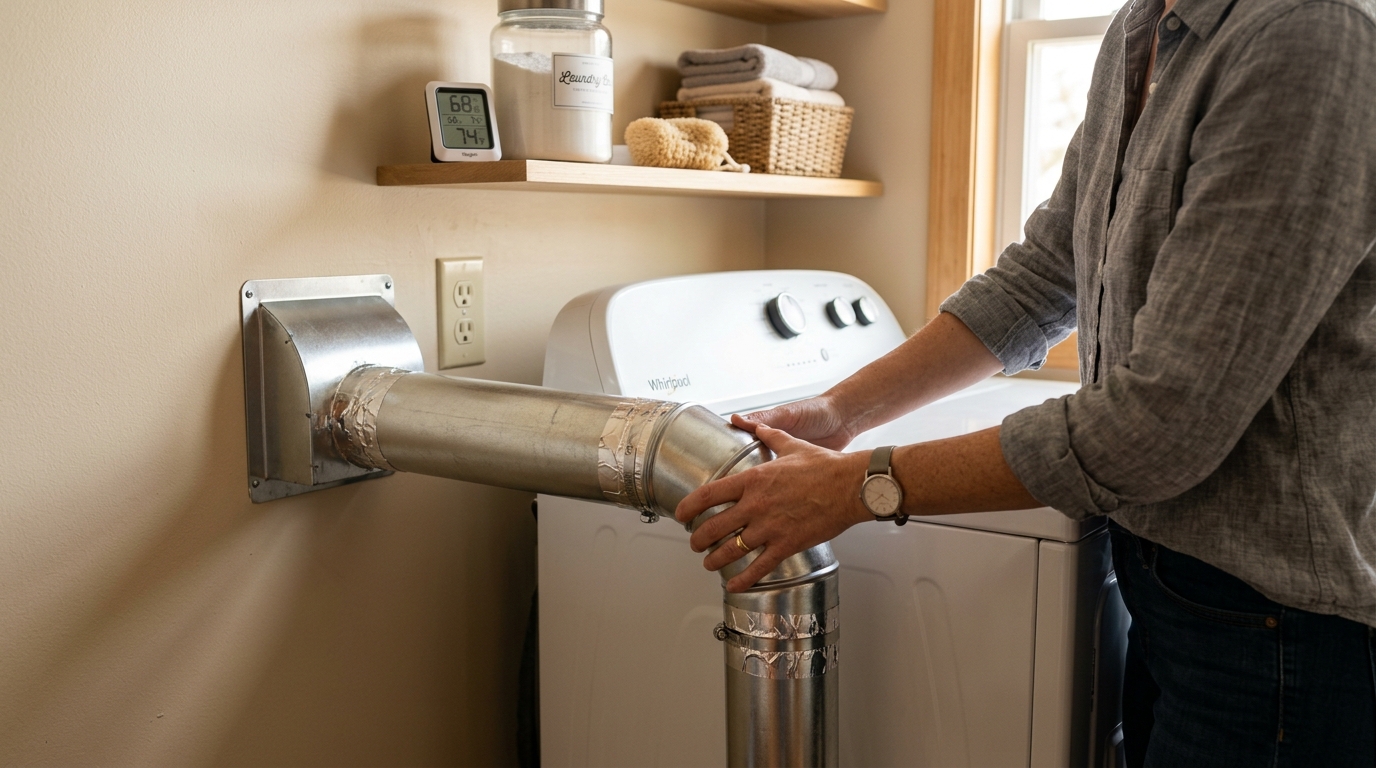
- Reassemble the duct run using rigid aluminum duct wherever possible, using sheet metal screws at each joint (not duct tape, which fails under heat). Keep the total equivalent duct length under 25 feet, subtracting 5 feet per 90-degree elbow from that budget. Seal each joint with foil-backed HVAC tape.
- If you have no exhaust fan in the laundry room, install a basic 50 to 80 CFM bathroom-style exhaust fan vented to the exterior, which costs $35 to $75 for the fan and ties into an existing circuit or a GFCI outlet. This handles residual moisture from the washer and damp clothes.
- Restore power, run a full load, and recheck exterior airflow. Use an inexpensive hygrometer ($10 to $15) to verify that laundry room humidity returns to below 60% relative humidity within 30 minutes of cycle completion.
Why It Works: The Benefits
A clean, properly sealed vent can reduce dryer run time by 25 to 30% per load, saving the average household $25 to $40 per year on electricity or gas just from faster drying cycles.
Stopping moisture at the source can lower whole-home relative humidity by 5 to 10 percentage points in summer, reducing the latent cooling burden on your AC and saving an additional 5 to 10% on cooling bills.
Keeping laundry room humidity below 60% relative humidity prevents mold colonies from establishing, protecting drywall, framing, and cabinetry from rot that can cost thousands to remediate.
The U.S. Fire Administration attributes roughly 2,900 home dryer fires annually to lint buildup in clogged vents. Cleaning and inspecting the duct eliminates the primary ignition source.
When a dryer runs in a restricted duct system, its heating element and motor cycle on and off more frequently, shortening service life. Proper airflow can extend appliance lifespan by several years.
💰 Savings Impact by Action
Clearing a partially blocked dryer vent restores designed airflow and reduces drying time by 25 to 30%, directly cutting per-load energy use.
Replacing flexible accordion duct with smooth rigid aluminum duct reduces airflow resistance, cutting dryer run time by an additional 10 to 15% per load.
Eliminating laundry room moisture spillover reduces whole-home latent heat load, saving approximately 5 to 10% on summer AC cooling costs.
A dedicated 50 to 80 CFM exhaust fan removes residual washer moisture and reduces room humidity recovery time by roughly 10 minutes per cycle.
🏠 Key Concepts Explained
The Science Behind It
A clothes dryer works by pulling ambient air across a heating element, tumbling it through wet clothes to absorb moisture, and then exhausting that now-humid air outside through a duct. A typical electric dryer moves roughly 150 to 225 cubic feet per minute of air during operation. When that airflow is restricted by a clogged duct, the physics change quickly: the dryer’s moisture-removal rate drops, clothes take longer to dry, and the drum interior stays hotter than designed, which damages fabrics and stresses the heating element. Meanwhile, humid air spills out around the door seal and exhaust connections into the room.
The moisture problem compounds because of how air behaves at different temperatures. Warm air from the dryer can hold a large amount of water vapor, but when it contacts a cooler surface like a cold water pipe or an exterior wall in winter, the air temperature drops below its dew point and that water vapor condenses into liquid water. This is the same process that fogs a cold mirror. Repeated daily in a poorly ventilated laundry room, this mechanism keeps surfaces perpetually damp, creating ideal growing conditions for mold, which requires only a surface humidity above 70% and a temperature between 40 and 100 degrees Fahrenheit to colonize.
The fix works because improving duct airflow restores the dryer’s designed exhaust velocity, roughly 1,000 feet per minute through a clean 4-inch duct, which carries moisture completely out of the building envelope before it can condense. Rigid metal duct outperforms flexible accordion duct because its smooth interior surface has far less friction resistance, keeping velocity high all the way to the exit. Reducing the equivalent duct length and number of elbows compounds this effect, since each 90-degree elbow adds the equivalent of about 5 feet of straight duct in flow resistance.
Frequently Asked Questions
▼ Why is my laundry room still humid even after I cleaned the dryer vent?
The dryer vent may not be the only moisture source. Front-load washers can leak from door gaskets, and top-loaders leave standing water in the drum if not left cracked open. Check that your washing machine drain hose is fully inserted into the standpipe and that the room itself has some form of exhaust ventilation. A hygrometer reading above 65% while the washer is running but the dryer is off points directly to the washer or the room’s lack of ventilation as the culprit.
▼ My dryer vent goes up through the roof. Is that causing the problem?
Roof-terminating dryer vents are legal but problematic. The long vertical run increases resistance, and condensation inside a roof duct can create wet lint plugs that are much harder to clear. The exterior cap is also harder to inspect and is prone to blockage from weather debris. Have the duct professionally cleaned annually, and consider re-routing to a wall termination if your layout allows, as it will reduce effective duct length and make future maintenance straightforward.
▼ Can I vent my dryer into the laundry room in winter to add humidity to the house?
This is not safe and not code-compliant for gas dryers, which exhaust combustion byproducts including carbon monoxide along with moisture. Even for electric dryers, indoor venting loads the home with fine lint particles and excessive moisture that can condense in wall cavities and attic spaces, causing structural damage and mold far from where you can see it. If you want to add humidity in winter, use a portable humidifier with a built-in hygrostat set to 40 to 45% relative humidity.
▼ How long before I notice a difference in humidity after fixing the vent?
Most homeowners notice drier air and shorter drying times within the first 2 to 3 loads after completing the fix. If you are using a hygrometer, laundry room humidity should return to below 60% within 20 to 30 minutes of a cycle ending. If it takes longer than that, there is still a restriction in the duct or an additional moisture source in the room that needs to be addressed.
▼ What if I live in an apartment and cannot modify the dryer vent?
Report persistent humidity and suspected vent blockages to your property manager in writing, as dryer vent maintenance is typically a landlord responsibility and a fire code requirement. In the meantime, run a portable dehumidifier in the laundry space set to 50% relative humidity, leave the door open during and after cycles, and ensure the washer door gasket is clean and dry to reduce secondary moisture sources.
Quick Tips
- Clean your dryer vent at least once per year, or every 6 months if you run more than 5 loads per week.
- If drying times have crept up by more than 10 to 15 minutes compared to when your dryer was new, a partially clogged vent is the most common cause.
- A hygrometer costs about $10 online and is the single most useful tool for diagnosing laundry room moisture. A reading above 65% relative humidity after a drying cycle confirms an exhaust problem.
- Front-load washers have higher spin speeds (1,200 RPM or more) and remove more water mechanically before the drying cycle, reducing both drying time and the moisture load your dryer must handle.
Variations for Your Situation
- Apartment or Condo: Renters cannot modify the building’s duct system, but you can clean the 5-foot flexible section behind the dryer yourself using a brush kit. Report blocked exterior caps to building management in writing. Run a 30-pint portable dehumidifier ($120 to $180) on a humidistat setting of 50% as an immediate fix, and leave the laundry room door open during drying cycles to allow humid air to disperse.
- Tight Budget (under $50): Start with the free Quick Inspection steps, which resolve the issue for many homes. If you need to buy anything, prioritize a $20 to $35 vent brush kit for a full duct cleaning and a $10 hygrometer to confirm the fix worked. Skip the rigid duct upgrade for now but schedule it within a year, as flexible accordion duct is a long-term fire risk even when clean.
- Older Home (pre-1980): Homes of this era often have dryer vents that terminate in crawl spaces or attics, which was once common practice but is now a code violation. Before cleaning anything, trace the full duct path and confirm it exits to the outdoors. You may also find 3-inch diameter duct rather than the current standard 4-inch, which restricts airflow significantly. Budget $150 to $400 for a professional re-route if the duct does not terminate correctly, and replace any old metal duct with crimped or rusted joints as part of the project.