You finally drift off to sleep, and then the furnace kicks on with a rattle, a boom, or a low drone that seems to rattle the whole house. Furnace noise is one of the most common complaints homeowners have in winter, and it is easy to assume the worst: a dying heat exchanger, an expensive repair, or a full system replacement. In reality, most nighttime furnace noise comes from small, fixable problems like loose sheet metal, vibrating ductwork, a clogged filter, or a blower running against too much resistance.
The good news is that the most common culprits can be tackled with items you can pick up at a dollar store or hardware aisle: foam weatherstripping, adhesive felt pads, a new filter, a roll of foil HVAC tape, and a few screws. These fixes take minutes, cost under $20, and can cut noise noticeably. A clean filter and tight panels also help your furnace run more efficiently, which means the same fix that quiets your system can trim your heating bill.
This post walks you through a fast zero-cost diagnosis, a dollar-store DIY upgrade for stubborn vibration, and the warning signs that mean you should stop and call a pro. We will also cover why furnaces make noise in the first place, so you can match the sound to the solution instead of guessing.
What You’ll Need
Click on an item below to shop for the recommended items for this recipe on Amazon.
As an Amazon Associate, we earn from qualifying purchases.
How to Do It
- Turn the furnace off at the thermostat and the nearby service switch. Wait a few minutes for the blower to stop and the cabinet to cool.
- Pull out the air filter and check it. If you cannot see light through it, replace it. A fresh pleated filter costs about $5 to $8 and is the single most common cure for a whistling or roaring blower.
- Check that the blower access door is fully seated and every screw is present and snug. A missing screw is a classic cause of a buzzing or rattling panel.
- Walk through the house and make sure supply and return vents are open and unblocked by furniture or rugs. Closed vents raise static pressure and create whistling.
- Turn the system back on and listen through a full heating cycle. If the noise is gone or reduced, you are done.
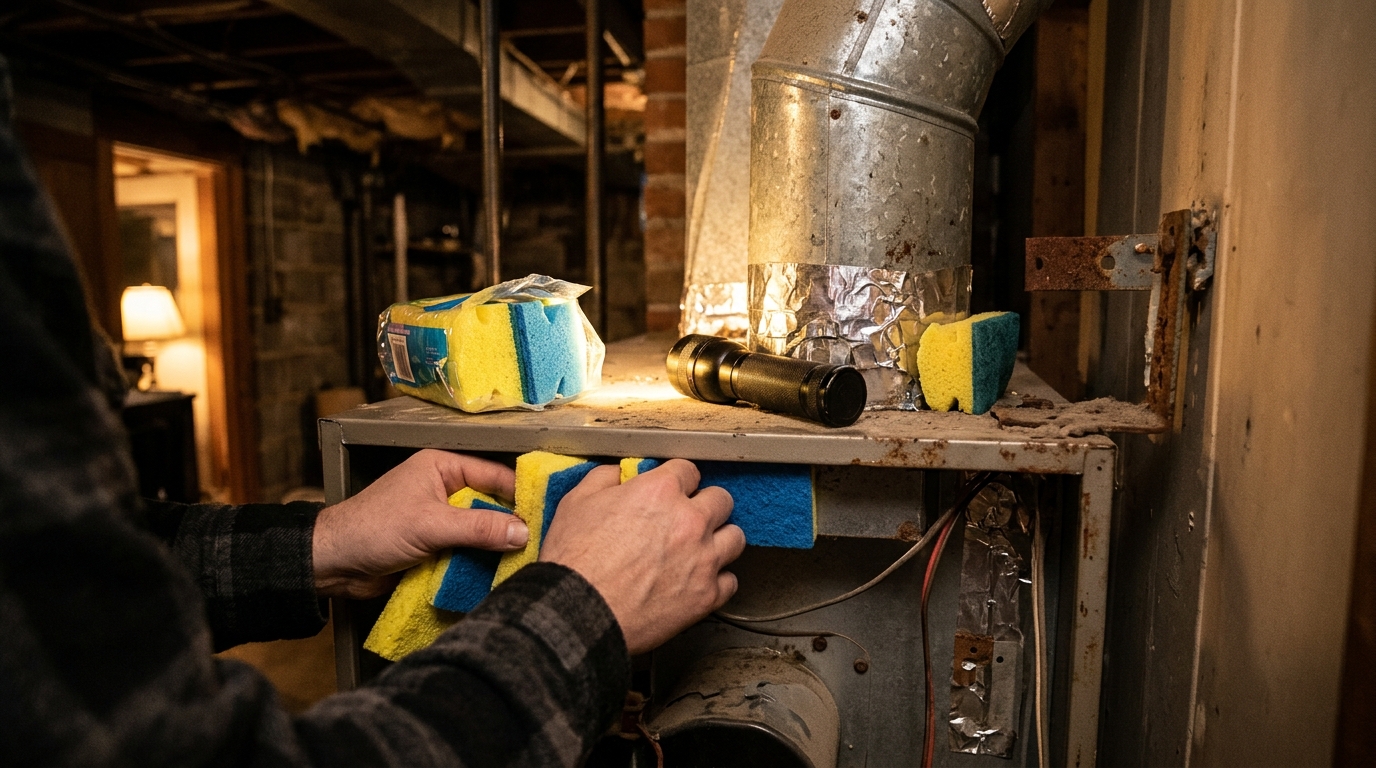
- With the furnace off, locate where the furnace cabinet touches the floor, wall, or framing. Slip dense foam strips or rubber isolation pads under the feet or contact points so metal is not sitting directly on rigid surfaces.
- Apply self-adhesive foam weatherstripping along the edges of the access panel so it seals snugly and cannot vibrate against the cabinet frame.
- Check ductwork where it connects to the furnace plenum. If the duct is touching joists or a metal strap, wrap a layer of foam or felt where it contacts framing to break the vibration path.
- Seal visible duct seams and joints with foil HVAC tape (not cloth duct tape, which dries out and fails). Press firmly and smooth out bubbles for a tight seal.
- Tighten loose duct screws or add sheet metal screws where seams have shifted. Add a hanger strap if a long duct run is sagging or flapping.
- Restore power, run the furnace through a full cycle, and compare the noise. Adjust or add padding to any spot that still rattles.
- Schedule a tune-up and inspection. The technician will check burner condition, igniter, flame sensor, and heat exchanger for cracks or buildup.
- Have the blower motor and wheel inspected, lubricated if applicable, and balanced or cleaned. A dirty or unbalanced blower wheel is a common cause of humming and vibration.
- Ask for a static pressure test. A reading well above the system design means ducts, filter, or coil are restricting airflow and may need modification.
- If the ducts are undersized or poorly designed, discuss adding return air capacity or a flex connector at the plenum to isolate vibration.
- Request a carbon monoxide check around the furnace and flue as part of the visit.
Why It Works: The Benefits
Fixing loose panels and adding vibration pads can reduce perceived furnace noise by several decibels, often enough to stop it waking light sleepers. Even a 3 dB drop is noticeable to most people.
A clean filter and sealed duct seams can improve system efficiency by roughly 2 to 10 percent. The Department of Energy notes that leaky ducts alone can waste 20 to 30 percent of the air your furnace moves.
A blower fighting high static pressure runs hotter and wears out its motor and bearings sooner. Keeping airflow free reduces strain and can help you avoid a premature $500 to $1,500 blower motor replacement.
Learning to match a sound to its cause lets you catch real issues, like a failing bearing or delayed ignition, before they become expensive breakdowns or safety hazards.
Most of these fixes cost between $0 and $20, compared with $100 to $200 for a typical HVAC service call just to diagnose a rattle.
💰 Savings Impact by Action
Replacing a clogged filter restores airflow and can improve heating efficiency by roughly 5 to 10 percent.
Sealing leaky duct seams with foil tape can recover up to 15 percent of lost heated air, based on DOE estimates of 20 to 30 percent duct leakage in typical homes.
Lower static pressure reduces blower motor strain and electricity use by about 5 percent.
Vibration pads and panel sealing can cut perceived cabinet and duct noise by around 30 percent for the common rattle and hum problems.
🏠 Key Concepts Explained
The Science Behind It
Most furnace noise is a vibration problem, not a failure problem. The blower motor and wheel spin at roughly 800 to 1,200 revolutions per minute, creating a steady vibration. When the cabinet or ductwork is rigidly connected to the building structure, that energy transfers into walls, floors, and ceiling joists, which are large surfaces that amplify and broadcast the sound. Adding a soft, dense barrier like foam or felt interrupts that path and absorbs some of the energy before it spreads.
Airflow noise follows a different rule: sound from moving air rises sharply with velocity. Doubling the air speed through a restriction can increase noise dramatically. A clogged filter or closed vents force the blower to push the same volume of air through a smaller opening, which raises velocity and static pressure. Restoring open pathways lowers velocity, which quiets the whistle and reduces the load on the blower motor, a win for both noise and efficiency.
Thermal expansion explains the popping and ticking you hear when the system starts or stops. Metal ductwork can expand by a fraction of an inch over long runs as it heats from room temperature to around 120 to 140 degrees Fahrenheit. If a duct is clamped tightly or rubbing against framing, that growth causes sudden slips that sound like pops. Loosening a rigid clamp or adding a felt buffer lets the duct move quietly.
Frequently Asked Questions
▼ Why is my furnace making a loud boom when it turns on?
A boom or whoomp at ignition usually means gas is accumulating briefly before it lights, often from dirty burners, a weak igniter, or a flame sensor issue. This is a safety concern, so turn the furnace off and call a licensed HVAC technician rather than attempting a DIY fix.
▼ My furnace rattles only when the blower is running. What should I check?
Start with the blower access panel and make sure every screw is present and tight. Then check that the filter door and any removable covers are seated properly. If it still rattles, add foam weatherstripping to the panel edges, and if the sound persists, the blower wheel may be dirty or unbalanced and need professional cleaning.
▼ Is a squealing or grinding noise from the furnace dangerous?
Squealing often points to a worn blower belt (on older units) or dry motor bearings, while grinding suggests a failing bearing or a wheel rubbing the housing. These will not fix themselves and can lead to motor failure, so shut the system down and book a service call soon.
▼ How much can fixing furnace noise really save me on heating bills?
Noise fixes like replacing a clogged filter and sealing duct seams can improve efficiency by roughly 2 to 10 percent. On a typical $1,200 winter heating bill, that is about $25 to $120 saved per season, so a $10 fix often pays for itself in the first month or two.
▼ The noise is only in one room. Is that a duct problem?
Often yes. A single noisy room usually means a loose duct section, a vent damper vibrating, or air whistling through a partially closed register near that room. Open the vent fully, check that the register cover is screwed down tight, and look for loose duct sections in the attic or crawlspace above or below that room.
Quick Tips
- Replace your furnace filter every 1 to 3 months during heating season. A fresh filter is the cheapest, most effective way to reduce both noise and energy use.
- Mark your filter size and replacement date on the furnace cabinet with a permanent marker so you never have to guess.
- Do not close more than about 10 percent of your supply vents. Closing too many raises static pressure, adds whistling, and can shorten blower life.
- Listen for changes over time. A new noise that gets steadily worse, especially grinding or squealing, is worth a professional look before it becomes a breakdown.
Variations for Your Situation
- Apartment/Rental: You usually cannot touch ductwork or the furnace cabinet itself, so focus on what you control. Replace the filter if the unit is in your space (about $5 to $8), make sure all vents are open, and add adhesive felt pads to loose vent covers. If the noise is from a unit you do not control, document it and send your landlord a written maintenance request.
- Tight Budget (under $50): Start with the free steps: tighten every visible screw on the furnace panels and check that vents are open. Then spend $5 to $8 on a fresh filter and $3 to $5 on a roll of foam weatherstripping for the access panel. That combination handles the most common rattles and whistles for under $15.
- Older Home (pre-1980): Older houses often have thin-gauge, lightly fastened ductwork that flexes, pops, and rattles more than modern systems. Focus on tightening and sealing duct seams with foil tape, adding hanger straps to sagging runs, and wrapping duct contact points with foam. Have a pro check older furnaces for heat exchanger condition, since age-related noise can mask real safety issues.
- Open-Concept or Finished Basement: Sound travels easily in open layouts, so isolate the furnace from the slab and surrounding framing with dense rubber pads and consider a flex duct connector at the plenum to break the vibration path into the ductwork.