You wake up to a cold house or a lukewarm shower, walk down to the basement or utility closet, and find the pilot light on your furnace or water heater has gone out again. Your first thought might be a gas leak, a broken appliance, or an expensive repair bill. The good news is that a pilot light going out overnight is one of the most common and most fixable problems in a home with a gas appliance.
Most nighttime pilot outages come down to a short list of causes: a thermocouple that has worn out, a pilot orifice clogged with dust or soot, a draft pushing the flame around when the house cools down, or a gas supply or venting issue that shows up only under certain conditions. Many of these are inexpensive to fix, and some take less than 15 minutes with no tools at all.
This post walks you through how to tell a harmless nuisance from a genuine safety concern, what to check first, how to relight the pilot correctly, and when it is time to call a licensed technician. We will also cover why a healthy pilot matters for energy use, because a constantly relit or poorly burning pilot can waste gas and leave you without hot water or heat when you need it most.
What You’ll Need
Click on an item below to shop for the recommended items for this recipe on Amazon.
As an Amazon Associate, we earn from qualifying purchases.
How to Do It
- Check for a gas smell first. If you smell rotten eggs, stop, leave the home, and call your gas company from outside. Do not touch switches or try to relight.
- Turn the gas control knob to OFF and wait at least 5 minutes so any residual gas can clear before you try again.
- Follow the relighting instructions printed on the appliance label: set the knob to PILOT, press and hold it down, and light the pilot with a long lighter or the built-in igniter button.
- Keep the knob pressed for 30 to 60 seconds after the flame appears so the thermocouple has time to heat up, then release slowly and turn the knob to ON.
- Look at the flame. It should be steady and mostly blue. Note whether it flickers when a nearby door closes or a bathroom fan runs, which points to a draft.
- Close nearby doors, check that the access panel is seated properly, and make sure no vents or fans are creating a strong draft near the unit.
- Turn the gas control knob to OFF, close the gas shutoff valve to the appliance, and let everything cool completely.
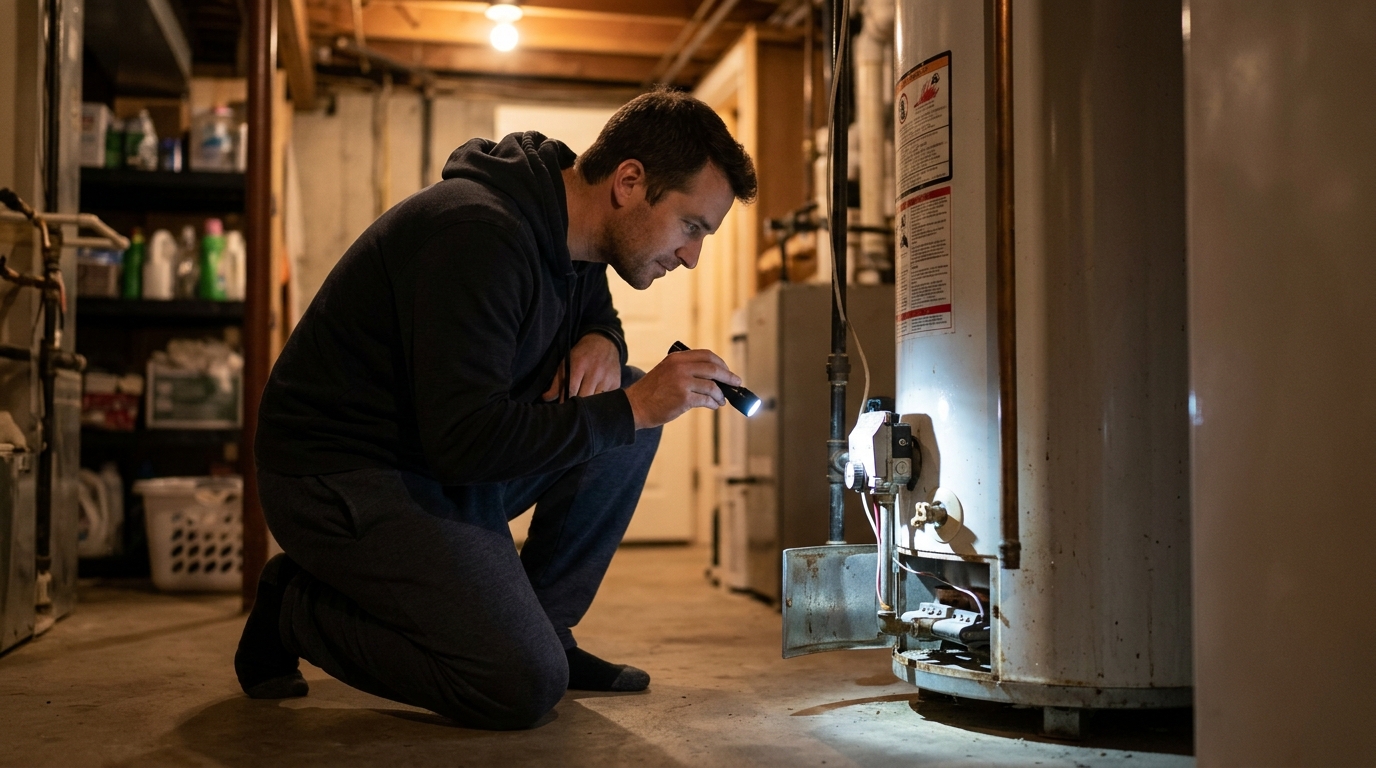
- Remove the burner access panel and locate the pilot assembly, including the pilot tube, orifice, and thermocouple (a thin copper wire ending near the flame).
- Gently clean the pilot orifice and the area around it with a soft brush and a can of compressed air. Never poke the orifice with a needle or wire, which can enlarge it.
- Wipe any soot from the end of the thermocouple with fine emery cloth or a fine abrasive pad so it can sense heat properly.
- If the pilot still will not stay lit, replace the thermocouple: unscrew the nut at the gas control valve, loosen the bracket at the pilot assembly, install a matching universal or OEM thermocouple, and tighten the nut snugly plus a quarter turn.
- Reopen the gas valve, relight the pilot, and watch it for 10 to 15 minutes, then check again the next morning to confirm it stayed lit overnight.
- Call a licensed HVAC or plumbing technician and describe exactly when the pilot goes out (time of night, which appliance, whether it relights easily).
- Ask them to test the flue draft and look for blockage, bird nests, rusted pipe, or improper venting that could cause backdrafting.
- Have them test gas pressure at the appliance and check the gas control valve, since a failing valve can drop the pilot even with a good thermocouple.
- Request a carbon monoxide test at the appliance and in the living space, especially if the appliance is in a closet or tight utility room.
- Ask whether the appliance is near the end of its life. A water heater past 12 years may be worth replacing with an electronic-ignition model, which eliminates the standing pilot entirely.
Why It Works: The Benefits
A typical HVAC or plumbing call for a pilot problem runs $150 to $300 before parts. Fixing a simple relight or cleaning yourself costs nothing, and a replacement thermocouple is often $10 to $25.
A stable pilot means your water heater or furnace fires on demand instead of leaving you with cold showers or a chilly house at 6 a.m.
A clean, correctly adjusted pilot burns efficiently. A standing pilot typically uses roughly 500 to 1,000 BTU per hour, and a sooty or oversized flame wastes a bit more, so tuning it can trim 1 to 3% from water heating gas use.
Knowing the difference between a nuisance outage and a backdraft or gas smell warning sign means you act quickly when it matters and stay calm when it does not.
Cleaning soot and dust from the burner area reduces corrosion and uneven heating, helping a water heater reach its typical 10 to 12 year lifespan or beyond.
💰 Savings Impact by Action
Fixing a simple relight or cleaning yourself avoids a typical $150 to $300 service call entirely.
A clean, correctly adjusted blue flame wastes less gas than a sooty, oversized one, trimming about 1 to 3% from water heating fuel use.
Reducing drafts and backdrafting around the appliance improves combustion stability and can recover a few percent of lost heating efficiency.
A $10 to $25 part replaces a $150+ repair visit, saving roughly 90% compared with hiring out the same fix.
🏠 Key Concepts Explained
The Science Behind It
A standing pilot works through a simple safety loop. The pilot flame heats the thermocouple, which generates a tiny voltage (around 25 to 30 millivolts) that holds an electromagnet inside the gas valve open. If the flame dies, the thermocouple cools within about a minute, the voltage drops, and the valve snaps shut so unburned gas cannot flow. This is why a weak thermocouple causes a pilot to drop out: it simply cannot generate enough voltage to keep the valve open, even though the flame looks fine.
Combustion also depends on a balance of gas and air. A pilot needs enough oxygen to burn blue and clean. When the orifice is partly clogged or room air is limited, the flame turns yellow and lazy, which is less stable and leaves soot behind. Nighttime makes this worse because the house cools, indoor air pressure shifts, and the stack effect changes, which can alter airflow around the appliance and nudge a weak flame out.
Venting matters because burned gases need a clear path outdoors. Hot exhaust rises naturally, but a blocked flue, a cold chimney, or competition from exhaust fans can reverse that flow. Backdrafting both snuffs the pilot and can introduce carbon monoxide, which is why a repeated outage deserves a quick look at the whole system rather than just a relight.
Frequently Asked Questions
▼ Why does my pilot light keep going out every night but stay lit all day?
That pattern usually points to a draft, a weak thermocouple, or a pressure change when the house cools. Try watching the flame while closing doors and running fans, and clean the pilot area. If it still dies overnight, replace the thermocouple, and if it continues after that, have a technician check the venting and gas valve.
▼ Is a pilot light going out a sign of a gas leak or carbon monoxide?
Not usually. Most outages are from a worn thermocouple or a dirty pilot. But if you smell gas, see a yellow sooty flame, notice black staining around the appliance, or your CO alarm sounds, leave the home immediately and call your gas company or 911 from outside.
▼ How often should I replace a thermocouple?
There is no fixed schedule, but 5 to 10 years is typical. If your pilot drops out occasionally, relights easily, and the appliance is more than 5 years old, replacing the thermocouple for about $10 to $25 is a smart, low-cost first fix.
▼ Can I just keep relighting it instead of fixing it?
You can for a short time, but repeated relighting hides the real cause and leaves you at risk of cold showers or a cold house. If you need to relight more than once or twice a month, find and fix the root cause or call a pro.
▼ Does a standing pilot light waste a lot of gas?
A standing pilot uses a small amount of gas continuously, roughly 1 to 2 therms per month on a water heater. That is a small cost, usually a few dollars a month, but it adds up, which is one reason newer electronic-ignition appliances are more efficient.
Quick Tips
- Install a carbon monoxide detector near every sleeping area and test it monthly. It is the single best safety upgrade for homes with gas appliances.
- Vacuum around the base of your water heater and furnace every few months to keep dust and lint from reaching the pilot area.
- Write the date you replaced the thermocouple on the appliance with a marker. Plan on replacement every 5 to 8 years as a preventive step.
- When your water heater reaches 10 to 12 years old, price an electronic-ignition or high-efficiency model. Eliminating the standing pilot and gaining a better energy factor can cut water heating gas use noticeably.
Variations for Your Situation
- Apartment/Rental: Do not open or modify the appliance beyond relighting it per the label. Report repeated outages to your landlord in writing so they can send a licensed technician, and buy a $20 to $30 plug-in or battery CO detector for your own protection.
- Tight Budget (under $50): Start with the free steps, which are relighting correctly, blocking drafts, and cleaning the area around the pilot with a brush and compressed air (about $5 to $8). If it still fails, a $10 to $25 replacement thermocouple is the highest-value repair.
- Older Home (pre-1980): Older appliances and flues are more likely to have rusted venting, poor combustion air supply, and worn gas valves. Have the flue inspected and CO tested, and seriously consider replacing a water heater or furnace over 15 years old with an electronic-ignition, higher-efficiency model.