You are lying in bed, the house is quiet, and you feel a cool stream of air across your shoulders even though the thermostat says 70 degrees. Or maybe you wake up to a bedroom that is ten degrees colder than the hallway. Night drafts are one of the most common comfort complaints homeowners have, and they are almost always blamed on “bad insulation.”
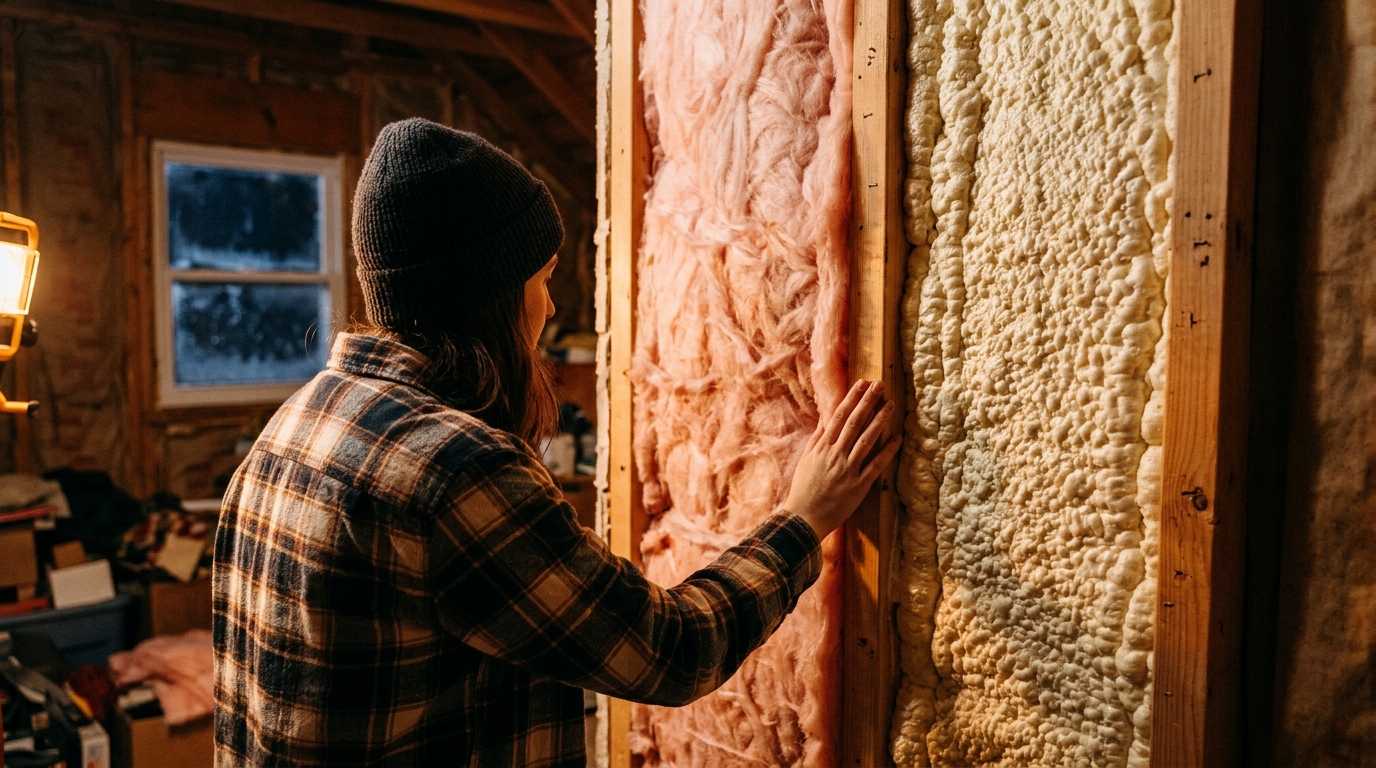
Here is the catch: fiberglass and spray foam do very different jobs. Standard fiberglass batts slow the flow of heat through a surface, but they do almost nothing to stop air from moving through it. Spray foam does both at once, because it expands to fill gaps and cracks while also resisting heat flow. That difference is why the debate gets so heated, and why the right answer depends on where your drafts are actually coming from.
In this post we break down how each material performs against drafts, what they really cost, and when each one makes sense. We also cover a quick fix you can do tonight for under $30 and a bigger upgrade for homeowners ready to invest, so you can stop the draft without overspending.
What You’ll Need
Click on an item below to shop for the recommended items for this recipe on Amazon.
As an Amazon Associate, we earn from qualifying purchases.
How to Do It
- On a cold, windy evening, hold a lit incense stick near outlets, baseboards, window frames, attic hatches, and recessed lights. Wherever the smoke wavers or streams sideways, you have a leak.
- Fill gaps smaller than 1/4 inch around window and door trim with paintable acrylic latex caulk.
- Use low-expansion spray foam sealant (about $6 to $9 per can) to fill larger gaps around pipes, wires, and the rim joist area in the basement or crawl space.
- Install foam outlet and switch plate gaskets behind cover plates on exterior walls, about $0.50 to $1 each.
- Add weatherstripping to the attic hatch and door sweeps to exterior doors.
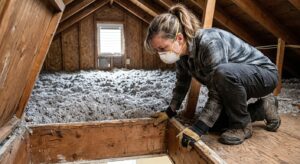
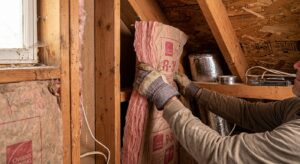
- Leave your existing fiberglass in place, but fluff or re-fit any batts that are compressed, gapped, or sagging.
- Pick your target zones: rim joists, crawl space perimeter, and cantilevered floors are the highest-draft areas and the best use of a kit.
- Wear a full respirator rated for isocyanates, safety goggles, gloves, and disposable coveralls. Ventilate the space well and keep other people and pets away during application.
- Warm the foam canisters to the temperature on the label, usually 70 to 80 degrees, so the foam mixes and expands correctly.
- Spray in thin passes of about 1 to 2 inches rather than one thick layer, letting each pass cure before adding the next, to avoid overheating and poor adhesion.
- Aim for roughly 2 inches of closed-cell foam on rim joists to reach about R-12 plus a solid air seal.
- Let the foam cure fully, then trim any excess and check for shrinkage gaps, touching up with sealant if needed.
- Get at least three quotes and ask each contractor for the R-value, thickness, and foam type (open-cell or closed-cell) in writing.
- Ask for a blower door test before and after the work, which measures air leakage in a way you can verify.
- Have the contractor air seal penetrations in the attic floor, such as top plates and chimney chases, before any insulation goes down.
- Plan for the crew to ventilate the home and for the family and pets to stay out for the time the contractor specifies, typically 24 hours.
- Confirm local rebates and the federal tax credit for insulation and air sealing, which can cover a meaningful share of the cost.
Why It Works: The Benefits
ENERGY STAR estimates that air sealing and adding insulation can save an average of 15 percent on heating and cooling costs, or about 11 percent on total energy costs.
Stopping infiltration raises interior surface temperatures, so you feel less of the cold radiating off exterior walls and floors.
Eliminating drafts removes the localized cold spots that cause you to wake up or crank the thermostat overnight.
Sealing leaks reduces the amount of unfiltered outdoor air, pollen, and humid air entering the home.
Closed gaps cut air-borne noise from outside, and dense spray foam can reduce sound transmission through walls.
💰 Savings Impact by Action
Sealing gaps and cracks cuts heating and cooling use by an average of 15 percent according to ENERGY STAR.
Bringing an under-insulated attic up to R-38 or higher reduces heat loss through the ceiling by 15 to 25 percent.
Insulating and sealing the rim joist area can trim total energy use by around 10 percent in drafty homes.
Weatherstripping and sweeps stop infiltration at the most common leak points for roughly 5 to 10 percent savings.
🏠 Key Concepts Explained
The Science Behind It
Heat moves three ways: conduction, convection, and radiation. Insulation fights conduction, and that is what R-value measures. A fiberglass batt traps tiny pockets of air so heat has a hard time passing through the material. But the batt is porous, so when wind or pressure differences push air through a wall or attic, that air passes right through the fiberglass and carries heat with it.
Spray foam works differently because it expands to as much as 30 to 100 times its liquid volume and bonds to surrounding surfaces. That seals the tiny cracks where air sneaks in, creating an air barrier and an insulation layer in one step. Closed-cell foam packs more resistance per inch, about R-6 to R-7, while open-cell foam is around R-3.5 to R-3.8 per inch and is softer and more affordable.
This is why a house with R-38 fiberglass in the attic can still feel drafty. The insulation is doing its job at slowing conduction, but the leaks beneath and around it let air bypass the system. The most efficient approach is almost always to seal first and insulate second, whether you finish with fiberglass, cellulose, or foam.
Frequently Asked Questions
▼ Why do I still feel drafts after adding more fiberglass insulation?
Fiberglass slows heat but does not block air, so leaks around outlets, rim joists, and attic penetrations keep working. Find and seal those gaps with caulk and low-expansion foam, then re-check with an incense stick on a windy night.
▼ Can renters stop night drafts without landlord permission?
Yes, in most cases. Use removable weatherstripping, door sweeps, outlet gaskets, and window insulation film, and avoid anything that alters walls or structure. Total cost is usually $20 to $50 and the products come off cleanly when you move out.
▼ How long before I notice savings on my bill?
You will feel the comfort difference the first night, and savings show up on the next bill or two, especially in extreme-weather months. Compare to the same month last year, since weather swings can hide a 10 to 15 percent improvement.
▼ Is spray foam worth it in an older home?
Often yes in targeted spots like rim joists and attic floors, where older homes leak the most. For whole-house coverage, check wiring and ventilation first, because foam can trap moisture or cover knob-and-tube wiring that needs inspection.
Quick Tips
- Test for drafts on a windy day with the furnace off and the bathroom and kitchen fans running, which depressurizes the house and makes leaks easier to find.
- Seal the attic floor penetrations before adding any insulation on top, since warm air escaping upward drives drafts at the bottom of the house.
- Do not compress fiberglass to cram it into a cavity, because squeezing a batt reduces its R-value.
- Ask for a blower door test if you hire a pro, so you can confirm the result with actual numbers rather than trusting the quote alone.
Variations for Your Situation
- Apartment/Rental: Skip anything permanent. Focus on removable outlet gaskets ($10 for a pack), door sweeps ($8 to $15), window insulation film kits ($15 to $25), and a draft stopper for the bottom of exterior doors. These handle most night drafts for under $50.
- Tight Budget (under $50): Start with caulk ($5 to $8), a can of low-expansion foam ($6 to $9), and weatherstripping ($10 to $15). Seal the attic hatch, outlets on exterior walls, and the gaps around pipes under sinks first, which gives the best return for the least money.
- Older Home (pre-1980): Expect higher baseline leakage from balloon framing, gappy attic floors, and little or no wall insulation. Prioritize air sealing the attic floor and basement rim joists, then consider dense-pack cellulose or professional foam, and have wiring checked before anything covers it.
- Cold Climate: Closed-cell spray foam on rim joists and crawl space walls pays off faster because heating season is long and the foam also blocks moisture. Aim for at least R-10 to R-13 at the rim joist.