Your water heater works around the clock, even when you are asleep or away from home. Much of that wasted energy is called standby heat loss, the slow bleed of warmth through the walls, door, and pipes surrounding the unit. If your water heater sits in an uninsulated closet, especially one on an exterior wall or in a garage, it can lose enough heat to add $30 to $60 per year to your energy bill without you ever noticing.
The good news is that the water heater closet is one of the easiest places in your home to improve with basic insulation. A few hours of work and $40 to $150 in materials can meaningfully reduce how often your water heater fires up to maintain temperature, which extends its lifespan and lowers your monthly utility costs at the same time.
This post covers two practical approaches: a quick fix using foam board and weatherstripping that most homeowners can complete in an afternoon, and a more thorough DIY upgrade with batt insulation and an insulated door panel. You will also find the building science behind why closet insulation works, common mistakes to avoid, and answers to the questions homeowners ask most.
What You’ll Need
Click on an item below to shop for the recommended items for this recipe on Amazon.
As an Amazon Associate, we earn from qualifying purchases.
How to Do It
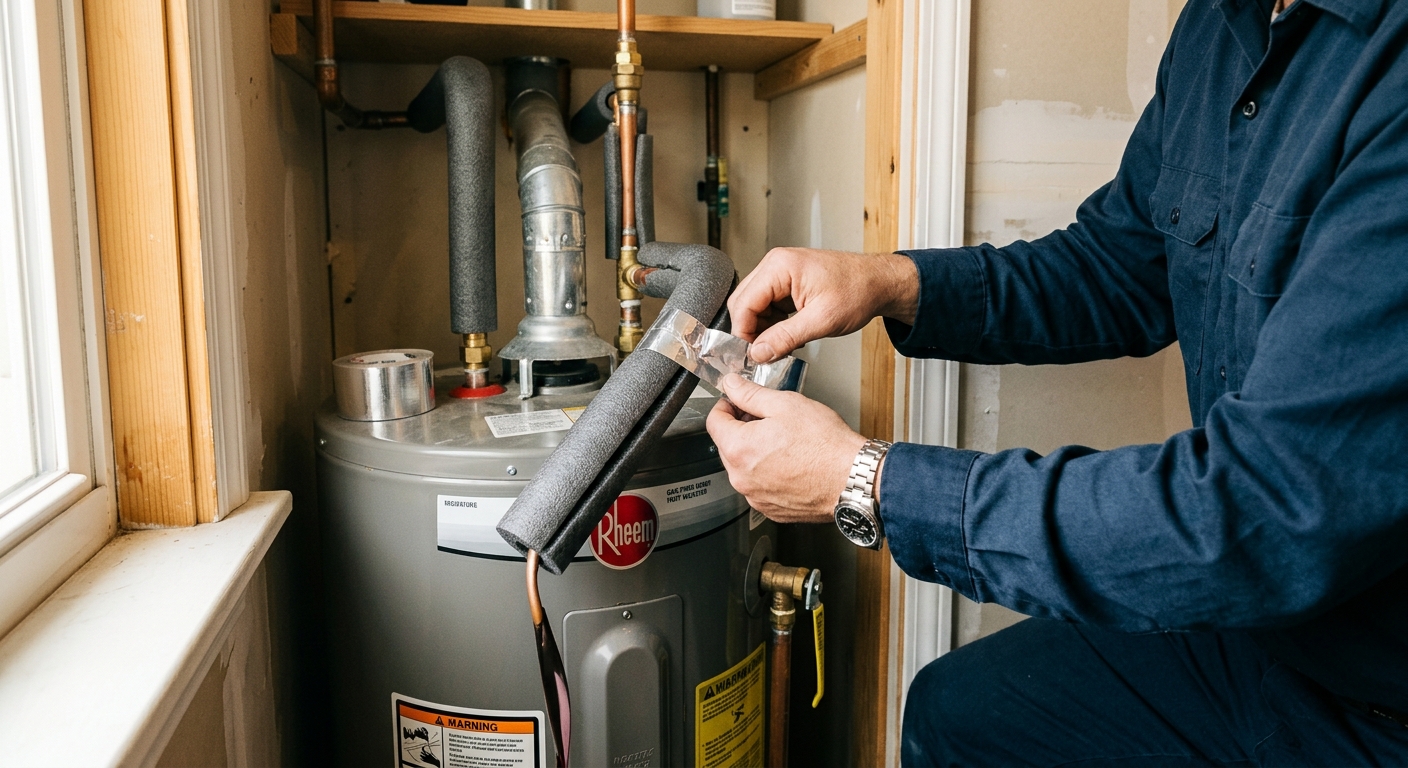
- Measure and purchase foam pipe insulation sleeves sized for your pipe diameter (usually 3/4 inch or 1/2 inch). Cover the first 6 feet of both the hot and cold water pipes coming off the top of the heater.
- Slide the pre-slit foam sleeves over the pipes and seal the slits with foil tape or the included adhesive. Start from the water heater connection and work outward.
- Check the closet door for gaps by holding a lit stick of incense near the frame. If the smoke wavers, air is moving through gaps.
- Apply adhesive-backed foam weatherstripping around the interior perimeter of the door frame to seal the air gap. Choose a thickness that compresses fully when the door closes.
- If the door has a large bottom gap, add a door sweep or a foam threshold seal to close it off.
- Check that all combustion air vents or louvered openings required by your water heater manufacturer remain unobstructed after sealing.
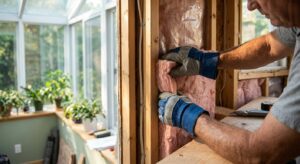
- Measure all interior closet walls and the back of the door. Purchase 1-inch or 2-inch polyisocyanurate or XPS rigid foam board (R-6 to R-13 per panel) cut to fit.
- Turn off the water heater at the breaker or gas valve before working in a tight space. Allow it to remain off only for the duration of your work.
- Use a utility knife and straightedge to score and snap the foam panels to fit each wall section. Leave at least 1 inch of clearance around any exhaust flue pipe, draft hood, or pressure relief valve.
- Attach foam panels to closet walls using construction adhesive rated for foam board or large-head roofing nails for temporary fit. For garage or exterior-facing walls, this single layer of foam can add R-6 to R-13 where walls previously had R-0 to R-4.
- Cut a panel to fit the back of the closet door and secure it with foam-safe adhesive or hook-and-loop fastener strips so the door still closes fully.
- Seal all panel edges and seams with foil-faced tape to eliminate air gaps, which are the most significant source of heat transfer in a loosely assembled closet.
- Re-inspect all manufacturer-required combustion air openings and ensure they are fully clear. Restore power or relight the pilot before closing the closet.
- Hire a licensed insulation contractor or HVAC professional to assess the closet and confirm combustion air requirements before any spray foam work begins.
- Have two-component closed-cell spray foam applied to all exterior-facing or garage-facing walls and the ceiling of the closet at a minimum thickness of 2 inches (R-12 to R-14).
- Request that the contractor leave all manufacturer-specified combustion air clearances intact and verify with a combustion analyzer after the work is complete for gas units.
- Replace the existing hollow-core closet door with a solid-core door or insulated steel door, which reduces conductive heat loss through the door face by 3 to 5 times compared to hollow-core.
- Have the contractor install a continuous door gasket and threshold seal rated for the finished door, ensuring an air-tight closure.
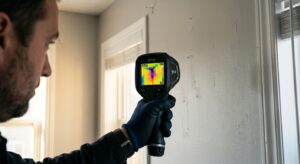
- Ask for a post-installation blower door test or thermal camera scan if budget allows, to confirm that the closet is performing as expected and no combustion air issues exist.
Why It Works: The Benefits
Reducing standby heat loss by 25 to 45% translates to roughly $20 to $60 per year in savings for a typical household, depending on climate, fuel type, and closet conditions. Gas water heaters and electric resistance heaters both benefit meaningfully.
Fewer heating cycles mean less thermal stress on the tank, burner, and heating elements. Reducing daily cycle frequency by even 20% can add 1 to 2 years to a water heater’s useful life, which is worth $150 to $300 in deferred replacement cost.
An insulated closet keeps ambient air warmer around the tank and pipes, which means less heat bleeds out of pipes before water reaches your fixtures. This can reduce the time you wait for hot water by several seconds, saving both water and energy.
A water heater closet on a shared interior wall can radiate warmth into a bedroom or hallway in summer, adding to cooling loads. Insulating the closet walls helps contain that heat and can reduce cooling costs by 3 to 8% in rooms adjacent to the closet.
💰 Savings Impact by Action
Insulating the first 6 feet of hot and cold water pipes reduces pipe conduction loss by up to 80%, saving roughly 8 to 12% on annual water heating energy.
Adding R-6 to R-13 rigid foam to uninsulated closet walls on exterior or garage-facing surfaces reduces standby heat loss through those surfaces by 50 to 70%.
Weatherstripping and insulating the closet door eliminates the primary air exchange pathway, reducing convective heat loss by up to 10% of total standby loss.
An R-8 to R-11 insulation blanket applied directly to an older water heater tank can reduce standby heat loss by 25 to 45% according to DOE estimates.
Reducing the tank setpoint from 140 to 120 degrees F lowers the temperature differential driving standby loss and saves 4 to 10% on water heating costs with no materials needed.
🏠 Key Concepts Explained
The Science Behind It
Water heaters maintain a constant reservoir of hot water, typically between 120 and 140 degrees Fahrenheit, at all times. Heat flows from hot to cold, always, which means the tank is continuously losing energy to the surrounding air, walls, and pipes. This is called standby heat loss, and it accounts for 15 to 20% of a typical household’s water heating energy use according to the U.S. Department of Energy. The rate of that loss is directly governed by the temperature difference between the water and the closet air, and by how much thermal resistance (R-value) exists between them.
When a water heater sits in an uninsulated garage closet in winter, the closet air might drop to 45 degrees F while the tank holds 125 degrees. That 80-degree delta T drives heat through the closet walls rapidly. Add a single inch of rigid foam to those walls and you might cut that heat flow by 50 to 65%, because you have dramatically increased the R-value of the assembly. The water heater does not need to know anything changed. It simply fires up less often because the tank temperature holds longer between cycles.
Pipe insulation works on the same principle. Uninsulated copper pipes conduct heat at roughly 223 BTU per hour per foot at typical temperature differentials. Foam pipe sleeves reduce that by 80 to 90%, which matters most on the hot water outlet pipe where heat bleeds out even when no one is drawing water. Sealing air gaps with weatherstripping adds a third layer of improvement by stopping convective air movement, which would otherwise carry warm closet air out and replace it with cold ambient air, constantly refreshing the heat loss gradient around the tank.
Frequently Asked Questions
▼ Will insulating my gas water heater closet create a carbon monoxide risk?
It can if you block combustion air openings. Gas water heaters require a minimum amount of fresh air for safe combustion, typically specified as a vent opening near the top and bottom of the closet door or wall. Check your installation manual for the required opening sizes and make sure your insulation work does not cover or reduce them. If you seal the door with weatherstripping, you may need to cut a louvered vent into the door to compensate. When in doubt, have an HVAC technician verify combustion air adequacy after you finish.
▼ My water heater is in a garage. Is it worth insulating that whole closet?
Yes, a garage closet is actually where insulation delivers the biggest payback because the temperature swings are so extreme. In cold climates, garage temps can drop to 20 to 30 degrees F, creating a 90 to 100 degree delta T against your tank. Start with rigid foam on all garage-facing walls and the door, and add pipe insulation throughout. You can reasonably expect to cut standby losses by 35 to 50% and save $40 to $80 per year on a gas water heater in that scenario.
▼ How long before I actually see savings on my energy bill?
Most homeowners see the impact within one to two billing cycles, especially if the work is done before winter. The savings are steady and monthly rather than dramatic, typically $3 to $8 per month depending on fuel costs and climate. To verify the impact, note your water heater’s average daily energy use from your utility smart meter or gas bill before and after the project and compare over 30-day periods.
▼ Can I put a water heater insulation blanket on a newer unit?
Modern water heaters manufactured after 2015 typically have much better factory insulation than older models, so a blanket may add less benefit than it would on a 10 to 15-year-old tank. Check the EnergyGuide label: if the estimated annual cost is already low and the unit has 2 or more inches of factory foam insulation, focus your effort on the closet walls and pipes instead. Adding a blanket to a newer unit will not hurt, but the ROI is lower.
▼ What if my water heater closet is inside the conditioned living space with no exterior walls?
In that case, the temperature differential is much smaller (closet air might be 68 to 72 degrees F versus your 120-degree tank), so standby losses are already lower. Pipe insulation and weatherstripping on the door still make sense and cost almost nothing, but adding rigid foam board to interior walls offers minimal return. Your best move in this scenario is to lower the thermostat setpoint to 120 degrees F and add a tank insulation blanket if the unit is older.
Quick Tips
- Set your water heater to 120 degrees F rather than the factory default of 130 to 140 degrees. A lower setpoint means a smaller delta T and less standby loss, saving 4 to 22% on water heating costs without any physical changes to the closet.
- Wrap the first 6 feet of pipes, not just the 1 to 2 feet directly above the water heater. Heat loss from pipes extends well into the wall cavity and can account for 2 to 4% of annual water heating energy.
- If your water heater is more than 10 years old, consider adding a water heater insulating blanket (R-8 to R-11) directly to the tank before tackling the closet walls. The blanket alone can reduce standby loss by 25 to 45% on older tanks with minimal factory insulation.
- Use foil-faced polyisocyanurate foam board rather than plain EPS or XPS for closet walls. Foil facing adds a radiant barrier that reflects heat back toward the tank and adds roughly R-1 to R-2 of effective performance beyond the rated R-value in a tight space.
Variations for Your Situation
- Apartment/Rental: Most apartment water heaters are in interior closets or utility rooms you cannot modify structurally. Focus on what you can do without permission: wrap exposed hot water pipes with foam sleeves, set the thermostat to 120 degrees F if accessible, and place a draft stopper at the closet door base. These steps cost under $20 and require no installation. Ask your landlord about adding a tank insulation blanket, which is removable and leaves no damage.
- Tight Budget (under $30): Skip the foam board entirely and prioritize the two highest-ROI items: foam pipe insulation sleeves for the first 6 feet of hot and cold pipes (about $8 to $12) and a foam weatherstrip kit for the door frame (about $5 to $10). These two items together address the most significant heat loss points and pay back in 3 to 6 months. Add a door sweep if there is a large bottom gap for another $6 to $10.
- Older Home (pre-1980): Homes built before 1980 often have water heaters with minimal factory insulation, uninsulated pipes throughout the walls, and closets with zero cavity insulation. In this scenario, start with a water heater tank insulating blanket rated R-8 or higher (about $30), which is the single highest-impact item for an older tank. Then add pipe insulation and foam board to the closet walls. Combined, these upgrades can reduce standby losses by 45 to 60% and save $50 to $90 per year on a gas heater in a cold climate.