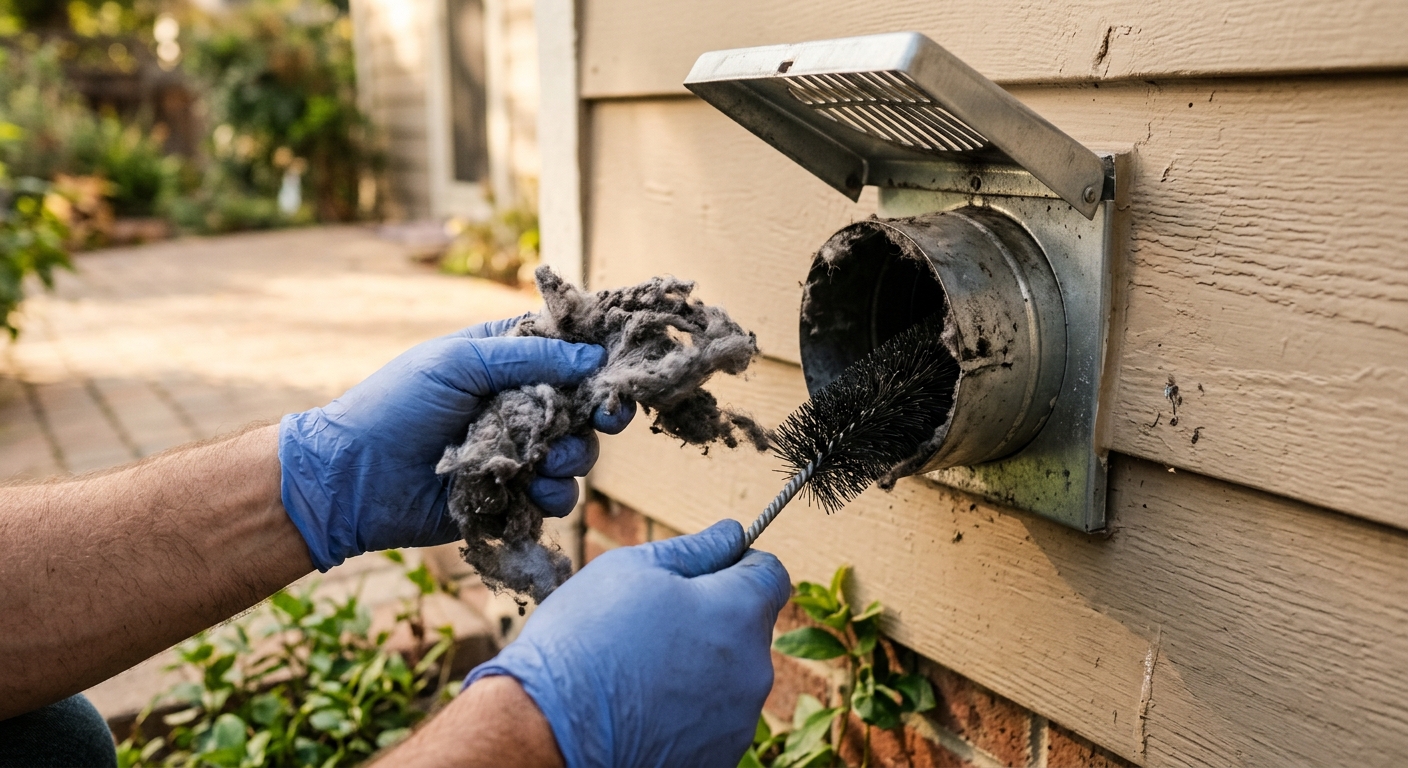
Your dryer vent might be the most neglected safety item in your entire home. Lint builds up inside the duct every single time you run a load, and over months and years that buildup restricts airflow, forces your dryer to work harder, and creates a genuine fire hazard. According to the US Fire Administration, dryers cause roughly 2,900 house fires per year, with failure to clean the vent cited as the leading contributing factor.
Beyond fire safety, a clogged vent hits your wallet directly. When hot, moist air cannot escape efficiently, your dryer runs longer cycles to dry the same load. Homeowners with partially blocked vents often see drying times climb from 35 minutes to 60 minutes or more, which can add $40 to $80 per year to your energy bill depending on whether you have a gas or electric dryer. Clothes also wear out faster when subjected to extra heat exposure.
This post walks you through two approaches: a quick weekend cleaning you can do yourself with a basic brush kit, and a more thorough DIY deep clean for longer or more complex duct runs. You will also find guidance on when to call a professional, how to spot a dangerous blockage, and what to do if your duct runs through a tight space or up through the roof.
What You’ll Need
Click on an item below to shop for the recommended items for this recipe on Amazon.
As an Amazon Associate, we earn from qualifying purchases.
How to Do It
- Unplug the dryer from the wall outlet (or turn off the gas shutoff valve if you have a gas dryer) before doing anything else.
- Remove the lint screen and wash it with warm soapy water and a soft brush to clear any built-up fabric softener film, which blocks airflow even when lint looks clean. Let it dry completely before reinserting.
- Pull the dryer away from the wall carefully to expose the duct connection at the back of the machine.
- Disconnect the flexible duct from the dryer’s exhaust port, then use a long-handled dryer lint brush or a vacuum hose attachment to clean as far into the duct as you can reach, typically 1 to 3 feet.
- Go outside and check the exterior vent cap. Remove any visible lint, bird nests, or debris blocking the flap. Open the flap by hand and vacuum or brush out the opening.
- Reconnect the duct, push the dryer back into position, restore power, and run the dryer on air-only (no heat) for 2 to 3 minutes to blow any dislodged lint out through the exterior cap.
- Purchase a dryer vent cleaning brush kit with flexible connectible rods (typically sold in sets covering 12 to 24 feet) and attach it to a power drill for maximum reach and agitation.
- Unplug the dryer and disconnect the full flexible duct section from both the dryer exhaust port and the wall duct entry point. Inspect the flexible section and replace it if it is accordion-style foil flex, which traps far more lint than rigid metal duct.
- Insert the rotating brush into the wall duct opening and feed it forward in sections, using the drill on low speed to spin the brush as you push it through. Work in 2 to 3 foot increments, pulling the brush back after each advance to extract lint before continuing.
- Have a helper stand outside at the exterior vent cap while you work, to watch for lint being expelled and to confirm airflow is improving. Alternatively, tape a piece of tissue over the opening before you start and confirm it moves freely when you run the dryer afterward.
- Once the brush reaches the exterior end or the maximum rod length, slowly retract it while spinning, then vacuum up all expelled lint from both the wall opening and the area around the dryer.
- Reconnect all duct sections using foil tape (not standard duct tape, which fails with heat) at every joint, reinstall the lint screen, restore power, and run a full timed drying cycle to confirm dramatically improved performance.
- Search for a certified chimney sweep or HVAC technician who specifically lists dryer vent cleaning as a service. The Chimney Safety Institute of America (CSIA) directory is a reliable starting point.
- Before the appointment, note your dryer’s make and model, the approximate duct length, and whether the vent exits through a wall or the roof so the tech arrives prepared.
- Ask the technician to use a vacuum-assisted rotary cleaning system, which fully contains dislodged lint rather than dispersing it into your laundry room.
- Request a camera inspection if you have an older home with a duct run that includes multiple turns or if the tech cannot confirm a clear passage, as crushed sections or pest nests deep in the duct require visual confirmation.
- After the service, ask for a written summary noting the duct length, any issues found, and the recommended cleaning interval for your specific configuration.
Why It Works: The Benefits
Removing lint buildup eliminates the primary fuel source for dryer vent fires. The US Fire Administration estimates that regular vent cleaning reduces dryer fire risk by more than 34%, making this one of the highest-impact home safety tasks you can do in under two hours.
A clean vent restores full exhaust airflow, which can cut drying times by 25 to 40%. A load that was taking 70 minutes may return to 35 to 40 minutes, saving several hours of run time per week for an average household.
Electric dryers are one of the largest energy consumers in a home, typically drawing 4,000 to 6,000 watts per cycle. Cutting cycle time by 30% translates to real savings of $40 to $80 per year for a household doing 5 to 7 loads per week.
Running a dryer against restricted airflow stresses the heating element, motor, and thermal fuse. Regular vent cleaning reduces mechanical wear and can add several years to the life of a machine that costs $500 to $1,200 to replace.
Excessive heat from prolonged cycles breaks down fabric fibers faster. Restoring normal cycle times reduces unnecessary heat exposure, which means your clothes and linens hold up better wash after wash.
💰 Savings Impact by Action
Restoring full duct airflow reduces dryer run time by 25 to 40%, directly cutting the energy consumed per load by the same percentage.
Cleaning the lint screen before every load maintains drum airflow and prevents the 10 to 15% efficiency loss caused by a film-coated screen.
Replacing accordion flex duct with smooth rigid metal duct reduces airflow resistance by up to 15%, permanently improving drying efficiency between cleanings.
A clear, freely opening exterior vent cap prevents back-pressure that can account for up to 20% of total duct resistance in a short duct run.
🏠 Key Concepts Explained
The Science Behind It
Dryers work on a simple thermodynamic principle: heat the air inside the drum to evaporate moisture from wet fabric, then exhaust that moisture-laden air to the outside and replace it with fresh hot air. This requires a continuous, unimpeded column of moving air from the drum intake through the heating element, through the drum, into the duct, and out the exterior cap. The moment lint begins to reduce the cross-sectional area of that pathway, the blower motor must work against higher static pressure to maintain airflow, heat starts to accumulate, and drying efficiency drops sharply.
The combustion risk comes from two converging factors. First, lint is essentially raw cotton and polyester fiber with an enormous surface-area-to-mass ratio, making it one of the most readily ignitable household materials, similar in character to tinder. Second, restricted airflow causes heat to concentrate in the duct rather than being carried outward. At sustained temperatures above 400 degrees Fahrenheit, which a blocked duct running a high-heat cycle can absolutely reach, lint deposits on duct walls can begin to smolder and ignite. Once a duct fire starts it can travel rapidly from inside the wall cavity into the broader structure of the home with very little warning.
From an energy efficiency standpoint, the physics is straightforward. Every additional minute your dryer runs to compensate for poor airflow is a minute of full heating-element power draw, typically 4,000 to 6,000 watts for electric models. A dryer running 40% longer per cycle due to a moderately blocked vent wastes the energy equivalent of running an extra full load every 2 to 3 days. Over a year, for a household doing 300 loads, that wasted energy is directly proportional to dollars added to your utility bill with zero benefit to you or your clothes.
Frequently Asked Questions
▼ My dryer still takes forever to dry even after I cleaned the vent. What else could it be?
If cleaning the accessible duct did not restore normal drying times, the most likely culprits are a section of duct that is crushed or kinked inside the wall, a failed or stuck exterior vent flap that is blocking exhaust, or a worn-out heating element that is not reaching proper temperature. Start by confirming strong airflow at the exterior cap while the dryer runs. If airflow feels weak, you have a duct obstruction or duct damage that likely requires a professional camera inspection to locate.
▼ How often should I clean my dryer vent?
The general guideline from the National Fire Protection Association and most dryer manufacturers is at least once per year for average household use. If you have a large family doing 8 or more loads per week, you have a long or complex duct run with multiple elbows, or you frequently dry bulky items like blankets and pet bedding, clean every 6 months. A simple sign that cleaning is overdue: if a normal load takes longer than 45 to 50 minutes, the vent needs attention.
▼ Can I use a leaf blower to clean my dryer vent instead of a brush kit?
A leaf blower can dislodge loose lint from a short, straight duct run but it cannot scrub compacted lint from duct walls the way a rotating brush does. It also blows displaced lint back into your laundry room if you are not careful about containment. Use a brush kit for any real cleaning, and reserve the blower idea for a light maintenance flush of a very short duct with no bends.
▼ My vent exits through the roof. Can I still DIY this?
Roof-exit duct configurations are significantly more difficult because they involve accessing the roofline and navigating longer runs with vertical sections. While experienced DIYers with proper ladder safety equipment can attempt it, most homeowners are better served by hiring a professional for roof-exit cleanings. The cost of $100 to $175 is well worth avoiding a fall and ensuring the full vertical run is actually clear.
▼ I rent my apartment. Can I clean the dryer vent myself or do I need my landlord?
You can absolutely clean the lint screen and the flexible duct section behind the dryer without any landlord involvement, and both steps make a real difference. For the full duct run inside the building structure, notify your landlord in writing and frame it as a fire safety concern, since landlords are legally responsible for maintaining safe appliances in rental units in most states. Most landlords will arrange professional cleaning when prompted with a safety-framed request.
Quick Tips
- Clean your lint screen before every single load, not just when it looks full. Even a thin film of lint reduces airflow measurably.
- Replace any accordion-style foil flex duct with smooth-wall rigid metal duct wherever physically possible. Rigid duct traps far less lint and is far easier to clean.
- Set a recurring annual reminder to do a full duct cleaning. Many home fires attributed to dryers happen in January and February when laundry frequency is high and vents have gone uncleaned for a year or more.
- If your dryer has an indicator light or alert for restricted airflow, treat it as a fire safety warning and not just a maintenance nuisance. Do not ignore it and keep running loads.
Variations for Your Situation
- Apartment or Rental: Renters can clean the lint screen thoroughly and disconnect and vacuum the flexible duct section behind the dryer without any landlord permission. For the in-wall duct beyond that, send your landlord a written maintenance request citing fire safety and the NFPA recommendation for annual vent cleaning. Keep a copy for your records. If the building uses a shared or common dryer, flag the concern to building management directly.
- Tight Budget (under $25): You can accomplish a meaningful cleaning with zero specialized tools by using a vacuum hose with the longest available attachment to reach into the duct opening, plus a long flexible bottle brush from a dollar store for scrubbing. Clean the exterior cap thoroughly by hand and check that the flap opens freely. This does not replace a brush kit for longer runs, but for a short straight duct under 8 feet it is a legitimate and free solution.
- Older Home (pre-1990): Homes built before modern dryer duct standards were widely adopted may have undersized duct, duct running through unconditioned attic or crawl space, or even plastic flexible duct which is a fire code violation in most jurisdictions today. If your home is pre-1990 and you have never had the duct inspected, start with a professional assessment before DIY cleaning. A technician can identify code-deficient materials or configurations that need upgrading before a cleaning brush would even be appropriate.