A summer power outage is uncomfortable. A summer power outage during a heat wave can be genuinely dangerous. Indoor temperatures in an unshaded, poorly insulated home can rise from 75°F to over 90°F in as little as three to four hours once the AC stops running, and humid air makes those temperatures feel even more punishing. For children, the elderly, and anyone with a heart or respiratory condition, that window can be narrow.
The good news is that your home already has passive cooling potential you probably never use. Thermal mass, shading, airflow patterns, and simple behavioral changes can slow the rate of heat gain dramatically, buying you hours of safety and comfort even with zero electricity. Combine those strategies with a modest set of low-cost backup tools and you can keep interior temperatures 10 to 20°F lower than an unprepared neighbor in the same outage.
This post walks you through exactly what to do in the first 30 minutes of an outage, how to set up your home for passive cooling over the following hours, and which affordable backup solutions give you the most protection per dollar spent. We cover everything from free behavioral tactics to a battery-powered cooling kit that costs under $200 and can run for eight to twelve hours.
What You’ll Need
Click on an item below to shop for the recommended items for this recipe on Amazon.
As an Amazon Associate, we earn from qualifying purchases.
How to Do It
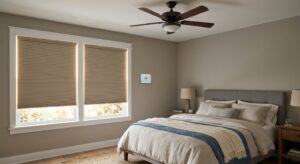
- Close all windows, blinds, and curtains immediately on the south and west sides of your home to block incoming radiant heat. Interior cellular shades or blackout curtains reduce solar heat gain through glass by 40 to 60%.
- Pre-cool your body, not the room. Wet a bandana or small towel with cool water and place it on your neck and wrists where blood vessels are close to the surface. This is more effective per unit of effort than trying to cool the air.
- Identify the coolest room in the house, typically the lowest floor, most shaded, and smallest volume, and consolidate your household there. Closing off unused rooms prevents heat from spreading and concentrates any passive cooling.
- After sunset or when outdoor temperatures drop below indoor temperatures, open low windows on the shaded or windward side of the house and a high window or bathroom exhaust vent on the opposite side to establish a natural cross-ventilation draft.
- Fill bathtubs, large pots, and reusable water bottles with cold tap water immediately. These serve as both a drinking water reserve and thermal mass that will absorb heat from the room over the following hours.
- Avoid using gas stoves, ovens, or any heat-generating appliances. Body heat from multiple people in a small room can raise air temperature by 2 to 4°F per hour, so limit physical activity and eat foods that require no cooking.
- Purchase a portable power station with at least 300 watt-hours of capacity (brands like Jackery, EcoFlow, or Anker offer reliable options in the $150 to $250 range). This is your backbone for running low-wattage cooling devices for eight to twelve hours.
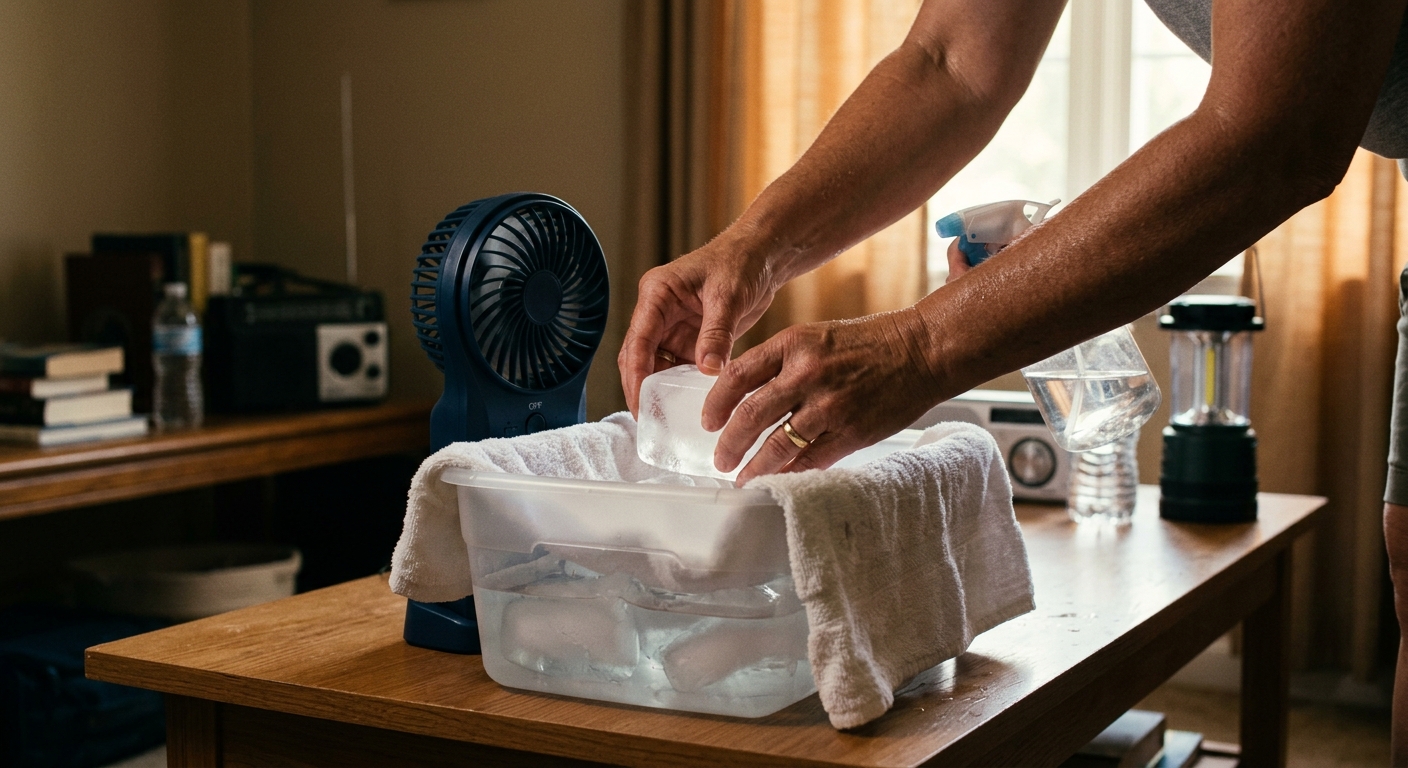
- Pair the power station with a high-velocity USB or 12V tower fan (20 to 40 watts). At 30 watts, a 300Wh station runs the fan for about ten hours. Position the fan to draw air over a bowl of ice or a frozen gel pack for an improvised evaporative boost.
- Add a battery-powered or USB evaporative personal cooler (often marketed as a personal air cooler). These units use 5 to 15 watts and can drop the temperature of air hitting your skin by 8 to 12°F in dry to moderate humidity conditions.
- Stock at least four large reusable gel ice packs and keep them in your freezer routinely. In an outage, transfer them to a small cooler with any medications requiring refrigeration (insulin, for example, stays viable for 28 days below 77°F). Rotate the remaining packs to the fan bowl for cooling.
- Set up your sleeping area on the lowest floor using lightweight cotton or moisture-wicking sheets. Hang a damp cotton sheet in a doorway or window opening on the windward side to act as a passive evaporative cooler for the room, refreshing it with water every two to three hours.
- Charge the power station fully at the start of any heat wave forecast. If you have a car, you can also recharge it via the 12V car outlet (roughly 60 to 100W input) without running the vehicle for extended periods, simply use a USB-C to car adapter cable for 30-minute top-ups.
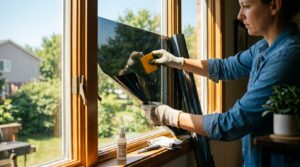
- Install exterior solar shades or roll-down awnings on south and west windows. Exterior shading blocks 60 to 90% of solar heat before it reaches the glass, compared to 40 to 60% for interior blinds. Retractable awnings cost $200 to $600 per window but pay back in both outage resilience and reduced AC load every summer.
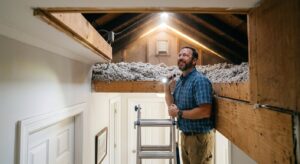
- Upgrade attic insulation to at least R-38 if you are below that threshold. In an unair-conditioned home during a heat wave, a well-insulated attic reduces second-floor temperature rise by 5 to 10°F over a six-hour period compared to an R-11 attic. Cost is typically $1,000 to $2,500 for a 1,500 square foot attic and qualifies for a 30% federal tax credit.
- Have a licensed electrician install a manual transfer switch or interlock kit on your main panel ($200 to $500 installed). This allows you to safely connect a portable generator to your home’s wiring to run a window AC unit, refrigerator, and lighting during extended outages without back-feeding the utility line.
- Install a whole-house attic fan (not a powered ridge vent) rated for your home’s square footage. On cool nights, these fans can flush hot attic air and cool a 2,000 square foot home from 85°F to 72°F in 30 to 45 minutes using only 200 to 500 watts, a fraction of central AC consumption.
- Plant or install fast-growing deciduous shade trees or trellised vines on the south and west sides of the home. Mature deciduous trees can reduce summer wall and roof temperatures by 20 to 40°F, significantly reducing how fast your home heats during any outage.
Why It Works: The Benefits
Combining pre-cooling, window management, and passive ventilation can keep interior temperatures 10 to 20°F below an unprepared home, which can be the difference between discomfort and a heat-related medical emergency for vulnerable family members.
A well-prepared home with pre-cooled thermal mass and blocked solar gain loses temperature roughly 1 to 2°F per hour instead of 3 to 5°F, giving you three to six additional hours before conditions become dangerous without any backup power.
Avoiding a hotel stay during a regional heat emergency saves $100 to $250 per night and eliminates the stress of finding availability when demand spikes. A $150 to $200 battery-powered cooling kit pays for itself in a single avoided hotel night.
A full, closed refrigerator stays safe for about four hours and a full freezer for 24 to 48 hours. Strategic preparation extends these windows and protects hundreds of dollars in groceries and temperature-sensitive medications.
All passive cooling strategies in this guide require zero electricity and zero fuel, so once you know them they cost nothing to use during any future outage, regardless of duration.
💰 Savings Impact by Action
Closing interior blackout curtains on south and west windows reduces solar heat gain through glass by 40 to 60%, directly slowing indoor temperature rise during an outage.
Flushing warm indoor air with cool night air can reduce next-morning indoor temperatures by 8 to 12°F, extending safe conditions through the following afternoon.
Upgrading attic insulation to R-38 slows heat conduction from the roof into living spaces by up to 25%, buying one to two extra hours before indoor temps become dangerous.
Wet-cloth neck cooling and spray-bottle misting reduce perceived heat stress by 10 to 15°F with zero energy input, keeping occupants safe at higher ambient temperatures.
Pre-cooling your home to 68°F before an outage stores cold energy in walls, floors, and water containers, slowing temperature rise by up to 20% over the first four hours.
🏠 Key Concepts Explained
The Science Behind It
Your home is essentially a thermally insulated container, and during a power outage it behaves like a large insulated box slowly equilibrating to outdoor temperature. The rate at which indoor temperature rises depends on three variables: the temperature difference between inside and outside, the thermal resistance of your walls and roof (your R-value), and the amount of solar radiation entering through glass. A home with R-38 attic insulation and exterior solar shading can lose temperature at half the rate of an identical home with R-13 insulation and bare west-facing windows, giving occupants dramatically more time before conditions become unsafe.
The human body generates heat continuously, roughly 300 to 400 BTUs per hour at rest and up to 2,000 BTUs per hour during vigorous activity. When ambient air temperature approaches skin temperature (around 95°F), the body can no longer shed heat by convection and relies almost entirely on evaporative cooling through sweat. This is why moving air matters so much even when it is not cold air. A fan does not lower air temperature, but it dramatically increases the rate of sweat evaporation from the skin, producing a perceived cooling effect of 5 to 15°F depending on humidity. At dew points above 70°F, however, the air is already saturated enough that sweat evaporation slows, which is why humid heat is physiologically more dangerous than dry heat at the same temperature.
Radiant cooling at night is your most powerful passive tool in dry climates. When the sky is clear and outdoor temperatures fall below indoor temperatures, opening windows and using a whole-house or box fan to flush warm interior air out and pull cooler night air in can drop indoor temperatures by 10 to 15°F in one to two hours. This works because your home’s thermal mass, which absorbed heat during the day, now releases it into the cooler night air. By morning, a well-ventilated home can be 8 to 12°F cooler than one that remained sealed, giving you a much more comfortable and safer starting point for the following day’s heat.
Frequently Asked Questions
▼ How hot is too hot inside during a power outage? When should I actually leave?
For healthy adults, sustained indoor temperatures above 90°F with high humidity (dew point above 65°F) represent serious heat stress risk after two to three hours. For infants, elderly adults, or anyone with heart disease or diabetes, the threshold is lower, around 85°F sustained. If you cannot get your indoor temperature below 90°F using the passive strategies in this guide and outdoor air is cooler than indoor air, open up fully and ventilate. If nothing works and temperatures keep climbing, go to a cooling center, library, or air-conditioned business.
▼ How long will my refrigerator and freezer stay safe during an outage?
A closed, full refrigerator holds safe food temperatures (below 40°F) for approximately four hours. A full freezer holds for 24 to 48 hours, while a half-full freezer holds for about 24 hours. Do not open the doors unless necessary. Grouping food together and adding frozen gel packs or dry ice can extend these windows significantly. When in doubt, use the USDA rule: above 40°F for more than two hours, throw it out.
▼ My home gets unbearably hot upstairs. Where should we sleep during an outage?
Move sleeping arrangements to the lowest floor immediately. Heat rises by convection and attic heat conducts down through ceilings, making upper floors 5 to 15°F hotter than ground level during an outage. A basement, if you have one, is ideal since ground-coupled temperatures hover around 55 to 65°F regardless of outdoor conditions. Set up sleeping bags or mattresses on the ground floor and use a battery-powered fan for airflow.
▼ Can I run my window AC unit off a portable power station?
Most window AC units draw 500 to 1,500 watts of continuous power, which exceeds what most consumer portable power stations (typically 300 to 1,000Wh capacity) can sustain for more than 30 to 90 minutes. A small, 5,000 BTU window unit at 500 watts would drain a 500Wh station in about one hour. It is technically possible for short cooling bursts, but for sustained operation you need a generator with a proper transfer switch or a large-capacity power station rated above 2,000Wh.
▼ Does running fans actually cool a room or just move hot air around?
Fans do not lower the air temperature of a room. They cool you by increasing evaporation from your skin, which can make you feel 5 to 15°F cooler. If outdoor air is hotter than indoor air, opening windows and running fans can actually bring more heat inside, so keep windows closed during the hottest part of the day (roughly 11 a.m. to 7 p.m.) and only ventilate at night once outdoor temperatures drop below indoor temperatures.
Quick Tips
- Fill your bathtub with cold water as soon as power goes out. Submersing arms and legs for 10 minutes lowers core body temperature more effectively than any fan, and the water also acts as thermal mass absorbing room heat.
- Freeze water in two-liter bottles the night before a forecasted heat wave. They last six to eight hours in a cooler and can double as ice for your fan-cooling setup once they begin to melt.
- Hang a damp sheet over an open window on the shaded, windward side of your home. Incoming air passes through the moist cotton and drops 5 to 10°F through evaporative cooling before entering the room.
- Check on neighbors, especially those over 65, within the first two hours of an outage. Heat-related illness progresses quickly and quietly, and isolation is a major risk factor during heat emergencies.
Variations for Your Situation
- Apartment or Rental: You likely cannot install exterior shading or a whole-house fan, but you can do nearly everything else. Focus on portable solutions: a $40 to $60 USB tower fan, reusable gel ice packs, blackout curtain panels (tension rod install, no drilling), and a 300Wh portable power station. Request that your landlord confirm the building has backup lighting in common areas. If you are on an upper floor, a ground-floor common area or a neighbor’s lower-floor unit may be significantly cooler.
- Tight Budget (under $50): Start with pure behavioral tactics that cost nothing: close south and west blinds immediately, move activity to the lowest floor, wet bandanas for neck cooling, fill the bathtub, and ventilate only after dark. A $10 spray bottle and a $15 battery-powered clip fan are the two highest-impact purchases under $30. Four large reusable gel ice packs cost around $15 to $20 and serve double duty for food safety and personal cooling.
- Older Home Pre-1980: Older homes typically have poor attic insulation (R-7 to R-11), single-pane windows, and significant air leakage. During an outage, this means faster temperature rise: expect 4 to 6°F per hour instead of 1 to 2°F. Prioritize the lowest floor aggressively since upper floors will become untenable quickly. If you can make one pre-season investment, attic insulation upgrades (now eligible for a 30% federal tax credit up to $1,200) will provide the largest reduction in heat gain rate during any future outage.