Your front door sees more abuse than almost any other part of your home. It opens and closes hundreds of times a year, exposing its seals to UV rays, moisture, temperature swings, and physical wear. Over time, the foam, rubber, or felt strips that seal the gap between your door and its frame compress, crack, and pull away, leaving a gap that acts like a small open window 24 hours a day.
According to the U.S. Department of Energy, doors and windows together account for roughly 25 to 30% of a home’s heating and cooling loss. A significant chunk of that comes from simple air infiltration around door frames, not through the door itself. Fixing this requires no special skills, no expensive tools, and in most cases under $30 in materials from any hardware store.
This guide walks you through two approaches: a fast 15-minute assessment and temporary fix you can do right now, and a proper DIY weatherstripping replacement that will last 5 to 10 years. You will also find real numbers on what to expect in savings, tips for choosing the right material for your door type, and answers to the most common questions homeowners run into during this project.
What You’ll Need
Click on an item below to shop for the recommended items for this recipe on Amazon.
As an Amazon Associate, we earn from qualifying purchases.
How to Do It
- On a windy day or while your heat or AC is running, hold a lit incense stick or a thin piece of tissue paper around the perimeter of your closed front door, including the top, both sides, and the bottom sweep. Watch for movement indicating airflow.
- Mark any problem areas with painter’s tape on the interior frame so you know exactly where to focus.
- Check the door bottom by sliding a piece of paper under the closed door. If it slides freely without resistance, the door sweep is worn or missing entirely.
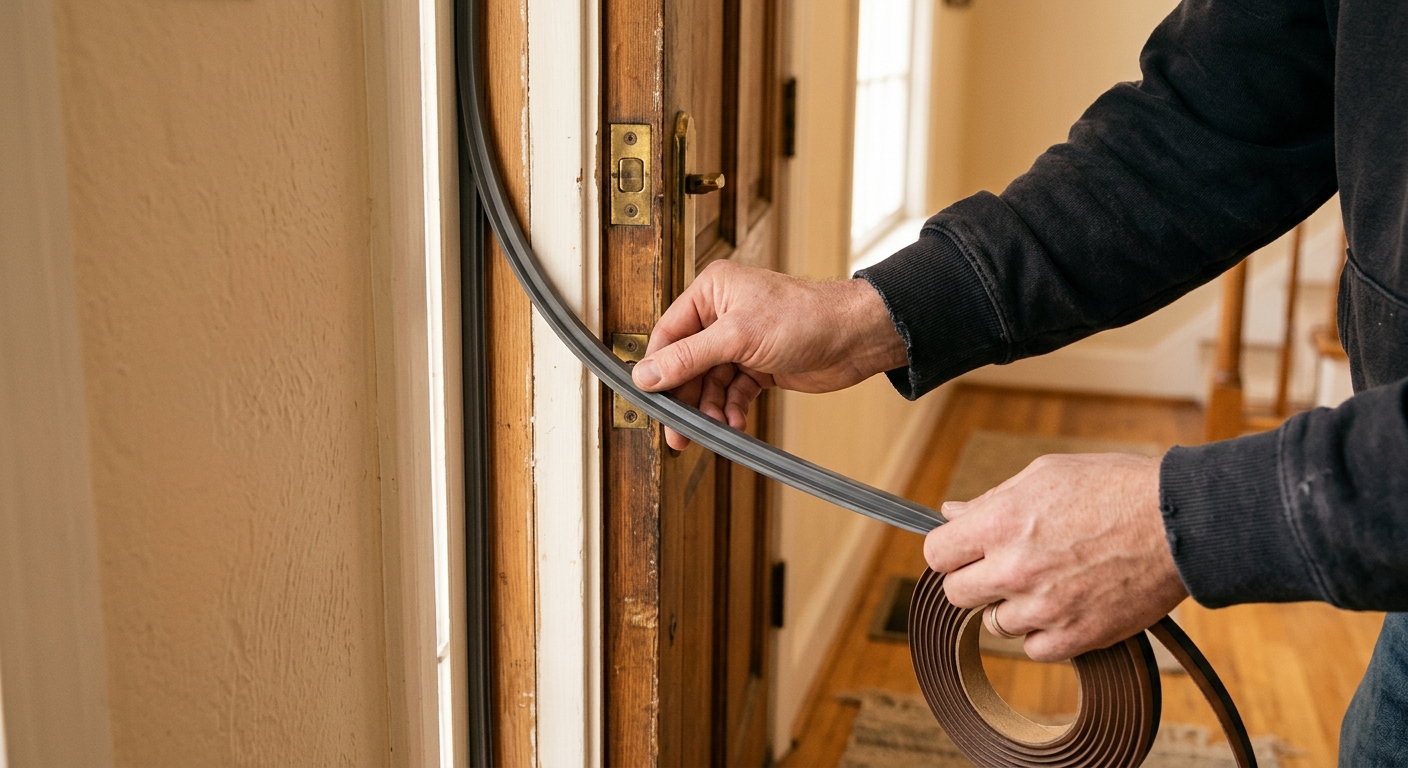
- For an immediate temporary fix on the sides and top, press adhesive-backed foam tape (available for under $5 at any hardware store) into the door stop channel where the door closes against the frame. This compresses when the door closes and blocks the gap.
- For the door bottom, roll up a tightly packed towel or use a commercial draft stopper ($5 to $8) as a temporary measure until you replace the door sweep properly.
- Remove all existing weatherstripping by pulling it away from the frame. Use a putty knife or flathead screwdriver to remove any staples or adhesive residue. Clean the surface with rubbing alcohol and let it dry completely so new adhesive bonds properly.
- Measure the height of both side jambs and the width of the top jamb with a tape measure. Add 5% to your measurements before cutting so you can trim to fit rather than come up short.
- For the door sides and top, cut V-strip (tension seal) weatherstripping to length with scissors or tin snips. V-strip is a folded strip of metal or plastic that springs open to fill the gap. Slide or tack it into the channel between the door and the stop molding with the opening of the V facing toward the outside. Nail or press into place per the manufacturer’s instructions.
- For the door bottom, measure the door width and purchase a door sweep that matches. Most standard exterior doors are 36 inches wide. Screw the door sweep to the bottom interior face of the door so the rubber or brush seal just touches the threshold when the door is closed. Adjust the height so it creates resistance without making the door hard to open.
- Close the door and repeat the incense or tissue paper test from Step 1 of the Quick Fix approach to confirm all gaps are sealed. Pay special attention to the corners where the side and top weatherstripping meet.
- If a corner gap remains, cut a small 45-degree miter on both pieces using scissors and press them tightly together, or use a small dab of exterior-grade silicone caulk to seal the joint.
Why It Works: The Benefits
The DOE estimates that sealing air leaks around doors and windows can reduce heating and cooling costs by 10 to 15% annually. For a home with a $200 monthly energy bill, that is $240 to $360 saved per year.
A properly sealed door stops cold drafts at floor level and along the sides of the frame the same day you install new weatherstripping, making rooms near the entryway noticeably more comfortable.
By eliminating a major infiltration point, your heating and cooling system cycles less frequently, reducing wear on the compressor and blower motor and extending equipment life.
A tight door seal also dampens exterior noise by 20 to 30%, which is a noticeable improvement for homes near busy streets or neighborhoods with frequent traffic.
Gaps that let air in also let insects, pollen, and fine dust enter. New weatherstripping closes these pathways and can noticeably reduce the amount of dust settling on surfaces near the front entry.
💰 Savings Impact by Action
Sealing the front door perimeter eliminates a gap responsible for up to 11% of total home air leakage according to DOE infiltration studies.
Properly weatherstripped exterior doors reduce heating season energy loss through infiltration by up to 15%, with the largest gains in older homes with no existing seals.
In cooling season, sealing door gaps reduces humid outdoor air infiltration, lowering the latent cooling load on your AC by approximately 10%.
Reducing infiltration at the front door decreases HVAC cycling frequency by an estimated 8%, extending equipment life and reducing compressor wear.
🏠 Key Concepts Explained
The Science Behind It
Air moves from high pressure to low pressure through any available opening. Your front door frame, even when it looks fully closed, typically has small gaps of 1/16 to 3/16 of an inch around its perimeter. While that sounds tiny, a gap of just 1/8 inch running the full height of a standard 80-inch door represents roughly 10 square inches of open area, comparable to leaving a small vent permanently open in your wall. On a cold or windy day, pressure differentials of 5 to 15 Pascals across the building envelope actively push cold air through these gaps continuously.
The type of weatherstripping material matters because of how it maintains the seal under repeated mechanical stress. Foam compresses easily but develops a permanent set, meaning it stops rebounding to fill the gap after 12 to 24 months of daily door use. V-strip works differently: it uses the elastic memory of metal or rigid plastic to maintain spring tension against the door edge. This means the seal actually improves slightly over time as the strip conforms to the surface, and it does not degrade under UV or moisture the way foam does.
The door bottom deserves special attention because the stack effect creates a persistent low-pressure zone at floor level in winter, actively pulling cold air under the door. A quality door sweep with a rubber or silicone seal against the threshold breaks this pathway. Combined with sealed side jambs and top header, you create what building scientists call a continuous air barrier: a sealed envelope that forces infiltrating air to find a much longer, more resistive path into your home, dramatically reducing its volume and the energy required to condition it.
Frequently Asked Questions
▼ I installed new weatherstripping but I can still feel a draft. What am I missing?
The most common cause is the door bottom. If the sweep is not making firm contact with the threshold across the full width of the door, cold air will continue to come in at floor level. Remove the sweep and adjust its height down by one screw slot at a time until you feel slight resistance when closing the door. Also check the corners where side and top strips meet, as even a small gap there allows significant airflow.
▼ Can renters replace weatherstripping without landlord permission?
In most cases, yes. Replacing weatherstripping is a non-destructive maintenance task that improves the property and leaves no permanent changes. That said, check your lease first and consider sending a quick written notice to your landlord explaining the improvement. Some jurisdictions actually require landlords to maintain weatherstripping as part of habitability standards, so your landlord may be responsible for the cost.
▼ How long before I see savings on my energy bill?
You should see a reduction on your very next monthly bill if you install weatherstripping during active heating or cooling season. The savings will be most visible in months with extreme outdoor temperatures. For a home with previously bare or badly worn seals, a 10 to 15% reduction in HVAC-related energy use is realistic and should be apparent within 30 to 60 days.
▼ My door is steel with a magnetic strip. Do I still need weatherstripping?
Steel exterior doors often come with a factory-installed magnetic or compression seal, similar to a refrigerator door. If the door is more than 10 years old or you can see visible light around the frame when it is closed, the magnetic gasket has likely degraded and should be replaced. Replacement magnetic door seal kits are available from door manufacturers and hardware stores for $20 to $50 and usually press or screw directly into the existing channel.
▼ What if my door sticks or becomes hard to close after I add weatherstripping?
You have likely used too thick a foam tape or set the door sweep too low. For the sides and top, switch to V-strip instead of foam, which adds almost no thickness to the door stop channel. For the sweep, loosen the screws and raise it until the door closes with light resistance rather than a hard push. The seal should compress under door pressure, not prevent closing.
Quick Tips
- Replace weatherstripping in fall before heating season for the fastest payback on your investment.
- If your door has a large visible gap on one side but not the other, the door may be sagging on its hinges. Tighten the hinge screws first, and replace any short screws with 3-inch screws that reach the wall framing for a more secure hang.
- Kerf-in weatherstripping (the type that presses into a slot cut in the door stop) creates a cleaner look and a stronger bond than adhesive-backed versions, and is worth the minor extra effort on a door you use daily.
- After completing the project, check the door sweep seasonally. The rubber or brush seal on most sweeps lasts 3 to 5 years with normal use, far less than the V-strip on the sides, so check it annually and replace it independently as needed.
Variations for Your Situation
- Apartment/Rental: Renters can use adhesive-backed foam tape or the peel-and-stick V-strip versions available for under $10, as both remove cleanly without damage to the door frame. For the door bottom, a fabric draft stopper that sits against the base of the door requires no installation at all and costs $8 to $15. Focus on the front door and any exterior-facing doors in your unit for the biggest impact.
- Tight Budget (under $20): Start with a $5 roll of adhesive foam tape for the sides and top and a $8 door sweep for the bottom. These budget materials will last 1 to 2 seasons rather than 5 to 10, but the payback is still well under a month. When the foam begins to fail, upgrade to V-strip at that point using the savings already accumulated.
- Older Home (pre-1980): Homes of this era often have out-of-square door frames due to decades of settling, making standard weatherstripping difficult to seat evenly. Use a flexible bulb or Q-lon foam gasket rather than rigid V-strip, as it conforms better to irregular gaps. Also inspect the wood door stop molding for rot before installing anything, as soft or damaged wood will not hold staples or nails and may need to be replaced first.