Your garage floor drain is one of those home features you never think about until it stops working. Designed to carry away water from melting snow, car washing, and spills, a floor drain that backs up during winter can turn your garage into a shallow pond – or worse, funnel water toward your foundation. With freezing temperatures on the way, a slow or blocked drain becomes a genuine structural risk, not just a puddle problem.
Most garage floor drain clogs are caused by sediment buildup, debris accumulation in the trap, root intrusion in older drain lines, or a dried-out P-trap that has lost its water seal. The good news is that many homeowners can diagnose and fix the problem in an afternoon with basic tools and under $50 in supplies. Knowing which type of blockage you have determines whether this is a quick DIY job or a call to a plumber.
This guide walks you through two approaches – a quick DIY cleaning you can do today, and a more thorough drain snaking and inspection method for stubborn clogs – plus clear guidance on when the issue is beyond a weekend fix. We include real cost estimates, tools required, and troubleshooting answers to the most common questions homeowners ask.
What You’ll Need
Click on an item below to shop for the recommended items for this recipe on Amazon.
As an Amazon Associate, we earn from qualifying purchases.
How to Do It
- Remove the drain grate by lifting it straight up or unscrewing a center bolt with a flathead screwdriver. Set it aside and rinse off debris.
- Scoop out all visible sediment, grit, and debris from the drain basin by hand using disposable gloves. This top layer alone often restores partial flow.
- Pour one gallon of hot (not boiling) water slowly into the drain to flush loose sediment downward and test current flow rate.
- If the drain smells like sewer gas but water flows normally, the P-trap has dried out. Pour 1 quart of water mixed with 1 tablespoon of vegetable oil down the drain. The oil floats on the water and slows evaporation, keeping the trap sealed through winter.
- For slow flow after debris removal, pour 1 cup of baking soda followed by 1 cup of white vinegar into the drain. Let it foam for 15 minutes, then flush with another gallon of hot water.
- Replace the grate and pour a final slow stream of water to confirm the drain clears within 30 seconds. If it still pools, move to the DIY Snake approach.
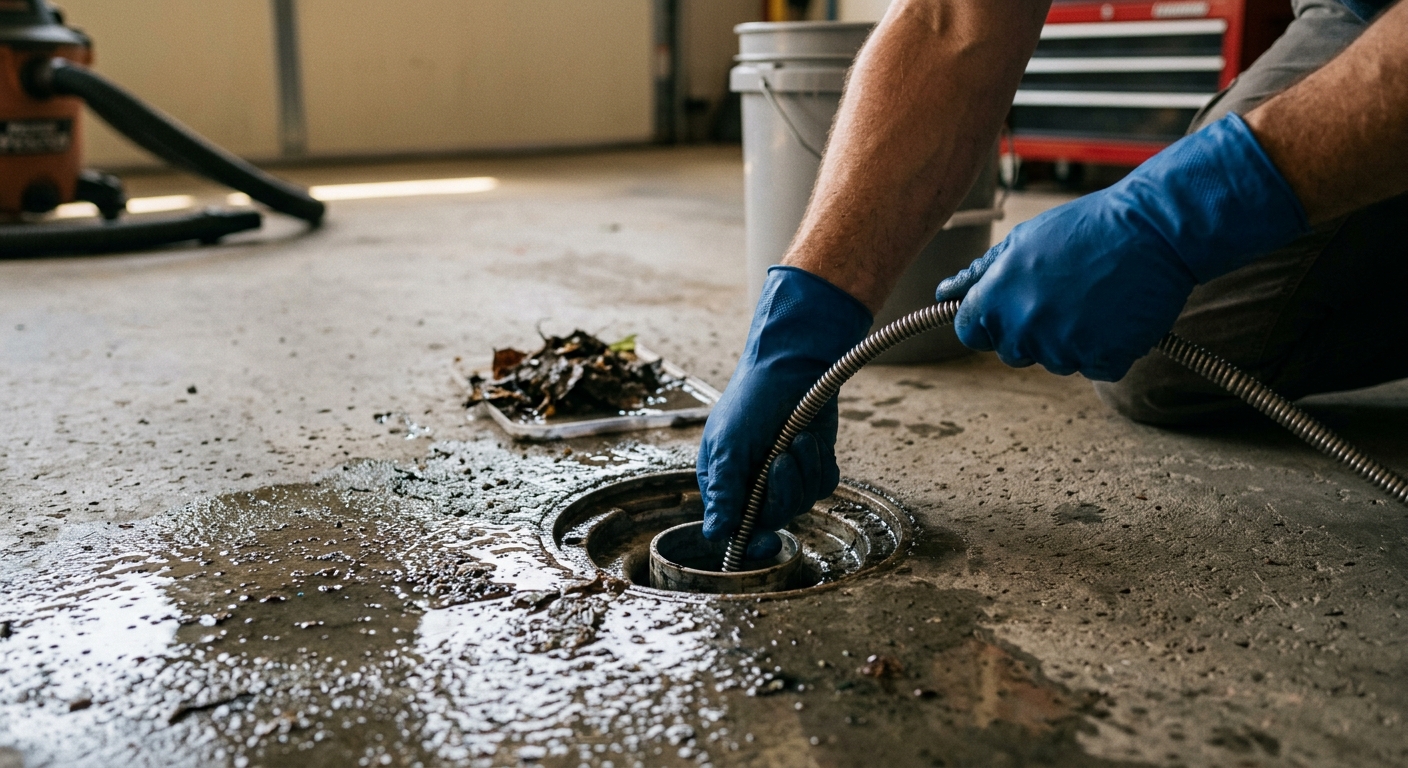
- Rent or purchase a 25-foot hand-crank drain snake from a hardware store ($25 to $50 purchase, $15 to $20 rental per day). Wear rubber gloves and old clothes – this is messy work.
- Remove the drain grate and clean out the top basin as described in the Quick Fix approach. You need a clear opening to feed the snake cable.
- Feed the snake cable slowly into the drain opening, turning the handle clockwise as you push. You will feel resistance when you hit the clog – typically 3 to 15 feet into the line for most garage drains.
- Once you feel resistance, continue rotating the snake to break up or hook the blockage. Push through it, then pull back slowly to extract debris. Repeat 2 to 3 times until the cable moves freely through that zone.
- Pour 2 to 3 gallons of hot water into the drain to flush dislodged material through the line. Confirm water drains completely within 60 seconds.
- Inspect the inside of the drain basin with a flashlight. Look for visible cracks in the pipe, dark staining that suggests root intrusion, or pipe sections that appear misaligned. Photograph anything unusual to share with a plumber if needed.
- Refill the P-trap with water and vegetable oil as described in the Quick Fix, replace the grate, and mark your calendar to re-check flow in 30 days.
- Call a licensed plumber who offers drain camera inspection services. Request a video inspection of the full garage drain line from the floor drain to its connection at the main sewer or drywell.
- Review the camera footage with the technician. Key things to look for: root intrusion, offset pipe joints, collapsed sections, and scale buildup that coating the pipe walls.
- If the issue is sediment or grease buildup without structural damage, hydro-jetting at 3,000 to 4,000 PSI will clear the line completely. This is far more effective than snaking for compacted debris and typically costs $300 to $500.
- If roots are confirmed, ask about root-killing treatment (copper sulfate or foam herbicide) as a maintenance follow-up after jetting, which can extend time between service calls by 1 to 2 years.
- If the camera reveals a collapsed or offset pipe section, get a written repair estimate before winter. Trenchless pipe lining ($80 to $250 per linear foot) is often less disruptive than full excavation and can be completed in one day.
Why It Works: The Benefits
A functioning drain keeps meltwater and rain runoff from pooling on your garage floor. Even 1/2 inch of standing water across a standard 400 sq ft garage is 125 gallons, enough to soak under doors, damage stored belongings, and saturate the slab edge.
Repeated freeze-thaw cycles against a wet foundation can cause cracks that cost $2,000 to $7,000 to repair professionally. Clearing a floor drain today eliminates that moisture source entirely for a fraction of the cost.
Restoring the P-trap water seal blocks hydrogen sulfide and methane from entering your garage, removing that rotten-egg smell that can permeate your home through an attached garage in minutes.
Regular cleaning prevents sediment from hardening into scale inside the pipe. Removing buildup now reduces the chance of a complete pipe blockage that would require hydro-jetting at $300 to $600 per service call.
Emergency plumbing calls in winter often run $200 to $500 above standard rates. Fixing the problem in fall during normal conditions cuts that cost to $0 for a DIY fix or $150 to $300 for a non-emergency plumber visit.
💰 Savings Impact by Action
A clear, functional floor drain eliminates standing water accumulation from meltwater and spills, preventing up to 95% of winter garage flooding events caused by drainage failure.
Removing the pooling water source near the slab edge reduces freeze-thaw moisture pressure on foundation walls by an estimated 80%, cutting long-term crack risk significantly.
Addressing a clog in fall at standard rates instead of as a winter emergency saves 40 to 60% on total plumber costs by avoiding after-hours and peak-demand pricing.
Annual mechanical cleaning removes the sediment and salt scale buildup that accelerates interior pipe corrosion, extending drain line service life by an estimated 30 to 50%.
🏠 Key Concepts Explained
The Science Behind It
Garage floor drains rely entirely on gravity and proper pipe slope to function. Building codes require a minimum pitch of 1/4 inch of drop per foot of horizontal pipe run. At that slope, water moves at roughly 2 feet per second – fast enough to carry suspended sediment and prevent debris from settling inside the pipe. When the slope flattens due to soil settlement or shifted concrete, water slows to a crawl and sediment drops out of suspension, building up layer by layer until flow is fully restricted. This is why older homes with settling foundations experience drain problems that seem to get worse every year even without a discrete clog event.
The P-trap is a critical but often misunderstood component. It holds a standing water column of roughly 2 inches inside a curved pipe section. That water physically blocks sewer gases – primarily hydrogen sulfide and methane – from traveling backward up the drain line and into your garage. In an attached garage, those gases can migrate into your living space within 20 to 30 minutes through gaps around the entry door. The trap works passively as long as the water does not evaporate, which it can do in as little as 3 to 4 weeks in a heated garage during winter when humidity is low. Adding a small amount of vegetable oil to the trap water reduces the evaporation rate significantly because the oil layer floats on top and blocks surface evaporation without interfering with drainage.
During winter, road salt (sodium chloride) carried in on tires and tracked from shoes accelerates pipe corrosion in uncoated iron or steel drain components. Salt lowers the freezing point of water in the drain basin, but it also attacks metal surfaces through electrochemical corrosion. In garages with older cast iron drain collars or grates, this corrosion can create rough pipe interior surfaces that trap debris far more readily than smooth PVC. If your drain grate is pitted or rust-stained, replacing it with a stainless steel or coated cast iron grate ($15 to $40) reduces corrosion-driven buildup over the long term.
Frequently Asked Questions
▼ I snaked the drain and it cleared, but it backed up again two weeks later. What’s happening?
Recurring clogs after snaking almost always indicate either root intrusion or a structural pipe problem like an offset joint or collapsed section. The snake punches through the blockage but does not remove the underlying cause. Schedule a camera inspection before winter – most plumbers charge $100 to $200 for this service – so you know exactly what you are dealing with and can decide between hydro-jetting or pipe repair while conditions are still workable.
▼ My garage drain has never been used and there is a terrible sewer smell. Is something broken?
Probably not broken – the P-trap has simply dried out from disuse, which allows sewer gases to flow freely up through the drain pipe. Pour 1 quart of water with a tablespoon of vegetable oil into the drain to refill the trap and seal it. The smell should disappear within an hour. Going forward, run water into the drain for 30 seconds every 4 to 6 weeks to keep the trap full.
▼ Water is coming up out of the drain when it rains heavily. What does that mean?
Water backing up during heavy rain typically means the garage drain ties into a system that is overwhelmed – either a municipal storm sewer surcharging under pressure, a drywell that is saturated, or a French drain that cannot handle peak flow. This is different from a standard clog and is not fixable by snaking. Contact your municipality to ask whether your storm sewer system was surcharging during that event, and consult a plumber about adding a backflow preventer to the drain line, which costs $150 to $400 installed.
▼ Can I just cap off or cover my garage floor drain if I never use it?
You can install a removable drain plug or cover, but permanently capping a garage floor drain is not recommended and may violate local building codes. More practically, if water ever enters your garage from any source – a burst hose bib, heavy rain through an open door, or an appliance leak – a capped drain means no escape route and potential flooding. A better approach is to keep the drain functional and use an inexpensive strainer to reduce maintenance frequency.
▼ What if my garage does not have a floor drain at all?
Many garages, particularly in older homes, were built without floor drains. In this case, focus on preventing water from entering rather than draining it out: install a quality garage door threshold seal ($20 to $40), keep a floor squeegee handy to push meltwater out the door quickly, and consider adding a portable wet-dry vacuum for larger water events. If you want to add a drain, expect to pay $500 to $1,500 for a plumber to core the slab and install a proper drain and trap connection.
Quick Tips
- Mark the location of your garage drain shutoff or cleanout access on a simple hand-drawn floor plan and tape it inside a cabinet door – this saves significant time for a plumber in an emergency.
- If your garage floor slopes away from the drain, small concrete resurfacing with a floor leveling compound ($25 to $60 per bag) can redirect water back toward the drain without a full slab replacement.
- Install a stainless steel drain strainer insert ($8 to $15) inside the grate opening each fall to catch leaves, grit, and debris before it enters the pipe. Clean it monthly.
- Test your drain before the first freeze by running a garden hose into it for 60 seconds. If water pools for more than 30 seconds after you stop the hose, the line has a partial blockage worth addressing now rather than in January.
Variations for Your Situation
- Detached Garage or Workshop: If your garage drain connects to a drywell or French drain rather than the municipal sewer, avoid all chemical treatments including enzyme cleaners, baking soda, and vinegar. These alter soil pH and damage the biological activity that allows the drywell to absorb water. Stick to mechanical cleaning only and budget for drywell inspection ($100 to $200) if flow does not improve after snaking.
- Tight Budget (under $30): Focus on the Quick Fix approach using only items you likely already own: hot water, a flathead screwdriver, and a wire coat hanger straightened into a probe to pull debris from the basin. A $10 bottle of enzyme drain cleaner and a $5 replacement drain strainer are the only purchases needed to meaningfully improve drain performance through winter without spending more.
- Older Home (pre-1980): Homes built before 1980 often have cast iron or clay tile drain lines that are more vulnerable to corrosion, root intrusion, and joint offset. Aggressive snaking can dislodge fragile joints in these pipes and turn a partial blockage into a broken pipe. Use the snake gently and stop if you feel grating or grinding rather than a soft clog resistance. A camera inspection is strongly recommended before attempting any aggressive mechanical clearing in a home of this age.