You set up your window air conditioner expecting cool, comfortable air – not a puddle on your windowsill or floor. Indoor dripping is one of the most common complaints homeowners have about window units, and the good news is that it rarely means your AC is dying. In most cases, the fix takes less than 30 minutes and costs nothing at all.
Window ACs remove humidity from your room as part of the cooling process. That moisture has to go somewhere, and it is designed to drain outside. When something disrupts that path – a slight backward tilt, a blocked drain hole, or ice buildup on the coils – water finds its way into your home instead. Left unchecked, this can warp window frames, encourage mold growth, and shorten the life of the unit.
This guide breaks down exactly why indoor dripping happens, how to diagnose which issue you have, and how to fix it yourself at no cost or low cost. You will also find tips for preventing the problem from coming back next cooling season.
What You’ll Need
Click on an item below to shop for the recommended items for this recipe on Amazon.
As an Amazon Associate, we earn from qualifying purchases.
How to Do It
- Turn off and unplug the window unit before doing anything else.
- Place a level across the top of the unit left to right first – it should be level side to side. Then check front to back. The back of the unit should sit 1/4 to 1/2 inch lower than the front. If it is level or tilted inward, the water cannot drain out.
- Adjust the tilt by shimming the exterior support bracket or adding a thin piece of wood under the front edge of the unit inside the window frame until the correct slope is achieved.
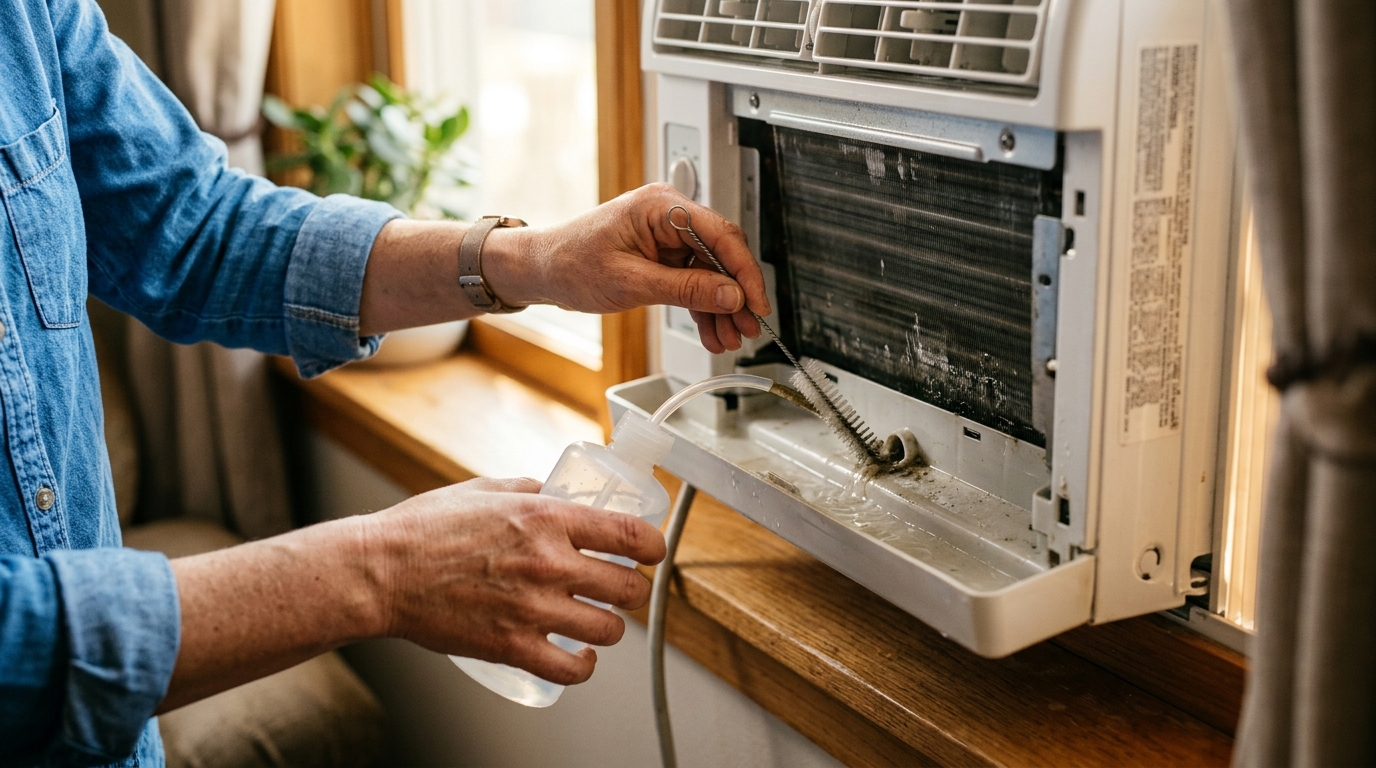
- With the unit still unplugged, locate the drain hole or drain port on the bottom rear exterior of the unit. Insert a pipe cleaner, straightened wire hanger, or a thin bottle brush to clear any debris or algae buildup blocking the hole.
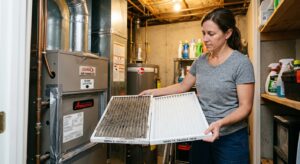
- Remove the front filter panel, pull out the air filter, and rinse it under warm water. A clogged filter is the top cause of coil freezing, which leads to excessive meltwater. Let it dry fully before reinstalling.
- Plug the unit back in, run it for 30 minutes, and check both inside and outside to confirm water is now dripping from the back exterior only.
- Unplug the unit and, if possible, remove it from the window and place it on a workbench or outdoors for easier access.
- Remove the outer casing by unscrewing the screws along the back and sides – typically 6 to 10 Phillips screws. Set the casing aside carefully.
- Inspect the evaporator coil (the front set of fins behind the filter) for ice or frost. If you see ice, the unit must be left off and unplugged for 2 to 4 hours until fully thawed before continuing. Running a frozen unit causes compressor damage.
- Once thawed, use a coil fin comb or soft brush to gently straighten any bent fins and remove dust buildup. Spray the coil with a no-rinse evaporator coil cleaner (available at hardware stores for $10 to $18) and allow it to drip into the drain pan below.
- Clean the drain pan thoroughly using a mixture of warm water and a tablespoon of bleach. Flush the drain port from above with a squeeze bottle to ensure it flows freely. Check that the pan sits flat and shows no cracks. A cracked pan can be sealed temporarily with waterproof silicone sealant.
- Reassemble the casing, reinstall the unit with the correct 1/4 to 1/2 inch outward tilt, and run the unit for a full hour. Monitor for any remaining indoor dripping. If the coil freezes again within a day, the refrigerant charge may be low and the unit needs professional service.
- If the coil freezes within 24 to 48 hours after you have cleaned the filter and confirmed correct tilt, schedule an HVAC technician visit. Repeated freezing on a clean unit almost always indicates low refrigerant, which requires an EPA-certified technician to diagnose and recharge.
- Ask the technician to check the refrigerant charge using manifold gauges and inspect the evaporator coil for leaks. A slow refrigerant leak will cause the coil to run abnormally cold, ice over, and flood the drain pan repeatedly.
- If the drain pan is cracked in multiple places or the plastic is warped, ask the technician or contact the manufacturer about a replacement pan. For units under warranty, this may be covered. For older units, weigh the pan replacement cost ($30 to $60 for the part) against the cost of a new unit.
- Request that the technician verify the unit’s BTU output matches the room size. An oversized unit short-cycles, never fully dehumidifying the air, which can contribute to excessive condensate and intermittent drainage problems.
Why It Works: The Benefits
Indoor dripping can saturate window frames, drywall, and flooring in a matter of days. Fixing the issue immediately avoids repairs that commonly run $150 to $400 for minor water damage and significantly more if mold develops.
A frozen coil or restricted airflow reduces cooling output by 20 to 30%, meaning the unit runs longer and uses more electricity to reach the same setpoint. Fixing the root cause brings efficiency back to rated levels.
Chronic ice buildup and standing water in the drain pan corrode the unit’s internal components. Proper drainage and airflow can add 2 to 4 years to a window AC that might otherwise fail from compressor stress.
When the drain system works correctly, the unit removes moisture efficiently and exhausts it outside. A dripping unit often signals reduced dehumidification, leaving your space feeling warmer and clammier than the thermostat suggests.
Persistent indoor moisture from a leaking unit creates conditions where mold can establish within 24 to 48 hours on organic surfaces like wood or drywall. Correcting drainage eliminates this health risk without any additional remediation cost.
💰 Savings Impact by Action
A clean, ice-free evaporator coil delivers up to 25% more cooling output per kilowatt-hour than a frosted or dirty coil running under the same conditions.
Cleaning a clogged window AC filter restores airflow and reduces electricity consumption by 5 to 15% according to DOE data on restricted-airflow cooling systems.
Correcting indoor dripping immediately avoids water damage repair costs that average $150 to $400 for minor cases, making this a 100% cost-avoidance measure.
Regular drain and coil maintenance reduces compressor stress and can extend window unit lifespan by 30%, deferring a $150 to $600 replacement purchase.
🏠 Key Concepts Explained
The Science Behind It
Window air conditioners cool your room by pulling warm indoor air across a very cold evaporator coil filled with refrigerant. As warm humid air contacts the coil surface (which runs between 35 and 50°F during normal operation), moisture in the air condenses on the fins just like water beads on a cold glass on a summer day. This is actually useful: the unit is dehumidifying your air at the same time it cools it. Under normal conditions, this condensate drips into a collection pan beneath the coil and drains out through a small port at the back of the unit, where it either drips outside or gets flung onto the condenser coil to help cool it.
When airflow is restricted by a dirty filter, the evaporator coil temperature drops below 32°F because the refrigerant is absorbing less heat than intended. The moisture that condenses on the coil freezes instead of dripping away. Ice accumulates over hours until an inch or more builds up, blocking airflow further and compounding the problem. When the unit cycles off or you notice the problem and shut it down, all of that ice melts at once – producing far more water than the drain system can move quickly. The result is overflow into the room. Restoring proper airflow by cleaning the filter keeps the coil above freezing and the condensate rate manageable.
The tilt angle matters because water follows gravity. The drain pan is not pressurized – it relies entirely on a slight downward slope to guide water toward the drain port at the back exterior. Most manufacturers specify a 1/4 to 1/2 inch drop over the depth of the unit (roughly 14 to 18 inches). At that angle, surface tension and gravity reliably move water to the exit point. A perfectly level unit leaves water sitting in the center of the pan. A unit tilted even slightly inward sends all of that water toward the front, where it drips onto your windowsill, wall, or floor. This is why tilt is the first thing to check – it is free to fix and accounts for a large share of all indoor dripping complaints.
Frequently Asked Questions
▼ I fixed the tilt but my window AC is still dripping inside. What else should I check?
Check the drain pan for cracks by pouring a small amount of water into it and watching for leaks at the seams or bottom. Also inspect whether the drain hole is truly clear by pouring water directly into the pan – it should drain within 60 seconds. If the pan holds water but the drain is clear and tilt is correct, the coil may be icing due to low refrigerant, which requires a technician.
▼ Why does my window unit only drip inside on the most humid days?
High outdoor humidity dramatically increases the condensate load – your unit may produce two to three times more water on an 85% humidity day than on a dry day. A drain system that barely keeps up on average days gets overwhelmed on peak days. Clear the drain port thoroughly, confirm correct tilt, and check that the filter is clean so the unit can move maximum airflow and keep up with heavier moisture loads.
▼ Can I use my window AC while the coil is partially frozen?
No. Running a unit with a frozen coil forces the compressor to work against restricted airflow, which overheats the compressor motor and can cause permanent failure in as little as a few hours. Turn the unit off, switch to fan-only mode if available to help thaw the coil faster, and wait until all ice is melted before restarting. Identify and fix the cause – almost always a dirty filter – before running it again.
▼ My window unit is only a year old. Why is it already dripping inside?
New units drip inside most often because of installation tilt rather than maintenance issues. The unit may have been installed level or with a slight inward tilt that was not obvious at the time. Check the slope first – even a 1/4 inch correction can stop the dripping immediately. Also check whether the unit was installed with a tight foam seal around it, since large air gaps let in extra humid air that increases condensate volume.
▼ Is the water dripping inside harmful to my health?
The water itself is clean condensate, but if it sits on wood, drywall, or carpet, mold can begin growing within 24 to 48 hours. Wipe up any standing water immediately and allow the area to dry completely. If water has been dripping for more than a few days, inspect the windowsill and surrounding wall for soft spots or discoloration that could indicate mold. A dehumidifier in the room can help dry out materials while you work on the fix.
Quick Tips
- Clean or replace the air filter every 2 to 4 weeks during heavy cooling season – this single habit prevents the majority of coil-freezing events.
- At the start of each season, pour a cup of water into the drain pan with the unit off to confirm the drain port is clear before you need it.
- Use a window AC foam seal kit ($8 to $15) to close gaps around the unit. This reduces humidity load and the volume of condensate the unit must handle on peak days.
- If your unit has a ‘fan only’ mode, running it for 30 minutes after you turn off the cooling gives the coil time to warm up and any remaining condensate to drain before you shut down for the night.
Variations for Your Situation
- Apartment/Rental: Renters can address tilt, filter cleaning, and drain clearing without any modifications to the unit or window frame. For tilt adjustment, a small rubber door stop or folded cardboard shim placed under the front interior edge of the unit works without tools or drilling. Report persistent dripping to your landlord in writing since water damage to the building is a maintenance issue the landlord is responsible for addressing.
- Tight Budget (under $50): The no-cost fixes – correcting tilt and clearing the drain with a wire hanger – resolve most cases for free. A replacement foam filter ($5 to $8) and a bottle of no-rinse coil cleaner ($10 to $18) cover the full DIY cleaning approach. Skip the professional visit unless the coil freezes repeatedly after cleaning, since that signals a refrigerant problem that may cost more to fix than an older unit is worth.
- Older Home (pre-1980): Older window frames are often out of square and may not provide a flat, level surface for the unit, making tilt correction harder to maintain. Use a longer exterior support bracket and add a secondary shim point inside the frame to stabilize the slope. Also check the window frame itself for rot or soft wood – a deteriorating frame can shift the unit’s tilt seasonally as the wood expands and contracts.