You know the room. Everyone in the house does. It’s the bedroom at the end of the hall, the sunroom addition, or the basement office that stays 5 to 10 degrees colder than the rest of the house no matter what you do. You pile on blankets, you crank the thermostat to 72°F and the living room becomes a sauna while that one room still hovers at 63°F. Meanwhile your furnace runs longer, your energy bill climbs, and the problem never actually gets solved.
The frustrating truth is that cold rooms are almost never about furnace capacity. They’re about delivery, leakage, and heat loss working against you simultaneously. A duct that’s 30% blocked, a window with failed weatherstripping, or a poorly insulated exterior wall can each rob a room of the heat your system is already producing and paying for. Fixing those root causes costs far less than a new HVAC system and often pays back within a single heating season.
This guide walks you through diagnosing exactly why your room is cold and then solving it, from free fixes you can do in the next 20 minutes to a proper DIY upgrade that typically runs $50 to $200. You’ll find real numbers, specific product types, and a clear path from freezing to comfortable – without replacing your entire heating system.
What You’ll Need
Click on an item below to shop for the recommended items for this recipe on Amazon.
As an Amazon Associate, we earn from qualifying purchases.
How to Do It
- Check every supply and return register in the cold room. Make sure supply registers (blowing air) are fully open and not blocked by furniture, rugs, or drapes. A sofa sitting 2 inches from a floor register can block up to 70% of airflow.
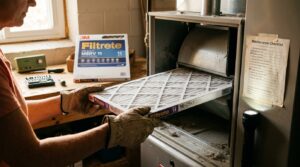
- Go to your furnace and check the air filter. A clogged filter is the single most common cause of weak airflow to distant rooms. If it looks gray and dense, replace it – a clean MERV-8 filter restores full system pressure immediately.
- Walk the ductwork path to the cold room if accessible (basement or crawlspace). Look for flex duct that is kinked, sagging, or crimped. A 90-degree kink in flex duct reduces airflow by up to 50%. Straighten and support any sagging sections with duct strap.
- Hold your hand near the base of exterior walls, window frames, and electrical outlets in the cold room. Feel for cold air drafts. Mark any drafty spots with tape so you remember them for sealing.
- Verify that dampers in the ductwork are open for the cold room’s branch. Some systems have manual balancing dampers – a wing-nut style lever inside the duct at the takeoff point. If it’s turned perpendicular to airflow, the room is intentionally starved of heat and just needs to be opened.
- Close registers in the 2 to 3 nearest, warmest rooms by about 25% to redirect more system pressure toward the cold room. Do not fully close any register, as this increases static pressure and can overheat the heat exchanger.
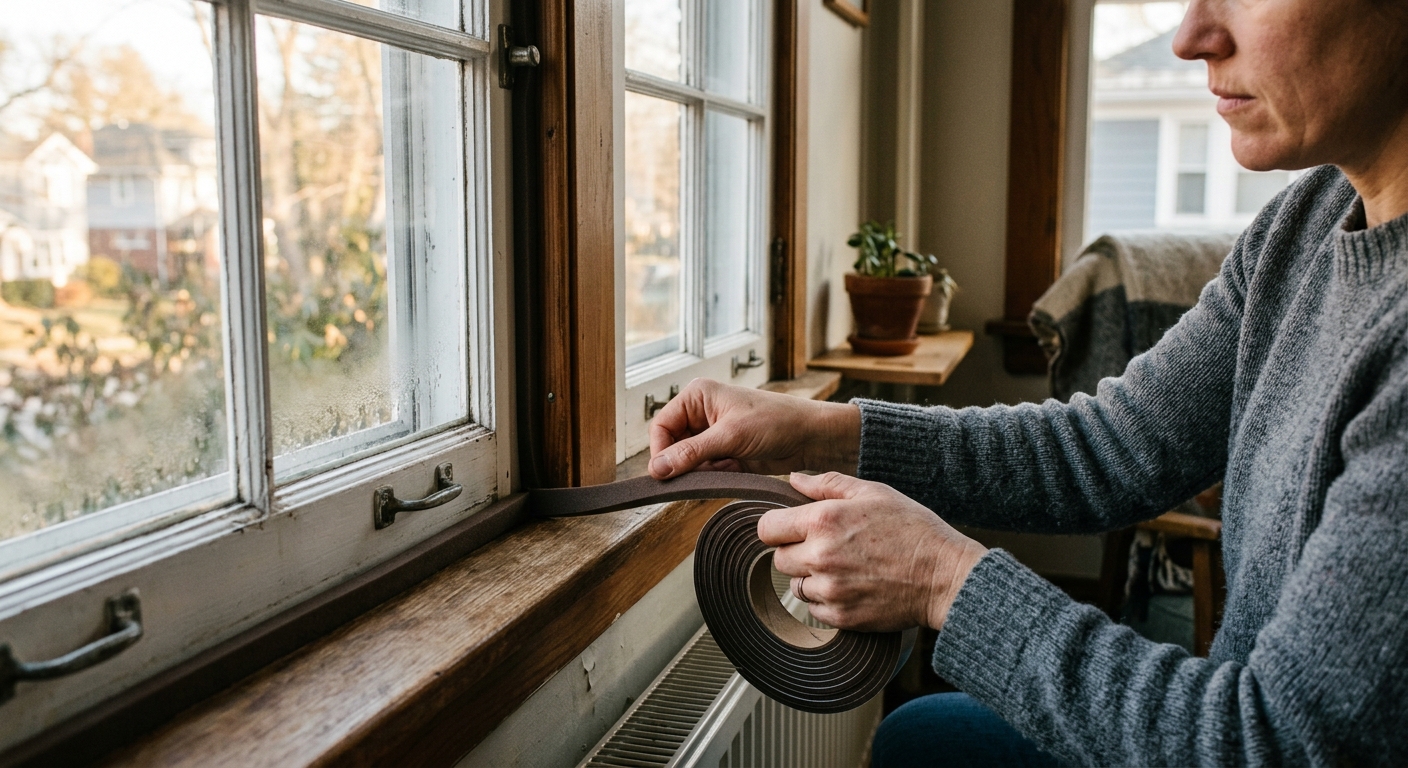
- Seal window and door frames with V-strip weatherstripping on the sides and a door sweep or door bottom seal on any exterior door. A $12 roll of V-strip weatherstripping seals a full window in 15 minutes and can reduce infiltration through that opening by 70 to 90%.
- Caulk interior gaps where the baseboard meets the floor and where window trim meets the wall on exterior walls. Use paintable latex caulk for interior surfaces. These thin gaps are primary cold-air entry points driven by the stack effect.
- Install foam gaskets behind all electrical outlet and switch covers on exterior walls. These $5 packs of pre-cut foam gaskets take 2 minutes per outlet and can meaningfully reduce cold air infiltration – outlets on exterior walls are responsible for a surprising share of winter drafts.
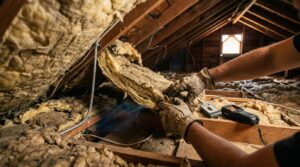
- If the room is above an unheated crawlspace or garage, add insulation to the floor cavity from below. Rigid foam board cut to fit between joists and secured with insulation supports is a DIY-friendly approach that can bring floor temperature up by 8 to 12 degrees in severe cases. Aim for R-19 to R-30 in floor assemblies.
- Install an in-line duct booster fan if airflow is still weak after clearing obstructions. These inline fans ($30 to $80) install inside the existing duct run to the cold room and increase airflow velocity by 50 to 100 CFM. Choose a model with an automatic thermostat so it runs only when the furnace is running.
- Add a thermal curtain or insulated cellular shade to large windows if replacing glazing is not in the budget. A good cellular shade adds roughly R-3 to R-5 to a single-pane window and can reduce radiant heat loss from that surface by up to 40%.
- Schedule a Manual J load calculation and duct performance test with a certified HVAC contractor or building performance specialist. This identifies whether the room is genuinely undersupplied, and by exactly how much, using actual airflow measurements in CFM.
- Have the contractor perform a duct blaster or blower door test to quantify air leakage in the room’s envelope and duct system. This takes the guesswork out of sealing and tells you precisely where your heat is going.
- Request professional duct sealing with Aeroseal or mastic if duct leakage is found to be above 15%. Aeroseal seals leaks from the inside and can reduce duct leakage by up to 90%, often adding 3 to 5 degrees to the coldest rooms in the house.
- If the room has no return air register, ask the contractor to add one. A room without a return path builds positive pressure when the system runs, which actually prevents warm air from entering. This is an extremely common and overlooked cause of persistent cold rooms.
- Consider a ductless mini-split for a room that is a detached addition, has no duct access, or sits at the far end of a long duct run. A 6,000 to 9,000 BTU mini-split costs $1,500 to $3,500 installed but eliminates the problem permanently with heating efficiency ratings of 300 to 400% (COP 3 to 4).
Why It Works: The Benefits
Correcting duct flow and sealing envelope leaks typically brings a chronically cold room to within 2 to 3 degrees of the thermostat setpoint, eliminating the uncomfortable temperature swing that forces you to overheat the rest of the house.
When you stop overheating the rest of the house to compensate for one cold room, thermostat setpoint can drop by 2 to 4 degrees, saving roughly 6 to 12% on your heating bill – about $60 to $150 per year in a typical home.
Fixing delivery and envelope issues means the furnace reaches setpoint faster and cycles off sooner. Shorter, more efficient cycles reduce wear on the heat exchanger and blower motor, extending equipment life by several years.
Cold surfaces cause moisture in warm air to condense, leading to window sweating, musty smells, and potential mold growth. Warming the room surfaces eliminates condensation points and brings relative humidity into the healthy 35 to 50% range.
Most cold-room fixes require no new HVAC equipment. A $15 duct booster fan or $30 in weatherstripping can deliver noticeable improvement within the same day, with zero permits and no contractor required.
💰 Savings Impact by Action
Sealing leaky ductwork in unconditioned spaces reduces heat lost before it reaches the room by up to 25%, directly increasing supply air temperature at the register.
Sealing infiltration gaps around windows, outlets, and baseboards reduces heating load in the affected room by 10 to 20% by eliminating cold air entry.
Adding floor or wall insulation to R-19 or better reduces conductive heat loss through the building envelope by up to 20%, raising surface temperatures and reducing furnace runtime.
Correcting register obstructions and duct restrictions restores proper CFM delivery, reducing the whole-house thermostat setpoint needed by 2 to 4 degrees and saving roughly 6 to 12% on heating bills.
Adding insulated cellular shades or window film reduces radiant heat loss through glazing by up to 40%, cutting window-related heat loss that accounts for 10 to 25% of total home heating load.
🏠 Key Concepts Explained
The Science Behind It
Cold rooms are almost always a systems problem, not a single-cause problem. Heat gets to your room through convection (warm air delivered by ducts), conduction (heat moving through walls and floors), and radiation (warmth emitted by surfaces). When any one of those three paths is compromised, the room loses the battle. Most homes with a chronically cold room have at least two of the three working against them at the same time.
The physics of forced-air delivery is particularly unforgiving for rooms at the end of long duct runs. Air pressure drops as the duct extends further from the air handler, following basic fluid dynamics. A room 40 feet from the furnace receives measurably lower static pressure than a room 10 feet away, even with identical duct sizing. Add a single 90-degree elbow, a partially kinked flex duct, or a slightly undersized register, and that pressure drop compounds. The DOE estimates that in a typical home, 20 to 30% of heating energy is lost through duct leakage and poor duct routing before it ever reaches the living space.
Radiant comfort is the piece most homeowners miss entirely. ASHRAE research shows that perceived comfort temperature is a function of both air temperature and mean radiant temperature, which is the average surface temperature of surrounding walls, floors, and ceilings. A room with a large single-pane window or an uninsulated exterior wall on a cold night can have a mean radiant temperature 8 to 12 degrees below air temperature. That means you need to heat the air to 74°F to feel as comfortable as you would in a well-insulated room at 68°F, a difference that adds up quickly on your energy bill. Insulating surfaces and sealing infiltration raises the radiant temperature of the room envelope, making the space feel warmer without any change to the thermostat setpoint.
Frequently Asked Questions
▼ Why is one room always colder than the rest of the house no matter what I do?
The most common culprits are a missing or undersized return air register (which prevents warm air from entering), a duct that is disconnected or severely leaking in an unconditioned space, or an exterior wall with little to no insulation. Start by checking whether the room has a return vent at all – a room with only a supply register and no return path builds up pressure that literally pushes the furnace’s warm air back into the duct system. If the room has both supply and return vents and airflow seems reasonable, the problem is likely envelope-related and requires air sealing and insulation.
▼ Can I use a space heater instead of fixing the ductwork?
A space heater solves the symptom but not the problem, and it costs more to run than you might expect. A 1,500-watt electric space heater running 8 hours a day costs roughly $40 to $60 per month at average US electricity rates. That same money invested in weatherstripping and duct sealing would solve the problem permanently at a lower total cost within one to two heating seasons. Use a space heater as a short-term bridge while you implement the real fix, not as a long-term solution.
▼ My room gets warm during the day but is freezing at night. What causes that?
This pattern points strongly to envelope leakage and low thermal mass rather than a duct problem. During the day, solar gain through windows adds passive heat. At night, outside temperatures drop further, infiltration increases as the stack effect strengthens, and without solar input the room’s weak insulation can’t retain heat. The fix is sealing air leaks at the window frames and baseboards, adding insulation to the coldest wall or floor, and considering insulated window coverings that you close at sunset to trap daytime solar heat inside.
▼ I installed a duct booster fan but the room is still cold. What am I missing?
A duct booster fan helps only if there is actually a flow restriction in the duct. If the duct itself is leaking in an unconditioned space, a booster fan just blows more warm air into the attic or crawlspace. Check whether the duct run to the room is sealed and insulated. Also verify the booster fan is installed in the correct flow direction and is wired to activate only when the furnace blower is running. If ductwork is intact and flowing, the issue is almost certainly envelope heat loss – insulation and air sealing will deliver more improvement than increasing air supply.
▼ How do I know if my cold room needs more insulation or just better airflow?
Do the touch test: on a cold day with the heating system running, feel the interior surface of the exterior walls and the floor. If they feel noticeably cold to the touch, insulation is the primary issue. If the walls feel reasonably warm but the room still does not heat up, airflow delivery is the problem. You can also hold your hand at the supply register – if airflow feels weak or the air coming out is lukewarm rather than warm, follow the duct path and look for kinks, disconnections, or a clogged filter before adding insulation.
Quick Tips
- Run a ceiling fan on its lowest speed in reverse (clockwise in winter) to push the warm air layer near the ceiling back down to floor level, adding 2 to 4 degrees of perceived warmth at body height.
- If you use a portable space heater as a temporary fix, place it near the interior door aimed into the room rather than against the exterior wall – this circulates warm air more effectively than heating the cold wall directly.
- Heavy rugs on cold floors provide both thermal resistance and comfort – an area rug over a cold slab or crawlspace floor can feel 10 to 15 degrees warmer underfoot and meaningfully reduces the radiant heat loss your body experiences.
- Check that your furnace is producing adequate supply air temperature. Hold a thermometer at a supply register while the furnace is running – you should see 120°F to 140°F. If output is below 110°F, the furnace may need servicing regardless of other fixes you make.
Variations for Your Situation
- Apartment/Rental: Renters cannot modify ductwork or add insulation, but several high-impact steps require no landlord permission. Draft snakes along door bottoms, removable window insulation film (which adds R-2 to R-3 and peels off cleanly), foam outlet gaskets, and heavy thermal curtains are all renter-safe options costing $30 to $80 total. A small ceramic space heater with a thermostat ($25 to $50) is the most practical supplemental heat source; look for models with an auto-shutoff. Document the cold room with a thermometer and photos, then formally request that the landlord inspect and repair ductwork or weatherstripping – in many states this is a habitability issue.
- Tight Budget (under $50): Focus on the three highest-return free and low-cost steps in order. First, open all supply registers fully and move any furniture blocking them – cost is zero, impact is immediate. Second, replace the furnace filter if it is more than 90 days old ($8 to $15). Third, use V-strip weatherstripping on the worst window ($10 to $15) and foam gaskets on exterior wall outlets ($5). These three steps address the most common causes of cold rooms and together cost under $30, typically delivering 3 to 6 degrees of improvement in moderately leaky homes.
- Older Home (pre-1980): Homes built before 1980 typically have little to no wall insulation, single-pane or early double-pane windows, and ductwork that was never sealed. Infiltration rates can be 3 to 5 times higher than a modern home. In these homes, start with a professional blower door test ($200 to $400) to identify the worst leakage points before spending money on materials. Attic air sealing is often the single highest-return project, reducing stack-effect-driven cold air infiltration on the entire first floor. Budget $500 to $1,500 for a contractor to air seal and insulate the attic floor, which typically pays back within 2 to 3 heating seasons in cold climates.