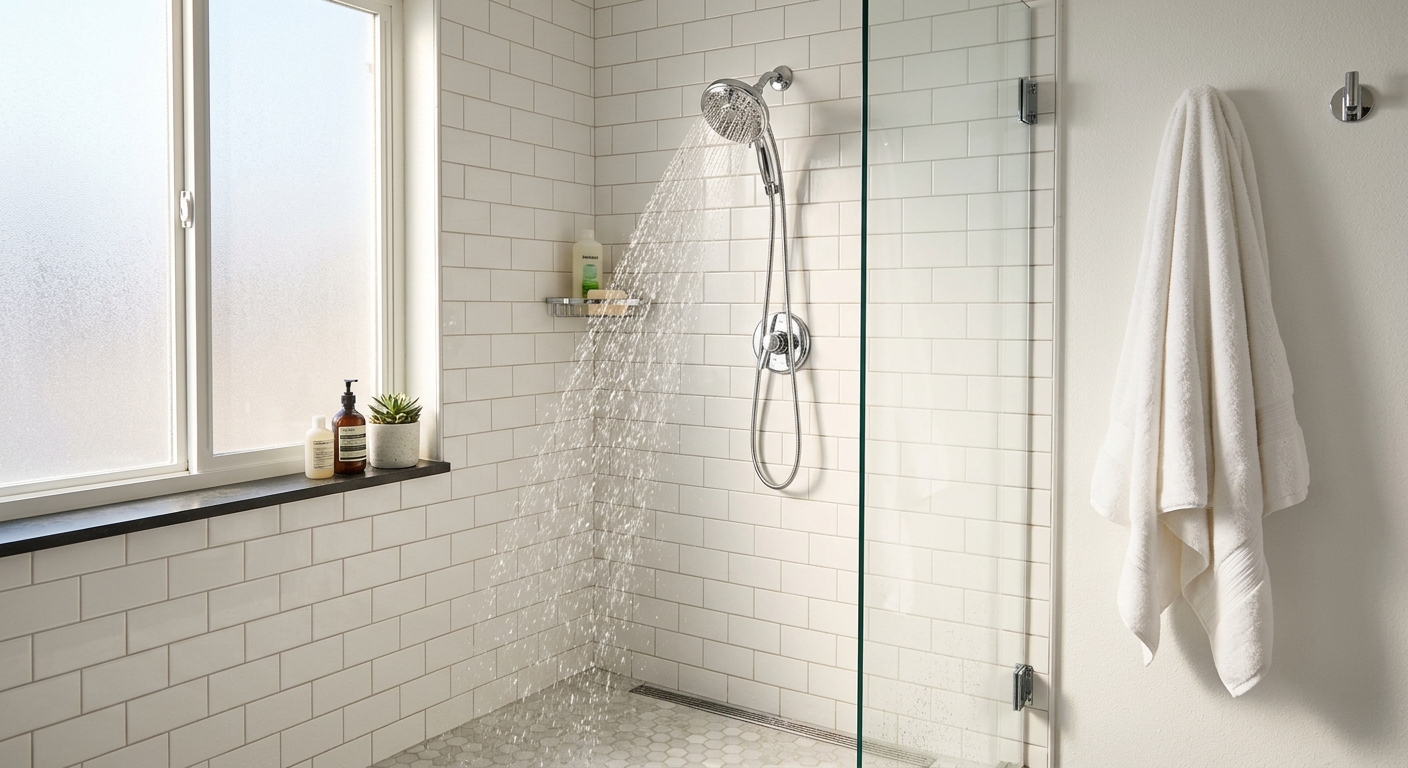
If you’re looking for the single easiest upgrade that pays back in months rather than years, look no further than your showerhead. The average American household spends about $400 to $600 per year heating water, and showers alone account for nearly 17% of all indoor water use. An older showerhead can dump 2.5 gallons per minute or more down the drain. A modern WaterSense-certified model uses 1.8 GPM or less, and many high-quality options perform at 1.5 GPM without feeling weak or restrictive.
The math here is compelling. A family of four, each taking a 10-minute shower daily, burns through roughly 36,500 gallons of hot water per year with a standard 2.5 GPM head. Drop that to 1.8 GPM and you save over 10,000 gallons annually. That translates directly to less energy your water heater has to burn, whether it runs on gas, electric, or propane. Most households recoup the $10 to $30 cost of a quality low-flow showerhead within 2 to 3 months.
In this post, you’ll learn exactly which showerheads to buy, how to install one without a plumber in about 15 minutes, and how to get the most savings out of the swap. Whether you’re a renter or an owner, on a tight budget or ready to upgrade your whole master bath, there’s an approach here that works for your situation.
What You’ll Need
Click on an item below to shop for the recommended items for this recipe on Amazon.
As an Amazon Associate, we earn from qualifying purchases.
How to Do It
- Purchase a WaterSense-certified showerhead rated at 1.8 GPM or less. Look for the EPA WaterSense label on the packaging.
- Turn off the shower and dry the pipe stub coming out of the wall. No need to shut off the main water supply for this job.
- Unscrew the existing showerhead by hand or with an adjustable wrench, turning counterclockwise. Wrap the wrench jaws with a cloth to avoid scratching the finish.
- Clean the threaded pipe end with a dry rag to remove old plumber’s tape and mineral buildup.
- Wrap the threads 2 to 3 times clockwise with new PTFE (plumber’s) tape to ensure a watertight seal.
- Hand-tighten the new showerhead onto the threads, then snug it one quarter turn with the wrench. Turn on the water and check for leaks at the connection.
- Purchase a handheld showerhead combo kit rated at 1.8 GPM or less with a slide bar, hose, and wall bracket. Delta, Moen, and Waterpik all offer solid options in this range.
- Remove the existing showerhead as described in the Quick Swap approach.
- Install the new wall-mount diverter or bracket fitting onto the shower arm using PTFE tape and hand-tightening plus a quarter turn with a wrench.
- If the kit includes a separate slide bar, hold it against the wall to mark anchor points, then drill into tile or surround using a masonry bit. Insert wall anchors and screw the bar in place.
- Attach the hose to the bracket fitting and connect the handheld head to the other end of the hose. Hand-tighten both connections.
- Turn the water on and test both the fixed spray (if included) and handheld positions. Check all connection points for drips and snug any that leak.
- Choose a thermostatic shower valve kit with a WaterSense-rated showerhead. Kohler, Moen, and Grohe offer reliable thermostatic kits in the $150 to $350 range.
- Shut off the hot and cold water supply lines to the bathroom at the shutoff valves or at the main.
- Open the existing shower valve trim and cartridge following the manufacturer’s instructions. Note pipe locations before removing anything.
- Install the thermostatic valve body into the wall cavity, connecting to existing hot and cold supply lines using SharkBite fittings or soldering as appropriate for your pipe type.
- Set the valve’s maximum temperature limit to 120 degrees Fahrenheit using the built-in adjustment screw to prevent scalding and reduce standby heat demand.
- Install the trim kit, attach the low-flow showerhead to the outlet arm, restore water supply, and test for leaks and temperature accuracy before closing the wall.
Why It Works: The Benefits
Switching from a 2.5 GPM to a 1.8 GPM showerhead reduces hot water consumption by roughly 28%, which can translate to $80 to $200 in annual energy savings for a family of four depending on energy source and local rates.
Beyond energy savings, low-flow showerheads also cut water usage by 10,000 or more gallons per year for a typical family, saving an additional $40 to $100 annually on municipal water and sewer charges.
WaterSense-certified showerheads must meet EPA performance standards for spray coverage and force, so a quality 1.8 GPM model feels just as satisfying as an older 2.5 GPM head to most users.
At a cost of $10 to $30 for a quality low-flow showerhead, most households fully recoup the purchase price within 2 to 4 months, making this one of the highest return-on-investment home efficiency upgrades available.
Reducing the number of heating cycles your water heater runs through each day reduces wear on the heating element or burner, potentially adding years to the unit’s service life and delaying a costly $800 to $1,500 replacement.
💰 Savings Impact by Action
Replacing a 2.5 GPM head with a 1.8 GPM WaterSense model reduces shower hot water use by roughly 28%, cutting related heating costs by 20 to 30% annually.
Reducing average shower time from 12 minutes to 8 minutes saves approximately 14,000 gallons and 20% of shower-related heating energy per year for a family of four.
Lowering your water heater from 140 to 120 degrees Fahrenheit saves 3 to 5% on total water heating costs by reducing standby heat loss from the tank.
Insulating the first 6 feet of hot water pipe from the heater with foam pipe wrap reduces heat loss in transit, saving up to 4% on water heating and delivering hot water faster.
🏠 Key Concepts Explained
The Science Behind It
Water heating works by transferring thermal energy into water through a heating element or burner. The energy required is directly proportional to how much water you heat and by how many degrees. A typical household sets its water heater to 120 degrees Fahrenheit and incoming cold water averages around 55 to 60 degrees, so every gallon of hot water delivered requires energy to raise that water roughly 60 to 65 degrees. Using less water per shower means fewer BTUs burned, plain and simple.
Modern low-flow showerheads maintain perceived pressure through two main technologies. Aerating designs mix air into the water stream, creating a full-feeling spray at reduced volume. Non-aerating or laminar flow designs use precision nozzle geometry to maintain tight, strong streams without introducing air. Both approaches fool your senses into perceiving strong water pressure even though actual flow volume is significantly reduced. This is why flow rate and water pressure are not the same thing – your home’s supply pressure can be 40 to 80 PSI regardless of whether your showerhead uses 1.5 or 2.5 GPM.
The savings compound in an often-overlooked way through tank water heater behavior. A standard 40-gallon electric tank heater runs heating cycles to maintain its set temperature. Every time you draw hot water, cold water enters the bottom of the tank and the thermostat triggers a new heating cycle. Fewer gallons drawn per shower means fewer and shorter recovery cycles, which reduces standby energy consumption beyond just the direct water savings. On a gas water heater, this also means fewer burner ignitions per day, which marginally reduces wear over time.
Frequently Asked Questions
▼ My new low-flow showerhead feels weak or trickles. What’s wrong?
First check your home’s water pressure using an inexpensive gauge attached to an outdoor hose bib. Homes below 40 PSI will feel weak with any low-flow head. If pressure is adequate, remove the showerhead and check for a flow restrictor disc inside the inlet – some models have a removable disc you can adjust or replace with a slightly less restrictive one. Also check for mineral buildup in the nozzles and soak the head in vinegar overnight.
▼ Can renters swap showerheads without landlord permission?
In most cases, yes, because showerheads are classified as removable fixtures rather than structural modifications. Keep the original showerhead and reinstall it before moving out to leave the unit as you found it. Confirm with your lease, but swapping a showerhead is generally considered the same category as changing a light bulb. Many landlords will actually appreciate the water savings since they often pay water bills for multi-unit properties.
▼ How long before I actually see savings on my utility bill?
You should see a measurable reduction within one full billing cycle, typically 30 days. For a family of four, expect to see water volume drop by 8,000 to 12,000 gallons per year and energy bills decrease by $7 to $17 per month. If you’re on a combined water and sewer bill, the savings are often even more visible since sewer charges frequently mirror water consumption.
▼ What if my shower arm threads are corroded or the old head won’t budge?
Spray the joint with penetrating oil like WD-40 and let it sit for 10 to 15 minutes before trying again. Use slip-joint pliers or a pipe wrench with a cloth buffer for more torque. If the arm itself starts to turn inside the wall, stop immediately and do not force it. A broken shower arm behind tile is a plumbing repair costing $150 to $300, so it is worth calling a plumber to stabilize the arm before proceeding with the showerhead swap.
▼ I have a rain-style overhead showerhead. Do low-flow versions exist?
Yes, several manufacturers including Delta, Moen, and Hansgrohe make wide-coverage rain showerheads rated at 1.75 to 2.0 GPM. Look specifically for WaterSense-certified versions, which are tested to confirm adequate coverage and spray performance despite the lower flow rate. Avoid generic no-name rain heads claiming low flow but lacking the WaterSense label, as they often sacrifice coverage quality to hit the number.
Quick Tips
- Set your water heater thermostat to exactly 120 degrees Fahrenheit. Every 10-degree reduction saves 3 to 5% on water heating costs and also reduces scalding risk.
- Install a shower timer or use your phone to keep showers under 8 minutes. Cutting a 12-minute shower to 8 minutes saves as much water as upgrading to a low-flow head.
- If your home has hard water, soak the new showerhead in white vinegar for 30 minutes every 6 months to dissolve mineral deposits and maintain full flow through the nozzles.
- Check your showerhead’s flow rate is printed on the packaging or stamped near the ball joint. Any head rated above 2.0 GPM is a candidate for replacement in most households.
Variations for Your Situation
- Apartment/Rental: Renters should purchase a simple fixed-mount WaterSense showerhead in the $12 to $20 range, keep the original in a labeled bag under the sink, and reinstall it at move-out. No tools beyond an adjustable wrench are needed. Brands like Niagara Conservation’s 1.5 GPM Earth Showerhead are renter-friendly, widely available, and pay back in under 3 months even on a short lease.
- Tight Budget (under $50): The Niagara Conservation 1.5 GPM showerhead retails for around $10 to $12 and consistently earns top marks in consumer tests. Paired with free habits like reducing shower time by 2 minutes and lowering your water heater to 120 degrees, this zero-tool swap delivers close to the same savings as a premium model at a fraction of the cost. Total outlay under $15 with a payback period of 6 to 8 weeks.
- Older Home (pre-1980): Homes built before 1980 often have original 3.0 to 4.0 GPM showerheads still in place, meaning the savings from swapping are even larger than average. However, older galvanized steel shower arms may be corroded and fragile. Apply penetrating oil before removal, work slowly, and have a plumber’s number ready. Replacing an original high-flow head with a 1.5 GPM model in an older home can cut shower-related water heating costs by 40 to 50% rather than the typical 25 to 30%.