Your home feels cold in winter and sweltering in summer, and your energy bills keep climbing. The instinct is to blame the insulation, but there is a good chance you are looking at the wrong problem entirely. Drafts and poor insulation feel similar from the inside but have completely different causes, different fixes, and very different price tags. Treating one when you have the other is one of the most common and costly mistakes homeowners make.
A drafty house has gaps, cracks, and holes in the building envelope where outside air physically enters and conditioned air escapes. A poorly insulated house has intact walls and ceilings but lacks the thermal resistance to slow heat from moving through solid surfaces. Both raise your bills and hurt comfort, but air sealing typically costs a few hundred dollars while a full insulation upgrade can run $2,000 to $8,000 or more. Diagnosing correctly before you spend a dime is the most valuable thing you can do.
In this post you will learn how to identify which problem you actually have using simple tests any homeowner can do, understand the building science behind each issue, and follow a clear action plan that addresses your specific situation, whether that is a quick weekend fix or a planned professional upgrade.
What You’ll Need
Click on an item below to shop for the recommended items for this recipe on Amazon.
As an Amazon Associate, we earn from qualifying purchases.
How to Do It
- Do the incense or hand test on a cold windy day: hold a lit incense stick or your damp hand near suspected leak points, including around electrical outlets on exterior walls, baseboards, window frames, door frames, attic hatches, fireplace dampers, and where pipes or wires enter walls. Smoke movement or a cold feeling confirms air leakage, not an insulation problem.
- Check your attic hatch first. This is the single most overlooked leak in most homes. If the hatch is uninsulated wood or drywall and has no weatherstripping, you have found a major culprit. Add adhesive foam weatherstripping around the perimeter and glue rigid foam board to the back of the hatch door for an instant R-10 improvement.
- Plug electrical outlets on exterior walls with foam outlet gaskets, available in packs of 20 for under $5. Remove the cover plate, press the gasket in, and replace the plate. This takes about 30 seconds per outlet and can seal dozens of small but cumulative leaks.
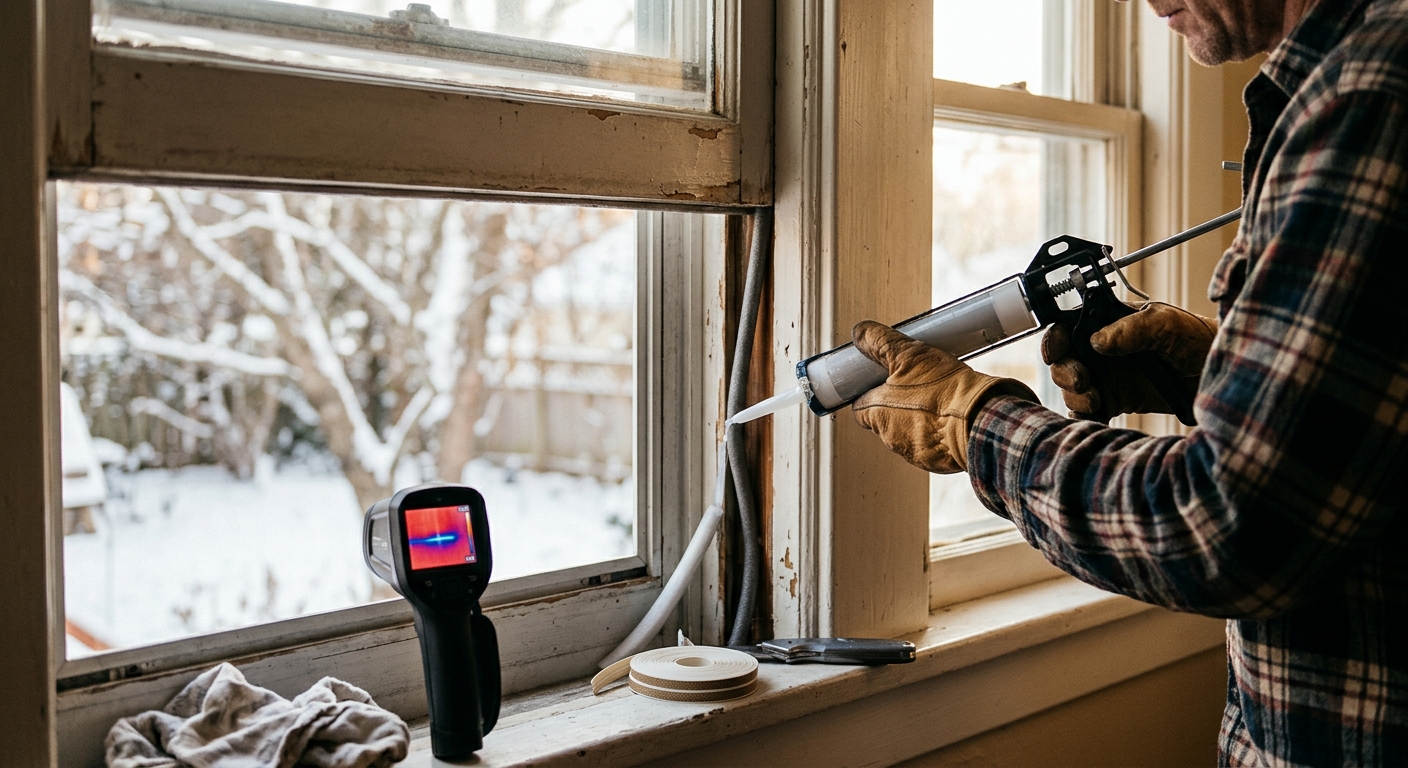
- Apply a bead of paintable caulk around window and door trim where it meets the wall surface, and around any pipe or wire penetrations visible in unfinished spaces like basements or garages. One tube of caulk costs about $5 and covers 20 to 30 linear feet.
- After sealing, repeat the incense test to confirm the leaks are closed. Record which spots still show movement so you can prioritize the next round of work or communicate clearly with a contractor.
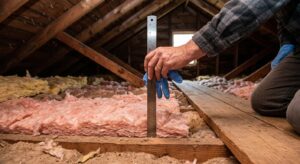
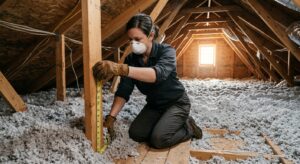
- Measure your attic insulation depth with a ruler or tape measure. The DOE recommends R-38 to R-60 in most U.S. climate zones. Fiberglass batts settle to roughly 1 inch per R-3, so 4 inches of old fiberglass is only about R-12, well below the minimum. If your insulation is under 10 inches, adding more is cost-effective with a payback of 2 to 4 years.
- Seal attic bypasses before adding insulation. Use a can of low-expansion spray foam to seal around every wire, pipe, recessed light housing, and top plate gap you can access from the attic floor. These bypasses allow warm air to bypass insulation entirely, making your R-value nearly meaningless above those spots. This step alone improves effective attic performance by 20 to 30%.
- Assess wall insulation using an inexpensive thermal leak detector or an infrared thermometer pointed at interior wall surfaces on a cold day. A well-insulated wall should read within 3 to 4 degrees Fahrenheit of room temperature. A wall reading 10 or more degrees colder than room temperature in the center (not near windows or outlets) suggests a true insulation gap, not just air leakage.
- Install door sweeps on all exterior doors where daylight is visible at the bottom gap. A quality door sweep costs $15 to $30 per door and eliminates one of the largest single-point air leaks in most homes. Compression-style sweeps outperform simple brush types and last 5 to 10 years.
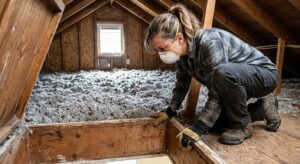
- Add blown-in insulation to the attic yourself using a rental blower machine, which most home improvement stores provide free with purchase of 10 or more bags of insulation. Cellulose insulation runs about $35 per bag and each bag covers roughly 40 square feet at R-38 depth. A 1,500 square foot attic costs approximately $400 to $600 in materials and one day of work.
- Retest with your thermal detector after completing work and compare to your baseline readings to confirm measurable improvement before winter bills arrive.
- Contact your utility company or a certified BPI (Building Performance Institute) auditor to schedule a blower door test. This test depressurizes your home to 50 Pascals and measures total air leakage in cubic feet per minute, giving you an objective number to compare against the standard of 5 to 7 air changes per hour for existing homes.
- Ask the auditor to use a thermal imaging camera during the blower door test. When the home is depressurized, air infiltration points show up as vivid thermal patterns on camera, locating leaks inside walls and ceilings that are impossible to find by feel alone. This is the most accurate way to distinguish insulation gaps from air leaks.
- Review the auditor’s priority list and get itemized quotes. Legitimate auditors will rank improvements by cost-effectiveness and will tell you honestly if your insulation is adequate but your air sealing is poor, or vice versa. Be skeptical of any auditor who recommends full insulation replacement without documenting specific failures.
- If professional air sealing is recommended, the contractor will use a combination of spray foam, caulk, rigid foam board, and weatherstripping to target the specific locations identified in the audit. A properly executed professional air seal typically reduces leakage by 30 to 50% and the improvement is verifiable with a follow-up blower door test.
- After air sealing is complete, have the auditor confirm that mechanical ventilation is still adequate. Very tight homes (under 3 ACH50) may need a heat recovery ventilator (HRV) or energy recovery ventilator (ERV) to maintain healthy indoor air quality without wasting energy.
Why It Works: The Benefits
Air sealing alone can reduce heating and cooling costs by 15 to 20% for under $500 in materials. Spending $4,000 on insulation when air leakage is the real problem may only yield a 5 to 8% improvement, making correct diagnosis worth hundreds of dollars before any work begins.
Sealing the top 10 leakage sites in a typical home, including attic hatches, plumbing penetrations, and electrical boxes, can reduce detectable drafts by 80% or more and make rooms that previously felt unusable in winter genuinely comfortable.
Every hour your furnace or AC runs to compensate for air leakage or heat loss adds wear to the system. Reducing the heating and cooling load by 20 to 30% can extend equipment life by 3 to 5 years and reduce repair frequency.
Uncontrolled air infiltration pulls in outdoor pollutants, allergens, radon, and moisture through whatever gaps it finds. Deliberate air sealing followed by proper ventilation gives you control over where air enters, improving filtration and reducing humidity-related mold risk.
Homes with ENERGY STAR certification or verified low air leakage rates sell for 3 to 5% more on average. More immediately, occupants report higher satisfaction scores simply from eliminating drafts, even before energy bills drop noticeably.
💰 Savings Impact by Action
Sealing major air leakage points in a pre-1990 home reduces annual heating and cooling energy use by 15 to 20% according to DOE data.
Upgrading attic insulation from R-11 to R-38 reduces ceiling heat loss by up to 70% through that surface, translating to 10 to 15% whole-home savings.
Insulating and air sealing the basement rim joist eliminates up to 15% of total home heat loss in homes with uninsulated foundations.
Adding door sweeps, weatherstripping, and window rope caulk reduces infiltration through openings by 60 to 80%, saving 5 to 10% on heating bills.
Completing both air sealing and attic insulation upgrades together delivers compounding savings of 25 to 30% annually versus either measure alone.
🏠 Key Concepts Explained
The Science Behind It
Heat moves in three ways: conduction (through solid materials), convection (carried by moving air or liquid), and radiation (via infrared energy across open space). Insulation primarily fights conduction, slowing heat transfer through walls, ceilings, and floors by trapping still air in tiny pockets. But insulation does almost nothing to stop convection, which is the mechanism behind drafts and air infiltration. This is why a home can have perfect R-38 attic insulation and still feel cold if air is bypassing that insulation through gaps around recessed lights or plumbing stacks.
The stack effect explains why drafts are felt most severely in winter at the lowest and highest points of a home. Warm indoor air, being less dense, naturally rises and seeks any exit at the top of the building, including attic hatches, ceiling light fixtures, and wall-top gaps. As it escapes, it creates a negative pressure zone at the bottom of the house that draws cold outside air in through foundation sill plates, basement rim joists, and low-wall penetrations. This convective loop runs continuously as long as there is a temperature difference between inside and outside, which in most climates means eight to nine months per year.
The distinction between the two problems becomes clear when you consider their signatures. A drafty home loses energy in direct proportion to wind speed and the indoor-outdoor temperature difference, because infiltration is driven by pressure. A poorly insulated home loses energy steadily and predictably based purely on the temperature difference, because conduction is not affected by wind. In practice, most homes built before 1990 have both problems to some degree, but air sealing almost always delivers better return on investment first because it addresses energy loss that insulation literally cannot prevent.
Frequently Asked Questions
▼ How do I know if I have a draft problem or an insulation problem without hiring anyone?
Do the hand test on a cold, windy day by holding your damp hand near suspected leak points. If you feel moving air near edges, penetrations, or outlets, you have an air leakage problem. If the wall surface itself feels uniformly cold to the touch even away from any gaps or edges, that points to missing or inadequate insulation. You can also check with an infrared thermometer: a reading more than 8 to 10 degrees Fahrenheit below room temperature on an interior wall surface in winter is a strong indicator of missing insulation.
▼ I sealed all the drafts I could find but my house still feels cold. What am I missing?
The leaks causing the most heat loss are often invisible from living spaces. Check the attic floor for gaps around recessed lights, plumbing stacks, and the tops of interior partition walls, all of which can be open to the attic above. Also check your basement rim joist, which is the wood framing resting on the foundation wall. These two zones together account for 40 to 60% of total air leakage in most pre-1990 homes but are rarely visible without going into the attic or basement. If sealing those areas does not help, the problem may be insufficient insulation rather than air leakage.
▼ My energy bills are high but I cannot feel any drafts at all. Is it definitely an insulation problem?
Not necessarily. Many air leaks are too small or in too remote a location to feel, but collectively move a large volume of air. A blower door test is the only reliable way to measure total air leakage objectively. That said, if your attic insulation measures under 8 inches of fiberglass or your walls were built before 1980 with no documented insulation upgrade, inadequate thermal resistance is a very likely contributor. Check your attic first since it is accessible and the measurement is straightforward.
▼ Can I just add more insulation on top of old insulation or do I need to remove it first?
In almost all cases you can add new insulation directly on top of existing material without removing it, as long as the existing insulation is dry, shows no signs of mold, and is not compressed or water-damaged. Blown-in cellulose over old fiberglass batts is a common and effective upgrade. The one exception is if the old insulation has faced batts with a vapor retarder facing up rather than toward the living space: you should either remove the top layer of faced batts or slash the facing before adding new material to avoid trapping moisture.
▼ Is it worth getting a professional energy audit or can I just do all this myself?
A professional blower door test and audit is worth it if your home is over 2,000 square feet, was built before 1985, or your annual heating and cooling bills exceed $2,000. The audit typically pays for itself in better-targeted improvements within the first year. Many utility companies offer free audits or rebates covering 50 to 100% of the audit cost, so check your utility’s website before assuming you need to pay out of pocket. For smaller or newer homes with obvious draft issues, the DIY diagnosis steps in this post are usually sufficient to guide your first round of improvements.
Quick Tips
- On a cold windy day, hold your hand near the bottom of exterior doors and the top of attic hatches. These two locations alone account for more measurable air leakage than all your electrical outlets combined in most homes.
- Foam backer rod (a cheap cylindrical foam rope sold at hardware stores) is the best tool for filling large gaps of half an inch to 3 inches before caulking. Caulk alone will crack and shrink in large gaps within one to two seasons.
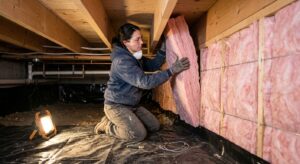
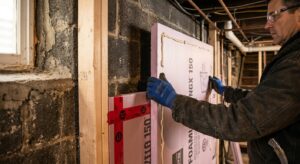
- Rim joists, the framing members that sit on top of your foundation wall around the perimeter of the basement, are responsible for up to 15% of total home heat loss in older construction. Cutting rigid foam board to fit between joists and sealing the edges with spray foam is a one-time fix with a payback of under two years in cold climates.
- If your home has a crawl space, an unsealed or vented crawl space can be responsible for 15 to 25% of total heating load. Encapsulating the crawl space with a vapor barrier and insulating the walls rather than the floor above is the current building science standard and dramatically reduces both energy loss and humidity problems.
Variations for Your Situation
- Apartment/Rental: Renters cannot open walls or modify HVAC systems, but air sealing at visible gaps is almost always permitted. Focus on door sweeps (removable types that do not require screws), foam outlet gaskets on exterior walls, rope caulk around drafty windows (it peels off without damage come spring), and a draft stopper at the base of the front door. These four items together cost under $40 and can reduce drafts noticeably. For insulation issues, document cold walls with photos and thermal readings and submit a written maintenance request to your landlord, referencing habitability standards in your state.
- Tight Budget (under $50): Start with the three highest-return free or near-free actions. First, close your fireplace damper tightly when not in use because an open damper is equivalent to a 48-square-inch hole in your ceiling. Second, add foam outlet gaskets to all exterior-wall outlets and switches, which costs about $5 for a pack of 20. Third, apply rope caulk around drafty windows for about $4 a roll. These three steps address the most common high-volume leak points and require no tools or special skills. Together they can cut air infiltration by 10 to 15% in a typical older home for under $20 total.
- Older Home (pre-1980): Homes built before modern energy codes have both problems simultaneously and at greater severity. Expect air leakage rates two to three times higher than current standards and wall insulation of R-0 to R-7 in many cases. Prioritize rim joist insulation and attic air sealing first, as these deliver the fastest payback. Wall insulation in older homes often requires injection foam or drill-and-fill cellulose by a contractor, which runs $1,500 to $4,000 for a typical home but can reduce heating costs by 20 to 25% in cold climates. Check whether your state offers weatherization assistance programs, as income-eligible households can receive this work at no cost through federal WAP funding.