You spent $4,000 to $12,000 on a new central air conditioner, and your home is still hot, humid, or uneven room to room. Before you call the installer and demand answers, know this: a new AC unit is only as effective as the system it connects to and the house it serves. In fact, the EPA estimates that up to 30% of conditioned air is lost through leaky ducts alone, and an oversized unit can actually make your home feel worse than no upgrade at all.
The most common causes of a new AC underperforming have nothing to do with a defective compressor or a warranty claim. They include duct leakage, poor insulation, improper refrigerant charge, incorrect sizing, and air infiltration – problems that existed before your new unit arrived and will keep sabotaging it until addressed. Understanding which issue is affecting your home is the first step to actually getting comfortable.
This post walks you through the most likely culprits, what you can check yourself today, what a qualified HVAC technician should verify, and exactly how to prioritize fixes so you stop burning money on electricity with nothing to show for it.
What You’ll Need
Click on an item below to shop for the recommended items for this recipe on Amazon.
As an Amazon Associate, we earn from qualifying purchases.
How to Do It
- Check and replace the air filter if it is clogged. A dirty filter is the single most common cause of reduced airflow and is often overlooked on brand-new installs where the contractor reused the old filter. Replace with a MERV 8 to 11 filter and note the date.
- Walk every supply and return vent in the house. Confirm all supply vents are open and unobstructed by furniture, rugs, or curtains. Blocked vents increase static pressure and reduce airflow throughout the entire system.
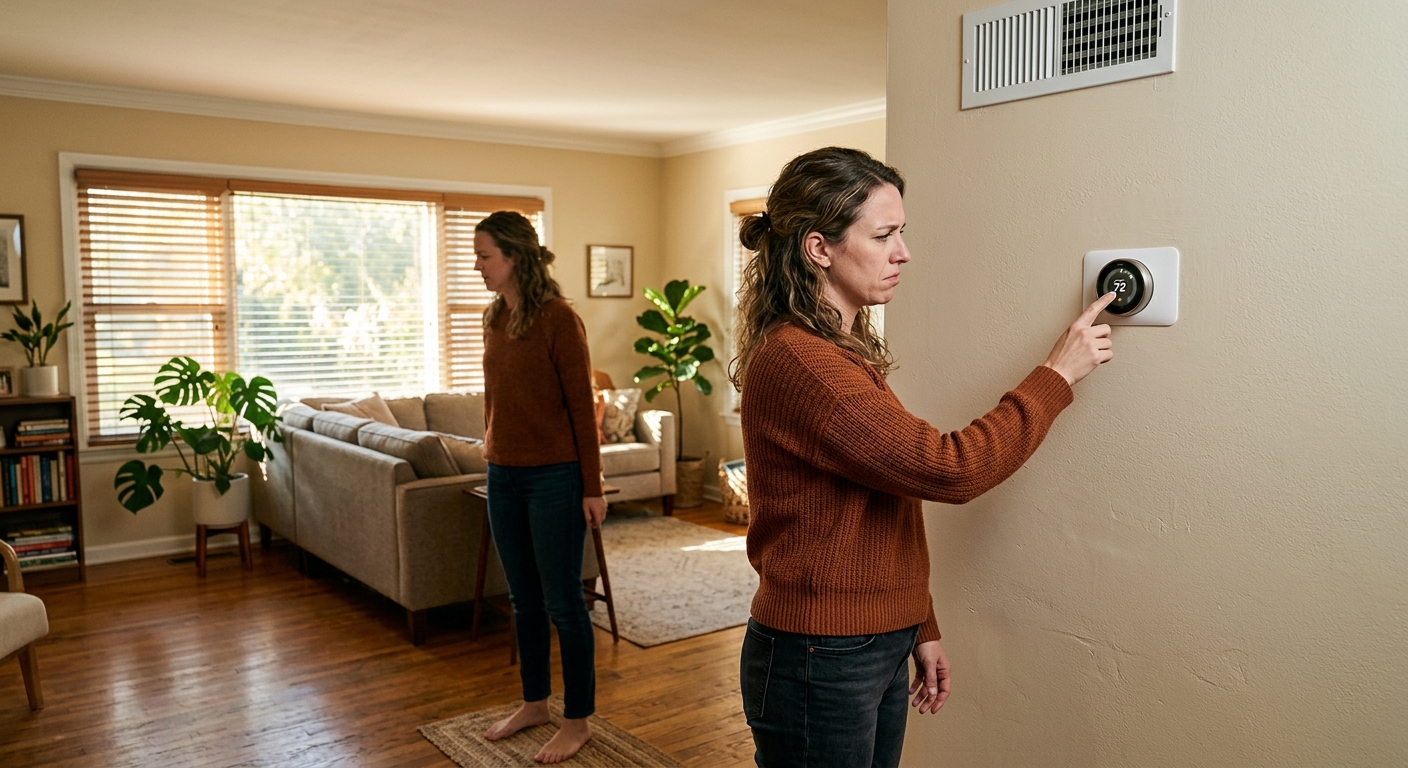
- Go to your thermostat and set it 5 degrees below current room temperature. Listen for the blower and compressor to both start within 5 minutes. If only the blower runs, the compressor may have a refrigerant or electrical issue requiring a technician.
- Feel the supply air coming from a floor or ceiling vent. It should feel noticeably cold, typically 15 to 20 degrees cooler than room temperature. If air feels only slightly cool or room temperature, refrigerant charge or airflow is likely the problem.
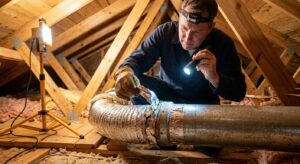
- Inspect visible duct connections in your attic, basement, or crawl space. Look for disconnected joints, torn flex duct, or sections hanging away from registers. Any gap you can see is losing conditioned air directly into unconditioned space.
- Check every exterior door and window for obvious daylight gaps or failed weatherstripping. A business card slid under a door with no resistance indicates a significant air leak that adds heat load your AC must overcome continuously.
- Purchase mastic duct sealant (not standard gray duct tape, which fails within 1 to 2 years) and apply it to every accessible duct joint in the attic, basement, or crawl space. Brush mastic onto all seams and joints and embed fiberglass mesh tape on gaps wider than 1/4 inch before applying a second coat.
- Seal the boot connections where ducts meet registers using foil-backed tape or mastic. These joints are notorious for separating over time and are often left unsealed during installation.
- Apply weatherstripping to all exterior doors that fail the business card test. Self-adhesive foam tape costs $5 to $12 per door and installs in 15 minutes. For larger gaps at the door bottom, install a door sweep ($8 to $20) for an immediate improvement.
- Caulk around window frames where the frame meets the wall using paintable latex caulk. Focus on windows in the hottest rooms first. A single tube ($4 to $6) covers 6 to 8 windows.
- Seal attic bypasses around recessed light fixtures, plumbing penetrations, and the tops of interior walls using fire-rated caulk or foam. These are the largest and most overlooked air leaks in most homes, often responsible for 20 to 40% of total infiltration.
- After sealing, run the AC for one full hour and re-check vent temperatures and comfort levels. Document any rooms still performing poorly to share with a technician if professional service is still needed.
- Request a Manual J load calculation review from your installer or a third-party HVAC company. This document proves whether your new unit was sized correctly for your home’s actual heat gain. Many residential installs skip this step, leading to 20 to 50% oversizing.
- Ask the technician to check refrigerant charge using superheat and subcooling measurements, not just a visual check or rule of thumb. A correctly charged system has refrigerant levels within 2 to 5% of factory spec. This visit should cost $75 to $150 and is often covered under your installation warranty.
- Request a static pressure test. The technician installs pressure gauges at the supply and return plenums to measure total external static pressure. A healthy system reads below 0.5 inches of water column. Values above 0.8 indicate duct or filter restriction requiring correction.
- Have the technician perform a duct leakage test (blower door or duct pressurization). Many HVAC companies and home energy auditors offer this for $100 to $250. Results quantify exactly how much air your duct system is losing and identify where.
- If the unit is confirmed oversized, ask about installing a two-stage or variable-speed replacement if still within return window, or adding a whole-home dehumidifier ($600 to $1,800 installed) to compensate for the short-cycling humidity problem in the interim.
Why It Works: The Benefits
Fixing duct leaks and ensuring a proper refrigerant charge can recover up to 30% of lost cooling output, meaning the unit you already paid for finally performs as advertised.
A correctly operating new AC running at its rated SEER2 efficiency can reduce cooling costs by 20 to 40% compared to the old unit. Unresolved duct and envelope issues erase most of that gain, so fixes directly translate to bill savings of $30 to $120 per month in warm climates.
Addressing duct balance and air sealing reduces hot spots. Homeowners who fix duct leakage often report temperature differences between rooms dropping from 8 to 10 degrees down to 2 to 3 degrees.
A properly sized and charged system that runs full cycles reduces indoor humidity to the comfortable 40 to 50% range, eliminating the clammy feeling that often follows an oversized AC replacement.
Correcting static pressure, refrigerant charge, and airflow reduces compressor stress. Proper operating conditions can add 3 to 5 years to compressor life and reduce the frequency of service calls in the first few years.
💰 Savings Impact by Action
Professionally sealing leaky ducts recovers up to 25% of conditioned air that was previously lost to unconditioned attic or crawl space.
Sealing envelope bypasses and weatherstripping doors reduces infiltration-driven heat gain, cutting cooling load by 10 to 15% in a typical home.
Restoring proper refrigerant charge on an undercharged system recovers up to 20% of rated cooling capacity at no hardware cost.
Closing blinds or adding window film on west and south-facing glass reduces solar heat gain by up to 30%, cutting peak cooling load by roughly 10%.
Switching fan mode from ON to AUTO and raising setpoint by 2 degrees when away reduces compressor runtime and saves 10% on monthly cooling bills.
🏠 Key Concepts Explained
The Science Behind It
An air conditioner does not create cold air – it moves heat. The refrigerant cycle absorbs heat from indoor air at the evaporator coil and rejects it outside at the condenser coil. The efficiency of this heat transfer depends entirely on airflow volume across the evaporator, the temperature difference between the refrigerant and the return air, and the refrigerant charge that determines how much heat each pound of refrigerant can carry. When any of these variables are off, the system’s rated SEER2 efficiency is impossible to achieve, regardless of how new the equipment is.
Duct leakage compounds the problem in a specific way. When conditioned supply air escapes into an unconditioned attic at 130 degrees, the pressure drop inside the duct system simultaneously pulls hot, unconditioned air in through return duct leaks. You are essentially air-conditioning your attic while pulling attic air into your living space. The Department of Energy found this cycle can account for the equivalent of leaving a window open 24 hours a day, even in what appears to be a tight house.
Oversizing creates a separate thermodynamic problem. An AC system removes humidity by running the warm, humid indoor air over the cold evaporator coil long enough for moisture to condense out. A unit that is 25 to 50% oversized reaches the thermostat setpoint so quickly that it shuts off before the coil has time to drain significant moisture. This leaves relative humidity above 60%, which at 72 degrees feels warmer to occupants than 75 degrees at 45% humidity – the opposite of the comfort improvement the upgrade was supposed to deliver.
Frequently Asked Questions
▼ My new AC runs constantly and never turns off. Is that normal?
On the hottest days of the year, a properly sized AC may run 80 to 90% of the time, and that is normal. If it runs continuously when it is only 85 degrees outside and still cannot reach setpoint, you have a problem. Start with the homeowner diagnostic checklist above: check the filter, verify vent airflow, and feel the temperature split at the supply register. If the split is less than 14 degrees, call for a refrigerant check.
▼ The house cools down but feels humid and clammy. What is wrong?
This is a classic oversized AC symptom. The unit is cooling the air temperature quickly but short-cycling before completing a dehumidification cycle, leaving indoor humidity above 55 to 60%. Ask your installer to verify the unit was sized using a Manual J calculation. In the short term, a whole-home dehumidifier ($600 to $1,800 installed) can compensate. Long term, confirm the equipment size matches your actual load.
▼ One or two rooms are much hotter than the rest of the house. What should I check?
First, check whether those rooms have supply vents that are partially closed or blocked by furniture. Then inspect the duct branch serving those rooms for disconnects, kinks in flex duct, or joints that have separated. If the ductwork appears intact, those rooms may simply be undersupplied from the original design and need a larger duct branch or a dedicated ductless mini-split, which costs $1,500 to $3,500 installed.
▼ My installer says everything is fine, but I am still uncomfortable. What do I do?
Request documentation of the Manual J load calculation, refrigerant superheat and subcooling readings, and a static pressure test result. These are the three objective measurements that prove a system is performing correctly. If the installer cannot or will not provide them, hire an independent HVAC company or a certified home energy auditor to conduct a third-party assessment. Many utilities offer free or subsidized energy audits that include duct testing.
▼ Could a dirty outdoor condenser unit be causing my cooling problems?
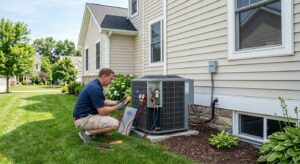
Yes, a fouled condenser coil on the outdoor unit reduces heat rejection efficiency and can decrease cooling capacity by 10 to 30% in severe cases. On a new unit this is unlikely unless it sat in storage for an extended period or is installed near a fence or shrubs restricting airflow. Rinse the coil fins gently with a garden hose from the inside out and ensure at least 18 to 24 inches of clearance around all sides of the unit.
Quick Tips
- Run your AC on a day when outdoor temperatures are between 85 and 95 degrees for the most accurate diagnostic readings. Systems are designed for this range and will show problems most clearly.
- If certain rooms are always hotter, check whether they are on the end of a long duct run or share a wall with an unconditioned garage or attic. These rooms may need a dedicated duct damper adjustment or a supplemental mini-split rather than a system-wide fix.
- Set your fan to AUTO, not ON. Running the blower continuously on ON mode pulls warm, humid air back into the system during the off cycle, undoing the moisture removal accomplished during the cooling cycle.
- Keep blinds and shades closed on south and west-facing windows during peak afternoon hours. Up to 30% of a home’s heat gain comes through glass, and shading reduces the load your AC must overcome on the hottest days.
Variations for Your Situation
- Apartment or Condo: Renters and condo owners typically cannot modify ductwork or the central system, but you can still improve comfort significantly. Start by replacing the air filter if you have access to the air handler (always allowed under most leases). Add window film to south and west-facing windows to block up to 70% of solar heat gain for $25 to $60 per window. Use a standalone dehumidifier ($150 to $300) to compensate for poor humidity control. If central AC is completely inadequate, a portable or window AC unit ($150 to $400) in the bedroom provides immediate relief and is renter-safe.
- Tight Budget Under $50: Focus entirely on zero and low-cost steps that address the biggest leaks first. Replace the air filter ($8 to $15), apply foam weatherstripping to the worst exterior door gaps ($5 to $12), close window blinds on the sunny side of the house during the day, and set the thermostat fan to AUTO instead of ON. These four steps cost under $30 and collectively can reduce cooling load by 10 to 15%. Document duct gaps you find in accessible areas so a technician can seal them efficiently on a future paid visit.
- Older Home Pre-1980: Homes built before modern energy codes have significantly higher baseline leakage and often have deteriorated duct insulation or flex duct that has cracked with age. A new AC in an older home is almost guaranteed to underperform without addressing the envelope first. Prioritize a professional blower door and duct leakage test ($200 to $400 total) before spending more on equipment. Many older homes leak 3 to 5 air changes per hour – three to five times the target for a modern efficient home – and no AC system can compensate for that load without help. State and federal rebates under the Inflation Reduction Act cover up to 30% of air sealing and insulation costs for qualifying households.