Utility rate hikes hit hard because they require zero change in your behavior to hurt your wallet. If your electric rate jumps from 12 cents to 16 cents per kilowatt-hour, that same lifestyle now costs 33% more. For the average U.S. household spending around $1,500 per year on electricity, that translates to an extra $400 to $500 annually, just for doing nothing differently.
The good news is that most homes waste 20 to 30% of the energy they consume, and that waste is recoverable without touching your thermostat comfort setting or giving up hot showers. The strategy is not deprivation, it is efficiency. You target the biggest loads, shift usage to cheaper time windows, and eliminate the quiet background drain that runs up your bill every month whether you notice it or not.
This guide walks you through a practical, prioritized plan to fight back against a rate hike, starting with free changes you can make today and building toward low-cost upgrades that pay for themselves in months. Real numbers are included throughout so you can decide what is worth your time and money.
What You’ll Need
Click on an item below to shop for the recommended items for this recipe on Amazon.
As an Amazon Associate, we earn from qualifying purchases.
How to Do It
- Check your utility’s website or bill for time-of-use rate windows. Set your dishwasher, washing machine, and dryer to run after 9 PM or before 8 AM on weekdays to shift those loads to off-peak rates.
- Lower your water heater thermostat to 120°F. Locate the dial on the front or side of the unit, turn it down, and wait 2 hours before testing the hot water tap. This saves 6 to 10% on water heating costs immediately.
- Raise your cooling thermostat by 2 degrees (or lower your heating setpoint by 2 degrees in winter). Use ceiling fans on the counterclockwise setting in summer so you feel cooler without lowering the thermostat. Each degree adjustment saves roughly 3% on HVAC costs.
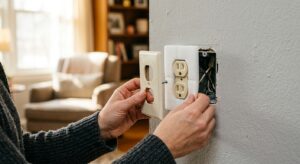
- Walk through every room and unplug chargers, TVs, gaming consoles, and small appliances not in daily use. Plug entertainment centers and home office equipment into a single power strip and switch it off at night to eliminate standby draw.
- Close blinds and curtains on south-facing and west-facing windows during the hottest part of the afternoon (1 to 5 PM) in summer. This alone can reduce solar heat gain by 30 to 45% through those windows, reducing air conditioner workload.
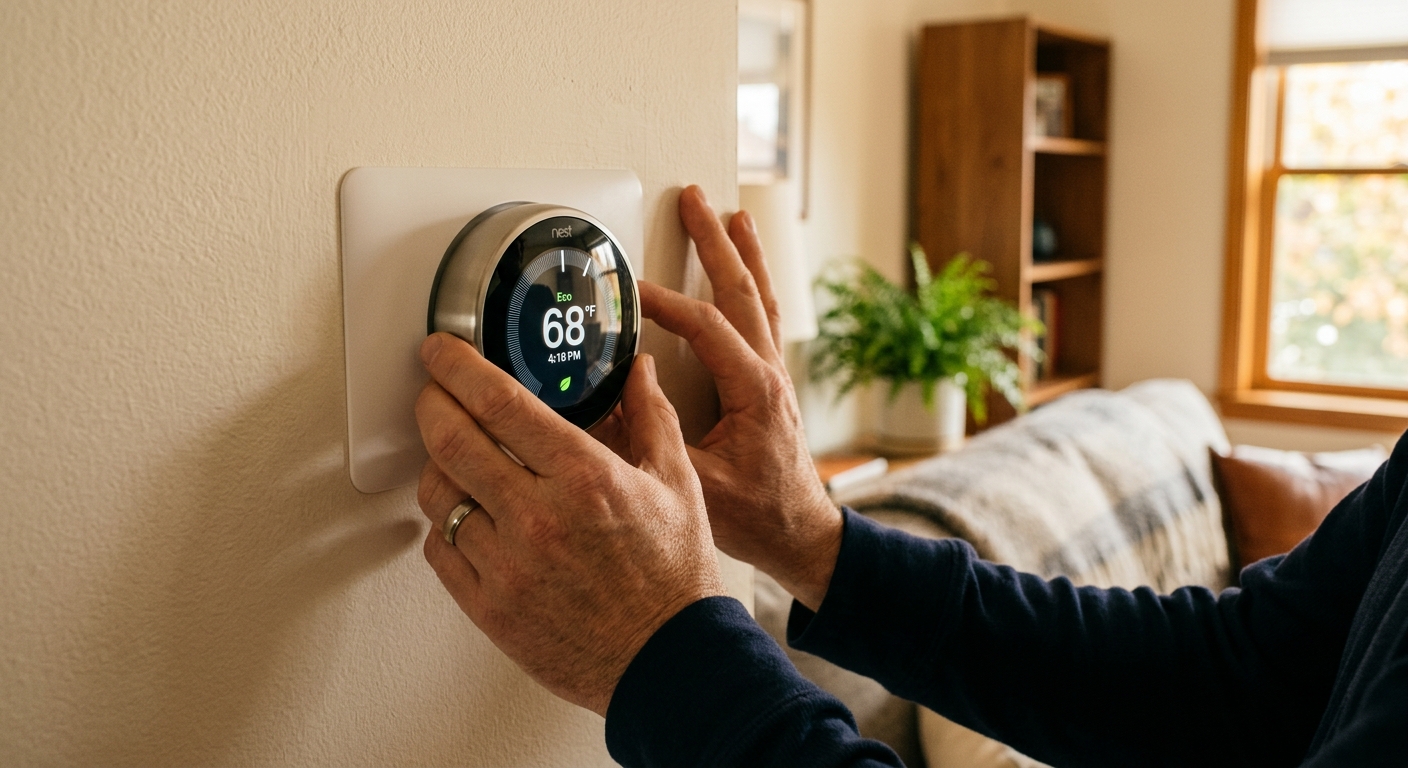
- Install a programmable or smart thermostat ($25 to $130). Program it to set back 4 to 6 degrees during sleeping hours and during the workday when the home is unoccupied. The EPA estimates this saves an average of $50 per year on HVAC costs, with payback in 6 to 12 months.
- Buy smart power strips ($25 to $40 each) for your TV and home office setup. These automatically cut power to peripheral devices when the primary device (TV or computer) is off, eliminating phantom load without requiring manual action.
- Weatherstrip every exterior door in the home ($10 to $20 per door, 20 minutes each). Slide a piece of paper under the closed door; if it slides freely, you have a significant air gap. New compression or V-strip weatherstripping reduces air infiltration and HVAC load by up to 15% in drafty homes.
- Add door sweeps to any exterior door showing visible light gaps at the bottom ($8 to $15 per door). Bottom gaps are often the largest single air leak in an older door assembly.
- Replace the five most-used light fixtures in your home with LEDs if you have not already done so ($3 to $8 per bulb). LEDs use 75% less energy than incandescent bulbs and run cool, reducing both lighting costs and the minor cooling load created by hot bulbs in summer.
- Install a water heater insulation blanket on an electric water heater ($20 to $30) if the tank feels warm to the touch. This reduces standby heat loss by 25 to 45% and can save $20 to $45 per year on water heating.
- Assess your appliances for age and efficiency. Refrigerators over 15 years old consume 40 to 50% more electricity than current ENERGY STAR models. A new ENERGY STAR refrigerator saves $100 to $150 per year, with payback in 5 to 8 years even before factoring in repair costs avoided.
- Audit your attic insulation. If you can see the ceiling joists, you have less than R-19, well below the recommended R-38 to R-60 for most U.S. climate zones. Adding blown-in insulation to bring attic levels to R-38 costs $800 to $2,000 for a typical home and reduces heating and cooling costs by 15 to 25%, with payback in 3 to 5 years.
- Consider a window AC or mini-split for the most-used room in your home if central air conditions largely empty spaces during the day. Cooling one room with a 6,000 BTU unit costs roughly $0.07 per hour versus $0.40 to $0.80 per hour for a 3-ton central system, generating large savings on summer bills if your household is concentrated in one area.
- Install a timer or smart plug on your electric water heater ($15 to $30) so it heats water only during off-peak rate hours and shuts off during peak windows. This delivers off-peak savings on your largest single cycling load without requiring a new appliance.
Why It Works: The Benefits
Shifting major appliance use to off-peak hours and eliminating phantom loads can save $15 to $40 per month on a typical utility bill, with zero reduction in the tasks you actually do.
Efficiency upgrades like LED lighting and smart thermostats reduce baseline consumption so that each future rate hike costs you less in absolute dollars, compounding your savings over time.
Air sealing and strategic window management reduce hot spots, cold drafts, and humidity swings, meaning your home feels more comfortable even if you raise the thermostat by 2 to 3 degrees.
Some utility rate structures include demand charges based on your highest 15-minute usage spike. Spreading out appliance use across the day can reduce or eliminate these surcharges, which can add $10 to $30 to a monthly bill.
Running your HVAC system 15 to 20% less extends equipment life, potentially delaying a $5,000 to $12,000 system replacement by several years.
💰 Savings Impact by Action
Running major appliances during off-peak hours on a time-of-use rate plan reduces the effective cost per kWh for those loads by 40 to 60%, translating to 10 to 25% savings on the portion of your bill tied to flexible loads.
Eliminating standby power draw from electronics and unused appliances recovers 5 to 10% of total household electricity consumption, worth $75 to $150 per year at average U.S. rates.
Programming 4-degree setbacks during sleeping and unoccupied hours saves approximately 10 to 12% annually on heating and cooling costs per DOE estimates.
Sealing the primary infiltration points in doors, windows, and attic penetrations reduces conditioned air loss and cuts HVAC runtime by up to 20% in typical existing homes.
Lowering water heater setpoint to 120°F and adding an insulation blanket reduces water heating energy by 6 to 16%, the second largest energy expense in most homes.
🏠 Key Concepts Explained
The Science Behind It
Every energy-saving strategy in this guide traces back to one of two physical principles: reducing the rate of heat transfer into or out of your home, or shifting or eliminating electrical loads. Your HVAC system is essentially fighting a constant battle against the second law of thermodynamics, which dictates that heat always flows from warmer areas to cooler ones. In summer, outdoor heat presses through every wall, window, and gap into your cool interior. The tighter and better-insulated your envelope, the slower that transfer occurs, and the less your system runs to counteract it.
Phantom loads and time-of-use pricing are purely about the economics of electricity generation. Power plants are most expensive to operate during peak demand hours because utilities must bring peaking plants online, which are often older, less efficient, and costlier to run than baseload generators. When you shift your washing machine to 10 PM, you are using electricity generated by cheaper, cleaner baseload capacity, which is why utilities price it lower. Smart meters installed in most U.S. homes built or retrofitted after 2010 track this usage by the hour, meaning your behavioral changes are measured and billed precisely.
Water heater standby loss is a straightforward thermodynamic phenomenon: a tank of 120°F water sitting in a 65°F basement loses heat continuously through its walls, and the heating element or burner cycles on periodically to restore temperature. That cycling happens whether you use hot water or not. An insulation blanket raises the effective R-value of the tank walls, slowing heat loss and reducing cycle frequency. Similarly, lowering the setpoint from 140°F to 120°F reduces the temperature differential driving that heat loss, cutting standby losses by roughly 8 to 14% independent of actual hot water consumption.
Frequently Asked Questions
▼ I made several changes but my bill barely dropped. What am I missing?
First, compare the same billing month from last year to rule out weather differences, since a hotter or colder than average month can offset real savings. Next, use a Kill-A-Watt meter to test your highest-suspected loads directly. If you have an electric vehicle, pool pump, or hot tub, those single loads can dwarf all other household consumption and should be addressed first with timers or rate-shift scheduling.
▼ My utility does not offer time-of-use rates. Is shifting usage still worth it?
If you are on a flat rate plan, time-shifting does not reduce your cost per kWh, but it may still reduce peak demand charges if your utility includes them. The bigger opportunity on a flat rate is total consumption reduction through air sealing, insulation, and smart thermostat setbacks, which deliver the same savings regardless of when you use energy.
▼ Can I do these fixes as a renter without landlord approval?
Yes, most of the highest-impact steps require no structural changes. Unplugging phantom loads, shifting appliance timing, adjusting the thermostat, and using smart power strips are all renter-safe. You can also add removable window film, draft snakes at door bottoms, and thermal curtains without altering the property. For weatherstripping and door sweeps, most landlords approve low-cost improvements that protect the property, and it is worth asking.
▼ Will raising the thermostat 2 degrees really make a noticeable comfort difference?
For most people, a 2-degree change is at or below the threshold of perception, especially with ceiling fans running. At 78°F with a ceiling fan on low, the wind chill effect lowers perceived temperature by 3 to 4 degrees, making it feel equivalent to 74 to 75°F with no fan. The key is combining the thermostat adjustment with the fan so the air movement compensates for the temperature change.
▼ How long before I see the savings show up on my actual bill?
Changes like thermostat adjustments and phantom load elimination typically appear in your very next billing cycle, usually within 30 days. Weatherstripping and window changes may take one full heating or cooling season to fully measure since weather variability obscures small gains month to month. Smart thermostat savings are often trackable within the app itself before the bill arrives, giving you confirmation faster.
Quick Tips
- Request your utility’s 12-month usage history online or by phone. Identify your two highest-bill months and focus your efforts on the loads that spike in those months, typically cooling in summer and heating in winter.
- Use a Kill-A-Watt meter ($25) to measure the actual wattage of any device you suspect is a high draw. Plug it in for 24 hours and multiply by your rate to see the real daily cost before deciding what to cut.
- If you have a gas furnace, replace the air filter every 60 to 90 days during peak heating season. A clogged filter increases static pressure, makes the blower work harder, and can reduce system efficiency by 5 to 15%.
- Refrigerator coils on the back or bottom of the unit collect dust and make the compressor run longer. Vacuum them once a year to maintain efficiency and extend appliance life.
Variations for Your Situation
- Apartment or Rental: Renters cannot modify central HVAC, add insulation, or change water heaters, but they can still capture 10 to 20% in savings. Start with smart power strips ($25 to $40), thermal blackout curtains ($30 to $60 per window), and a smart plug timer on a window AC unit. Ask your landlord in writing to weatherstrip exterior doors, since this protects the unit and costs under $20 per door. If you pay your own electric bill, shifting laundry and dishes to off-peak hours under a time-of-use plan requires zero landlord interaction.
- Tight Budget (Under $50): Focus entirely on zero-cost behavioral changes first: thermostat setbacks, time-shifted appliance use, unplugging standby devices, and closing window coverings during peak sun hours. With a $50 budget, add one roll of foam weatherstripping for your leakiest door ($8), a set of LED bulbs for your top 5 fixtures ($20), and a basic smart plug for your water heater timer ($15). These three items together can save $10 to $20 per month, paying back your $43 investment in 2 to 4 billing cycles.
- Older Home (Pre-1980): Homes built before 1980 typically have 50 to 70% more air leakage than modern construction and little to no wall insulation. The quick fixes still apply, but the biggest leverage is in the building envelope. Prioritize attic air sealing at top plates and around light fixtures before adding insulation, since insulation without air sealing delivers only a fraction of its rated benefit. Budget $200 to $500 for a professional blower door test and air sealing service, which typically reduces infiltration by 30 to 50% and delivers the highest ROI of any single investment in an older home.