Moving into a new home is exciting, but the cooling system is one of the most overlooked items on any move-in checklist. You might not know when the air filter was last changed, whether the refrigerant is low, or if the ductwork is leaking conditioned air into the attic. Left unchecked, these hidden issues can add 20 to 40% to your first summer cooling bill and put stress on a system you barely know.
The good news is that a systematic pre-summer tune-up does not require an HVAC license for most of it. A combination of simple DIY steps and one optional professional visit can get an inherited system running at near-peak efficiency within a weekend. The Department of Energy estimates that a properly maintained central AC system costs 5 to 15% less to operate than a neglected one, and some targeted fixes like air sealing and thermostat upgrades can push total savings even higher.
This guide walks you through everything from a 20-minute quick inspection you can do the day you get your keys to a full DIY tune-up weekend and a professional service call that pays for itself within the first cooling season. Whether you are buying or renting, moving into an older ranch or a newer townhome, there is a path here that fits your situation and budget.
What You’ll Need
Click on an item below to shop for the recommended items for this recipe on Amazon.
As an Amazon Associate, we earn from qualifying purchases.
How to Do It
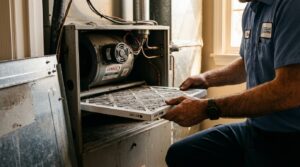
- Locate the air handler or furnace and pull out the existing air filter. Hold it up to a light source. If you cannot see light through it, replace it immediately with a MERV 8 to 11 filter. Note the filter size on your phone for future purchases.
- Set the thermostat to COOL and lower the set point 5 degrees below room temperature. Go outside and confirm the condenser fan is spinning and the unit is running. Listen for unusual rattling, grinding, or hissing sounds that suggest refrigerant leaks or mechanical issues.
- After the system runs for 10 minutes, hold a thermometer at a supply vent and a return vent. A properly functioning AC system should produce a temperature difference (delta-T) of 16 to 22 degrees Fahrenheit between return and supply air. A smaller split often means low refrigerant or a dirty evaporator coil.
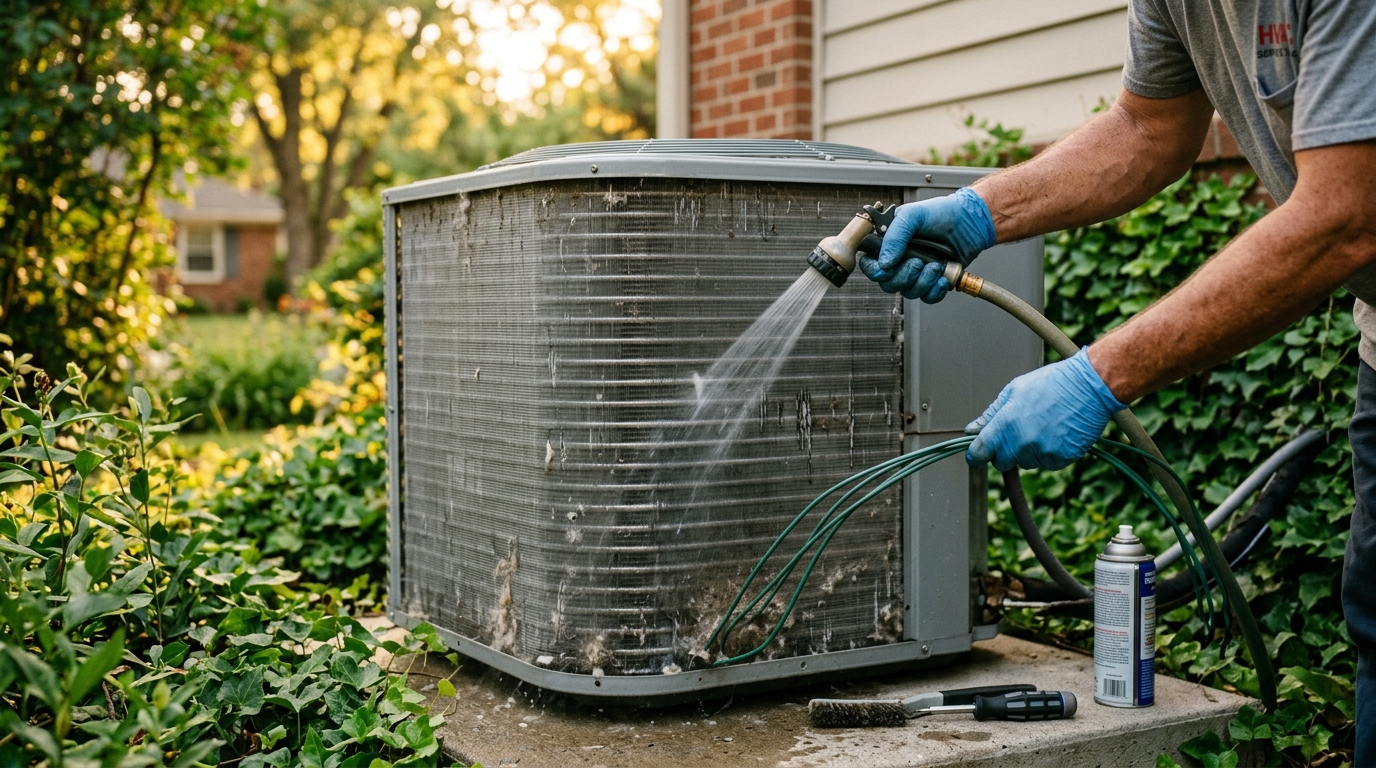
- Walk around the condenser unit outside and clear any vegetation, mulch, or debris within 18 inches of the unit. Check that the unit sits level on its pad. Tilted units can cause compressor oil pooling, leading to premature failure.
- Check the condensate drain line at the air handler for standing water or slime buildup, which signals a clog. A blocked drain can trigger a safety float switch and shut down the system. Pour a cup of distilled white vinegar into the drain pan to prevent algae growth.
- Turn off power to the air handler at the breaker and at the unit’s service switch before opening any panels. Replace the air filter with a fresh MERV 8 to 11 rated filter sized exactly to the slot. Avoid MERV 13 or higher in older systems without checking whether the blower motor can handle the added static pressure.
- With power off, open the air handler cabinet and use a soft brush or no-rinse coil cleaner spray to clean the evaporator coil. Allow it to drip dry into the drain pan. A clean coil can restore 5 to 10% efficiency lost to dust and biofilm buildup.
- Flush the condensate drain line by pouring a 50/50 mixture of bleach and water down the access port near the air handler. Follow with plain water. Consider installing a float switch if one is not already present to prevent overflow water damage.
- Turn off power to the outdoor condenser at the disconnect box. Use a garden hose on a gentle setting to spray the condenser coils from the inside out, removing dirt and cottonwood seeds from between the fins. Never use a pressure washer. Straighten any bent fins with a fin comb.
- Inspect all accessible ductwork in the basement, crawlspace, or attic for visible disconnections, holes, or unsealed joints. Seal gaps with UL 181-rated foil mastic tape or brush-on mastic sealant. Do not use standard gray cloth duct tape, which fails within 1 to 2 years. Sealing ducts can recover 20 to 30% of lost conditioned air.
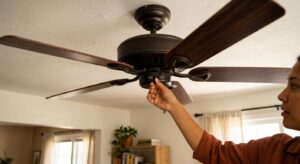
- If the thermostat is more than 10 years old or is a manual dial type, replace it with a programmable or smart thermostat. Set a schedule that raises the cooling set point by 7 to 10 degrees during working hours. The DOE estimates this saves about 10% annually on heating and cooling combined.
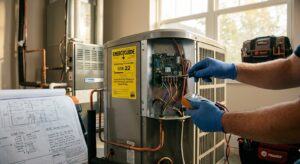
- Schedule a full HVAC tune-up with a licensed HVAC technician before Memorial Day. Request that the service include refrigerant pressure check, capacitor test, contactor inspection, blower motor amp draw, and a full coil cleaning.
- Ask the technician specifically about refrigerant charge. Request they record the static pressure readings and supply them to you in writing. If the system uses R-22 refrigerant (common in systems older than 2010), ask about retrofit options since R-22 is no longer manufactured and costs $50 to $150 per pound.
- Request a duct leakage assessment or at minimum a visual inspection of accessible ductwork. Some HVAC companies offer a blower door or duct blaster test for $150 to $300 that quantifies exactly how much conditioned air you are losing.
- Have the technician check electrical connections, tighten terminals, and verify the condensate drain safety float switch is operational. Ask for a written report so you have a documented baseline for the system going forward.
Why It Works: The Benefits
A neglected system running 20 to 40% above optimal efficiency translates directly to wasted money. Completing even the basic steps in this guide can realistically cut cooling costs by 15 to 25% compared to doing nothing after move-in.
Systems that have not been serviced are far more likely to trip on high-pressure lockout or ice over during a heat wave, exactly when you need cooling most. A pre-season inspection catches dirty coils, low refrigerant, and failing capacitors before they become emergency calls.
When you service the system before your first summer, you know the exact date of the last filter change, coil cleaning, and refrigerant check. This baseline makes future maintenance scheduling straightforward and helps you detect problems earlier.
A properly charged, unrestricted system removes moisture from air as it cools. Addressing filter clogs and low refrigerant restores the system’s dehumidification capacity, reducing that sticky, clammy feeling common in poorly maintained homes during humid weather.
Compressors and blower motors that run hard due to dirty coils and restricted airflow wear out years sooner. Regular maintenance can extend central AC compressor life by 3 to 5 years, deferring a $3,000 to $6,000 replacement cost.
💰 Savings Impact by Action
Replacing a severely clogged filter restores airflow and reduces blower energy consumption by 5 to 15% immediately.
Cleaning dirty evaporator and condenser coils can recover up to 10% in lost heat transfer efficiency over a neglected system.
Sealing leaky ducts in unconditioned spaces recovers 20 to 30% of conditioned air that would otherwise be lost to the attic or crawlspace.
Setting a programmable schedule with a 7 to 10 degree setback during work hours saves approximately 10% on annual cooling costs per DOE estimates.
Clearing obstructions and cleaning condenser coils improves heat rejection, cutting cooling runtime by 10 to 15% on peak days.
🏠 Key Concepts Explained
The Science Behind It
Central air conditioning works on a refrigeration cycle: liquid refrigerant absorbs heat from indoor air as it evaporates in the evaporator coil, then travels outside where it releases that heat to the outdoor air as it condenses back to liquid. The efficiency of this cycle depends heavily on temperature differentials at both coils. When a dirty filter reduces airflow across the evaporator, the coil gets too cold, potentially freezing the condensate water on its surface into a block of ice that stops airflow entirely. Clean airflow keeps the evaporating refrigerant at the right pressure and temperature to absorb heat efficiently.
Duct leakage undermines efficiency in a less visible but equally important way. When supply ducts leak into an unconditioned attic that is 130 to 150 degrees Fahrenheit on a summer day, you are not just losing cooled air. You are also drawing that superheated attic air back through any return leaks, dramatically increasing the load on the system. The building science community uses the term “duct system efficiency” to describe how much of the mechanical cooling actually reaches the living space. In a home with 25% duct leakage, a 3-ton AC system effectively delivers only about 2.25 tons of cooling to the rooms you are paying to cool.
Thermostat scheduling works because of a principle called heat transfer rate dependence on temperature differential. When your home is allowed to warm to 82 to 85 degrees while you are at work, heat flows into it more slowly than if it were being held at 76 degrees all day, because the indoor-outdoor temperature gap is smaller. The system then cools the home back down in a shorter burst. This cyclic approach uses less total energy than continuous setpoint maintenance, which is why the DOE quantifies the savings at roughly 1% per degree of setback per 8-hour period.
Frequently Asked Questions
▼ The AC is running but the house is not getting cool. Where do I start?
Start with the air filter and the delta-T test. A filter so clogged it blocks airflow and a frozen evaporator coil are the two most common causes of an AC that runs without cooling. Turn the system off, let it thaw for 2 hours with the fan on, replace the filter, then restart. If the delta-T is still below 14 degrees after 15 minutes of operation, the system is likely low on refrigerant and needs a technician.
▼ Can renters do this without landlord permission?
Renters can legally and safely do anything that does not involve opening electrical panels or adding refrigerant. Replacing the air filter, cleaning the condensate drain with vinegar, clearing vegetation around the outdoor unit, and installing a smart thermostat (if you take the original one with you) are all renter-friendly steps. For anything involving the refrigerant system or ductwork, notify your landlord in writing and request a professional service call. Documenting the poor system condition protects you from being blamed for damage that existed before you arrived.
▼ How long before I actually see savings on my electric bill?
You will see the impact on your very first full billing cycle after completing the tune-up. Most utilities bill monthly, so if you move in during May and complete the checklist before the first heat wave, your June bill will reflect the improved efficiency compared to what a neglected system would have cost. Keep in mind that the first summer also gives you a baseline. The savings become most obvious when you compare your cost-per-cooling-degree-day to regional averages.
▼ What if the home has a window AC unit or mini-split instead of central air?
The same principles apply but the process is simpler. For window units, wash the filter under the tap, vacuum the evaporator fins with a brush attachment, and straighten any bent fins. For mini-splits, clean the filter in the indoor head unit monthly and spray the outdoor unit coils with a hose annually. Mini-splits are generally more efficient than central systems to begin with, but a dirty filter can still reduce their output by 10 to 15%.
▼ The previous owner said the system was just serviced. Do I still need to do this?
Verify the claim before trusting it. Ask for the service invoice, which should include the date, technician name, company, and specific work performed. If the invoice exists and is less than 12 months old with refrigerant pressures recorded, you can skip the professional visit and focus on the Quick Inspection steps. If no invoice is available, treat the system as unserviced. A verbal assurance during a real estate transaction is not a substitute for documented maintenance.
Quick Tips
- Photograph the air filter slot, drain pan, and duct connections with your phone during the first inspection so you have a visual record before any cleaning is done.
- Register your HVAC system with the manufacturer using the model and serial number you find on the data plate. This activates the warranty and lets you look up the exact refrigerant type and charge specification for the unit.
- Check whether the previous owner left any service records. Sellers are not required to disclose HVAC history in most states, but a request via your real estate agent often turns up invoices stapled inside the air handler cabinet door.
- If the condenser fins are more than 30% bent or the cabinet is heavily rusted, factor a possible equipment replacement into your first-year budget. A system over 15 years old with an unknown service history may be approaching the end of its useful life regardless of how well you tune it up.
- Install a smart thermostat with energy reporting so you have a week-by-week baseline of runtime hours. This makes it easy to spot the moment efficiency starts declining next season.
Variations for Your Situation
- Apartment or Rental with Window Units: You likely cannot touch central HVAC controls, so focus on what you can reach. Clean the window AC filter monthly (rinse under warm water, let dry fully before reinstalling). Seal the gap around the window unit with foam weatherstripping tape, available for $8 to $12 at any hardware store, to stop hot outdoor air from bypassing the unit. Use a smart plug with energy monitoring ($15 to $25) to track the unit’s daily watt-hours and spot efficiency drops before they become a problem.
- Tight Budget Under $50: Prioritize the steps with zero or near-zero cost first. The delta-T test costs nothing and tells you whether the system has a serious problem worth spending money on. A new MERV 8 filter costs $8 to $15 and delivers the highest efficiency return per dollar of anything on this list. A bottle of no-rinse coil cleaner is $10 to $15 and can restore meaningful cooling capacity if the evaporator is coated in dust. Vinegar for the condensate drain costs under $2. Together these four steps address the most common efficiency killers for about $30 total.
- Older Home Pre-1980: Homes built before 1980 often have ductwork made from fiberglass duct board or flexible duct that has become brittle and perforated over decades. Before investing in a professional tune-up, inspect all accessible ducts with a flashlight for visible holes, collapsed sections, or disconnected joints at trunk lines. Budget $150 to $400 for a duct sealing session with a contractor before spending on refrigerant or coil cleaning. Also check whether the existing system uses R-22 refrigerant (look for a yellow label on the outdoor unit). If it does, factor the cost of refrigerant at $50 to $150 per pound or a system conversion into your first-year budget.