You flip on the AC, hear it humming away, and walk over to a vent expecting cool relief. Instead, you get a blast of warm or room-temperature air. It is one of the most common summer complaints homeowners have, and the good news is that many of the causes are fixable without calling a technician. The bad news is that letting the problem go undiagnosed wastes serious energy and money while your home stays uncomfortable.
According to the U.S. Department of Energy, air conditioning accounts for roughly 12% of a typical household’s annual energy bill, climbing to 27% in hot southern climates. When your AC is blowing warm air, it is working hard and spending money without delivering the comfort you are paying for. Identifying the root cause quickly can save you hundreds of dollars in wasted electricity and prevent a minor issue from becoming a major refrigerant or compressor repair.
In this guide, we cover the four most likely culprits behind warm AC air: a dirty air filter, a refrigerant problem, a tripped circuit or thermostat error, and a frozen evaporator coil. For each one, you will get a clear symptom checklist, a step-by-step diagnostic process, and a recommended fix ranging from free adjustments to knowing when to call a pro.
What You’ll Need
Click on an item below to shop for the recommended items for this recipe on Amazon.
As an Amazon Associate, we earn from qualifying purchases.
How to Do It
- Check your thermostat first: confirm it is set to Cool (not Fan Only), the setpoint is at least 3 to 5 degrees below current room temperature, and it is calling for cooling. A common mistake is accidentally switching to Fan mode.
- Go to your electrical panel and locate the breaker labeled AC, Compressor, or Air Handler. If it is tripped (sitting between On and Off), switch it fully Off and then back On. Do not reset it more than once, since repeated tripping means an underlying fault a technician must diagnose.
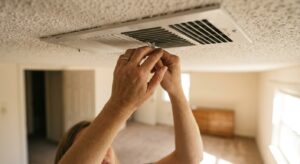
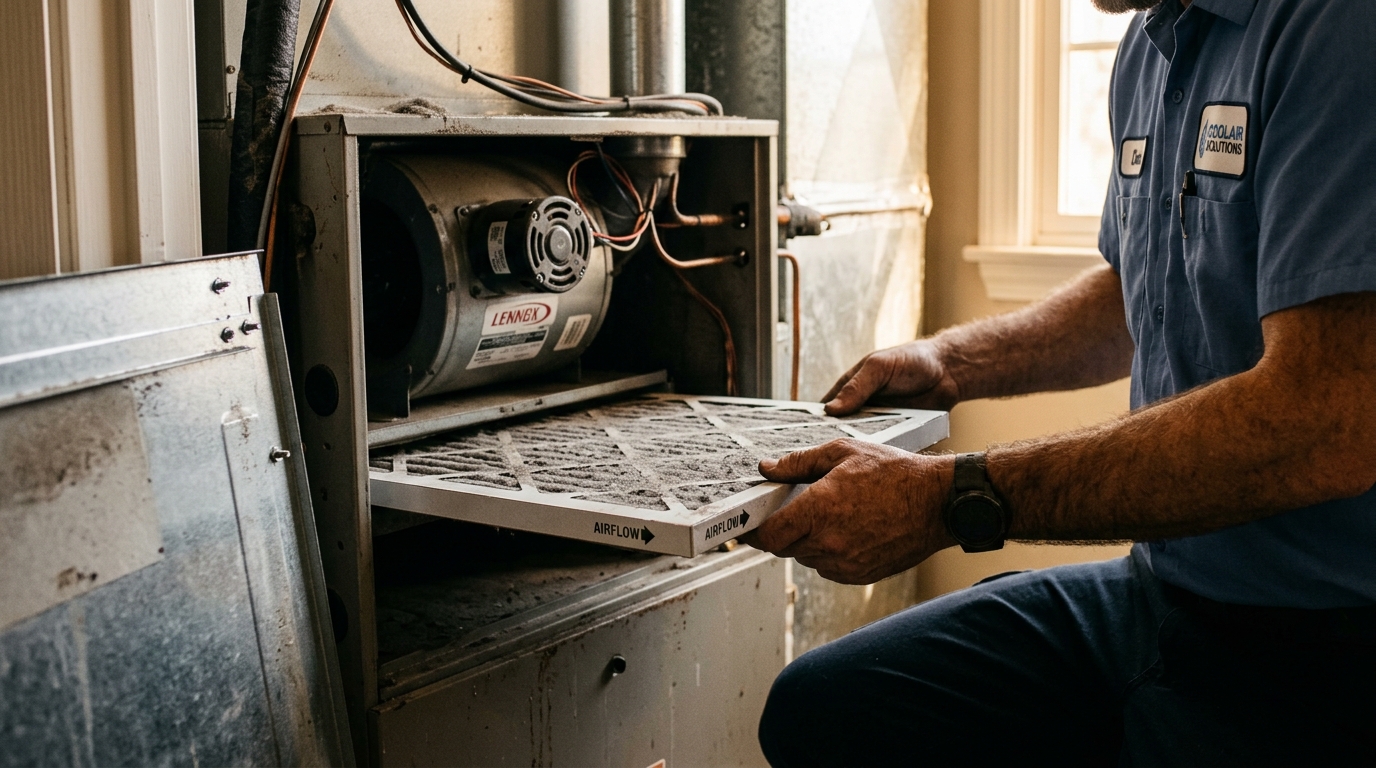
- Find your air filter, typically in the return vent or air handler cabinet. Hold it up to a light source. If you cannot see light through it, it is clogged. Replace it with a new filter of the same size and MERV rating (MERV 8 to 11 for most homes). Filters cost $8 to $20.
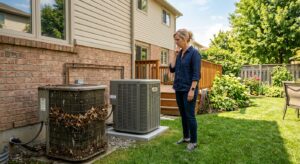
- Go outside and look at your condenser unit. Confirm the fan on top is spinning, the unit is running, and there is no ice visible on the refrigerant lines going into the house. Clear any debris, leaves, or grass clippings from the sides of the unit.
- Return inside and hold your hand near a supply vent for 5 minutes after the system restarts. If air feels cool (below room temperature), you likely resolved the issue. If it is still warm, proceed to the DIY diagnostic approach.
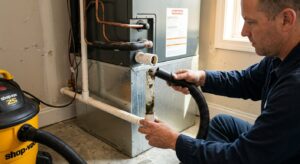
- Check for a frozen evaporator coil: turn the system OFF but set the fan to ON so it runs without cooling. Open the air handler cabinet (usually in a closet, attic, or basement) and look at the evaporator coil. If you see ice or frost, you have a freeze-up. Let the system run in fan-only mode for 2 to 4 hours until all ice melts before continuing.
- After the coil thaws, replace your air filter if you have not already, then turn the system back to Cool. Monitor whether the coil refreezes over the next hour. If it freezes again with a clean filter, low refrigerant is the likely cause and you need a licensed HVAC technician.
- Clean the outdoor condenser coils: shut off power at the disconnect box next to the outdoor unit. Use a garden hose to gently rinse the fins from the inside out (spray outward through the fins), removing dirt and debris. Do not use a pressure washer since the fins bend easily. Let the unit dry for 10 minutes before restoring power.
- Check refrigerant line insulation: the larger of the two copper lines running into your home (the suction line) should be wrapped in foam insulation. If insulation is cracked, missing, or wet, replace it with foam pipe insulation from a hardware store ($5 to $15 for 6 feet). Missing insulation causes heat gain on the line and reduced efficiency.
- Use a thermometer to measure supply and return air temperature: place a thermometer in a return vent for 5 minutes, record the temperature, then measure a supply vent closest to the air handler. A properly functioning AC should show a temperature difference (delta T) of 15 to 22 degrees Fahrenheit. A delta T below 10 degrees with clean filters and no visible ice strongly indicates low refrigerant. Call a technician with this data in hand.
- Before calling, document what you found: thermostat settings confirmed correct, breaker status, filter condition, whether the coil froze, and your delta T measurement. This information helps the technician skip basic checks and focus on the actual problem.
- Request a technician with EPA Section 608 certification (legally required to handle refrigerants). Ask specifically whether the diagnostic fee applies to the repair cost if you proceed, which many companies offer.
- Expect the technician to check system refrigerant pressure using manifold gauges. If pressure is low, they will find and repair the leak before adding refrigerant. Adding refrigerant without fixing the leak is a temporary fix that will repeat the problem within one to two seasons.
- If a frozen coil was diagnosed, confirm the technician checks both airflow (filter, blower motor speed, coil cleanliness) and refrigerant charge as possible causes before simply topping off the refrigerant.
- Ask for a written summary of what was found, what was repaired, and what the system pressures were after service. This creates a baseline for future maintenance and helps you spot patterns if the problem recurs.
Why It Works: The Benefits
Diagnosing and fixing the root cause returns your AC to its rated cooling output, which for most central systems means dropping your home to the setpoint temperature within one to two hours instead of running all day without reaching it.
An AC blowing warm air often runs continuously, consuming full electricity while delivering no comfort. Fixing a dirty filter alone can reduce energy use by 5 to 15% according to the DOE. Addressing refrigerant or coil issues can recover 10 to 30% efficiency.
Many warm-air causes, especially low refrigerant and frozen coils, put extra strain on the compressor. Catching the problem early avoids compressor failure, which can cost $1,500 to $2,800 to replace and often leads homeowners to replace the entire system.
Walking through this diagnostic sequence before calling a technician means you can describe the exact symptom and what you have already ruled out. This shortens the service call and can save one to two hours of labor at $85 to $150 per hour.
Most AC systems last 15 to 20 years with proper maintenance. Running a system hard while it is malfunctioning accelerates wear on the compressor and fan motors. Addressing warm-air causes promptly keeps the system within its designed operating parameters.
💰 Savings Impact by Action
Replacing a severely clogged air filter restores airflow and can reduce AC energy consumption by 5 to 15% according to the DOE.
Cleaning heavily fouled condenser coils restores heat rejection capacity and can recover 10 to 30% of lost cooling efficiency.
Fixing a refrigerant leak and recharging to the correct level restores the system to its rated efficiency, recovering 10 to 20% in wasted energy.
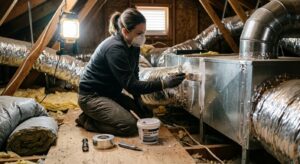
Sealing leaky ducts that deliver warm air to certain rooms improves overall system delivery efficiency by up to 20 to 30% in homes with ducts in unconditioned spaces.
🏠 Key Concepts Explained
The Science Behind It
Your air conditioner does not create cold air. It moves heat. Refrigerant circulates in a closed loop, absorbing heat from inside your home at the evaporator coil (located in the air handler) and releasing that heat outside at the condenser coil. For this process to work, two things must happen simultaneously: refrigerant must be at the correct pressure and charge level, and enough air must flow across the evaporator coil to carry heat into the refrigerant. Disrupt either one and the cooling cycle breaks down.
When airflow is restricted by a clogged filter, the evaporator coil gets too little warm air to absorb. Its surface temperature drops below the dew point and then below freezing, causing condensation on the coil to freeze solid. The ice acts as an insulating barrier, blocking what little airflow remains and creating a feedback loop that makes the problem worse the longer the system runs. This is why a frozen coil produces warm air from vents, the coil is encased in ice and cannot transfer heat to the air passing through it at all.
Low refrigerant causes a different but related problem. With less refrigerant in the system, the evaporator coil pressure drops, which lowers the refrigerant’s boiling point. The coil again gets too cold and freezes. Meanwhile, the compressor is pulling in low-density refrigerant vapor, working harder than designed, and running hotter. Over time this overheating degrades the compressor’s internal lubrication and leads to failure. This chain reaction from a small refrigerant leak to a failed compressor is why diagnosing warm air quickly is far more cost-effective than ignoring it for a season.
Frequently Asked Questions
▼ Why is my AC still blowing warm air after I replaced the filter and reset the breaker?
If both of those checks did not help, the two most likely remaining causes are a frozen evaporator coil or low refrigerant. Shut the system off, run the fan only for 2 to 4 hours to thaw any ice, then restart it in Cool mode. If it blows warm again within an hour or the delta T between supply and return air is below 12 degrees Fahrenheit, you have a refrigerant issue and need a licensed HVAC technician.
▼ My AC is blowing cool air through some vents but warm air through others. What does that mean?
Uneven temperature across vents is usually a duct problem, not an AC problem. The vents getting warm air may be connected to a duct run with a disconnection, significant leakage, or inadequate insulation in a hot attic or crawlspace. Check accessible ductwork for obvious gaps or disconnected sections. Sealing duct leaks can improve system delivery efficiency by 20 to 30% in homes with duct systems in unconditioned spaces.
▼ How do I know if my AC is low on refrigerant without calling a technician?
You cannot measure refrigerant charge without specialized gauges, but there are strong indicators: ice forming on the refrigerant lines or evaporator coil, a delta T below 12 degrees Fahrenheit with a clean filter and no visible ice, hissing or bubbling sounds near the refrigerant lines, and the system running constantly without reaching the setpoint. If you observe two or more of these, call a technician and describe what you found to speed up the diagnosis.
▼ Can I run my AC with a frozen coil to try to cool the house while I wait for a technician?
No. Running a frozen system forces the compressor to work against abnormal pressures and without adequate lubrication return, which can burn out the compressor in hours. Turn the system off or to fan-only mode immediately. A frozen coil situation requires diagnosis and repair before you run the system in cooling mode again.
▼ My AC was working fine and suddenly started blowing warm air with no warning. What happened?
A sudden onset without gradual decline usually points to an electrical cause: a tripped breaker at the panel, a blown fuse in the disconnect box next to the outdoor unit, or the thermostat switching modes accidentally. Check both the panel breaker and the outdoor disconnect fuse before assuming a refrigerant or mechanical failure. If both check out and the outdoor unit is not running at all, the capacitor (a $15 to $50 part) may have failed, which is a very common cause of sudden compressor or fan stoppage.
Quick Tips
- Change your air filter every 30 to 90 days during cooling season. Homes with pets or dusty conditions need monthly changes. A $12 filter replaced on schedule prevents hundreds in potential repair costs.
- Keep at least 2 feet of clearance around your outdoor condenser unit and trim back shrubs each spring. Restricted airflow around the condenser raises system pressure and reduces efficiency by 10 to 30%.
- Set your thermostat fan to Auto, not On. The On setting runs the blower continuously even when the compressor is off, which can pull warm unconditioned air into the duct system through leaks and raise humidity levels.
- Schedule a professional AC tune-up every spring before peak cooling season. A technician will check refrigerant charge, clean coils, and test electrical connections for roughly $80 to $150, which is far less than an emergency summer call.
Variations for Your Situation
- Apartment or Rental: If you have a window AC or mini-split, the same four causes apply but the diagnostic steps are simpler. Check that the unit is set to Cool mode, clean the washable filter inside the front panel (rinse it under water and let it dry), and clear any obstructions around the outdoor portion. If the unit is blowing warm air with a clean filter and correct settings, contact your landlord or building manager since refrigerant service requires a certified technician regardless of unit type. Document the issue in writing to create a maintenance request record.
- Tight Budget (under $50): Start with the zero-cost steps: verify thermostat settings, check and reset the breaker, and inspect the filter. A replacement filter costs $8 to $20 and is the single highest-value action you can take. Use a simple kitchen thermometer ($10) to measure delta T and confirm whether the system is cooling at all. If delta T is above 12 degrees, the system may be undersized or the house may have excessive heat gain from poor insulation rather than an AC fault, which directs your spending toward weatherization rather than HVAC repair.
- Older Home (pre-1990): Systems from this era often use R-22 refrigerant, which has been phased out under EPA regulations. R-22 recharge costs $50 to $150 per pound compared to $20 to $50 per pound for modern R-410A, and supply is increasingly limited. If your technician diagnoses a refrigerant leak in an R-22 system and the system is more than 15 years old, get a cost comparison between repairing the current system and replacing it with a modern R-410A or R-32 system. A new 16-SEER system often pays back its cost in 5 to 8 years through energy savings alone compared to an aging, poorly charged R-22 unit.