Reach your hand toward an outlet on an exterior wall on a cold winter day and you may feel a distinct chill radiating from it. That is not your imagination. Standard outlet boxes cut directly through your wall cavity, creating a direct channel between the cold outdoors and your warm living space. Without a gasket or cover plate seal, conditioned air leaks out and cold air seeps in around the edges of the box and through the slots in the outlet itself.
The Department of Energy estimates that air infiltration accounts for 25 to 40 percent of a home’s heating and cooling losses, and outlets on exterior walls are one of the most overlooked contributors. A typical uninsulated outlet box can leak as much air as a small window left open a crack. Multiply that across every exterior outlet and switch in your home and the total gap becomes significant.
This post walks you through exactly how to seal those outlets, from the simplest five-minute foam gasket install to a more thorough DIY approach that adds a childproof cover and foam-in-place sealing for maximum performance. Both methods cost almost nothing and require zero specialized skills.
What You’ll Need
Click on an item below to shop for the recommended items for this recipe on Amazon.
As an Amazon Associate, we earn from qualifying purchases.
How to Do It
- Turn off the circuit breaker for the outlet you are working on and verify power is off using a non-contact voltage tester before touching anything.
- Remove the outlet cover plate by unscrewing the single center screw. Set the screw aside in a safe place.
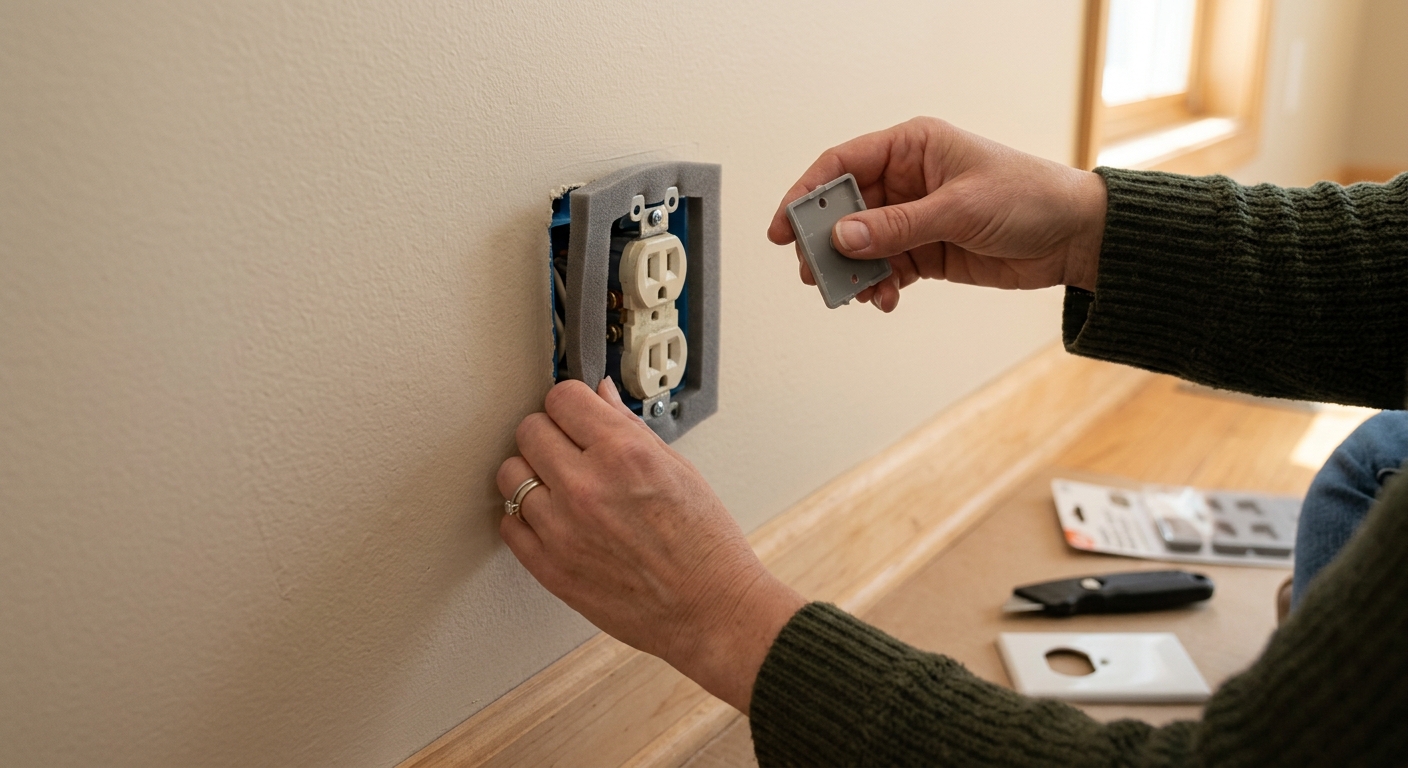
- Place the foam gasket flat against the electrical box opening, aligning the cutouts with the outlet slots and screw hole. No adhesive is needed as the cover plate holds it in position.
- Reinstall the cover plate over the foam gasket and tighten the screw snugly but not so tight that you crack the gasket or plate.
- Restore power at the breaker and test the outlet. Run your hand along the edges of the plate on a cold day to confirm the draft is gone.
- Turn off the circuit breaker for the outlet and confirm power is off with a non-contact voltage tester.
- Remove the cover plate and then carefully unscrew the outlet from the electrical box. Gently pull the outlet forward a few inches without disconnecting any wires.
- Inspect the back and sides of the electrical box for visible gaps where the box meets the framing or where wires enter. These are the primary infiltration points.
- Apply a thin bead of non-flammable, paintable latex caulk or a small amount of low-expansion spray foam around wire entry points and any visible gaps at the back of the box. Do not spray foam directly onto wires or electrical components.
- Allow the sealant to set for a few minutes, then carefully push the outlet back into the box and re-secure it with the mounting screws.
- Install a foam gasket behind the cover plate as described in the Quick Fix approach, then reinstall the cover plate and restore power at the breaker.
Why It Works: The Benefits
Sealing all exterior outlets and switches in a typical home can reduce air infiltration losses by 5 to 10 percent, translating to $30 to $100 per year in savings depending on climate and home size.
Foam gaskets block the direct airflow path through the outlet box, eliminating the cold draft sensation near exterior walls within minutes of installation.
Sealing the outlet box reduces the flow of humid interior air into the cold wall cavity, lowering the risk of condensation and moisture damage inside the wall over the long term.
Reducing cold air infiltration near exterior walls helps maintain more consistent temperatures throughout the room, reducing cold spots and improving overall comfort.
Homes that treat all penetrations including outlets, switches, and fixtures can improve their air changes per hour (ACH) by a measurable amount, which matters for resale value and energy audits.
💰 Savings Impact by Action
Sealing all exterior outlets and switches can reduce a home’s total air infiltration by up to 10 percent, directly cutting heating and cooling losses.
A comprehensive air sealing project including outlets, attic bypasses, and penetrations can reduce infiltration losses by 20 percent or more according to DOE estimates.
At $1 to $3 per gasket and typical energy savings of $3 to $8 per outlet per year, most gaskets pay for themselves within one to two months of installation.
Eliminating air bypass through an outlet box restores up to 15 percent of the effective R-value lost due to convective looping inside the wall cavity around the box.
🏠 Key Concepts Explained
The Science Behind It
An electrical outlet box installed in an exterior wall creates what building scientists call a thermal bypass. Standard fiberglass batt insulation stops conductive heat transfer well, but it does not stop air movement. The outlet box punches a hole through the insulation layer and connects directly to the interior of the wall cavity. If that cavity is connected to the outside through any gap in the sheathing or framing, you have a direct air pathway from outdoors to indoors.
The driving force behind this infiltration is pressure difference. In winter, the stack effect creates a zone of negative pressure at lower levels of the home as warm buoyant air rises and exits near the ceiling and roofline. This negative pressure actively draws outside air inward through every available gap, including the quarter-inch space between an outlet box and the drywall around it. Wind adds additional positive pressure on the windward side of the house, compounding the effect on outlets facing the prevailing wind.
A foam gasket works by creating a simple but effective air barrier between the outlet box and the room. Even though the gasket is only an eighth of an inch thick, it eliminates the primary infiltration path. The deeper seal approach using caulk at the wire penetrations at the back of the box addresses secondary pathways where air can enter through the wall cavity itself. Together, these two layers of sealing address both the perimeter gap and the interior of the box, which is why the combined approach outperforms the gasket alone on particularly leaky walls.
Frequently Asked Questions
▼ I installed the foam gasket but I can still feel a draft from the outlet. What do I do?
The gasket seals the perimeter between the cover plate and the wall, but air can still enter through the outlet slots themselves and through gaps at the back of the electrical box. Try the Deep Seal Upgrade approach to caulk the wire entry points at the back of the box. You can also add a sliding childproof outlet cover on top of the gasket to block the slot openings directly.
▼ Is it safe to put foam or caulk inside an electrical box?
It is safe as long as you use the right materials and keep sealant away from the outlet device and wiring connections. Use low-expansion foam or non-flammable latex caulk and apply it only around wire entry points and gaps at the back and sides of the box. Never use standard high-expansion spray foam inside an electrical box as it can stress wiring and create a fire risk.
▼ How many outlets should I treat to actually see a difference on my bill?
To get a meaningful reduction in infiltration, treat every outlet and switch on exterior walls throughout the house. A typical home has 10 to 25 exterior electrical boxes depending on size. Treating them all in one session usually costs under $25 in foam gaskets and takes two to three hours total, making it one of the highest return-per-dollar weatherization tasks you can do.
▼ Can I do this in an apartment without landlord permission?
Yes, foam gaskets require no permanent modification and leave zero damage when removed. Simply unscrew the cover plate, slip the gasket in, and reinstall. When you move out, remove the gasket and the outlet looks exactly as it did before. This is one of the few weatherization tasks that is genuinely renter-safe without any conversation with your landlord.
▼ My home was built in the 1960s. Does this still apply?
Older homes especially benefit from this fix because they typically have little to no vapor barrier or house wrap behind the exterior sheathing, meaning wall cavities are more directly connected to outside air. Check carefully for aluminum wiring before proceeding with the Deep Seal approach and call an electrician if you see it. The basic foam gasket approach is safe for any home regardless of age.
Quick Tips
- Buy a bag of 10 mixed gaskets rather than individual ones. You will almost always find more outlets to treat once you start checking, and the per-unit cost drops significantly.
- Check outlets in rooms that feel consistently colder than the rest of the house first. Those are the strongest indicators of air infiltration from the exterior.
- Use a stick of incense or a smoke pencil near the outlet on a windy day before and after sealing to visually confirm you have eliminated the airflow.
- Childproof outlet covers with sliding tabs add a second layer of draft sealing on top of the foam gasket and cost about $5 for a pack, making them a smart addition for homes with young children.
Variations for Your Situation
- Apartment or Rental: Foam gaskets are completely reversible and require no landlord permission. Buy a bag of pre-cut gaskets for about $8, use your own screwdriver, and treat every exterior outlet in your unit in under an hour. When moving out, remove the gaskets and no trace remains. This is the single easiest renter weatherization task available.
- Tight Budget (under $10 total): A bag of 10 foam outlet gaskets costs $4 to $8 at any hardware store and covers most exterior outlets in a small apartment or condo. Skip the caulk and spray foam entirely. The gasket alone eliminates the majority of infiltration at zero skill and minimal cost. Prioritize outlets on the coldest walls first for the biggest immediate comfort improvement.
- Older Home (pre-1980): Homes built before 1980 frequently have larger gaps around electrical boxes due to settled insulation, older box styles, and no house wrap layer. After installing gaskets, inspect the outside of the home for gaps in siding around outlet covers. Exterior-grade caulk applied around the perimeter of the cover on the outside surface adds a second line of defense. Budget $20 to $30 for a full treatment including both interior gaskets and exterior caulking.