Every summer, millions of homeowners crank up the air conditioning and watch their electricity bills climb, often without realizing that the real problem is happening before the heat ever reaches the thermostat. The sun is pouring radiant energy through your windows, baking your roof, and pushing heat through your ceiling into your living space. Your AC then has to fight all of that heat continuously, running longer cycles and wearing itself out faster than it should.
According to the U.S. Department of Energy, solar heat gain through windows accounts for roughly 28 to 40% of a home’s cooling load in summer. Add in an under-insulated attic that can reach 150 degrees Fahrenheit on a hot day, and you have a recipe for sky-high bills and a house that never quite feels comfortable. The good news is that blocking solar heat at the source is far more cost-effective than trying to refrigerate your way out of the problem.
This guide walks you through exactly how to stop the sun before it heats your home, starting with free and low-cost steps you can do today, moving through practical DIY upgrades, and finishing with longer-term investments that deliver significant payback. Whether you rent or own, live in a single-family home or a condo, there are actionable strategies here that will make a real difference on your next utility bill.
What You’ll Need
Click on an item below to shop for the recommended items for this recipe on Amazon.
As an Amazon Associate, we earn from qualifying purchases.
How to Do It
- Close blinds and curtains on south and west-facing windows by 10 AM each morning before direct sun hits the glass. This single habit reduces solar heat gain through those windows by up to 45% compared to uncovered glass.
- Reverse your ceiling fans to run counterclockwise (standard summer direction) at medium speed. This creates a wind-chill effect that makes 78 degrees feel like 72 degrees, letting you raise the thermostat by 4 degrees without discomfort.
- Set your thermostat to 78 degrees Fahrenheit when home and 85 degrees when away during the day. The DOE estimates this setback saves about 10% per year on cooling costs.
- Place a portable box fan facing outward in a window on the shaded side of your home during evening hours once outdoor temps drop below indoor temps. This flushes accumulated daytime heat for free.
- Check that attic vents and soffit vents are clear of insulation and debris. Blocked ventilation traps hot air in the attic and increases heat transfer into the living space significantly.
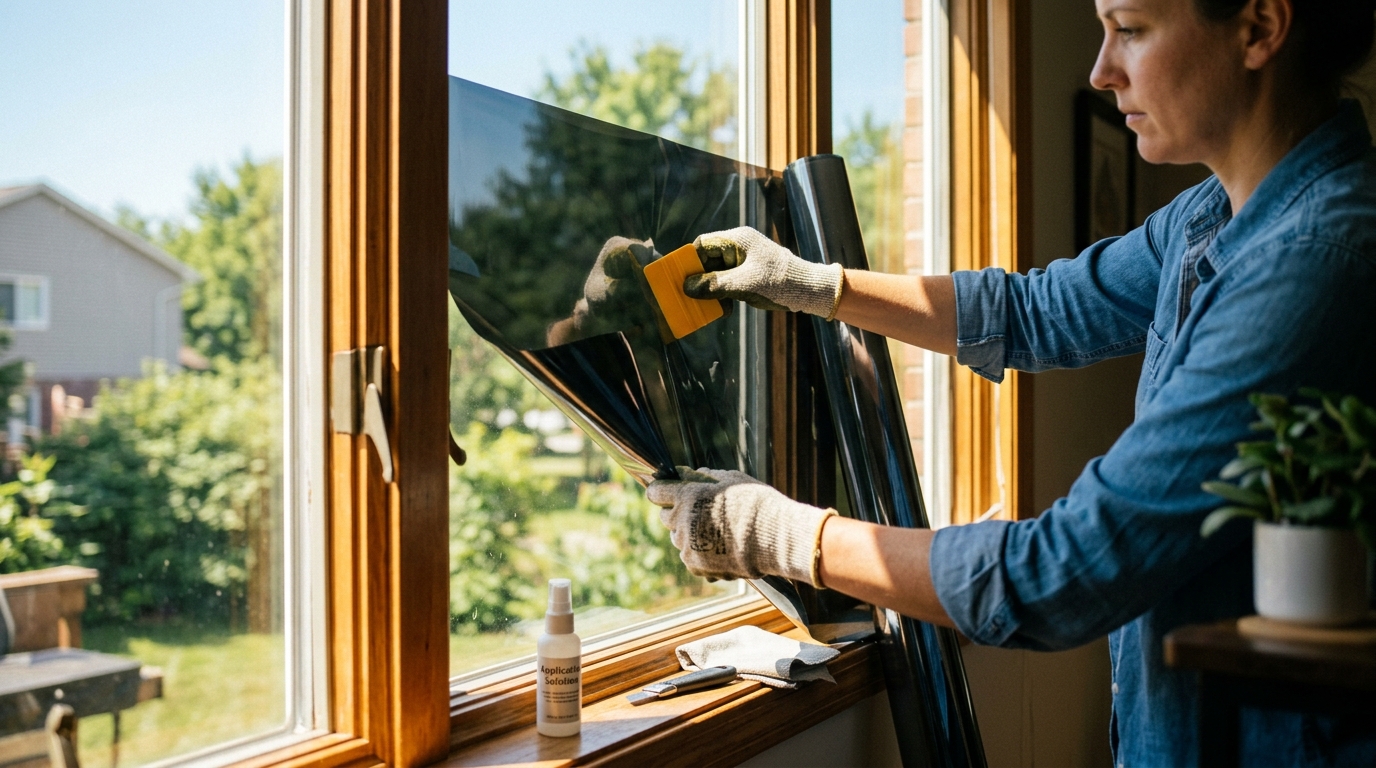
- Measure your south and west-facing windows and purchase solar control window film with an SHGC rating of 0.25 to 0.40 and a visible light transmission of at least 40% so rooms don’t feel dark. Brands like Gila, 3M, or Llumar are widely available at home improvement stores for $1 to $3 per square foot.
- Clean windows thoroughly with soapy water, then apply film according to manufacturer instructions starting from the top corner and using a squeegee to push out bubbles. Allow 30 days for full cure before judging clarity.
- Install tension-mounted cellular shades or insulating honeycomb shades on any remaining uncovered windows. Cellular shades reduce solar heat gain by 40 to 60% compared to bare windows and cost $30 to $80 per window.
- Mount a retractable exterior awning or install a tension-based shade sail over the largest west-facing window or patio door. Exterior awnings reduce solar heat gain by up to 77% on south-facing windows and 65% on west-facing ones according to DOE data.
- Plant or position large potted shrubs or tall ornamental grasses in front of low west-facing windows to provide afternoon shading. Even 50% shading from vegetation meaningfully reduces heat entering the glass.
- After completing window treatments, walk through the home at 3 PM on a sunny day and feel along window frames, electrical outlets on exterior walls, and where the floor meets exterior walls. Use foam backer rod or caulk to seal any gaps you can feel warm air coming through.
- Schedule an attic inspection or energy audit to measure your current insulation depth. In most U.S. climate zones, the DOE recommends R-38 to R-60 in the attic. If you are below R-30, adding insulation typically pays back in 2 to 5 years through energy savings.
- Ask your insulation contractor about adding a radiant barrier foil to the underside of the roof decking during the same job. A radiant barrier reflects up to 97% of radiant heat away from the attic floor, reducing attic temperatures by 10 to 25 degrees Fahrenheit and cutting cooling costs by 5 to 10% in hot climates.
- Have the contractor air seal the attic floor before adding blown-in insulation. Sealing bypasses around recessed lights, top plates, and plumbing penetrations prevents conditioned air from escaping into the attic and reduces HVAC losses by 10 to 20%.
- Consider upgrading attic ventilation at the same time by adding a solar-powered attic fan if your ridge and soffit vents are inadequate. A properly ventilated attic stays 10 to 30 degrees cooler than one with blocked airflow, directly reducing heat transfer to the living space.
- After installation, verify the work with a thermal imaging camera during a hot afternoon. Your contractor should be willing to walk through the results. If the attic floor shows even heat distribution and no bright spots above living areas, the job is done correctly.
Why It Works: The Benefits
Combining exterior shading with attic improvements can reduce cooling energy use by 20 to 40%, which translates to $150 to $400 in savings over a typical summer depending on your climate and home size.
Blocking solar heat at the source reduces hot spots in sun-facing rooms, so your AC doesn’t cycle on and off trying to compensate for uneven loads throughout the day.
Every degree you keep out of your home is one less degree your AC compressor has to remove. Reducing cooling load by 25% can meaningfully extend the life of your HVAC system and reduce the frequency of service calls.
Radiant heat from sun-drenched windows makes you feel hotter even when the air temperature is acceptable. Blocking that direct solar radiation can make a room feel 4 to 8 degrees cooler without touching the thermostat.
UV radiation that causes solar heat gain also fades hardwood floors, carpets, and furniture. Low-e window films block up to 99% of UV rays, protecting your interiors while cutting cooling costs.
💰 Savings Impact by Action
Exterior shading on south and west windows blocks up to 77% of solar heat gain through those windows, reducing total home cooling load by roughly 20 to 25%.
Upgrading attic insulation to R-38 or higher reduces heat transfer from the attic into living space by 15 to 25% in hot climates according to DOE data.
A foil radiant barrier installed on attic rafters reflects up to 97% of radiant heat and cuts cooling costs by 5 to 10% in hot sunny climates.
Raising the thermostat setpoint by 7 to 10 degrees Fahrenheit for 8 hours per day saves approximately 10% annually on cooling costs per DOE guidance.
Sealing attic bypasses and window frame gaps prevents hot air infiltration and reduces conditioned air loss, cutting HVAC runtime by up to 15% in leaky homes.
🏠 Key Concepts Explained
The Science Behind It
The sun delivers about 1,000 watts of energy per square meter to Earth’s surface on a clear summer day. When that energy hits a standard single-pane window, roughly 86% of it passes straight through as shortwave radiation and converts to heat inside your home. That is why a sunlit room can feel 10 to 15 degrees hotter than a shaded one even when the air conditioner is running. Low-e glass and solar films work by applying a microscopically thin metallic coating that reflects infrared and ultraviolet wavelengths while still allowing visible light to pass through, cutting that heat transmission by 60 to 75%.
Your roof is the other major battleground. Dark asphalt shingles absorb 85 to 95% of incoming solar radiation and transfer it into the attic as heat. On a 95-degree day, an unventilated attic can reach 150 to 160 degrees Fahrenheit. That enormous temperature difference between your attic and your living space drives heat through the ceiling at a high rate regardless of how much insulation you have, though more insulation slows the process significantly. A radiant barrier interrupts this cycle by reflecting radiant heat back toward the roof before it can warm the attic air and then conduct through the ceiling insulation.
The physics of shading also explains why exterior shading outperforms interior shading dramatically. When sunlight hits an interior blind or curtain, the glass has already admitted the solar energy into the room. The blind absorbs and re-radiates most of that heat into the indoor air. When you shade the window from the outside, whether with an awning, exterior shutter, or landscape vegetation, you intercept the solar energy before it contacts the glass at all. The DOE reports that exterior shading can be 5 to 7 times more effective per dollar spent than interior window treatments at reducing solar heat gain.
Frequently Asked Questions
▼ Why is my house still hot even with the AC running all day?
If your AC runs continuously without reaching the setpoint, the cooling load exceeds your system’s capacity, often because of uncontrolled solar heat gain. Start by closing all south and west window coverings by 10 AM and checking whether your attic insulation meets the DOE minimum of R-38 for most climate zones. If neither fixes the problem, have an HVAC technician check your system’s refrigerant charge and air filter, as a dirty filter or low refrigerant reduces cooling capacity by 15 to 25%.
▼ Can renters do any of this without landlord approval?
Yes, renters have several effective options that require no permanent changes. Tension-mounted cellular shades, freestanding window film that clings without adhesive, portable evaporative coolers in dry climates, and strategic use of ceiling fans are all renter-safe. Solar cling film from brands like Gila applies with water and peels off cleanly, making it acceptable in most rentals. For larger changes like exterior awnings, ask your landlord in writing and frame it as protecting their flooring and reducing utility costs.
▼ How long before I see savings on my electricity bill?
Window film and shade adjustments show results within the same billing cycle since they immediately reduce how hard your AC works. Cellular shades and awnings deliver savings from the first sunny day they are installed. Attic insulation improvements may take one to three billing cycles to fully quantify since billing periods overlap and weather varies month to month. For the clearest comparison, track your kilowatt-hour usage rather than dollar amounts, since utility rates fluctuate independently of your actual consumption.
▼ My window film is bubbling or peeling. Did I do it wrong?
Bubbling immediately after installation is normal and usually disappears within 2 to 4 weeks as the adhesive cures and residual moisture escapes. If bubbles persist beyond 30 days, they were likely caused by applying film to dirty glass or not using enough slip solution during installation. Large edge peeling usually means the film was cut too close to the frame and is not bonded to the edge seal. Trim the edge cleanly with a sharp utility knife and press the film down while it is still pliable.
▼ What if my home is older than 30 years? Are these strategies still effective?
Older homes typically have single-pane windows, minimal attic insulation, and more air leakage, which means solar heat gain is even more of a problem and the upgrades deliver even larger savings. Start with the quick fixes since they cost nothing and work on any home. Window film is especially impactful on single-pane glass because those windows have an SHGC near 0.86. For attic work, have an auditor check for vermiculite insulation and knob-and-tube wiring before adding insulation, both of which require special handling and can affect what insulation methods are safe to use.
Quick Tips
- Focus on west-facing windows first. They receive the most intense late-afternoon sun when outdoor temperatures and indoor heat accumulation are both at their peak.
- Use a thermometer to measure the surface temperature of your window glass on a sunny afternoon. Glass above 90 degrees Fahrenheit is a strong sign you need solar film or exterior shading.
- Light-colored or reflective roofing materials can reduce roof surface temperature by 50 to 60 degrees Fahrenheit compared to dark shingles, which is worth asking about when your roof is due for replacement.
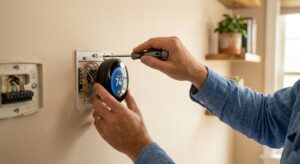
- Combine your solar heat blocking strategy with a smart thermostat pre-cooling schedule. Set the AC to cool the home to 74 degrees by 11 AM, then let the setpoint rise to 78 degrees during peak solar hours. You are using cheap off-peak electricity to create a thermal buffer before the afternoon sun hits hardest.
Variations for Your Situation
- Apartment or Condo: Renters and condo owners who cannot modify the building envelope should focus on interior strategies. Purchase no-adhesive solar cling film for windows, install tension-rod cellular shades, and use portable tower fans with built-in air circulators. If you have a west-facing balcony, a freestanding bamboo or fabric privacy screen used as a shade sail costs $40 to $100 and can block significant afternoon sun from entering sliding doors without any permanent installation.
- Tight Budget (under $50): Start with zero-cost habit changes: close window coverings on sun-facing windows by 10 AM every day, raise the thermostat setpoint to 78 degrees, and use ceiling fans to offset the feel of warmer air. Spend your $50 on a roll of solar cling film for your largest west-facing window, which typically costs $15 to $30 for a standard window and delivers the highest return per dollar of any window treatment available.
- Older Home (pre-1980): Homes built before 1980 almost always have single-pane windows and attic insulation below current DOE recommendations. Prioritize air sealing over insulation since older homes typically have large bypasses around plumbing and electrical that allow hot attic air to dump directly into living spaces. A can of expanding foam spray ($5 to $8) used to seal visible gaps around recessed lights and top plates can make a meaningful immediate difference. Budget for a professional energy audit ($100 to $400) to identify the highest-impact improvements specific to your home’s construction.